

TL;DR:
- Native 4K laser projectors dominate home theater options in 2026, offering true resolution and long-lasting brightness. Brightness and room lighting significantly affect contrast, making dark rooms and quality screens essential for optimal image quality. Smart features and HDMI 2.1 connectivity are important for gaming and convenience, but room setup and calibration remain critical for great viewing.
Native 4K laser projection is the definitive standard for the latest projectors for home theater in 2026. Premium models now combine true 3,840 x 2,160 resolution with laser light sources rated at up to 20,000 hours of lamp life, delivering consistent brightness and color accuracy across years of use. Features like HDR10+, Dolby Vision, HDMI 2.1 for 4K gaming at 120fps, and built-in smart platforms have moved from luxury to baseline expectation. Whether you are building a dedicated dark room or upgrading a living room setup, understanding what separates a genuinely great projector from a well-marketed one saves you real money and real disappointment.
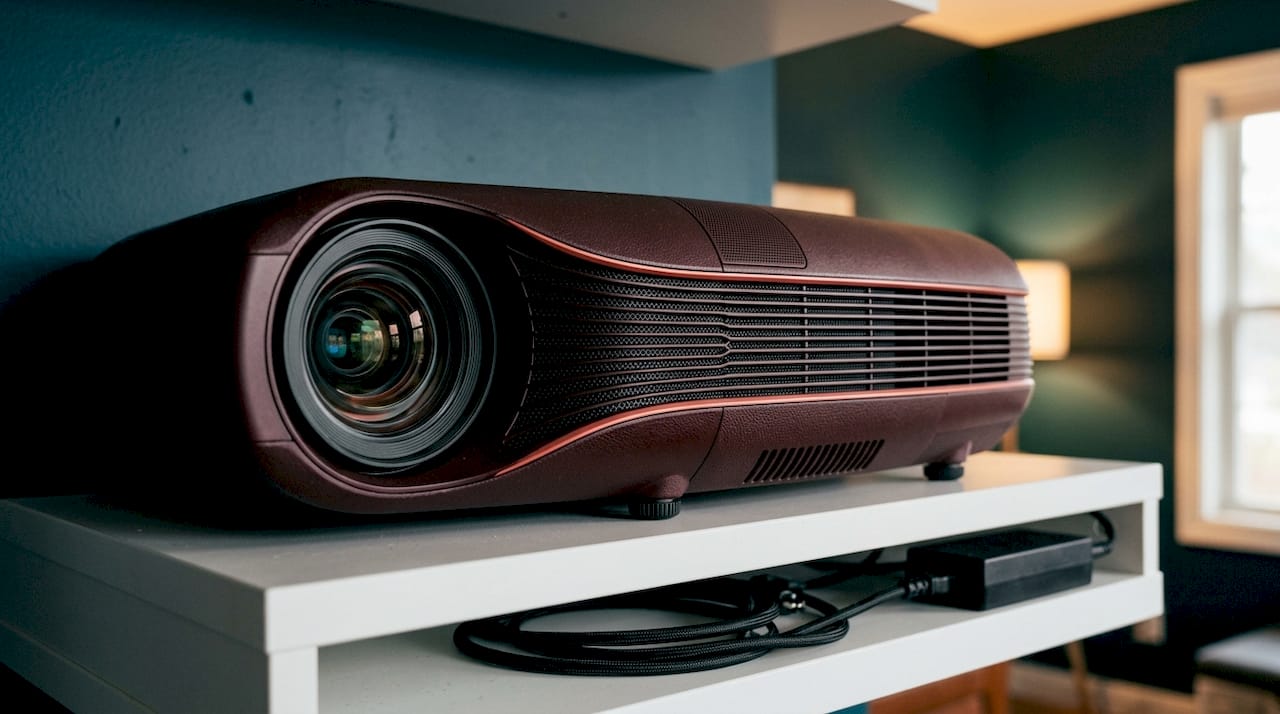
1. What makes the latest projectors for home theater stand out?
The single biggest shift in top home theater projectors is the move from lamp-based to laser light sources. Laser projectors maintain brightness and color consistency far longer than traditional bulb-based models. Laser lamp life reaches up to 20,000 hours, which means roughly 10 years of nightly two-hour viewing sessions before any meaningful degradation.
Native 4K resolution is the second defining feature. Many projectors marketed as "4K" use pixel shifting, a technique that physically moves a lower-resolution chip to simulate higher detail. Pixel shifting simulates 4K resolution, while true native 4K delivers markedly better sharpness. For a dedicated home theater, native 4K is the correct choice. Projectordisplay stocks both categories, so you can compare them directly before buying.
HDR support, specifically HDR10+ and Dolby Vision, adds another layer of image depth by expanding the range between the darkest blacks and brightest highlights. Combined with wide color gamut coverage, these features produce images that look closer to what a director intended on set.
2. Native 4K laser projectors worth considering in 2026
The Epson EH-LS12000B is a strong benchmark for premium home theater laser projectors. It uses a 3LCD laser engine with HDR10+ support and delivers excellent contrast for a reflective-light display. Epson projector Malaysia buyers consistently rate it for color accuracy and long-term reliability. The Epson projector range, including this Epson lcd projector model, represents the best Epson projector tier for serious home cinema use.
The Optoma CinemaX D2+ is a native 4K ultra short throw laser projector that sits just centimeters from the wall. Optoma projector Malaysia options like this one suit living rooms where a long throw setup is not practical. It includes smart home entertainment features and produces a large image from a very short distance.
The AWOL Vision LTV-3000 Pro uses triple laser technology with 2,600 ANSI lumens, HDR10+, and Dolby Vision with Dolby Atmos support. Triple laser systems produce a wider color gamut than single or dual laser designs. This model targets enthusiasts who want the most immersive image and sound combination in a single unit.
The ViewSonic X2000B-4K is a 4K HDR ultra short throw smart laser projector with built-in streaming. Viewsonic projector Malaysia buyers looking for a best smart projector for home theater will find this model balances convenience and image quality well. It suits smaller rooms where a traditional long throw projector would require ceiling mounting.
The VAVA Chroma VA-SP003 is a triple laser ultra short throw projector with native 4K UHD resolution. Its color accuracy is a standout feature, covering a wide color gamut that benefits HDR content significantly.
The Optoma Wave 120SK is a compact 4K UHD laser projector with an eco-friendly design. It suits buyers who want high brightness in a smaller form factor without sacrificing true 4K resolution.
The ViewSonic PX701-4K delivers 3,200 ANSI lumens with native 4K resolution. It is one of the more accessible entry points into good projectors for home theater without dropping to pixel-shifted alternatives.
Pro Tip: When comparing models, ask specifically whether the chip is native 4K or pixel-shifted. The product listing or spec sheet will state "native 4K" or list a base resolution of 3,840 x 2,160 without mention of pixel shifting.
3. How to evaluate brightness, contrast, and placement
Brightness is the most misunderstood projector specification. Projectors peak at 200–300 nits of brightness, while modern TVs exceed 2,000 nits. That gap is not a flaw in projector design. It is a fundamental difference in how the technology works, and it means room lighting control is not optional for a quality home theater.
Reflected light limits contrast in projectors more than in self-emissive displays like OLED TVs. Every photon that bounces off a wall or ceiling and lands on your screen reduces perceived contrast. A dedicated dark room with blackout curtains and dark wall paint addresses this directly.
Screen selection matters as much as projector brightness. The projection screen heavily influences contrast and color accuracy, sometimes more than a modest increase in projector brightness. A high-contrast gray screen can recover perceived black levels in rooms that cannot be fully darkened. Projectordisplay carries a range of projection screen materials suited to different room conditions.
Placement requirements differ sharply between projector types. UST projectors sit centimeters from walls, while dedicated home cinema models require 5–10 meters of throw distance. Traditional long throw projectors need ceiling mounts, cable runs, and careful alignment. UST models need a flat, stable surface close to the screen and precise leveling.
Pro Tip: Before buying, measure your room and use an online throw distance calculator. A projector that requires 4 meters of throw in a 3-meter room is the wrong choice regardless of its image quality.
- Measure your room length and width before selecting a projector type.
- Identify your ambient light sources and whether blackout control is possible.
- Choose a screen gain and material that matches your room's light level.
- Confirm the projector's throw ratio matches your available distance.
- Plan cable routing and mounting before purchase, not after.
4. What smart and feature integrations matter most?
Enthusiasts prefer projectors without built-in streaming or speakers for maximum image and sound fidelity. Built-in apps and audio systems add convenience but rarely match the quality of dedicated external components. A separate streaming device and a proper surround sound system will outperform any integrated solution at the same price point.
That said, smart features serve casual users well, particularly UST models with integrated interfaces and better audio. If you want a simple setup with fewer boxes and cables, a smart projector with built-in Android TV or Google TV makes daily use much easier. The trade-off is image and sound quality at the margins.
HDMI 2.1 is the connectivity standard that separates gaming-capable projectors from the rest. 4K HDR gaming at 120fps requires HDMI 2.1 bandwidth. Without it, you are limited to 4K at 60fps or 1080p at 120fps. For home theater enthusiasts who also game, HDMI 2.1 is a non-negotiable specification.
Key smart and connectivity features to check before buying:
- HDMI 2.1: Required for 4K at 120fps gaming and future-proofing.
- Built-in streaming OS: Android TV or Google TV adds convenience but may slow over time.
- Wireless connectivity: Wi-Fi 6 support reduces buffering in high-bandwidth 4K streaming.
- Low input lag mode: Look for figures below 20ms for responsive gaming.
- Voice control: Google Assistant or Amazon Alexa integration simplifies operation.
5. How to match projector choices to your room and budget
Choosing the right projector depends on the intended use: a cinema-grade dark room setup differs fundamentally from a brightly lit living room. Getting this wrong is the most common and most expensive mistake home theater buyers make.
For dedicated dark rooms, prioritize native 4K resolution, contrast ratio, and color accuracy over raw brightness. A 2,000-lumen native 4K laser projector in a dark room will outperform a 4,000-lumen pixel-shifted model in the same environment. The Epson EH-LS12000B and similar premium models target exactly this use case.
For bright rooms or multi-purpose living spaces, brightness becomes the priority. Look for models rated above 3,000 ANSI lumens and pair them with a high-gain screen. UST models like the Optoma CinemaX D2+ work well here because they minimize the throw path where ambient light can interfere.
Budget considerations for the Malaysian market:
- Entry-level native 4K (projektor murah category): Pixel-shifted 4K models offer lower cost but reduced sharpness. Suitable for casual viewing.
- Mid-range native 4K laser: Models like the ViewSonic PX701-4K offer genuine 4K at accessible prices. Best home projector Malaysia buyers in this range get strong value.
- Premium native 4K laser: Models in the $3,000–$4,999 range deliver true native 4K with laser sources and full HDR support. This is the best home theater projector tier for serious enthusiasts.
Testing contrast and color accuracy in person, or reviewing calibrated measurements from independent reviewers, matters more than resolution claims alone. A projector with excellent contrast and accurate color at 1080p will look better than a poorly calibrated native 4K model.
Key takeaways
The best home theater projector in 2026 combines native 4K resolution, laser light technology, and a screen and room setup that controls ambient light effectively.
| Point | Details |
|---|---|
| Native 4K over pixel-shifted | True native 4K delivers sharper images; always confirm the chip resolution before buying. |
| Laser light source longevity | Laser projectors last up to 20,000 hours, eliminating frequent lamp replacements. |
| Room control is non-negotiable | Projectors peak at 200–300 nits; dark rooms and quality screens are required for cinema-grade contrast. |
| Match projector type to space | UST models suit small rooms; long throw models need 5–10 meters and ceiling mounting. |
| Smart features are a trade-off | Built-in streaming adds convenience but dedicated external components deliver better quality. |
What I have learned from years of watching the projector market
The projector industry has a marketing problem. Resolution numbers dominate advertising, but resolution is rarely the limiting factor in a home theater setup. Ambient light, screen quality, and contrast performance determine whether a projector looks great or merely adequate. I have seen buyers spend heavily on a native 4K laser projector and then place it in a room with white walls, no blackout curtains, and a basic matte screen. The result disappoints every time.
The shift to laser light sources is genuinely significant, not just a marketing upgrade. Consistent brightness over thousands of hours changes how you think about projector ownership. You stop worrying about lamp costs and replacement schedules. That reliability matters in Malaysia's climate, where humidity and heat can shorten traditional lamp life faster than rated specifications suggest.
My honest advice for Malaysian home theater buyers: spend at least as much thought on your home theater setup as on the projector itself. A well-chosen screen from a reliable projector screen Malaysia supplier, combined with proper room darkening, will improve your image more than upgrading from one premium projector to another. The projector is the engine. The room is the chassis. Both need to work together.
— Projector
Projectordisplay: your source for the best home theater projectors in Malaysia
Projectordisplay is the best projector seller in Malaysia for home theater enthusiasts who want genuine native 4K and laser projector options without guesswork. The catalog covers ultra short throw models, long throw cinema projectors, and everything in between, from brands including Epson, Optoma, ViewSonic, Hisense, JVC, Panasonic, and more.
Projectordisplay also stocks a full range of projection screens and accessories to complete your setup. Fast shipping across Peninsular Malaysia and WhatsApp support make the buying process straightforward. If you are still deciding between projector types, the guide on why projectors beat screens for large rooms lays out the case clearly. Browse the full home theater range at Projectordisplay and get the right setup for your space and budget.
FAQ
What is native 4K and why does it matter for home theater?
Native 4K means the projector's imaging chip has a full 3,840 x 2,160 pixel array. Pixel-shifted models simulate 4K and deliver noticeably less sharpness, making native 4K the correct choice for dedicated home theaters.
How bright does a home theater projector need to be?
For a dark dedicated room, 2,000–3,000 ANSI lumens is sufficient. Brighter rooms require 3,000 lumens or more, and the screen material must be matched to the room's light level.
What is the difference between UST and long throw projectors?
Ultra short throw projectors sit centimeters from the screen and suit small rooms. Long throw models require 5–10 meters of distance and are better suited to dedicated home cinema rooms with ceiling mounting.
Do I need a special screen for a laser projector?
A high-contrast matte or gray screen improves perceived black levels significantly. Screen quality influences contrast and color accuracy more than a modest brightness increase from the projector itself.
Can a home theater projector handle 4K gaming?
Yes, provided the projector has HDMI 2.1 ports. 4K HDR gaming at 120fps requires HDMI 2.1 bandwidth and a low input lag mode below 20ms for a responsive gaming experience.