
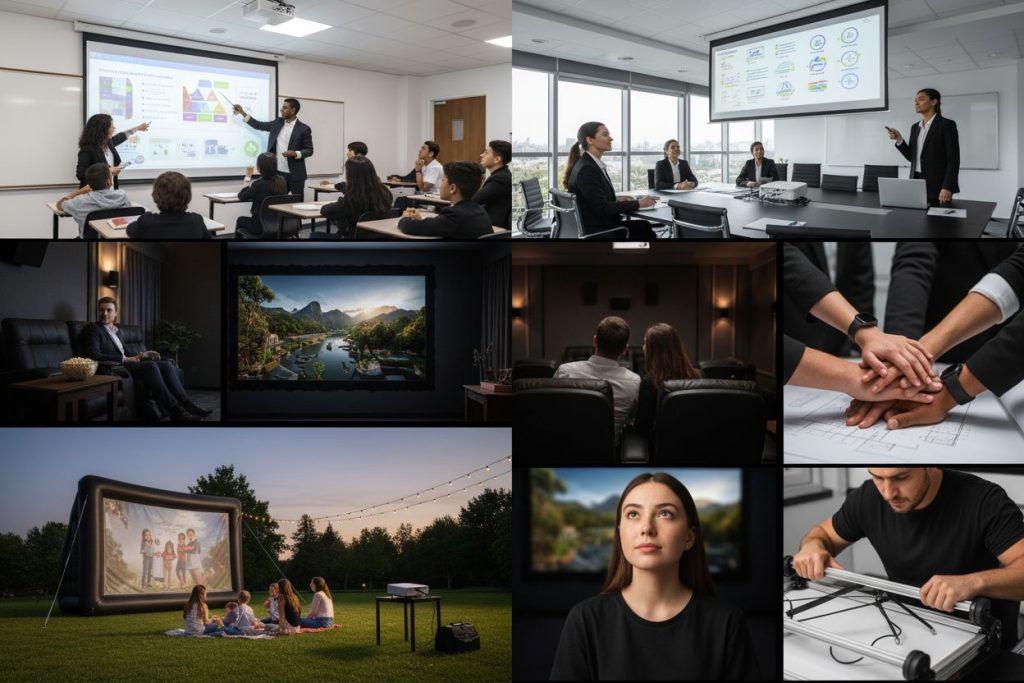
Projection screens come in all shapes and sizes, from portable setups to ultra-modern LED displays. Most people think the main difference is just price or portability, but that barely scratches the surface. With features like built-in tensioning systems, multi-touch detection, and even artificial intelligence now powering the latest screens, choosing the right one can shape the entire viewing or learning experience in ways you never expected.
Table of Contents
- Manual Projection Screens: A Practical Choice
- Electric Projection Screens: Convenience at Its Best
- Fixed Frame Projection Screens: For A Cinema-Like Experience
- Folding And Portable Projection Screens: On-The-Go Solutions
- LED Projection Screens: Embracing Modern Technology
- Outdoor Projection Screens: Enjoy Movies Under The Stars
- Interactive Projection Screens: Engaging Educators And Students
Quick Summary
| Takeaway | Explanation |
|---|---|
| Choose manual screens for affordability | Manual projection screens are budget-friendly and easy to install, ideal for home theaters and classrooms. |
| Select electric screens for convenience | Electric screens offer motorized operation and smart integration, perfect for professional settings. |
| Opt for fixed frame screens for quality | Fixed frame screens maintain tension, providing superior image clarity, making them ideal for home theaters. |
| Pick portable screens for flexibility | Folding screens are lightweight and easy to transport, suitable for presentations in various locations. |
| Consider outdoor screens for enhanced viewing | Outdoor screens withstand environmental challenges, providing excellent performance for backyard movie nights. |
1: Manual Projection Screens: A Practical Choice
Manual projection screens represent a straightforward and budget friendly solution for various display needs. These screens offer simplicity and affordability that make them an attractive option for home theaters, classrooms, and small business environments. Unlike more complex automated systems, manual screens provide direct control through a pull-down mechanism that allows users to easily extend or retract the screen as needed.
The fundamental design of manual projection screens involves a lightweight roller mechanism mounted on a wall or ceiling. Users can smoothly pull down the screen surface manually when required and retract it back into its housing when not in use. This mechanism ensures compact storage and clean aesthetic integration into different spaces. Typically constructed from durable materials like white matte fabric or specialized projection materials, these screens are engineered to provide optimal image reflection and minimal light dispersion.
Key advantages of manual projection screens include:
- Cost effectiveness compared to motorized alternatives
- Simple installation process
- Minimal maintenance requirements
- Versatile mounting options
- Lightweight and portable design
Professional projector screen experts recommend considering factors like screen size, aspect ratio, and room lighting when selecting a manual projection screen. The right screen can significantly enhance visual clarity and viewing experience across different settings.
Choosing a manual projection screen involves evaluating specific requirements such as available wall or ceiling space, intended usage environment, and budget constraints. Some screens offer additional features like black backing to improve contrast or tensioned surfaces to eliminate wrinkles, which can further enhance image quality.
Explore our comprehensive guide on projector screen sizes to understand how to perfectly match your screen dimensions with your projection needs and room layout.
2: Electric Projection Screens: Convenience at Its Best
Electric projection screens represent the pinnacle of modern display technology, offering seamless and sophisticated visual solutions for professional and home environments. These advanced screens leverage motorized mechanisms that enable smooth and silent screen deployment with just a simple touch of a button or remote control. The convenience and technological sophistication of electric projection screens make them an exceptional choice for users seeking a blend of functionality and elegance.
Unlike manual screens, electric projection screens are powered by integrated electric motors that control screen movement. This technological advancement eliminates the need for manual pulling and provides a more refined and professional screen deployment experience. The motors are typically hidden within an elegant aluminum or metal casing, which can be mounted on walls or ceilings, ensuring a sleek and unobtrusive appearance.
Key features of electric projection screens include:
- Quiet and smooth motor operation
- Remote control functionality
- Programmable stop positions
- Various mounting options
- Integration with smart home systems
Projection technology experts recommend considering factors such as room size, viewing angle, and electrical infrastructure when selecting an electric projection screen. The ability to preset screen positions and integrate with automation systems makes these screens particularly appealing for conference rooms, home theaters, and educational environments.
Advanced electric screens often come with additional sophisticated features like built in cable management, tension mechanisms to eliminate wrinkles, and optional black masking borders that enhance contrast and image quality. Some models even offer memory settings that allow users to save preferred screen positions for different presentations or viewing scenarios.
Explore our comprehensive guide on projection screen types to understand how electric screens can transform your visual presentation experience and integrate seamlessly into various professional and personal settings.
3: Fixed Frame Projection Screens: For a Cinema-like Experience
Fixed frame projection screens represent the gold standard for home theater and professional presentation environments, delivering an immersive visual experience that mimics professional cinema settings. These screens are permanently mounted and stretched taut across a rigid frame, ensuring a perfectly flat and wrinkle-free surface that guarantees optimal image quality and precision.
Unlike retractable screens, fixed frame projection screens provide a dedicated and permanent display solution that eliminates potential distortions or inconsistencies during projection. The robust aluminum frame is designed to maintain screen tension, creating a smooth surface that maximizes image clarity and color reproduction. This design makes them particularly appealing for dedicated home theaters, conference rooms, and professional multimedia spaces where visual perfection is paramount.
Key characteristics of fixed frame projection screens include:
- Consistent and uniform screen surface
- Superior image sharpness and clarity
- Permanent installation
- Enhanced contrast performance
- Multiple fabric options
Audio-Visual experts recommend considering screen gain, viewing angle, and ambient light conditions when selecting a fixed frame projection screen. The screen's material composition plays a crucial role in determining overall visual performance, with specialized materials designed to optimize different projection environments.
Professional-grade fixed frame screens often feature black velvet borders that help absorb peripheral light and create a more focused viewing experience. These borders not only enhance visual aesthetics but also improve perceived image contrast by creating a clean, defined projection area.
Explore our comprehensive home theater screen guide to understand how fixed frame screens can transform your visual entertainment setup and deliver a truly cinematic experience at home.
4: Folding and Portable Projection Screens: On-the-Go Solutions
Folding and portable projection screens represent the ultimate flexibility for professionals, educators, and presenters who require dynamic visual display solutions across multiple environments. These innovative screens are engineered to provide maximum mobility without compromising image quality, making them an essential tool for those who frequently transition between different presentation spaces.
Unlike traditional fixed screens, folding projection screens are designed with lightweight materials and collapsible frames that enable quick setup and compact storage. The ingenious engineering allows users to transform these screens from compact travel configurations to full-sized projection surfaces within minutes. This versatility makes them particularly valuable for business travelers, sales professionals, educational institutions, and event management teams.
Key advantages of folding and portable projection screens include:
- Lightweight and compact design
- Quick and easy setup process
- Minimal storage requirements
- Durability for frequent transportation
- Compatible with multiple projection technologies
Projection technology experts suggest evaluating factors such as screen size, weight, and material durability when selecting a portable projection screen. The best portable screens balance portability with robust performance, ensuring consistent image quality across diverse environments.
Advanced portable screens now incorporate innovative features like built-in stands, tension mechanisms, and multiple projection surface options. Some models offer dual-sided projection capabilities, allowing presenters to switch between front and rear projection techniques seamlessly. These screens are particularly useful in scenarios requiring versatile presentation setups, such as trade shows, conferences, and mobile training sessions.
Explore our selection of portable projection screens to discover solutions that can adapt to your dynamic presentation and entertainment needs, providing professional-grade visual experiences wherever you go.
5: LED Projection Screens: Embracing Modern Technology
LED projection screens represent a cutting-edge technological advancement in visual display solutions, seamlessly blending high-resolution imaging with energy-efficient illumination technologies. These innovative screens utilize advanced LED technologies to create vibrant, dynamic display surfaces that transform traditional projection experiences. Unlike conventional projection screens, LED screens incorporate integrated light-emitting diodes directly into the screen's structure, enabling unprecedented color accuracy, brightness, and visual performance.
The fundamental innovation of LED projection screens lies in their ability to generate illumination and display content simultaneously. This unique characteristic allows for superior image quality, reduced power consumption, and enhanced durability compared to traditional projection methods. Modern LED screens can adapt to various lighting conditions, maintaining remarkable color consistency and contrast levels across different environments.
Key technological features of LED projection screens include:
- Direct LED integration
- High color gamut performance
- Energy efficient operation
- Minimal heat generation
- Enhanced color reproduction
Display technology researchers emphasize that LED projection screens offer significant advantages in complex visual environments, particularly in spaces with challenging ambient lighting conditions. The technology enables seamless transitions between different content types, making them ideal for multimedia presentations, digital signage, and immersive entertainment experiences.
Advanced LED projection screens now incorporate intelligent calibration systems that automatically adjust color temperature, brightness, and contrast based on surrounding environmental conditions. These smart features ensure optimal visual performance without requiring manual intervention, representing a significant leap forward in display technology.
Learn more about the latest projection technologies and discover how LED projection screens are revolutionizing visual communication across various professional and personal domains.
6: Outdoor Projection Screens: Enjoy Movies Under the Stars
Outdoor projection screens transform ordinary backyard spaces into extraordinary entertainment venues, offering movie enthusiasts and social gatherings a unique cinematic experience under the open sky. These specialized screens are engineered to withstand environmental challenges while delivering exceptional visual performance in outdoor settings, making them a perfect solution for home entertainment, community events, and recreational spaces.
Unlike traditional indoor screens, outdoor projection screens are constructed with robust materials designed to resist wind, moisture, and temperature fluctuations. The specialized screen surfaces are typically made from heavyweight, weather-resistant fabrics that maintain image quality while providing durability against outdoor elements. These screens can be permanent installations or portable setups, offering flexibility for various outdoor entertainment scenarios.
Key considerations for outdoor projection screens include:
- UV and weather resistance
- High gain reflective surfaces
- Quick assembly mechanisms
- Compact storage options
- Compatibility with different projector types
Outdoor entertainment experts recommend carefully evaluating factors such as ambient light conditions, screen size, and projection distance when selecting an outdoor screen. The right screen can dramatically enhance the viewing experience, transforming a simple backyard into a professional outdoor cinema environment.
Advanced outdoor projection screens now incorporate innovative features like built-in frame tensioning systems and quick-deploy mechanisms, allowing users to set up professional-grade screening areas within minutes. Some models offer additional accessories like carrying cases, ground stakes for stability, and protective covers to extend the screen's lifespan.
Explore our comprehensive guide to outdoor projector screens and discover how you can create unforgettable entertainment experiences in your outdoor spaces, bringing the magic of cinema directly to your backyard.
7: Interactive Projection Screens: Engaging Educators and Students
Interactive projection screens represent a revolutionary educational technology that transforms traditional learning environments into dynamic, engaging, and participatory spaces. These advanced screens combine cutting-edge touch-sensitive technologies with projection capabilities, enabling direct interaction between users and displayed content, making them an invaluable tool for modern educational and professional settings.
Unlike conventional projection screens, interactive screens utilize sophisticated sensor technologies that detect touch, gesture, and movement, allowing users to manipulate digital content in real-time. These screens bridge the gap between digital information and physical interaction, creating immersive learning experiences that enhance comprehension, collaboration, and student engagement. The technology supports multiple touch points, enabling simultaneous interactions from multiple users.
Key features of interactive projection screens include:
- Multi-touch capabilities
- Real-time content manipulation
- Seamless software integration
- Intuitive user interfaces
- Cross-platform compatibility
Educational technology researchers emphasize that interactive projection screens significantly improve knowledge retention by transforming passive learning into active, participatory experiences. The screens support various educational methodologies, from collaborative group work to individual skill development, making them versatile tools across different learning contexts.
Advanced interactive projection screens now incorporate artificial intelligence and machine learning algorithms that can adapt to individual user interactions, providing personalized learning experiences. These intelligent systems can track user engagement, provide real-time feedback, and generate comprehensive performance analytics for educators.
Below is a comprehensive table summarizing the seven main types of projection screens discussed in the article, their key features, benefits, and typical use cases.
| Projection Screen Type | Key Features | Benefits | Common Uses |
|---|---|---|---|
| Manual Projection Screens | Pull-down mechanism, lightweight, easy installation | Affordable, low maintenance, flexible mounting | Home theaters, classrooms |
| Electric Projection Screens | Motorized, remote control, smart integration | Convenient, sleek, programmable positions | Professional settings, smart homes |
| Fixed Frame Projection Screens | Permanently mounted, taut surface, velvet borders | Superior image quality, cinema-like experience | Dedicated home theaters |
| Folding & Portable Screens | Collapsible frame, lightweight, quick setup | Portable, easy storage, versatile presentation | Business, education, events |
| LED Projection Screens | Direct LED integration, intelligent calibration | High resolution, energy-efficient, vibrant colors | Multimedia, signage, modern venues |
| Outdoor Projection Screens | Weatherproof materials, UV resistance, fast assembly | Durable, high performance outdoors, easy setup | Backyard movies, events |
| Interactive Projection Screens | Multi-touch, AI/ML integration, real-time interaction | Engaging, collaborative, boosts learning outcomes | Classrooms, training, meetings |
Explore our comprehensive guide to interactive projection technologies and discover how these innovative screens are revolutionizing educational and professional communication, creating more interactive, engaging, and effective learning environments.
Find Your Perfect Projection Screen with ProjectorDisplay.com
Choosing the right projection screen can feel overwhelming. Every space and every goal is different, which is why this article explored seven types of projection screens, each designed to solve specific challenges whether you want crisp visuals for your home theater, an easy-to-move portable solution, or an interactive surface for the classroom. But knowing your options is only half the journey. The real challenge is finding a high-quality screen that fits your exact needs and delivers the clear, flawless display you expect.
Ready to upgrade your viewing or teaching experience and make a confident choice? Visit our Projector Screen selection for the latest options, including fixed frame, portable, electric, and more. Explore how ProjectorDisplay.com can help you bring your vision to life whether you need a screen for professional, educational, or home use. Don't miss out on featured deals and expert guidance—explore now and secure the right screen while stocks last.
Frequently Asked Questions
What are the main differences between manual and electric projection screens?
Manual projection screens require physical interaction to pull down and retract, while electric screens use motorized mechanisms for operation, providing convenience and sleek design.
How do I choose the right size for my projection screen?
To determine the right size, consider the room dimensions, viewing distance, and projector specifications. Using a projector screen size guide can help match the screen dimensions to your setup.
What are the benefits of using a fixed frame projection screen?
Fixed frame screens provide a permanently tensioned surface that ensures optimal image quality, minimal distortion, and superior clarity, making them ideal for dedicated home theater or professional environments.
Can outdoor projection screens be used for indoor setups?
Yes, while outdoor projection screens are designed for durability against weather conditions, many can also be used indoors. Just ensure that the screen material fits your indoor viewing environment's needs.
Recommended
- 7 Best Projector Screens for Home Theater Enthusiasts – Projector Display
- Understanding Projector Screen Materials for Home and Business – Projector Display
- Best Projector and Screen for Home Theater in Malaysia 2025 – Projector Display
- Projector Screen Size Guide 2025: Perfect Fit for Malaysian Needs – Projector Display