
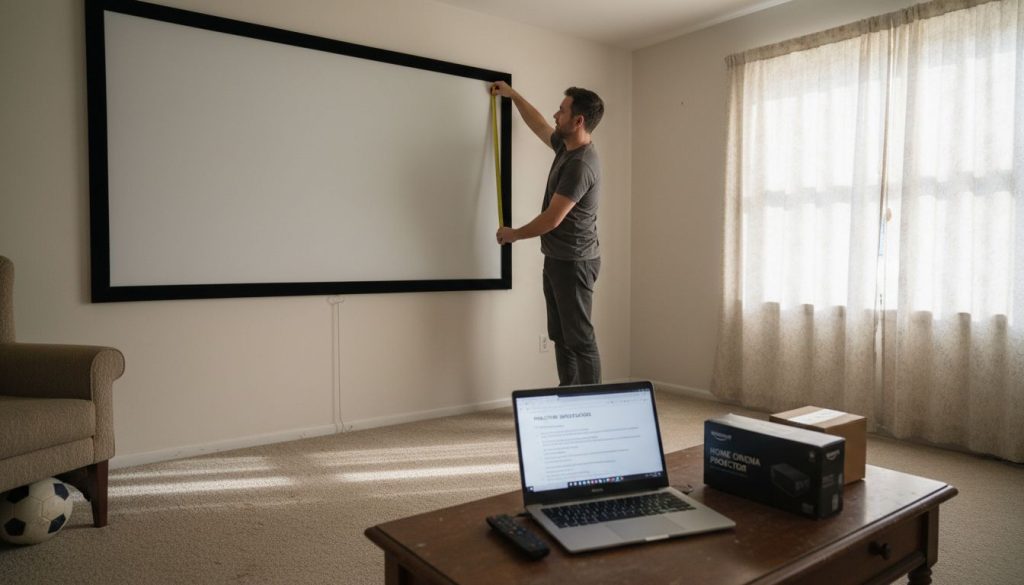
Over 65 percent of American households now own a projector, yet many struggle with disappointing image quality because of the wrong screen choice. Understanding the major differences between fixed frame, portable, and specialty screens matters far more than most people think. This guide cuts through confusion and highlights the essential factors American buyers need to know to get the best viewing experience possible.
Table of Contents
- Understand Screen Types And Your Needs
- Compare Fixed Frame Vs. Portable Screens
- Consider Screen Size And Viewing Distance
- Evaluate Screen Materials For Image Quality
- Check Compatibility With Your Projector
- Look For Easy Installation Features
- Factor In Warranty And Support Options
Quick Summary
| Takeaway | Explanation |
|---|---|
| 1. Choose the right screen type | Assess your environment and needs to select the most suitable projector screen type for optimal viewing experience. |
| 2. Match screen with projector specifications | Ensure compatibility in aspect ratio and resolution between your projector and the screen to prevent image distortion. |
| 3. Consider screen size and viewing distance | Understand the relationship between screen size and viewer distance to enhance visual clarity and comfort. |
| 4. Evaluate screen materials for quality | Select screen materials based on lighting conditions and projection needs to maximize image performance. |
| 5. Check warranty and support options | Review warranty details and customer support to safeguard your investment and ensure long-term satisfaction. |
1. Understand Screen Types and Your Needs
Selecting the right projector screen is more than just picking any white surface. Your screen choice dramatically impacts image quality, viewing experience, and overall visual performance.
Projector screens come in multiple varieties, each designed for specific environments and viewing requirements. Different types of projector screens offer unique characteristics that can significantly enhance or diminish your visual presentation.
Screen Types to Consider:
Fixed Frame Screens:
- Ideal for dedicated home theaters and permanent installations
- Provides a taut, perfectly flat surface for maximum image clarity
- Best for rooms with controlled lighting conditions
Portable Screens:
- Perfect for mobile professionals and educators
- Lightweight and easy to set up in multiple locations
- Great for presentations, classrooms, and temporary setups
Manual Pull Down Screens:
- Budget friendly option
- Simple mechanism for quick deployment
- Suitable for spaces with limited wall mounting options
Electric Screens:
- Motorized screens that descend with a remote control
- Sleek and modern appearance
- Excellent for professional conference rooms and high end home theaters
When choosing your screen, evaluate your specific needs. Consider factors like room size, ambient light, projection distance, and intended use. A screen that works perfectly in a bright conference room might perform poorly in a dark home theater.
Pro Tip: Always match your screen type to your environment. A mismatch can result in poor image quality, reduced brightness, and an unsatisfactory viewing experience.
Remember that understanding projection screen characteristics helps you make an informed decision that maximizes your visual investment.
2. Compare Fixed Frame vs. Portable Screens
Choosing between fixed frame and portable projector screens depends on your specific viewing environment and usage requirements. Different projector screen types offer unique advantages that can dramatically impact your visual experience.
Fixed Frame Screens Pros:
- Provides superior image stability
- Delivers perfectly flat projection surface
- Ideal for permanent home theater setups
- Offers superior picture quality
- Recommended for dedicated viewing rooms
Fixed Frame Screen Considerations:
- Requires permanent wall mounting
- Less flexible for changing environments
- More expensive than portable options
- Challenging to move or relocate
Portable Screens Pros:
- Extremely lightweight and compact
- Quick and easy setup
- Perfect for professionals who travel
- Affordable alternative
- Versatile for multiple locations
Portable Screen Considerations:
- May have slight wrinkles affecting image quality
- Less rigid projection surface
- Limited screen size range
- Potential stability issues during presentations
Decision Making Factors:
- Room configuration
- Budget constraints
- Frequency of screen relocation
- Desired image quality
- Intended usage environment
Select a screen that matches your specific needs. A home theater enthusiast might prioritize image quality with a fixed frame screen, while a traveling business professional would benefit more from a portable option.
Pro Tip: Always test the screen in your intended environment before making a final purchase. Image quality, stability, and ease of use should be your primary considerations.
3. Consider Screen Size and Viewing Distance
Choosing the right projector screen involves more than aesthetic preferences. Understanding the relationship between screen size and viewing distance determines your ultimate visual experience.
Screen Size Calculation Guidelines:
- Measure available room space
- Consider seating arrangement
- Evaluate projector throw distance
- Account for audience viewing angle
Viewing Distance Recommendations:
- Home Theater: 1.5 times the screen width
- Business Presentations: 2 times the screen width
- Educational Settings: 1.2 times the screen width
Screen Size Factors:
- Room dimensions
- Ceiling height
- Projector lumens output
- Wall or mounting surface availability
Practical Measurement Strategy:
- Measure room length and width
- Determine optimal seating positions
- Calculate maximum possible screen dimensions
- Select screen that fits viewing parameters
Projector screen size selection requires careful consideration of multiple variables. A screen too large creates visual strain, while one too small reduces image clarity and immersion.
Pro Tip: Always leave 10 15% extra space around your projected image to prevent visual cutoff and ensure comfortable viewing experience. Measure twice. Purchase once.
4. Evaluate Screen Materials for Image Quality
Screen materials are the unsung heroes of projection quality. Understanding projector screen materials can dramatically transform your visual experience.
Screen Material Categories:
White Matte Screens:
- Excellent for rooms with controlled lighting
- Provides wide viewing angles
- Uniform light distribution
- Most affordable option
- Ideal for home theaters and classrooms
High Contrast Gray Screens:
- Superior performance in ambient light
- Enhances black levels and color depth
- Reduces glare and reflection
- Recommended for bright rooms
- Slightly more expensive than white screens
Specialized Acoustic Screens:
- Integrated speakers behind perforated surface
- Perfect for home theaters
- Allows sound to pass through screen
- Maintains audio visual synchronization
- Premium option for serious enthusiasts
Reflective Gain Screens:
- Amplifies projector brightness
- Increases image luminosity
- Best for low lumen projectors
- Works well in partially lit environments
- Narrows viewing angle
Screen Material Selection Factors:
- Room lighting conditions
- Projector brightness
- Viewing distance
- Budget constraints
- Intended usage environment
Pro Tip: Always test screen materials under your specific lighting conditions. What works perfectly in a showroom might perform differently in your actual space.
5. Check Compatibility with Your Projector
Not all projector screens are created equal. Ensuring your screen matches your projector's specifications prevents frustrating visual performance issues.
Compatibility Checklist:
Aspect Ratio Matching:
- 16:9 for widescreen projectors
- 4:3 for traditional display formats
- Check projector native resolution
- Align screen format precisely
Resolution Considerations:
- Full HD screens for 1080p projectors
- 4K screens for ultra high definition projectors
- Matching resolution prevents image distortion
- Ensures maximum visual clarity
Keystone Correction Requirements:
- Screen material affects correction performance
- Matte white screens work best
- Gray screens might limit correction range
- Consider projector mounting angle
Aspect ratio alignment impacts display clarity dramatically. Mismatched ratios create stretched or compressed images.
Technical Compatibility Factors:
- Projector lumens output
- Throw distance
- Mounting height
- Room lighting conditions
- Screen gain requirements
Pro Tip: Always verify manufacturer specifications. A screen that seems perfect might compromise your projector's performance if key technical parameters do not align.
6. Look for Easy Installation Features
Installing a projector screen should simplify your visual setup, not complicate it. Screen installation processes vary significantly and understanding key features can save you hours of frustration.
Installation Feature Categories:
Manual Screens:
- Pull down mechanism
- Lightweight design
- No electrical connections required
- Budget friendly option
- Quick setup in minutes
Electric Screens:
- Remote controlled deployment
- Motorized rolling mechanism
- Wall or ceiling mounting options
- Perfect for professional environments
- Sleek modern appearance
Mounting Considerations:
- Wall mounting brackets
- Ceiling attachment points
- Quick release mechanisms
- Adjustable mounting angles
- Integrated level indicators
Quick Installation Checklist:
- Measure mounting space precisely
- Check weight load capacity
- Verify electrical requirements
- Confirm mounting surface compatibility
- Test screen movement before final installation
Critical Installation Features:
- Tool free setup
- Clear instruction manual
- Minimal mounting hardware
- Adaptable to multiple environments
- Lightweight construction
Pro Tip: Always keep installation instructions. Even simple screens can become complex without proper guidance. Patience and careful reading prevent costly mistakes.
7. Factor in Warranty and Support Options
A projector screen is an investment that extends far beyond its initial purchase price. Understanding warranty coverage protects your financial commitment and ensures long term satisfaction.
Warranty Coverage Essentials:
Manufacturer Warranty Tiers:
- Standard 1 year warranty
- Extended 2 3 year protection plans
- Comprehensive parts and labor coverage
- Replacement versus repair options
Support Options to Evaluate:
- Technical support availability
- Response time for service requests
- Online troubleshooting resources
- Telephone support channels
- Local repair center accessibility
Warranty Validation Checklist:
- Register product immediately
- Retain original purchase documentation
- Understand specific coverage limitations
- Check international support capabilities
- Review return merchandise authorization process
Red Flags in Warranty Terms:
- Vague service descriptions
- Complicated claim procedures
- Limited geographical support
- Excessive documentation requirements
- Unclear replacement criteria
Additional Protection Considerations:
- Third party extended warranty options
- Credit card purchase protection
- Accidental damage coverage
- Manufacturer reputation for customer service
Pro Tip: Read warranty details carefully. A seemingly affordable screen with minimal support can become expensive if technical issues arise. Prioritize manufacturers demonstrating commitment to customer satisfaction.
Below is a comprehensive table summarizing the different projector screen types, considerations, and recommendations discussed throughout the article.
| Type/Consideration | Features & Characteristics | Recommendations |
|---|---|---|
| Fixed Frame Screens | Provides superior image stability and flat surface. Ideal for dedicated home theaters. | Best for permanent setups in controlled lighting. |
| Portable Screens | Lightweight, easy to set up. Ideal for mobile professionals. | Suitable for multiple locations and travel. |
| Manual Pull Down Screens | Budget-friendly with simple mechanisms. | Good for limited wall mounting spaces. |
| Electric Screens | Motorized with remote control. Offers modern appearance. | Excellent for high-end home theaters and conference rooms. |
| Screen Size & Distance | Dependent on room space and projector distance. | Match screen size to room and seating position. |
| Screen Materials | Includes White Matte, High Contrast Gray, Reflective Gain. | Choose based on room lighting and viewing environment. |
| Projector Compatibility | Aspect ratio and resolution matching are crucial. | Align screen specifications with projector for best performance. |
| Installation Features | Manual screens are easy to set up, electric screens offer sleek deployment. | Verify mounting requirements and ease of setup. |
| Warranty & Support | Manufacturer warranties and support options vary. | Prioritize comprehensive coverage and responsive support. |
Find the Perfect Projector Screen for Your Space Today
Choosing the right projector screen can be overwhelming with so many options and technical details to consider. This article highlights common challenges like matching screen types to your environment, picking the ideal size for your room, and ensuring compatibility with your projector's specifications. Whether you want a fixed frame or portable screen, or need to consider screen material and installation ease, making the right choice is crucial for stunning image quality and an immersive viewing experience.
Explore our wide selection of projector screens designed to fit every need and budget.
Ready to upgrade your viewing experience with a screen tailored to your projector and room? Visit ProjectorDisplay.com now and discover expert-curated options with fast shipping across Malaysia. Don't wait—find your perfect match today and enjoy crystal-clear visuals tomorrow.
Frequently Asked Questions
What factors should I consider when choosing a projector screen?
Consider your specific needs such as screen type, size, and viewing distance. Evaluate your room environment, including lighting conditions, to ensure the screen will provide the best visual quality for your needs.
How do I determine the right screen size for my projector?
Calculate your screen size by measuring the room and considering the seating arrangement. To achieve optimal viewing, position your seating 1.5 to 2 times the screen width away, depending on whether it's for home theater or business presentations.
What are the differences between fixed frame and portable projector screens?
Fixed frame screens provide superior image stability and are ideal for permanent setups, while portable screens are lightweight and easy to move, making them suitable for professionals on the go. Assess your usage frequency to decide the best option for your needs.
How can I ensure my projector screen material enhances image quality?
Select screen materials based on your room's lighting conditions. For bright rooms, choose high contrast gray screens to improve black levels, while matte white screens are great for controlled lighting environments.
Why is compatibility with my projector important when selecting a screen?
Ensuring compatibility prevents issues like image distortion and maintains visual clarity. Check that the screen's aspect ratio and resolution match your projector's to optimize performance.
What installation features should I look for in a projector screen?
Look for easy installation features such as lightweight designs and clear manuals. Prioritize screens with quick release mechanisms and minimal mounting hardware to simplify the setup process.