

{
“@type”: “Article”,
“author”: {
“url”: “https://projectordisplay.com”,
“name”: “Projector Display”,
“@type”: “Organization”
},
“@context”: “https://schema.org”,
“headline”: “Best Projector and Screen for Home Theater in Malaysia 2025”,
“publisher”: {
“url”: “https://projectordisplay.com”,
“name”: “Projector Display”,
“@type”: “Organization”
},
“inLanguage”: “en”,
“articleBody”: “Discover the best projector and screen for home theater in Malaysia. Get expert tips on creating an immersive cinema experience for your space in 2025.”,
“description”: “Discover the best projector and screen for home theater in Malaysia. Get expert tips on creating an immersive cinema experience for your space in 2025.”,
“datePublished”: “2025-07-22T07:13:19.099Z”,
“mainEntityOfPage”: “https://projectordisplay.com/best-projector-and-screen-for-home-theater-malaysia-2025”
}
Building a home theater in Malaysia can feel overwhelming with all the new projection tech and screen options out there. Plenty of shoppers are shocked when they learn that rooms with ambient light need at least 2,500 lumens just to get a clear image. And yet, even the brightest projector will disappoint if you choose the wrong screen material or placement. Get ready to see how the smallest details in your setup can completely change your movie nights.
Table of Contents
- How To Choose The Right Projector And Screen
- Top Home Theater Projectors For Malaysian Users
- Best Screens For Crisp And Clear Viewing
- Tips For Setting Up A Perfect Home Theater
Quick Summary
| Takeaway | Explanation |
|---|---|
| Assess room requirements for projectors | Identify room size, light levels, and wall color. These factors influence projector brightness and image quality significantly. |
| Select appropriate screen type for environment | Choose between matte white or ALR screens based on room lighting. This affects brightness and color performance during viewing. |
| Opt for adequate projector resolution | Aim for at least Full HD or 4K for clear, vibrant visuals. Higher resolution enhances viewing experiences, especially with larger screens. |
| Position projector and screen correctly | Ensure the projector is aligned to avoid distortion and maintain optimal viewing distance. Proper placement enhances visual integrity. |
| Incorporate quality audio system | Use a multi-channel surround sound setup for immersive audio. Proper audio enhances overall viewing experience, complementing visual quality. |
How to Choose the Right Projector and Screen
Selecting the perfect projector and screen for your home theater requires careful consideration of multiple technical and environmental factors. Your ultimate goal is creating a stunning visual experience that transforms your living space into a personal cinema.
Understanding Projection Technology and Room Requirements
Before investing in a home theater setup, assess your specific space and viewing needs. Our guide on projector configurations highlights the critical importance of room characteristics. According to Crutchfield's home theater projector guide, rooms with significant ambient light demand projectors featuring at least 2,500 lumens to maintain image clarity and brightness.
Key considerations include room dimensions, wall color, and typical lighting conditions. Dark-colored walls absorb light and reduce unwanted reflections, while lighter walls can create unwanted glare. Measure your room's depth to determine the appropriate projection distance and ensure your chosen projector can accommodate your space.
Screen Selection and Projection Quality
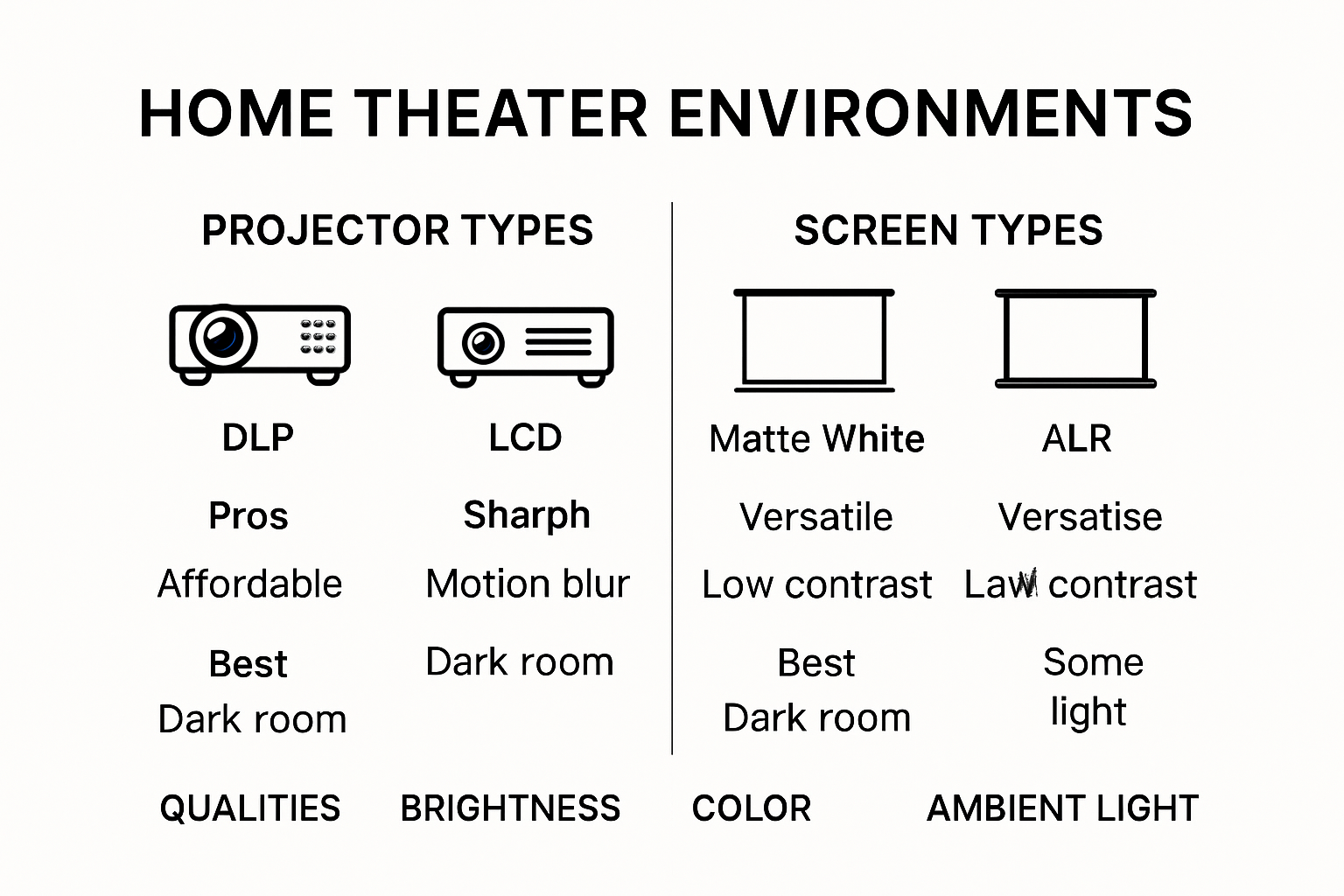
Choosing the right screen is equally crucial as selecting the projector itself. ProjectorCentral's comprehensive guide explains that screen materials significantly impact image quality. Matte white screens work best in dark rooms, providing uniform light reflection, while ambient light rejecting (ALR) screens excel in brighter environments.
Screen gain represents another critical factor. A standard gain of 1.0 reflects light evenly, maintaining consistent brightness across viewing angles. Higher gain screens increase brightness but potentially narrow the optimal viewing area. Consider screens with gains between 1.0 and 1.5 for balanced performance.
Technical Specifications to Evaluate
When comparing projectors, focus on several essential technical specifications. Resolution matters tremendously – aim for at least Full HD (1920×1080) or 4K for superior image quality. Contrast ratio determines the depth and richness of colors, with higher ratios producing more vibrant visuals.
Additionally, ProjectorCentral recommends careful placement, suggesting positioning the projector behind viewers to minimize fan noise and aligning it precisely with the screen's center. This approach helps prevent keystone distortion and ensures optimal image alignment.
Ultra short throw (UST) projectors offer excellent solutions for compact spaces, allowing large screen projections from minimal distances. These innovative devices solve placement challenges while delivering impressive visual experiences.
Remember that investing time in research and understanding your specific requirements will lead to a home theater setup that delivers exceptional entertainment for years to come. Each room presents unique challenges, so prioritize flexibility and adaptability when making your final selection.
To help you quickly compare the key projector types and their benefits for Malaysian home theater setups, here's a comparison table summarizing the main options highlighted in this section:
| Projector Type | Best For | Notable Benefits |
|---|---|---|
| Standard Long Throw | Large or dedicated rooms | High image quality, flexible placement |
| Ultra-Short Throw (UST) | Compact spaces, urban apartments | Large image from close distances, easy setup |
| Portable/Smart Projector | Flexibility, temporary setups | Compact, built-in smart features, suitable for outdoor/professional use |
Top Home Theater Projectors for Malaysian Users
Navigating the home theater projector market in Malaysia requires understanding the latest technological innovations and performance benchmarks. The right projector can transform your living space into an immersive entertainment zone, offering cinema-quality experiences without leaving home.
Premium 4K Home Theater Projectors
For discerning Malaysian users seeking top-tier visual experiences, several standout models emerge in 2025. TechRadar's comprehensive projector guide highlights the Sony Bravia Projector 8 (VPL-XW6100ES) as a premium option. This model leverages Sony's advanced XR processor to deliver exceptional image quality, making it ideal for home theater enthusiasts who demand superior visual performance.
Another remarkable option is the BenQ X3100i, which TechRadar recommends for its impressive 4K resolution and gaming-friendly features. This projector bridges the gap between cinematic experiences and interactive entertainment, appealing to users who want versatility in their home setup.
Innovative Ultra-Short Throw Solutions
Ultra-short throw (UST) projectors represent a game-changing technology for Malaysian homes with limited space. The Formovie Theater Premium stands out as a remarkable example. According to TechRadar's CES 2025 coverage, this projector boasts a triple-laser light engine covering 107% of the BT.2020 color space and delivers 2,200 ISO lumens of brightness. Its Dolby Vision HDR support ensures stunning visual depth and color accuracy.
Our comprehensive projector configuration guide provides additional insights into selecting the perfect UST projector for different room configurations. These projectors are particularly beneficial for Malaysian users living in compact urban apartments, where traditional long-throw projectors might be impractical.
Portable and Smart Projector Options
For users seeking flexibility, portable smart projectors offer compelling alternatives. The XGIMI MoGo 3 Pro and Samsung The Freestyle 2nd Gen emerge as top contenders in 2025. TechRadar's portable projector guide highlights these models for their impressive combination of portability, smart features, and connectivity options.
These projectors are perfect for Malaysian users who value flexibility – whether for home entertainment, outdoor movie nights, or professional presentations. Their compact designs and built-in smart platforms mean you can enjoy high-quality projection without complex setup requirements.
When selecting a home theater projector, consider factors beyond raw specifications. Evaluate your specific space, lighting conditions, and intended use. A projector that performs brilliantly in one environment might underwhelm in another. Malaysian users should prioritize models offering versatility, robust connectivity, and appropriate brightness levels for their unique living spaces.
Best Screens for Crisp and Clear Viewing
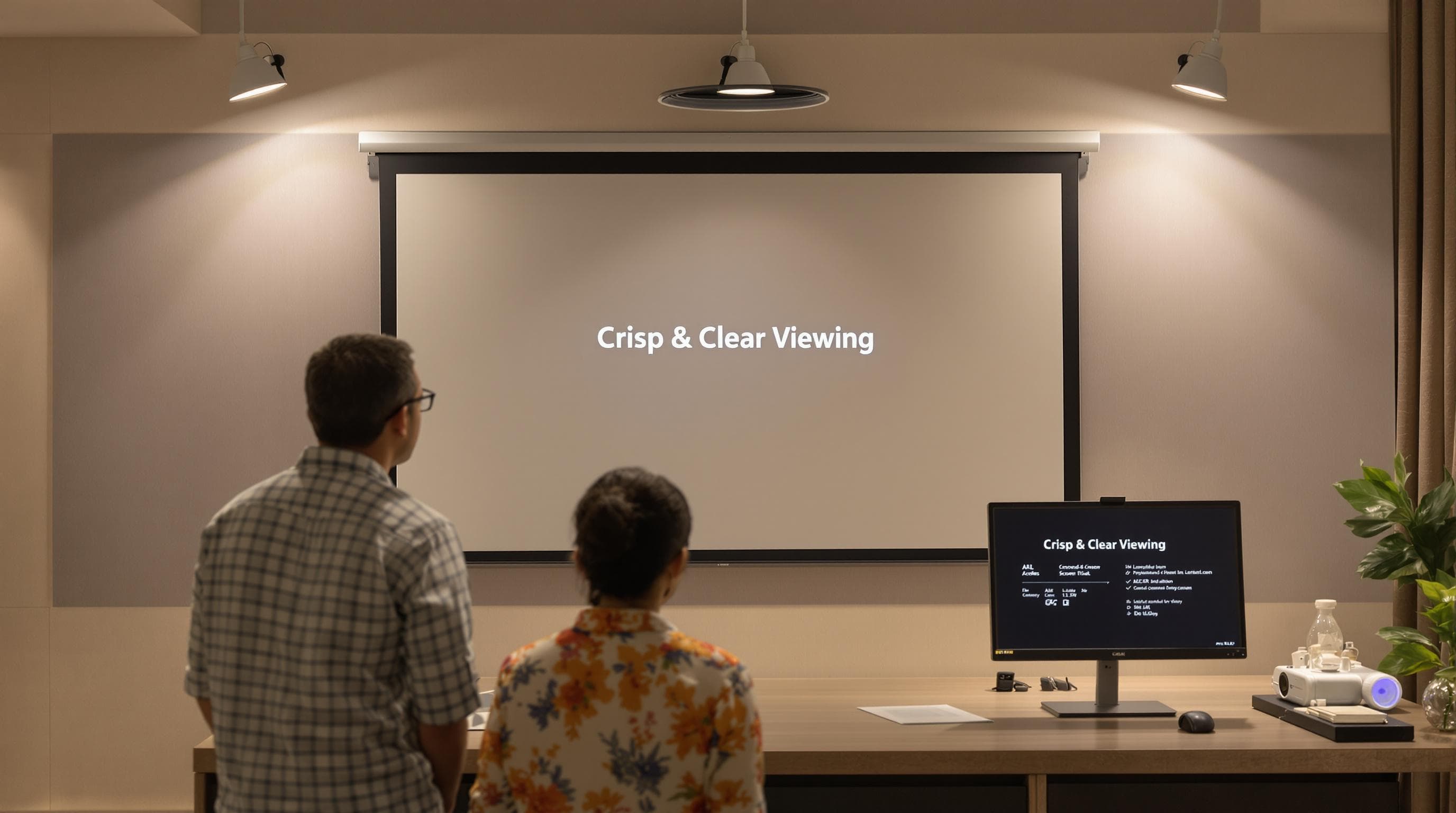
Selecting the right projection screen is crucial for transforming your home theater experience from good to extraordinary. The screen acts as the final canvas where your projector's visual magic comes to life, significantly impacting image quality, color reproduction, and overall viewing pleasure.
Screen Material and Optical Performance
According to the AVS Forum's comprehensive screen materials guide, screen composition plays a pivotal role in image clarity. Different screen materials interact uniquely with projected light, creating distinct visual outcomes.
White Matte Screens remain the most versatile option, offering uniform light reflection across a wide viewing angle. These screens work exceptionally well in controlled lighting environments, providing balanced color reproduction and consistent brightness. They are ideal for dedicated home theater rooms with minimal ambient light.
Acoustic Transparent Screens present an innovative solution for users wanting to position speakers directly behind the screen. These specialized screens feature micro-perforations that allow sound to pass through without compromising visual quality. They create a seamless audio-visual integration, mimicking professional cinema setups.
To help you compare common screen material types and their benefits, here's a summary table:
| Screen Type | Key Benefits | Best Use Case |
|---|---|---|
| White Matte | Uniform reflection, wide viewing angle | Dark or fully light-controlled home theater rooms |
| Acoustic Transparent | Allows speaker placement behind the screen | Cinematic setups needing invisible front speakers |
| Ambient Light Rejecting | Blocks ambient light, improved contrast | Rooms with windows or significant ambient lighting |
Advanced Screen Technologies
Ambient Light Rejecting (ALR) screens represent a technological breakthrough for Malaysian homes with challenging lighting conditions. These screens utilize specialized optical coatings and angular reflection properties to minimize unwanted light interference. Our projector configuration guide highlights how ALR screens can dramatically improve image quality in rooms with windows or variable lighting.
Key characteristics of high-performance ALR screens include:
- Directional Light Rejection: Filtering out horizontal ambient light
- Enhanced Contrast: Maintaining deep blacks and vibrant colors
- Wide Viewing Angles: Preserving image quality across different seating positions
Screen Size and Aspect Ratio Considerations
Choosing the correct screen size involves more than measuring wall space. Consider viewing distance, room dimensions, and typical content consumption. For most home theaters, screens between 100-120 inches provide an immersive experience without overwhelming the space.
Aspect ratio selection depends on your primary content type. 16:9 screens remain standard for most contemporary content, including movies, sports, and streaming services. 2.35:1 screens cater to cinephiles preferring a true cinematic widescreen experience, particularly for epic film productions.
Premium screens often incorporate additional features like:
- Black borders for enhanced perceived contrast
- Tensioned mounting systems ensuring perfectly flat surfaces
- Edge-blending capabilities for complex multi-projector setups
Invest time in understanding your specific viewing environment. A meticulously chosen screen can elevate your home theater from a simple display to a breathtaking visual experience. Remember that screen selection is as critical as projector choice – they work in symbiotic harmony to deliver stunning imagery.
Malaysian home theater enthusiasts should prioritize screens that balance optical performance, room adaptability, and personal aesthetic preferences. Your screen is the window to immersive entertainment.
Tips for Setting Up a Perfect Home Theater
Creating the ultimate home theater experience requires more than just purchasing high-end equipment. It demands strategic planning, precise positioning, and an understanding of acoustic and visual dynamics that transform a simple room into an immersive entertainment sanctuary.
Room Preparation and Acoustic Optimization
The foundation of an exceptional home theater begins with room selection and preparation. Choose a space with minimal external noise and potential for light control. Walls play a crucial role in sound quality and visual performance. Our projector configuration guide recommends using sound-absorbing materials like acoustic panels, heavy curtains, and carpeting to minimize sound reflection and echo.
Color selection matters significantly. Dark or neutral wall colors reduce light reflection and enhance perceived contrast. Consider painting walls in deep grays, dark blues, or matte black to create a cinema-like environment. Avoid glossy or reflective surfaces that might scatter light and compromise image quality.
Projector and Screen Positioning Strategies
Precise equipment placement determines the quality of your home theater experience. The projector should be positioned perpendicular to the screen, maintaining a straight line to prevent keystone distortion. Calculate throw distance carefully – the space between the projector lens and screen impacts image size and clarity.
Optimal viewing distance depends on screen size and resolution. A general rule suggests sitting at a distance approximately 1.5 to 2.5 times the screen's diagonal measurement. For a 120-inch screen, this translates to a viewing distance between 180 and 300 centimeters. This range ensures immersive viewing without eye strain or visual fatigue.
Audio and Connectivity Considerations
Sound quality is equally important as visual performance. A well-designed audio system creates depth and dimension in your home theater. Consider a 5.1 or 7.1 surround sound configuration that includes:
- Center channel speaker: For clear dialogue
- Front left and right speakers: For stereo imaging
- Rear surround speakers: For immersive sound effects
- Subwoofer: For deep bass and low-frequency sounds
Modern home theaters demand sophisticated connectivity. Ensure your setup includes HDMI ports with sufficient bandwidth for 4K and HDR content. Invest in high-quality HDMI cables supporting the latest standards to prevent signal degradation.
Wireless connectivity offers additional flexibility. Many contemporary projectors support screen mirroring, allowing seamless streaming from smartphones, laptops, and tablets. Verify your chosen projector's wireless capabilities and compatibility with your existing devices.
Cable management represents a frequently overlooked aspect of home theater design. Use cable sleeves, cord clips, and strategic routing to maintain a clean, professional appearance. Hidden cables not only improve aesthetics but also prevent potential tripping hazards.
Remember that creating the perfect home theater is an iterative process. Be prepared to experiment with positioning, test different configurations, and fine-tune your setup. Each adjustment brings you closer to a personalized entertainment experience that rivals commercial cinema environments.
Malaysian home theater enthusiasts should adapt these guidelines to their unique living spaces. Consider local climate, room constraints, and personal preferences when implementing these recommendations. The goal is not just technical perfection but creating a space that brings joy and immersion to your multimedia experiences.
Frequently Asked Questions
What is the minimum brightness required for projectors in rooms with ambient light?
To achieve clear images in rooms with significant ambient light, projectors should have at least 2,500 lumens of brightness.
How do I choose the right screen material for my projector?
Select matte white screens for dark rooms with controlled lighting, while ambient light rejecting (ALR) screens are better for brighter environments to improve contrast and color performance.
What resolution should I look for in home theater projectors?
Aim for at least Full HD (1920×1080) or 4K resolution to ensure clear and vibrant visuals, especially for larger screens.
How important is projector and screen positioning in a home theater setup?
Proper positioning of the projector and screen is crucial to avoid distortion and ensure optimal viewing distance, greatly enhancing the overall visual and audio experience.
Upgrade Your Home Cinema With the Perfect Projector and Screen, Right Here
Tired of searching for the right projector and screen combination only to feel overwhelmed by complex technical terms like lumens, ALR screens, and throw distance? Many home theater shoppers in Malaysia struggle with matching their room lighting and layout to the projector they choose. The wrong screen can easily ruin the benefits of even the most advanced projector. At ProjectorDisplay.com, we solve these real-world frustrations by offering a curated selection of home theater projector screens designed for Malaysian homes. Get clarity and confidence when shopping for screens that can handle high lumens and deliver crystal-clear images, no matter your lighting conditions.
Ready to experience movies the way they were meant to be seen? Shop our projector screen collection to find the perfect fit, or visit ProjectorDisplay.com for everything from smart projectors to sound systems and expert support. Give your home theater the upgrade it deserves and make every movie night unforgettable. Shop now for exclusive deals and fast delivery within Malaysia.