

Projector screen materials might seem like just another detail in a home theater or conference room. Here is something most people miss. The right screen can actually make images appear up to twice as bright compared to projecting on a plain white wall. That means your movie night or presentation could look washed out and dull without the right surface, even if you have an expensive projector.
Table of Contents
- What Are Projector Screen Materials?
- Why The Choice Of Material Matters For Projection Quality
- How Different Materials Affect Viewing Experience
- Key Concepts In Projector Screen Material Performance
- Practical Applications Of Various Screen Materials In Different Settings
Quick Summary
| Takeaway | Explanation |
|---|---|
| Screen materials significantly impact image quality | The choice of projector screen material directly affects brightness, contrast, and overall viewing experience. |
| Gain ratings affect brightness in different settings | Higher gain materials increase brightness in ambient light, while lower gain provide color accuracy and uniformity. |
| Material composition is crucial for specific environments | Different screen materials optimize performance based on lighting conditions, such as white or gray for varying ambient light. |
| Optical properties enhance viewing experiences | Advanced screen materials maintain color accuracy and clarity by minimizing light scatter and ensuring even light distribution. |
| Selecting the right screen standardizes professional settings | In corporate and educational settings, appropriate screen materials ensure consistent color presentation and minimize glare distractions. |
What are Projector Screen Materials?
Projector screen materials represent the specialized surfaces designed to optimize image projection and visual performance across various environments. These materials are engineered to enhance contrast, brightness, color reproduction, and overall viewing quality by strategically reflecting or diffusing projected light.
The Science Behind Screen Materials
At their core, projector screen materials are meticulously crafted to interact with projected light in specific ways. Unlike traditional white walls or plain surfaces, these materials have unique optical properties that significantly improve image clarity and viewing experience. Our comprehensive guide on projector screen types explores the intricate details of these specialized surfaces.
The fundamental characteristics that define projector screen materials include:
- Reflectivity: The ability to bounce light back towards the audience
- Gain: Measurement of how much light is reflected compared to a standard white surface
- Color neutrality: Maintaining accurate color reproduction without introducing tints or distortions
Material Composition and Performance
Projector screen materials can be constructed from various substances, each offering unique advantages. White matte fabrics, vinyl, specialized polymers, and even metallic surfaces are commonly used. These materials undergo precise manufacturing processes to ensure uniform texture, minimal light absorption, and optimal light reflection.
White screens remain the most popular, providing balanced performance across different lighting conditions.
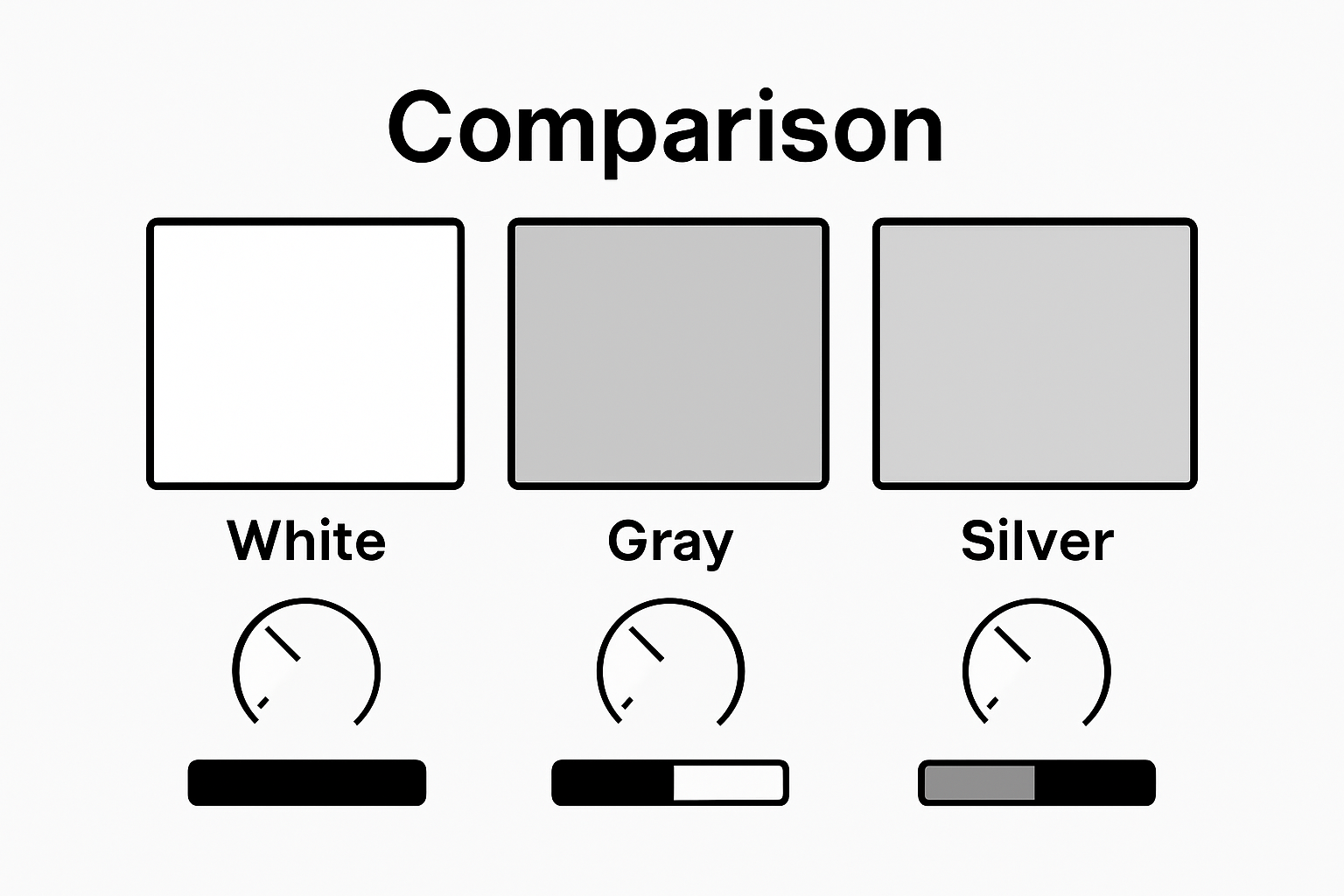 However, specialized screens like gray or silver materials can enhance contrast in rooms with ambient light, making them ideal for spaces where complete darkness is challenging to achieve.
Understanding projector screen materials is crucial for selecting the right surface that matches your specific projection environment, whether it's a home theater, business presentation space, or educational setting.
To help you compare different projector screen materials and their key properties for various environments, the following table summarizes their features and performance strengths.
| Screen Material Type | Typical Environments | Gain Rating | Key Performance Features |
|---|---|---|---|
| White Matte | Home theaters, classrooms | 1.0 | Balanced color accuracy and brightness |
| Gray (High Contrast) | Living rooms with ambient light | 0.8 – 1.1 | Enhanced contrast, absorbs ambient light |
| Silver/Metallic | Conference rooms, bright spaces | 1.5+ | High brightness, excellent color saturation |
| Micro-perforated | Home theater, multimedia setups | 1.0 | Allows sound through, maintains image clarity |
| Vinyl/Special Polymers | Mixed-use, commercial settings | Varies | Durable, easy maintenance, uniform light reflection |
Why the Choice of Material Matters for Projection Quality
Selecting the right projector screen material is not merely an aesthetic decision but a critical factor that directly impacts visual performance, image clarity, and overall viewing experience. The material you choose influences how light is reflected, perceived color accuracy, and the effectiveness of your projection setup.
Impact on Image Brightness and Contrast
The screen material significantly determines how much projected light is effectively returned to the viewer. Different materials have varying gain ratings, which measure light reflection efficiency. A higher gain material can make images appear brighter in rooms with ambient light, while lower gain materials provide more uniform and color-neutral presentations. Check out our comprehensive guide on home theater projection setups to understand these nuances better.
Key considerations for brightness and contrast include:
- Ambient light conditions in the viewing environment
- Projector lumens and light output
- Desired color reproduction and accuracy
- Viewing angle requirements
Material Properties and Viewing Experience
Screen materials are engineered with specific optical properties to address different projection scenarios. White matte screens offer balanced performance and work well in controlled light environments. Gray screens enhance contrast by absorbing ambient light, making them ideal for spaces with some light interference. Silver or specialized metallic screens can provide exceptional brightness and color saturation for professional presentations or high-end home theaters.
The texture and surface treatment of screen materials also play a crucial role. Micro-perforated screens allow sound to pass through, enabling seamless audio integration for home theater and professional multimedia setups. Some advanced materials incorporate special coatings that minimize hot spotting and provide wider viewing angles, ensuring a consistent visual experience for all viewers.
How Different Materials Affect Viewing Experience
Projector screen materials create a transformative layer between digital content and human perception, fundamentally altering how visual information is received and interpreted. The interaction between projection technology and screen surface determines the quality, immersion, and effectiveness of the displayed content across various professional and personal settings.
Color Reproduction and Optical Performance
Different screen materials interact uniquely with projected light, dramatically influencing color accuracy, vibrancy, and overall image quality. Explore our comprehensive screen size selection guide to understand the nuanced relationships between screen materials and projection performance.
Key characteristics that define viewing experience include:
- Spectral reflectivity across different color wavelengths
- Surface texture and light diffusion properties
- Uniformity of light distribution
- Preservation of original color temperature
Environmental Adaptation and Performance
Screen materials are engineered to perform optimally under specific environmental conditions. White screens function excellently in controlled, dim lighting environments, providing balanced color reproduction. Gray screens excel in spaces with moderate ambient light, absorbing unwanted reflections and enhancing perceived contrast. Specialized metallic or silver screens offer exceptional performance in high-brightness settings, such as conference rooms or spaces with significant external illumination.
Advanced screen materials incorporate sophisticated optical coatings that minimize hotspotting, reduce light scatter, and maintain consistent image quality across wider viewing angles. These technological innovations ensure that viewers experience uniform visual clarity regardless of their seating position or surrounding light conditions.
This table outlines key projection screen material properties, defining each characteristic and explaining its effect on the viewing experience.
| Property | Definition | Effect on Viewing Experience |
|---|---|---|
| Gain | Measure of light reflected versus standard white | Determines image brightness |
| Color Neutrality | Ability to display accurate colors without distortion | Maintains true-to-source color reproduction |
| Reflectivity | Percentage of projected light returned to audience | Impacts perceived clarity and brightness |
| Surface Texture | Microscopic surface finish of material | Affects sharpness, potential for hot spotting |
| Ambient Light Rejection | Ability to reduce reflection from room light | Enhances contrast in non-dark environments |

Key Concepts in Projector Screen Material Performance
Projector screen material performance encompasses a complex interplay of optical, physical, and technological characteristics that determine the quality of visual reproduction. Understanding these fundamental concepts helps users make informed decisions about selecting the most appropriate screen for their specific projection needs.
Gain and Light Reflection Dynamics
Gain represents a critical metric in projector screen performance, measuring how effectively a screen reflects light compared to a standard white reference surface. Learn more about projector screen gain principles to understand this nuanced concept. Different gain ratings significantly impact image brightness, color reproduction, and viewing experience across various environmental conditions.
Key performance indicators include:
- Light reflection efficiency
- Color neutrality under different illumination
- Uniformity of light distribution
- Angular reflectivity characteristics
Material Optical Properties and Technical Considerations
Screen materials are engineered with sophisticated optical properties that go beyond simple light reflection. Advanced materials incorporate specialized coatings and treatments designed to enhance image quality, minimize visual artifacts, and provide optimal viewing experiences. These technical considerations include surface micro-structures that manipulate light waves, preventing unwanted scattering and maintaining precise color reproduction.
Professional-grade screen materials utilize complex engineering techniques like microporous surfaces, specialized polymers, and precision-calibrated textures. These innovations ensure that projected images maintain exceptional clarity, contrast, and color accuracy across different projection technologies and environmental conditions.
Practical Applications of Various Screen Materials in Different Settings
Projector screen materials are not universal solutions but specialized tools designed to optimize visual performance across diverse environments. The selection of appropriate screen material directly influences the effectiveness of projection in professional, educational, and entertainment contexts.
Professional Presentation Environments
In corporate settings, screen materials must balance clarity, professional aesthetics, and adaptability to varying lighting conditions. Explore our curated selection of top home theater projector screens to understand how material choices translate across different applications. High-gain white or light gray screens with specialized optical coatings provide crisp, uniform image reproduction in conference rooms, boardrooms, and presentation spaces.
Key considerations for professional environments include:
- Minimal reflection and glare management
- Consistent color accuracy across viewing angles
- Compatibility with various projection technologies
- Durability and maintenance requirements
Educational and Classroom Applications
Educational institutions demand versatile screen materials capable of performing under dynamic lighting conditions and supporting diverse content types. Micro-perforated screens with acoustic transparency enable seamless integration with sound systems, while maintaining excellent visual clarity. Matte white screens with moderate gain ratings provide balanced performance across different classroom configurations, ensuring students can clearly perceive educational content from multiple seating positions.
Advanced screen materials in educational settings incorporate features like ambient light rejection, wide viewing angles, and resistance to wear and tear. These technological innovations ensure consistent, high-quality visual experiences that support interactive and multimedia learning approaches.
Get the Most From Your Projection With the Right Screen Material
Choosing the wrong screen material can leave your images looking washed out or disturbingly inaccurate in color, whether you are setting up a home theater or preparing a critical business presentation. The article above has shown how factors like gain, color neutrality, and light conditions are vital for a clear and vibrant picture. Many users struggle to achieve both brightness and authentic color, especially in mixed lighting environments. Now you can eliminate guesswork and frustration by browsing our dedicated Projector Screen category for professional solutions designed for every setting in Malaysia.
Ready to elevate your viewing experience? Visit ProjectorDisplay.com for a comprehensive selection of projector screens, expert guidance, and deals tailored for homes, businesses, and classrooms. Make the switch to professional-grade materials now and see the difference instantly. Still crafting your dream AV setup? Explore our range of sound systems and top-rated accessories to complete your environment. Shop now and get fast shipping within Peninsular Malaysia.
Frequently Asked Questions
What materials are commonly used for projector screens?
Projector screens can be made from various materials including white matte fabrics, vinyl, specialized polymers, and metallic surfaces. Each offers unique advantages depending on the lighting conditions and desired image qualities.
How does screen material affect image brightness and contrast?
The screen material influences how much light is reflected back to the viewer. Higher gain materials can make images appear brighter in environments with ambient light, while lower gain materials tend to provide more uniform and color-accurate presentations.
What is the importance of color neutrality in projector screen materials?
Color neutrality is crucial as it ensures that the colors projected are not altered or distorted by the screen surface. This characteristic helps maintain accurate color reproduction for a better viewing experience.
How do different screen materials perform in various environments?
Different screen materials are engineered for specific environments. White screens work best in dim lighting, gray screens improve contrast in moderately lit spaces, and metallic screens excel in bright settings, ensuring optimal performance tailored to the conditions.
Recommended
- 7 Best Projector Screens for Home Theater Enthusiasts – Projector Display
- Best Projector and Screen for Home Theater in Malaysia 2025 – Projector Display
- DIY Projector Screen Ideas: Transform Your Space Easily – Projector Display
- Best Home Theater Screen: Top Choices and Buying Guide – Projector Display