

Many Malaysian teachers know the challenge of keeping every student focused and interested during lessons. Academic motivation in Malaysian classrooms is more than a buzzword—it is a powerful driver of classroom engagement and improved performance. Research highlights that intrinsic motivation stands out as a major factor predicting student success and active participation. By understanding what motivates students and leveraging projection technology, educators can create dynamic, interactive spaces that make learning both enjoyable and meaningful.
Table of Contents
- Defining Student Motivation in Malaysian Classrooms
- Popular Strategies for Motivating Students
- How Projection Technology Drives Engagement
- Implementing Projector-Based Activities Effectively
- Common Challenges and How to Overcome Them
Key Takeaways
| Point | Details |
|---|---|
| Intrinsic motivation is crucial | Students perform better when they are internally motivated rather than driven by external rewards. |
| Personalized learning pathways enhance engagement | Tailoring learning experiences to align with individual interests and strengths fosters deeper academic involvement. |
| Technology enhances interactive learning | Utilizing projection technology creates immersive and participatory learning environments that attract student attention. |
| Focus on teacher-student relationships | Building strong rapport and creating supportive classroom settings encourages student participation and academic risk-taking. |
Defining Student Motivation in Malaysian Classrooms
Student motivation represents the complex psychological drivers that compel learners to engage, persist, and excel in academic pursuits. In Malaysian educational contexts, motivation transcends simple reward mechanisms, emerging as a nuanced interplay between internal psychological states and external educational environments. Academic motivation research reveals that students' psychological engagement directly correlates with their learning outcomes and long-term academic success.
The Malaysian educational landscape recognizes motivation as a multidimensional construct encompassing cognitive, emotional, and behavioral components. Students are not passive recipients of knowledge but active participants whose intrinsic desire to learn determines their academic trajectory. Intrinsic motivation particularly stands out as a powerful predictor of student performance, where learners are driven by internal satisfaction rather than external pressures or rewards.
Research specifically examining Malaysian students demonstrates that motivation varies across different academic domains. Motivation dimensions impacting student performance reveal that psychological well-being, personal interests, and perceived relevance of curriculum significantly influence student engagement. Educators must therefore design learning experiences that resonate with students' individual aspirations and create meaningful connections between academic content and real-world applications.
Here's a summary of key dimensions influencing student motivation in Malaysian classrooms:
| Dimension | Key Influence | Notable Impact on Learning |
|---|---|---|
| Cognitive | Perceived relevance | Improved engagement |
| Emotional | Psychological well-being | Academic persistence |
| Behavioral | Personal interests | Increased participation |
| Intrinsic Motivation | Internal satisfaction | Higher academic outcomes |
Pro tip: Create personalized learning pathways that align with students' individual interests and strengths to naturally enhance their intrinsic motivation and academic engagement.
Popular Strategies for Motivating Students
Motivating students requires a sophisticated approach that addresses psychological, emotional, and cognitive dimensions of learning. Strategic motivation techniques highlight the importance of creating learning environments that boost student confidence and perceived value of academic pursuits. Educators must design interventions that transform traditional teaching models into dynamic, engaging experiences that resonate with students' intrinsic interests and future aspirations.
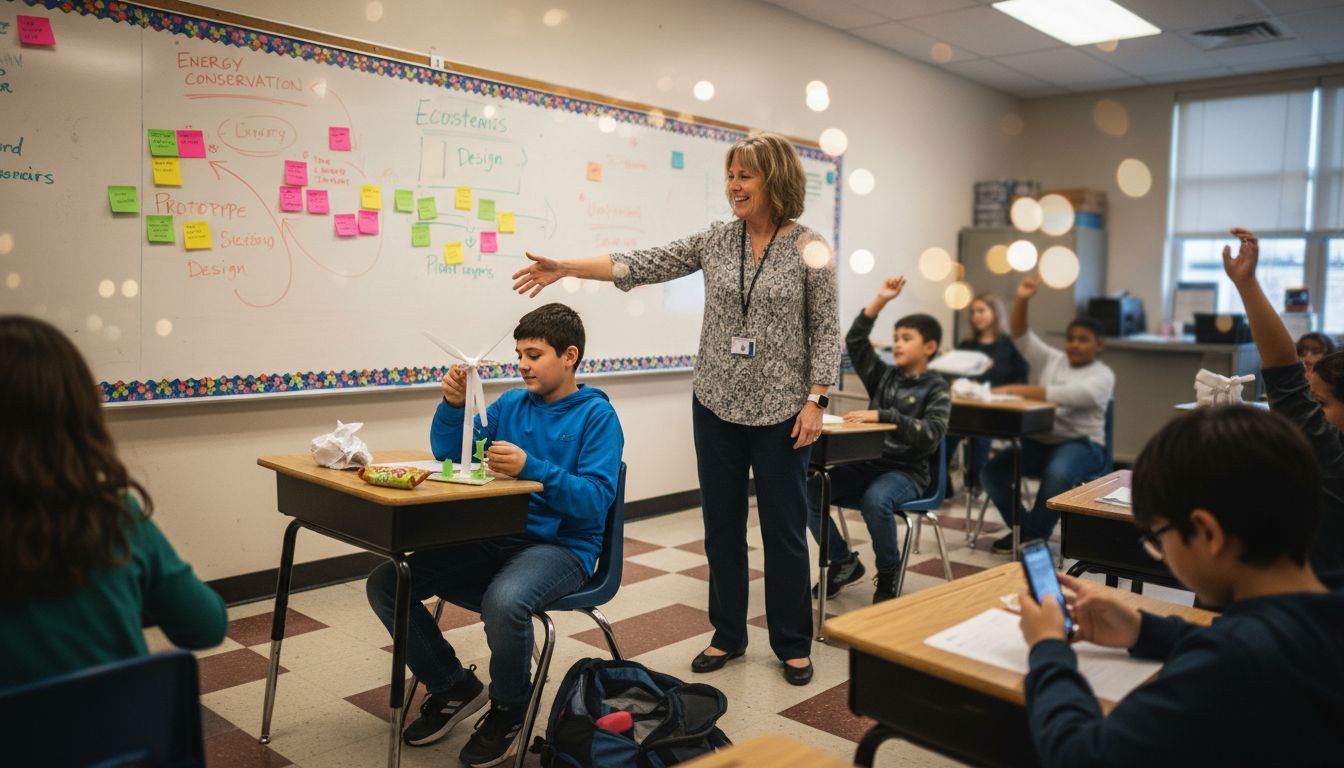
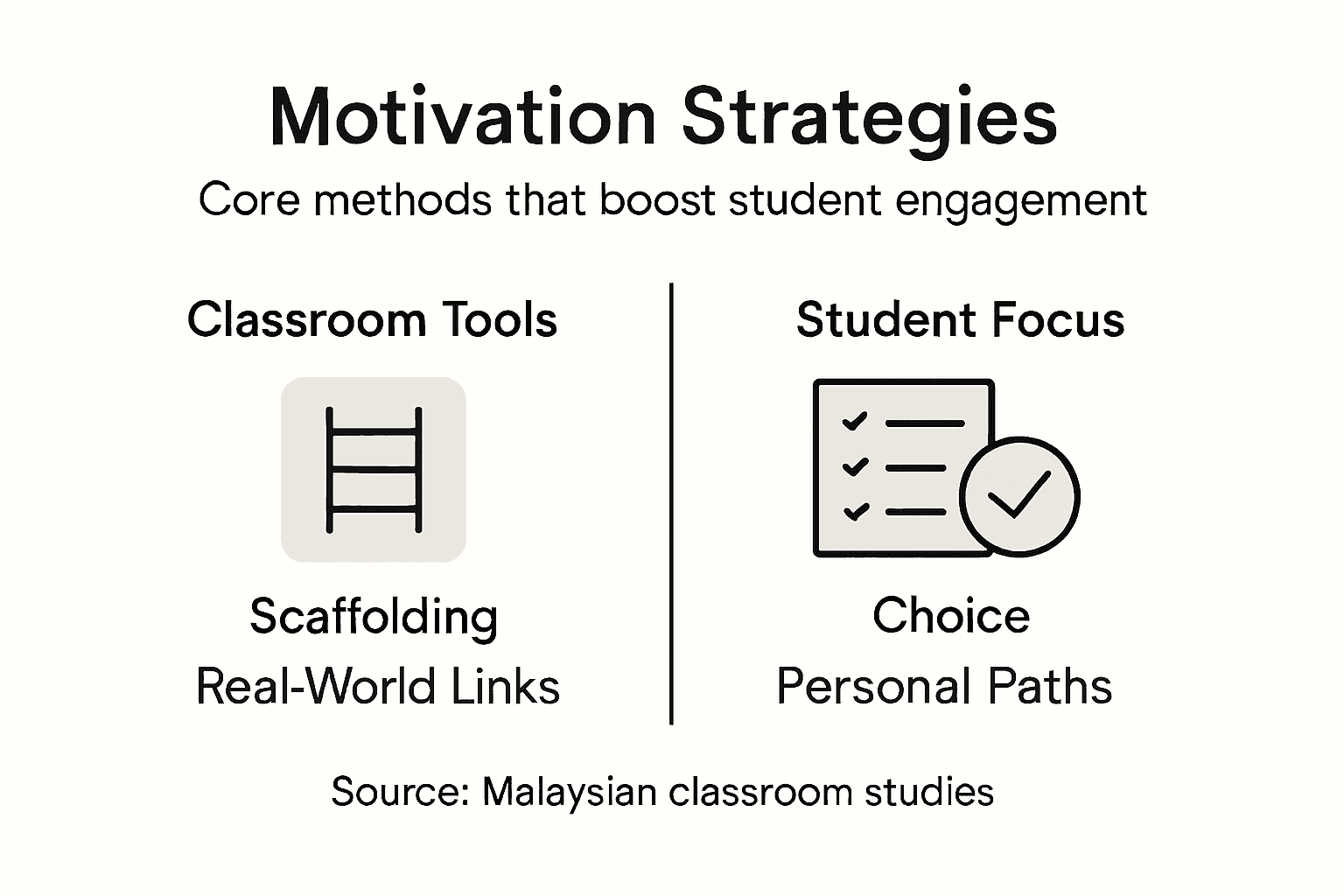
Effective motivation strategies encompass multiple interconnected approaches. Scaffolding learning experiences helps students build confidence incrementally, reducing perceived academic challenges. Connecting curriculum content to real-world applications and students' future career goals provides meaningful context that enhances engagement. Personalized learning pathways emerge as a critical strategy, allowing students to explore subjects through individual lenses that align with their unique strengths and interests.
Teacher-student relationships play a pivotal role in motivation. Authentic teaching strategies reveal that creating safe, supportive classroom environments significantly increases student willingness to participate and take academic risks. This involves developing rapport, demonstrating genuine interest in students' perspectives, and providing constructive feedback that encourages growth mindset principles. Supporting student self-regulation by teaching metacognitive skills enables learners to understand their own learning processes and develop intrinsic motivation mechanisms.
Pro tip: Design classroom activities that allow students to make meaningful choices about their learning, creating a sense of autonomy and personal investment in academic outcomes.
The following table compares major strategies for motivating students and their core benefits:
| Strategy | Approach Type | Core Benefit |
|---|---|---|
| Scaffolding learning experiences | Cognitive | Builds student confidence |
| Real-world curriculum connections | Contextual | Enhances subject relevance |
| Personalized pathways | Individualized | Improves intrinsic engagement |
| Strong teacher-student rapport | Relational | Fosters academic risk-taking |
How Projection Technology Drives Engagement
Projection technology has revolutionized classroom dynamics, transforming traditional learning environments into interactive, immersive spaces that captivate student attention. Immersive projection technologies enable educators to create dynamic visual experiences that simulate real-world scenarios, particularly benefiting lower-achieving students who struggle with conventional teaching methods. By translating complex concepts into engaging visual narratives, projectors bridge the gap between abstract learning and tangible understanding.
Modern projection systems offer unprecedented opportunities for collaborative learning. Interactive projection surfaces allow students to contribute directly to classroom content, breaking down traditional barriers between instructor and learner. These technologies support flexible learning arrangements, enabling students to engage with content through multiple sensory channels. By converting passive learning environments into active, participatory spaces, projection technology fundamentally reshapes how students interact with educational material.
Collaborative classroom technologies demonstrate that visual tools are more than presentation devices they are powerful platforms for fostering creativity, critical thinking, and inclusive learning. Projectors enable diverse teaching approaches, from group problem-solving to interactive simulations, allowing educators to design learning experiences that cater to different learning styles and cognitive preferences. This adaptability makes projection technology a critical tool in creating engaging, student-centered classrooms.
Pro tip: Experiment with different projection techniques like split-screen displays and interactive annotations to maintain student curiosity and maximize technological engagement.
Implementing Projector-Based Activities Effectively
Successful implementation of projection technologies demands strategic planning and thoughtful instructional design. Classroom instruction strategies reveal that projectors are powerful tools for delivering multimodal lessons that transform traditional learning experiences. By utilizing projectors as dynamic visual platforms, educators can create immersive learning environments that capture student attention and facilitate deeper comprehension across diverse subject areas.
Designing effective projector-based activities requires careful consideration of technical and pedagogical elements. Interactive projection techniques enable educators to move beyond passive content delivery, encouraging student participation and collaborative learning. Teachers can leverage projection technologies to simulate real-world scenarios, conduct virtual field trips, and present complex information through engaging multimedia presentations. These approaches break down traditional classroom barriers, allowing students to interact directly with educational content and explore concepts from multiple perspectives.
Interactive projection techniques demonstrate that technology integration goes beyond equipment placement. Successful implementation involves optimizing classroom layout, ensuring high-quality visual displays, and providing adequate teacher training. Key considerations include selecting glare-free projection surfaces, creating accessible viewing angles, and developing interactive content that encourages student engagement. By treating projection technology as an instructional strategy rather than merely a presentation tool, educators can create dynamic, responsive learning environments that adapt to students' diverse learning needs.
Pro tip: Conduct periodic technology rehearsals to familiarize yourself with projection equipment and develop seamless, spontaneous integration techniques that maintain student interest.
Common Challenges and How to Overcome Them
Classroom technology integration challenges reveal complex obstacles that educators must strategically navigate to effectively leverage digital learning tools. Technological implementation is rarely straightforward, with multiple interconnected barriers preventing seamless adoption. Technical limitations such as outdated equipment, inconsistent internet connectivity, and insufficient infrastructure frequently undermine educators' best technological intentions.
The primary challenges emerge from three critical domains: technological infrastructure, pedagogical readiness, and institutional support. Technical support systems play a crucial role in addressing equipment failures and minimizing classroom disruptions. Educators require robust training programs that move beyond theoretical knowledge, emphasizing practical skills in troubleshooting and adaptive technology use. Schools must invest in comprehensive professional development that empowers teachers to confidently integrate projection technologies into their instructional approaches.
Classroom technology adoption strategies demonstrate that successful implementation depends on holistic, collaborative approaches. Key recommendations include creating equitable technology access, developing clear usage guidelines, and fostering a culture of continuous learning. Resistance to technological change can be mitigated by involving educators in decision making, providing ongoing technical support, and demonstrating tangible benefits of digital learning tools. Institutions must view technology integration as an evolutionary process that requires patience, investment, and adaptive strategies.
Pro tip: Develop a technology mentorship program where tech-savvy teachers support colleagues in building confidence and skills with new classroom projection technologies.
Enhance Student Motivation with Cutting-Edge Projection Solutions
Addressing the challenge of boosting student motivation requires tools that transform the classroom into an engaging, interactive space. This article highlights how authentic strategies like personalized learning pathways and real-world curriculum connections can be amplified through technology that invites participation and collaboration. If you seek to overcome common barriers such as limited engagement or passive learning, high-quality projection systems play a pivotal role in bringing classroom activities to life.
Discover how ProjectorDisplay.com offers a comprehensive selection of projectors and interactive displays designed to foster intrinsic motivation and academic engagement in Malaysian classrooms. Whether you need versatile short-throw projectors for immersive visuals or smart projectors that support interactive lessons, our solutions make it easy to implement effective motivational strategies today. Visit our projector collection and empower your teaching approach now with technology that captivates and inspires.
Frequently Asked Questions
What are effective strategies for motivating students in the classroom?
Effective strategies include scaffolding learning experiences, creating real-world connections, personalizing learning pathways, and fostering strong teacher-student relationships. These approaches enhance student engagement and build intrinsic motivation.
How does intrinsic motivation impact student performance?
Intrinsic motivation plays a crucial role in student performance by driving learners to engage in academic activities for internal satisfaction rather than external rewards, leading to improved learning outcomes.
Why is projection technology important for student engagement?
Projection technology transforms traditional classrooms into interactive and immersive learning environments, enhancing student engagement by making complex concepts more accessible and encouraging collaborative learning.
What challenges do educators face when implementing technology in the classroom?
Educators often encounter challenges such as outdated equipment, insufficient technical support, and a lack of training in using new technologies effectively. Addressing these issues requires comprehensive professional development and institutional support.
Recommended
- Gamification in Learning: Transforming Classroom Engagement – Projector Display
- Improving Student Engagement: Strategies for Modern Classrooms – Projector Display
- 7 Interactive Classroom Ideas for Engaging Learning – Projector Display
- Personalized Learning Benefits for Malaysian Classrooms – Projector Display
- Self-talk "you can do it" – MK Marathon Weekend, Milton Keynes 3-4 May 2026