
TL;DR:
- Projector display technologies vary, with DLP, 3LCD, and LCoS offering distinct image qualities suited to different needs. DLP excels in gaming with low input lag but may cause rainbow effects, while 3LCD provides seamless colors ideal for classrooms and offices. Laser light sources offer long-term savings and minimal maintenance, making them a top choice for high-performance setups.
Projector display types are the core technologies that determine how every image is created, colored, and projected onto your screen. The three main display technologies are DLP, 3LCD, and LCoS, and each one produces a fundamentally different picture. Whether you are searching for the best home projector Malaysia has to offer, setting up a classroom, or equipping a boardroom, the display technology inside the unit shapes your entire viewing experience. Prices range from around $400 for entry-level DLP units to over $10,000 for premium LCoS home theater projectors, so understanding these technologies before you buy protects your investment.
What are the main projector display types and how do they work?
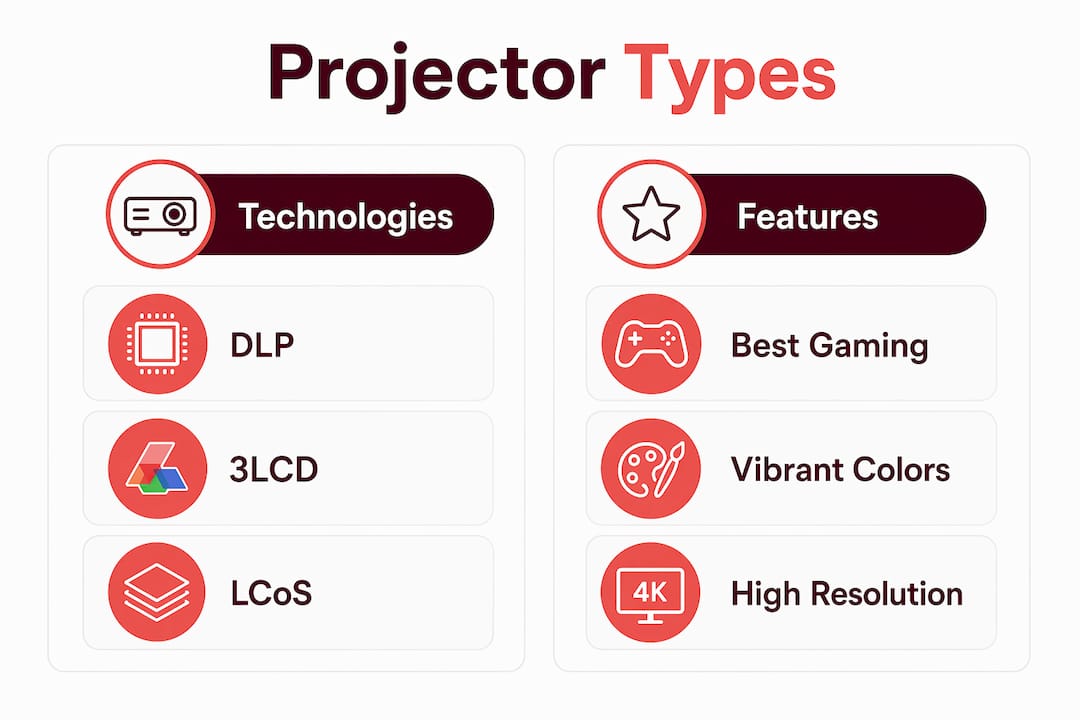
Projector display technologies fall into three categories in 2026: DLP, 3LCD, and LCoS. Each uses a different physical mechanism to produce an image, and that mechanism determines color accuracy, contrast, motion handling, and long-term reliability.
DLP (Digital Light Processing)
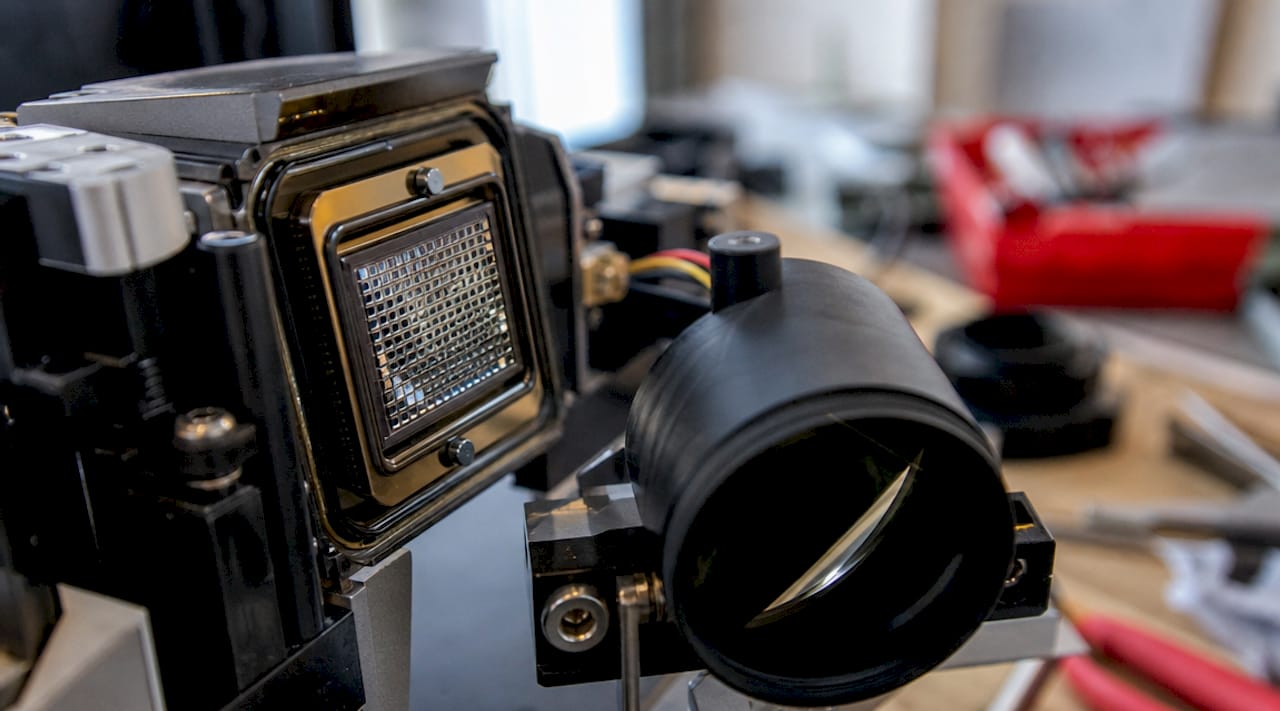
DLP projectors use millions of microscopic mirrors on a chip called a Digital Micromirror Device (DMD). A spinning color wheel passes light through these mirrors to produce color frames in rapid sequence. Single-chip DLP models are compact and affordable, typically priced between $400 and $2,000. The technology delivers sharp contrast and low input lag as low as 2ms, making DLP the preferred choice for gaming. The trade-off is the rainbow effect: sensitive viewers may see brief flashes of red, green, and blue in high-contrast scenes because of the color wheel's sequential operation.
3LCD technology
3LCD projectors split light through three separate liquid crystal panels, one for each primary color, then recombine them before projection. Brands like Epson use this architecture across their entire lineup, from the best classroom projector to high-end home theater units. The result is smooth, consistent color with no rainbow artifact. 3LCD projectors are priced between $500 and $3,000, making them accessible for schools and offices. The Epson projector Malaysia market is particularly strong because 3LCD handles skin tones and presentation graphics with natural accuracy.
LCoS (Liquid Crystal on Silicon)
LCoS is a hybrid technology that combines the reflective approach of DLP with the liquid crystal layer of LCD. JVC and Sony use LCoS (branded as D-ILA and SXRD respectively) in their flagship home theater projectors. Image quality is exceptional, with deep blacks and precise color rendering. The cost reflects that quality: LCoS projectors start above $2,500 and can exceed $10,000 for premium home theater configurations. For most Malaysian buyers, LCoS is the top-tier option when cinematic accuracy is the primary goal.
| Technology | Best For | Price Range | Key Weakness |
|---|---|---|---|
| DLP | Gaming, portable use | $400–$2,000 | Rainbow effect for some viewers |
| 3LCD | Classrooms, offices, movies | $500–$3,000 | Slightly lower contrast than DLP |
| LCoS | Premium home theater | $2,500–$10,000+ | High cost, larger form factor |
Pro Tip: If you or anyone in your household is sensitive to flickering or color fringing, test a DLP projector in a store before buying. The rainbow effect is invisible to most people but distracting to roughly 15% of viewers.
How do light sources affect projector performance and cost?
Light source choice directly affects brightness consistency, maintenance frequency, energy consumption, and total cost of ownership. The four main options are traditional lamp, LED, laser, and hybrid laser-LED systems.
Traditional lamp projectors carry the lowest upfront cost and are still common in Malaysian schools and offices as projektor murah options. The projector lamp Malaysia market remains active, but lamp replacement every 3,000 to 5,000 hours adds recurring expense. A projector bulb Malaysia replacement typically costs between RM 150 and RM 600 depending on the brand.
LED light sources last up to 20,000 hours and consume significantly less power. They suit portable and mini projectors well, though peak brightness is lower than lamp or laser units. Wireless projector Malaysia models often use LED sources because the lower heat output allows compact, fanless designs.
Laser projectors represent the fastest-growing segment in 2026. Laser light sources maintain consistent brightness for up to 30,000 hours with virtually zero maintenance. Brands including BenQ projector Malaysia, Optoma projector Malaysia, and Hisense projector Malaysia have all expanded their laser lineups. The higher upfront cost is offset by near-zero running costs over a five-year period.
| Light Source | Lifespan | Brightness Potential | Maintenance |
|---|---|---|---|
| Traditional lamp | 3,000–5,000 hrs | High | Frequent bulb replacement |
| LED | 20,000 hrs | Moderate | Minimal |
| Laser | 25,000–30,000 hrs | Very high | Near zero |
| Hybrid laser-LED | 20,000+ hrs | High | Minimal |
Pro Tip: For a Malaysian classroom or office that runs a projector 6 to 8 hours daily, a laser projector pays for its premium within 3 years through eliminated lamp costs and reduced downtime.
What throw types and form factors should you consider?
Throw distance defines how far a projector must sit from the screen to produce a given image size. Getting this wrong means either a cramped setup or a washed-out picture.
Standard throw projectors need roughly 8 to 12 feet of distance to produce a 100-inch image. They suit dedicated home theater rooms, large classrooms, and conference halls. Brands like Panasonic projector Malaysia, Barco projector Malaysia, and NEC projector Malaysia dominate the large venue and auditorium segment with standard throw models.
Short throw projectors produce a large image from 3 to 5 feet away. They work well in smaller Malaysian classrooms and meeting rooms where ceiling mounting is not practical. ViewSonic projector Malaysia and Ricoh projector Malaysia both offer strong short throw lines for education and corporate use.
Ultra-short throw (UST) projectors sit just inches from the wall and project upward onto the screen. They are ideal for Malaysian living rooms where furniture placement limits throw distance. However, UST projectors require ALR screens to maintain contrast and image quality in rooms with ambient light. Without an ambient light rejecting screen, the image washes out noticeably. You can explore compatible options in the projection screen guide to match your UST setup correctly.
Key form factors to consider for the Malaysian market:
- Portable and mini projectors: Compact units using LED or laser sources, ideal for traveling professionals and small meeting rooms. Brands like JMGO projector Malaysia and Duvix projector Malaysia lead this segment.
- 4K home theater projectors: Deliver cinema-grade resolution. The sweet spot for 4K home theater sits between $1,200 and $2,500, covering HDR10 and wide color gamut standards.
- Smart projectors: Built-in Android OS and wireless connectivity. Samsung projector Malaysia and ViviFocus projector Malaysia offer smart models that eliminate the need for an external media player.
- Outdoor projectors: High-lumen units designed for garden screenings or outdoor events, common for Malaysian community and corporate events.
How to choose the right projector display type for your needs in Malaysia
Matching display technology to your actual use case prevents overspending on specs you will never use and underspending on features you genuinely need.
Follow this decision framework:
- Define your primary use. Gaming demands DLP for its superior contrast and low input lag. Movies and home theater favor 3LCD or LCoS for color accuracy. Classrooms and offices work best with 3LCD projectors like the Epson LCD projector range or the best Epson projector models, which handle mixed content and bright rooms well.
- Assess your room lighting. Malaysian homes often have moderate ambient light from windows and open-plan layouts. Choosing brightness too high for a dark room crushes black levels and produces grayish images. Match lumens to your environment using a brightness selection guide before finalizing your choice.
- Set a realistic budget. Entry-level classroom projectors from Acer projector Malaysia or Infocus projector Malaysia start around RM 1,500. Mid-range office projectors from ViewSonic projector Malaysia or BenQ projector Malaysia sit between RM 2,500 and RM 5,000. Premium home theater units from JVC projector Malaysia exceed RM 10,000.
- Prioritize color accuracy for cinematic use. Home theater projectors should achieve Delta E below 3 for accurate color reproduction. Raw lumen numbers matter far less than color calibration quality for movie watching.
- Factor in screen compatibility. A UST projector without an ALR screen is a wasted investment. The best projector screen for your setup depends on throw type, room size, and ambient light. Consult the DLP vs LCD comparison to align technology choice with screen selection.
Pro Tip: Always buy your projector and screen together, or at minimum confirm compatibility before purchase. Malaysian living rooms with large windows need ALR screens regardless of projector type to get clean images during daytime viewing.
Key takeaways
Choosing the right projector display type requires matching display technology, light source, throw distance, and screen type to your specific room, budget, and use case.
| Point | Details |
|---|---|
| DLP suits gaming and portability | Low input lag and sharp contrast make DLP the top choice for fast content. |
| 3LCD delivers consistent color | Epson and similar 3LCD brands produce accurate color without rainbow artifacts. |
| Laser sources reduce long-term cost | 30,000-hour lifespan eliminates lamp replacement expenses over time. |
| UST projectors need ALR screens | Without ambient light rejecting screens, UST image quality degrades significantly. |
| Color accuracy beats raw lumens | Delta E below 3 matters more than high lumen counts for home theater quality. |
What I've learned from helping Malaysian buyers choose projectors
After working with hundreds of Malaysian customers across home, education, and corporate setups, the single most common mistake I see is chasing lumen numbers. A buyer walks in wanting "the brightest projector available," installs it in a dark home theater room, and ends up with washed-out blacks and a picture that looks worse than a mid-range unit would have delivered. Brightness is a tool, not a goal.
The second pattern I notice is underestimating the screen. Malaysian multi-purpose living rooms are genuinely challenging environments. Natural light from sliding doors and open kitchens competes directly with the projected image. A UST laser projector paired with a standard matte screen in that environment will disappoint every time. The same projector with a proper ALR screen transforms the experience completely.
Laser projectors are gaining ground fast in Malaysia, and for good reason. The total cost of ownership over five years is lower than lamp-based units once you factor in projector lamp Malaysia replacement costs and the downtime that comes with bulb failures. For schools running projectors daily, the case for laser is almost unarguable.
My honest recommendation: spend 20% of your projector budget on the screen. Most buyers spend 0%. That single shift produces a bigger visible improvement than upgrading from a mid-range to a premium projector while keeping a basic screen.
— Projector
Find the right projector at Projectordisplay Malaysia
Projectordisplay is the best projector seller in Malaysia for home entertainment, education, and professional use. The platform carries DLP, 3LCD, and laser projectors from brands including Epson projector Malaysia, BenQ projector Malaysia, ViewSonic projector Malaysia, Optoma projector Malaysia, and more, covering every budget from projektor murah options to premium home theater units.
Whether you need the best office projector for a corporate boardroom, the best classroom projector for a school, or a large venue projector for an auditorium, Projectordisplay offers expert guidance and fast shipping across Peninsular Malaysia. Browse the full range and get a quote at Projectordisplay, the top projector seller in Malaysia.
FAQ
What are the three main projector display types?
The three main projector display types are DLP, 3LCD, and LCoS. DLP uses digital micromirrors, 3LCD uses three liquid crystal panels, and LCoS combines both approaches for premium image quality.
Which projector display type is best for gaming?
DLP projectors are best for gaming because they deliver input lag as low as 2ms and high contrast ratios. 3LCD and LCoS projectors prioritize color accuracy over response speed, making them less suited to fast-moving content.
Do I need a special screen for a UST projector?
Yes. Ultra-short throw projectors require ambient light rejecting (ALR) screens to maintain contrast and image quality. Without an ALR screen, the upward-projecting light from a UST unit washes out in any room with ambient light.
How long do laser projectors last compared to lamp projectors?
Laser projectors last 25,000 to 30,000 hours with minimal maintenance, while traditional lamp projectors require bulb replacement every 3,000 to 5,000 hours. For daily classroom or office use in Malaysia, laser projectors offer significantly lower total running costs.
What brightness should I choose for a Malaysian home theater?
Match lumens to your room's lighting conditions rather than buying the highest lumen count available. Overly bright projectors in dark rooms produce grayish blacks instead of deep contrast. Home theater projectors prioritize color accuracy with Delta E below 3 over raw brightness output.
Recommended
- Types of Projectors: Guide for Malaysia Users 2025 – Projector Display
- Projector Screen Types: Guide for Malaysia in 2025 – Projector Display
- Malaysia Projector Buying Guide: Features, Tips & Choices – Projector Display
- Home projector buying guide 2026: expert tips for Malaysians – Projector Display