

Over 85 percent of corporate leaders agree that strong networks are a key driver of career advancement, a fact proven in both Malaysian and American professional circles. In today's highly interconnected world, business professionals recognize that purposeful networking unlocks opportunities beyond the four walls of the office. This guide offers practical strategies tailored for managers and executives aiming to build genuine relationships that lead to meaningful career growth and expanded influence.
Table of Contents
- Professional Networking Defined and Its Value
- Key Types of Business Networking Methods
- Building Genuine and Lasting Connections
- Leveraging Digital Platforms for Networking
- Best Practices at Corporate Events and Meetings
- Networking Pitfalls to Avoid in Business
Key Takeaways
| Point | Details |
|---|---|
| Professional Networking is Strategic | It involves building meaningful, long-term relationships for career growth and resource exchange. |
| Different Networking Channels Exist | Professionals can network through in-person events, online platforms, and formal gatherings, adapting to their specific goals. |
| Genuine Connections Matter | Prioritize authentic interactions, listen actively, and maintain regular follow-up for effective networking. |
| Avoid Common Pitfalls | Focus on mutual benefit, engage in consistent communication, and practice active listening to enhance networking outcomes. |
Professional Networking Defined and Its Value
Professional networking represents a strategic approach to building and maintaining career-enhancing relationships that transcend traditional workplace interactions. At its core, networking involves intentional interpersonal connections designed to exchange valuable career resources, insights, and opportunities. Professional networks consist of mutually beneficial relationships with other professionals that open doors to opportunities across various industries and career stages.
The significance of professional networking extends far beyond simple social interactions. It is a dynamic process that evolves with career goals and industry trends, creating social capital through trust and information exchange. Successful professionals understand that networking is not about collecting business cards or making superficial connections, but about cultivating genuine relationships that provide mutual professional growth. These connections can help individuals gain critical industry insights, access unadvertised job opportunities, and develop a more comprehensive understanding of their professional landscape.
Professional networking manifests through multiple channels in today's interconnected world. Professionals can build their networks through:
- In-person industry conferences and events
- Online platforms like LinkedIn
- Professional associations and industry groups
- Workplace interactions and collaborative projects
- Alumni networks and academic connections
Pro tip: Approach networking as a long-term relationship-building strategy, focusing on providing value to others before expecting returns from your professional connections.
Key Types of Business Networking Methods
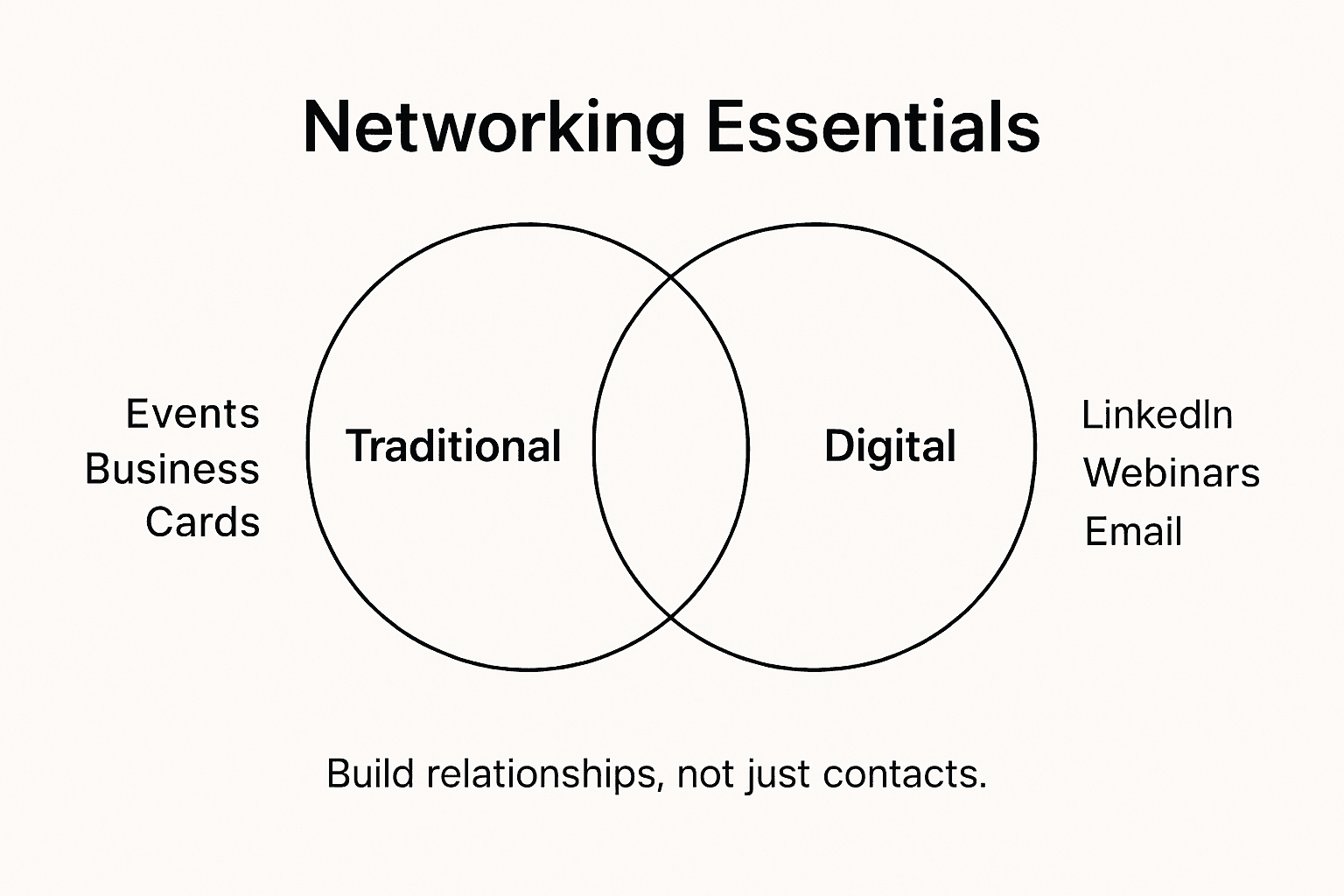
Business networking represents a comprehensive approach to building professional relationships through diverse and strategic interaction channels. These networking methods enable professionals to create meaningful connections, exchange valuable insights, and advance their career trajectories. Understanding the various networking techniques allows individuals to select the most appropriate strategies for their specific professional goals and industry contexts.
Traditional networking methods continue to play a crucial role in professional relationship building. These include:
- In-Person Networking
- Industry conferences
- Professional seminars
- Trade shows and exhibitions
- Local business meetups
- Chamber of Commerce events
- Formal Structured Networking
- Professional association meetings
- Alumni network gatherings
- Industry-specific workshops
- Roundtable discussions
Digital networking platforms have revolutionized how professionals connect and collaborate. Online networking methods encompass a wide range of digital interactions, including:
- Professional social media platforms like LinkedIn
- Virtual industry webinars
- Online professional forums
- Industry-specific discussion groups
- Professional networking apps and communities
Pro tip: Create a consistent personal brand across both digital and traditional networking platforms to maximize your professional visibility and networking effectiveness.
Here's how traditional and digital networking methods differ in value and effectiveness:
| Aspect | Traditional Networking | Digital Networking |
|---|---|---|
| Reach | Mostly local or regional | Global and borderless |
| Speed of Connection | Slower, face-to-face | Instant, online interactions |
| Accessibility | Requires physical presence | Available anytime, anywhere |
| Relationship Depth | Higher through personal contact | Varies, depends on engagement |
| Resource Sharing | Limited to in-person | Easy document and idea exchange |
Building Genuine and Lasting Connections
Genuine professional connections transcend superficial interactions, requiring intentional emotional engagement and mutual understanding. Successful networking is not about collecting contacts, but about developing meaningful relationships that provide reciprocal professional support and growth. These connections are built through consistent, authentic communication that demonstrates genuine interest in the other person's professional journey and potential collaborative opportunities.
Creating lasting professional relationships involves several strategic approaches:
- Active Listening
- Pay full attention during conversations
- Ask thoughtful, open-ended questions
- Show genuine curiosity about others' experiences
- Consistent Follow-Up
- Send personalized follow-up messages
- Share relevant industry insights
- Maintain periodic communication
Building genuine connections requires setting clear networking goals and developing a personalized strategy that integrates technology and consistent communication. Professionals should approach networking as a long-term investment, focusing on quality interactions rather than quantity. This means being selective about connections, providing value to others, and maintaining a genuine interest in mutual professional growth.

Pro tip: Schedule quarterly check-ins with key professional contacts to maintain meaningful relationships and stay updated on their career developments.
Leveraging Digital Platforms for Networking
Digital platforms have revolutionized professional networking, transforming how individuals connect and collaborate across geographical boundaries. These technological tools provide unprecedented opportunities for professionals to expand their networks, share insights, and discover career opportunities without traditional geographic or institutional limitations.
Key digital networking platforms offer unique advantages for professionals:
- Professional Social Networks
- LinkedIn for career connections
- ResearchGate for academic collaborations
- Industry-specific professional forums
- Real-Time Communication Platforms
- Twitter for industry discussions
- Professional Slack channels
- Specialized online communities
Researchers and professionals can strategically use digital platforms to disseminate work, increase visibility, and find potential collaborators across diverse disciplines. Success on these platforms requires creating a compelling professional profile, engaging consistently with relevant content, and maintaining an authentic and professional online presence. This involves sharing thoughtful insights, commenting on industry trends, and proactively connecting with professionals who align with your career goals.
Pro tip: Optimize your digital networking profiles by using a professional headshot, crafting a concise and impactful summary, and regularly updating your achievements and professional experiences.
Best Practices at Corporate Events and Meetings
Corporate event success requires strategic planning that transforms traditional meetings into engaging professional experiences. Effective networking at corporate events goes beyond mere attendance, demanding intentional preparation, active participation, and thoughtful follow-up strategies that maximize relationship-building opportunities.
Key strategic approaches for successful corporate event networking include:
- Pre-Event Preparation
- Research attendee lists
- Identify key potential connections
- Prepare thoughtful conversation starters
- Set specific networking objectives
- During-Event Engagement
- Ask open-ended questions
- Listen actively and attentively
- Exchange meaningful business contact information
- Demonstrate genuine professional interest
Networking effectiveness at corporate events depends on understanding subtle interpersonal dynamics and maintaining a professional yet approachable demeanor. Successful professionals recognize that each interaction represents a potential opportunity for collaboration, mentorship, or future professional advancement. This requires balancing confidence with genuine curiosity, strategic communication skills, and the ability to create memorable, authentic connections in limited interaction timeframes.
Pro tip: Bring multiple business cards and a smartphone with a dedicated networking app to quickly capture and organize contact information immediately after meaningful conversations.
Networking Pitfalls to Avoid in Business
Professionals often undermine their networking potential by falling into predictable communication traps that diminish their credibility and relationship-building effectiveness. Recognizing and proactively addressing these common mistakes can significantly enhance one's ability to create meaningful professional connections and advance career opportunities.
Key networking pitfalls professionals should consciously avoid include:
- Communication Mistakes
- Overwhelming conversations with self-promotion
- Failing to demonstrate genuine interest
- Interrupting or dominating discussions
- Neglecting active listening skills
- Strategic Relationship Errors
- Treating networking as a transactional exchange
- Inconsistent or sporadic follow-up
- Requesting favors without establishing rapport
- Approaching connections with solely personal agendas
Successful networking requires understanding the delicate balance between professional ambition and authentic relationship building. Professionals must cultivate an approach that prioritizes mutual value, consistent communication, and genuine curiosity about others' professional journeys. This means moving beyond superficial interactions and developing a strategic yet empathetic networking mindset that focuses on creating lasting, meaningful professional relationships.
Compare common networking pitfalls with best practices to maximize professional growth:
| Pitfall | Negative Impact | Best Practice |
|---|---|---|
| Overly self-promotional | Damages trust, alienates peers | Focus on mutual benefit |
| Sporadic follow-up | Missed opportunities | Maintain regular contact |
| Transactional approach | Short-lived relationships | Invest in long-term rapport |
| Dominate conversations | Limits collaboration | Practice active listening |
Pro tip: Practice the 70-30 rule in networking conversations: listen 70% of the time and speak only 30% to demonstrate genuine interest and build stronger connections.
Elevate Your Professional Networking with Cutting-Edge Presentation Solutions
Effective networking in Malaysia demands more than just connections it requires standout presentations that capture attention and leave a lasting impression. As highlighted in "Networking Tips for Professionals in Malaysia," building genuine and lasting professional relationships depends on clear communication and engaging interactions. When attending corporate events or virtual meetings investing in quality display technology can help you convey your message powerfully and foster meaningful connections.
ProjectorDisplay.com offers a wide selection of portable, laser, and smart projectors designed to meet diverse business presentation needs. Whether you want to impress at industry conferences or host interactive workshops, our projectors deliver high lumens brightness, crisp full HD resolution, and seamless wireless connectivity that ensure your ideas shine. Explore our range of interactive displays and projection screens to create immersive presentations that encourage dialogue and engagement.

Take your professional networking to the next level today with reliable display solutions from ProjectorDisplay.com. Browse our extensive catalog now and enjoy fast shipping throughout Peninsular Malaysia. Make every conversation count and turn every connection into an opportunity with technology that empowers your voice.
Frequently Asked Questions
What is professional networking?
Professional networking involves intentionally building and maintaining relationships that offer career-enhancing opportunities through resource and information exchange.
How can I build genuine professional connections?
Building genuine connections involves active listening, consistent follow-up, and demonstrating a genuine interest in others' professional journeys. Focus on providing value and establishing mutual support.
What are some effective networking methods to consider?
Effective networking methods include in-person industry events, online platforms like LinkedIn, participation in professional associations, and workplace collaborations.
What are common networking pitfalls to avoid?
Common networking pitfalls include overly self-promotional conversations, neglecting active listening, sporadic follow-up, and adopting a transactional mindset in networking interactions.
Recommended
- Wireless Screen Mirroring in Malaysia: 2025 Guide for Entertainment, Education, and Business – Projector Display
- Setting Up Home WiFi Network: Step-by-Step Made Easy – Projector Display
- Team Productivity Tools: Boosting Collaboration Success – Projector Display
- Work From Home Essentials for Better Productivity – Projector Display