

Most advice about mindfulness skips over a crucial detail—the shift from quick stress relief to nurturing whole-person development now shapes how students learn worldwide. For educators in Malaysia, this change is more than theory, as methods inspired by American schools show that mindfulness can increase focus and decrease classroom anxiety by up to 60 percent. This guide helps you embrace mindful teaching while exploring how projectors can enrich classroom experiences for every learner.
Table of Contents
- What Mindfulness in Education Means Today
- Core Practices and Student Benefits
- Implementing Mindfulness in Malaysian Schools
- Role of Projectors in Mindful Classrooms
- Common Pitfalls and Practical Solutions
Key Takeaways
| Point | Details |
|---|---|
| Holistic Approach | Modern mindfulness in education emphasizes whole-person development, focusing not just on academic performance but on emotional and social growth. |
| Core Practices | Key mindfulness strategies include moment-to-moment awareness, mindful breathing, and reflective journaling to enhance student well-being. |
| Implementation Challenges | Integrating mindfulness in schools requires addressing challenges like teacher training and culturally sensitive practices for effective execution. |
| Role of Technology | Utilizing visual tools such as projectors can enhance mindfulness instruction, making practices more engaging and accessible for students. |
What Mindfulness in Education Means Today
Mindfulness in education represents a profound transformation from traditional pedagogical approaches, shifting towards a more holistic understanding of student development. Emerging research demonstrates that mindfulness is no longer just a classroom intervention, but a comprehensive approach to humanizing educational experiences.
Today, mindfulness transcends simple stress reduction techniques. It represents a deep philosophical reimagining of educational spaces where students are viewed as complete human beings with emotional, cognitive, and social needs. Contemporary scholarly perspectives suggest moving beyond clinical intervention models toward creating educational environments that nurture whole-person development.
The modern mindfulness approach in education focuses on several key dimensions:
- Cultivating self-awareness
- Developing emotional intelligence
- Promoting compassionate interactions
- Encouraging critical reflection
- Supporting individual agency
This paradigm shift recognizes that learning is not merely about academic achievement, but about developing resilient, empathetic, and self-understanding individuals who can navigate complex personal and social landscapes.
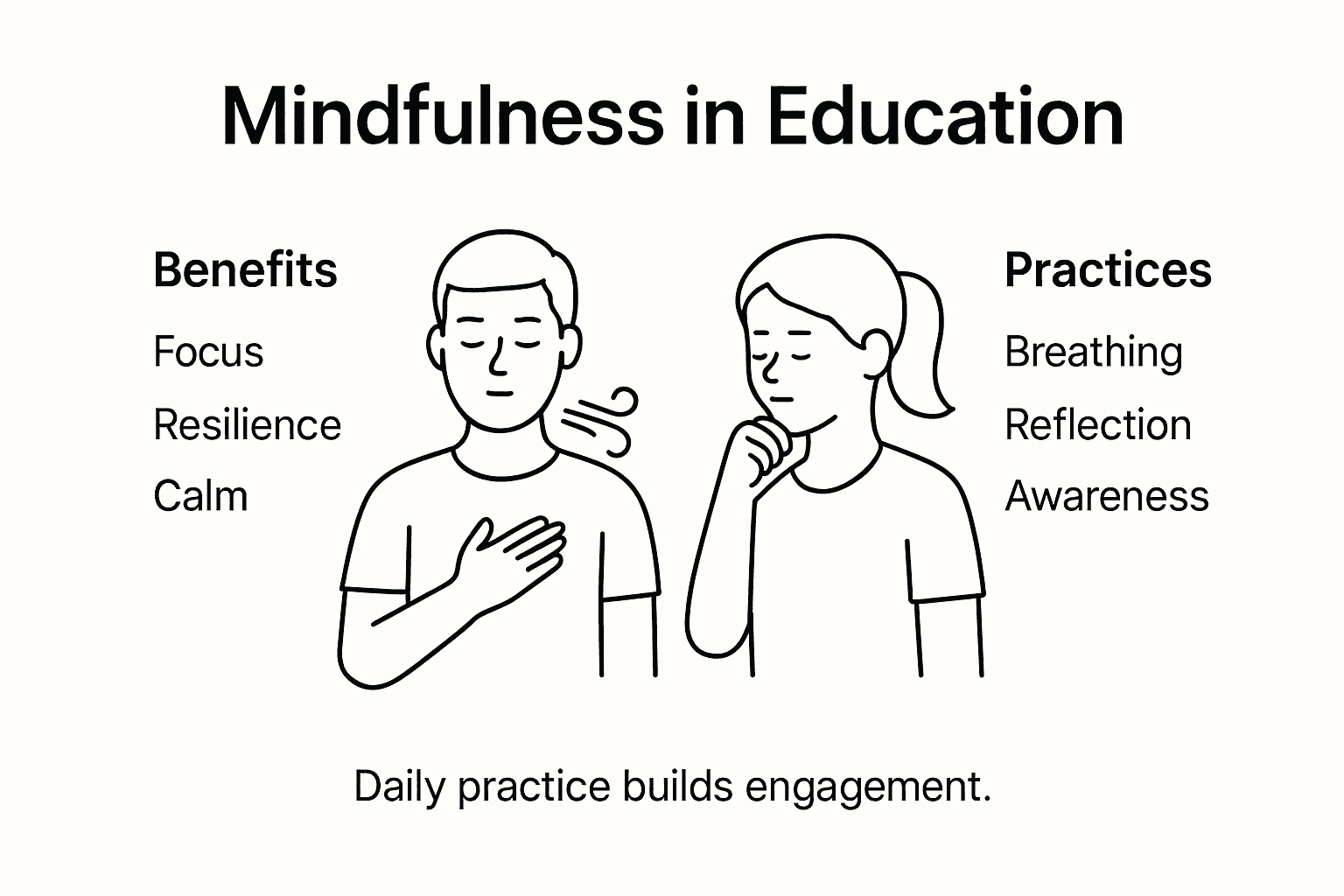
Here is a summary comparing traditional and modern mindfulness approaches in education:
| Aspect | Traditional Approach | Modern Mindfulness Approach |
|---|---|---|
| Student View | Test-focused learner | Whole-person development |
| Main Goal | Academic performance | Emotional and social growth |
| Method | Occasional stress relief | Integrated daily practices |
| Teacher Role | Instructor | Facilitator and guide |
| Outcomes | Grades improvement | Resilience, empathy, self-awareness |
Pro tip: Start implementing mindfulness through short, daily 3-5 minute guided meditation or reflection exercises to gradually build student comfort with introspective practices.
Core Practices and Student Benefits
Research on mindfulness interventions in education reveals a comprehensive set of core practices designed to support holistic student development. These practices go beyond traditional academic approaches, focusing on building emotional resilience, cognitive awareness, and personal well-being through systematic mental training techniques.
Core mindfulness practices typically include several key strategies:
- Moment-to-moment awareness exercises
- Mindful breathing techniques
- Body scan meditations
- Guided visualization practices
- Reflective journaling
Educational research highlights significant student benefits from consistent mindfulness engagement. Students practicing these techniques demonstrate improved emotional regulation, reduced anxiety levels, enhanced cognitive function, and better overall academic performance. The practices help students develop critical self-management skills that extend far beyond classroom learning.
Understanding mindfulness as a skill set rather than a single intervention allows educators to integrate these practices more effectively. By creating structured opportunities for students to explore inner experiences, schools can cultivate environments that support mental health, academic achievement, and personal growth simultaneously.
Pro tip: Implement a daily 5-minute mindfulness routine at the start of each class to help students transition and center themselves before learning.
Implementing Mindfulness in Malaysian Schools
Research exploring Malaysian educators' perspectives reveals significant challenges and opportunities in integrating mindfulness practices within the national educational landscape. Malaysian schools are increasingly recognizing the potential of mindfulness as a transformative educational approach, though implementation remains complex and nuanced.
Successful mindfulness integration requires a multi-dimensional strategy that addresses several critical components:
- Comprehensive teacher training programs
- Culturally sensitive curriculum design
- Systematic implementation frameworks
- Ongoing professional development
- Measurement of student outcomes
Mindfulness implementation guidelines emphasize the importance of adapting practices to local educational contexts. In Malaysia, this means creating mindfulness approaches that respect cultural diversity, Islamic educational principles, and the unique multiethnic learning environments characteristic of the country.
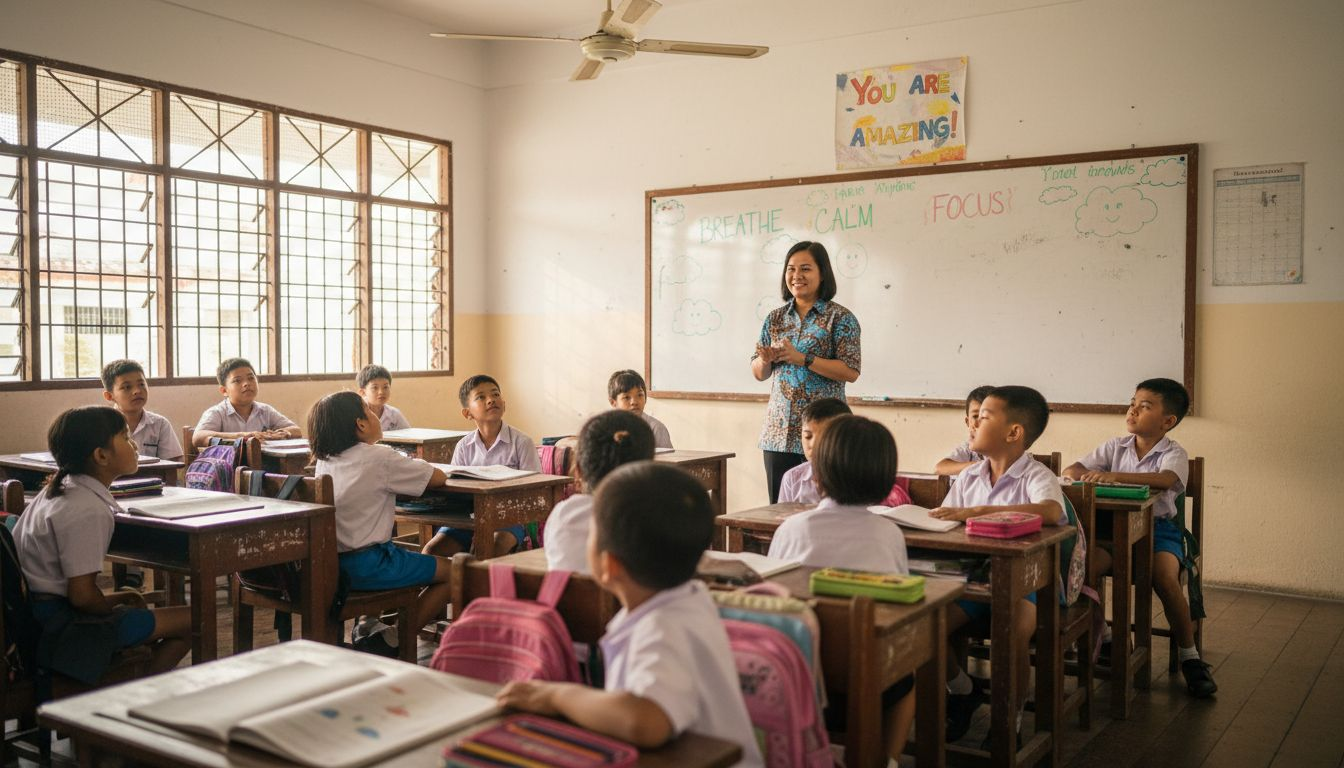
Practical implementation begins with pilot programs in select schools, allowing educators to develop expertise, refine approaches, and demonstrate tangible benefits. By starting small and scaling gradually, Malaysian schools can build robust mindfulness practices that enhance student well-being, emotional intelligence, and academic engagement.
Pro tip: Collaborate with local educational psychologists to develop mindfulness modules that are culturally appropriate and aligned with Malaysian educational goals.
Role of Projectors in Mindful Classrooms
Technologies like projectors are transforming mindfulness instruction by providing innovative visual tools that enhance student engagement and focus. Modern classroom projectors serve as powerful mediums for delivering guided mindfulness experiences, allowing educators to create immersive and dynamic learning environments that support mental well-being.
Key ways projectors support mindfulness practices include:
- Displaying guided meditation visual instructions
- Presenting calming imagery and nature scenes
- Demonstrating breathing exercise sequences
- Providing ambient background visualizations
- Facilitating interactive mindfulness activities
Mindfulness implementation research suggests that visual technologies can make mindfulness more accessible and engaging for students. By leveraging high-quality projector displays, educators can create multisensory mindfulness experiences that cater to different learning styles and help students develop deeper concentration and self-awareness.
Projectors enable educators to design comprehensive mindfulness programs that go beyond traditional instruction methods. Interactive displays can transform abstract mindfulness concepts into tangible, visually compelling experiences that resonate with students across different age groups and learning preferences.
Pro tip: Select projectors with high-resolution capabilities and color accuracy to ensure the most immersive and calming visual mindfulness experiences.
Common Pitfalls and Practical Solutions
Comprehensive mindfulness implementation research reveals several critical challenges educators encounter when introducing mindfulness practices in educational settings. Understanding these potential obstacles is crucial for developing effective, sustainable mindfulness programs that genuinely support student well-being and engagement.
Common pitfalls in mindfulness implementation include:
- Insufficient teacher training
- Lack of consistent program structure
- Inadequate cultural adaptation
- Limited understanding of mindfulness principles
- Superficial or tokenistic approach to practice
Research on Malaysian educational contexts highlights specific challenges unique to diverse learning environments. Practical solutions involve developing targeted professional development programs, creating supportive institutional policies, and fostering collaborative approaches that build teacher confidence and expertise in delivering mindfulness practices.
Successful implementation requires a holistic strategy that goes beyond simple technique introduction. Schools must invest in comprehensive teacher training, develop clear implementation frameworks, and create ongoing support systems that allow mindfulness practices to become integrated into the broader educational culture rather than treated as isolated interventions.
The table below highlights common pitfalls and practical solutions for effective mindfulness implementation in schools:
| Pitfall | Impact on Students | Recommended Solution |
|---|---|---|
| Inadequate teacher training | Low practice quality | Offer targeted professional development |
| Superficial adoption | Minimal behavior change | Establish clear program goals |
| Lack of cultural adaptation | Student disengagement | Customize content for local context |
| Inconsistent structure | Limited skill development | Adopt a phased, scaffolded approach |
Pro tip: Develop a phased implementation approach that starts with pilot programs, collects consistent feedback, and allows gradual, adaptive scaling of mindfulness practices.
Enhance Mindfulness in Your Classroom with Interactive Projection Solutions
The article highlights the importance of creating immersive and engaging mindfulness experiences to boost student focus and emotional growth. Educators face the challenge of consistently delivering high-quality mindfulness practices that captivate diverse learners and encourage whole-person development. To overcome pitfalls like superficial adoption and limited engagement, the use of advanced projection technology can transform mindfulness instruction into a multisensory journey.
Visual tools such as high-resolution, full HD projectors can display guided meditations, calming visuals, and interactive exercises to nurture self-awareness and resilience. Projectors designed for educational settings with wireless connectivity and vibrant color accuracy make it easy for teachers to integrate mindfulness routines seamlessly into the daily classroom flow.

Discover how the right projection solutions can elevate your mindfulness programs today. Visit ProjectorDisplay.com to explore a wide selection of portable, laser, and smart projectors perfect for Malaysian schools looking to transform educational spaces. Start building immersive mindfulness environments with trusted technology that supports student well-being and academic success. Act now to bring innovation and calm to your classroom with expert support and fast delivery from ProjectorDisplay.com. Experience the future of mindful education right here.
Frequently Asked Questions
What is mindfulness in education?
Mindfulness in education refers to a transformative approach that emphasizes holistic student development, focusing on emotional, cognitive, and social needs rather than just academic performance.
How can mindfulness boost student engagement?
Mindfulness practices cultivate self-awareness, emotional intelligence, and critical reflection, which helps students become more engaged, resilient, and empathetic learners.
What are some core mindfulness practices for students?
Core mindfulness practices include mindful breathing, body scan meditations, moment-to-moment awareness exercises, guided visualizations, and reflective journaling.
How can educators successfully implement mindfulness in the classroom?
Educators can implement mindfulness by integrating short daily practices, providing teacher training, customizing practices to fit cultural contexts, and using appropriate technologies like projectors to engage students visually.
Recommended
- Improving Student Engagement: Strategies for Modern Classrooms – Projector Display
- Gamification in Learning: Transforming Classroom Engagement – Projector Display
- 7 Interactive Classroom Ideas for Engaging Learning – Projector Display
- The Essential Guide to Teaching Critical Thinking Skills – Projector Display