

Every Malaysian school leader knows the difference a supportive environment makes for growing minds. Creating a culture of mental health awareness is more than a box to check—students depend on safe, inclusive spaces to develop strength and emotional resilience. By focusing on comprehensive mental health support, educators empower students to tackle academic and social challenges with confidence while building a foundation for lifelong well-being.
Table of Contents
- Defining Mental Health Awareness in Schools
- Common Student Mental Health Challenges
- Recognizing and Addressing Warning Signs
- Role of Educators and School Policies
- Best Practices for Creating Supportive Environments
- Avoiding Stigma and Common Pitfalls
Key Takeaways
| Point | Details |
|---|---|
| Mental Health Awareness in Schools | Schools play a pivotal role in promoting students' psychological well-being through supportive environments and integrated mental health strategies. |
| Common Mental Health Challenges | Anxiety disorders, depression, and ADHD are prevalent among students, often impacting their academic performance and personal development. |
| Recognizing Warning Signs | Early identification of mental health warning signs can facilitate timely intervention, significantly improving student outcomes. |
| Role of Educators and Policies | Educators must be trained and supported to recognize mental health issues, ensuring a holistic approach in school policies that prioritize psychological health. |
Defining Mental Health Awareness in Schools
Mental health awareness in schools represents a comprehensive approach to understanding, supporting, and promoting psychological well-being among students. Whole school mental health strategies aim to create supportive environments where students can develop emotional resilience, social skills, and effective coping mechanisms.
At its core, mental health awareness involves recognizing the critical role educational institutions play in students' psychological development. Schools are not just academic spaces but crucial environments where children learn emotional regulation, interpersonal skills, and self-understanding. Integrated mental health policies help create safe, inclusive learning environments that nurture students' emotional intelligence and overall psychological well-being.
Key components of mental health awareness in schools include:
- Developing supportive classroom climates
- Training educators in mental health recognition
- Creating peer support networks
- Implementing age-appropriate mental wellness curriculum
- Establishing clear referral pathways for professional support
Pro tip: Implement regular mental health check-ins with students to create open dialogue and normalize discussions about emotional well-being.
Common Student Mental Health Challenges
Students today face a complex landscape of mental health challenges that significantly impact their academic and personal development. Student mental health challenges represent a critical area of concern, with many young people experiencing various psychological conditions that can disrupt their learning and personal growth.

The most prevalent mental health challenges among students include anxiety disorders, depression, attention disorders, and behavioral problems. Comprehensive mental health assessments reveal that these conditions often emerge during adolescence and can profoundly affect students' academic performance, social interactions, and overall well-being. Research indicates that approximately 50% of mental health conditions begin by age 14, highlighting the urgent need for early intervention and support.
Specific mental health challenges students commonly experience include:
- Generalized anxiety disorder
- Social anxiety
- Clinical depression
- Attention Deficit Hyperactivity Disorder (ADHD)
- Obsessive-Compulsive Disorder (OCD)
- Post-Traumatic Stress Disorder (PTSD)
- Eating disorders
- Bipolar disorder
These challenges can manifest through various symptoms such as persistent sadness, difficulty concentrating, social withdrawal, sudden changes in academic performance, and unexplained physical symptoms like headaches or stomachaches. Understanding these indicators is crucial for educators and parents to provide timely and appropriate support.
Here's a summary of common student mental health challenges and their potential academic impacts:
| Mental Health Challenge | Typical Onset Age | Possible Academic Impact |
|---|---|---|
| Anxiety Disorders | 10-15 years | Reduced participation, test avoidance |
| Depression | 12-17 years | Lower grades, missed deadlines |
| ADHD | 6-12 years | Difficulty focusing, incomplete work |
| OCD | 10-18 years | Perfectionism, frequent absences |
| PTSD | Any school age | Trouble concentrating, absenteeism |
| Eating Disorders | 13-18 years | Fatigue, poor school performance |
| Bipolar Disorder | Late teens | Fluctuating energy, erratic output |
Pro tip: Develop a non-judgmental, compassionate approach when discussing mental health with students to create a safe environment for open communication.
Recognizing and Addressing Warning Signs
School-based mental health interventions play a critical role in identifying and supporting students experiencing psychological challenges. Recognizing warning signs early can significantly impact a student's mental health trajectory, preventing potential long-term complications and supporting timely intervention.
Critical warning signs educators should monitor include:
- Significant changes in academic performance
- Persistent social withdrawal
- Sudden mood swings
- Unexplained physical symptoms
- Frequent emotional outbursts
- Dramatic shifts in behavior or personality
- Declining personal hygiene
- Expressing feelings of hopelessness
Comprehensive warning sign strategies emphasize a holistic approach to addressing student mental health challenges. This involves creating a supportive environment where students feel safe discussing their emotional experiences, training staff to recognize subtle behavioral changes, and establishing clear referral pathways for professional mental health support.
Effective addressing of warning signs requires a multi-tiered approach involving educators, school counselors, parents, and mental health professionals. Communication, empathy, and a non-judgmental attitude are crucial when approaching students showing potential mental health concerns. Early identification and compassionate intervention can make a transformative difference in a student's psychological well-being and academic success.
The following table compares approaches to address mental health warning signs in schools:
| Approach | Primary Focus | Who's Involved | Unique Benefit |
|---|---|---|---|
| Early Staff Training | Spotting subtle signs | Teachers, counselors | Quicker interventions |
| Peer Support Groups | Student connection | Students | Increased trust, openness |
| Confidential Reporting | Anonymity, privacy | Students, staff | Removes fear of stigma |
| Professional Referral | Specialized care | Health professionals | Access to expert treatment |
Pro tip: Create a confidential reporting system that allows students to anonymously share mental health concerns and seek support.
Role of Educators and School Policies
Mental health professional development represents a critical foundation for creating supportive educational environments. Educators play a transformative role in identifying, supporting, and nurturing students' psychological well-being, extending far beyond traditional academic responsibilities.
Key responsibilities for educators in mental health support include:
- Developing awareness of mental health indicators
- Creating inclusive classroom environments
- Implementing early intervention strategies
- Maintaining confidential student communications
- Collaborating with mental health professionals
- Reducing stigma around psychological challenges
- Providing compassionate, non-judgmental support
School mental health policies must establish comprehensive frameworks that integrate mental health considerations into every aspect of educational programming. This involves creating clear protocols for identifying at-risk students, establishing referral mechanisms, and ensuring staff receive ongoing training in recognizing and addressing psychological challenges.
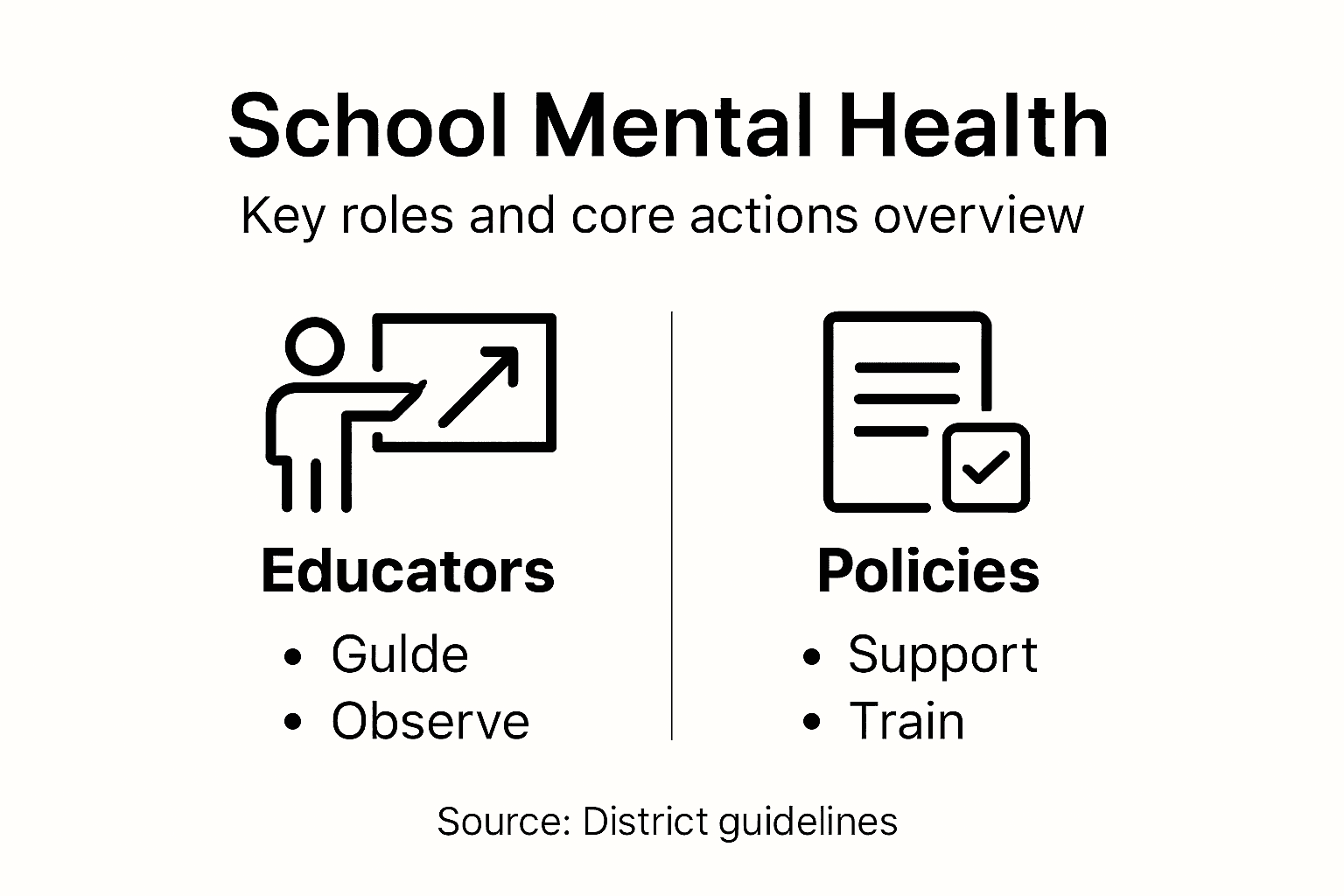
Successful implementation requires a systemic approach that empowers educators with knowledge, resources, and supportive organizational structures. School leadership must prioritize mental health as a fundamental component of student success, creating cultures of understanding, early intervention, and holistic student support.
Pro tip: Develop regular peer support networks and supervision opportunities for educators to share mental health insights and strategies.
Best Practices for Creating Supportive Environments
Evidence-based school mental health strategies are crucial for developing comprehensive support systems that nurture student psychological well-being. Creating supportive environments requires a holistic approach that addresses students' emotional, social, and academic needs through intentional, integrated interventions.
Key best practices for developing supportive school environments include:
- Promoting mental health literacy
- Implementing social-emotional learning curricula
- Fostering school-wide connectedness
- Developing mindfulness programs
- Offering psychosocial skills training
- Supporting staff mental wellness
- Creating inclusive classroom cultures
- Establishing safe communication channels
Comprehensive school mental health approaches require multi-stakeholder engagement, integrating policies that create respectful, understanding environments. This involves collaboration among educators, counselors, families, and community partners to build comprehensive support networks that address students' diverse psychological needs.
Successful implementation demands ongoing commitment, regular training, and adaptive strategies that respond to evolving student experiences. Schools must create dynamic, responsive environments that prioritize emotional safety, validate student experiences, and provide multiple pathways for support and intervention.
Pro tip: Design anonymous feedback mechanisms that allow students to share concerns and suggest improvements to school mental health support systems.
Avoiding Stigma and Common Pitfalls
Mental health stigma reduction strategies are essential for creating supportive educational environments where students feel safe discussing psychological challenges. Stigma can significantly prevent students from seeking help, creating barriers that undermine mental health awareness and support efforts.
Common pitfalls schools must actively avoid include:
- Treating mental health as a taboo subject
- Using insensitive or judgmental language
- Relying exclusively on formal counseling services
- Neglecting whole-school cultural transformation
- Marginalizing students with mental health challenges
- Implementing one-size-fits-all approaches
- Failing to provide ongoing education
- Overlooking individual student experiences
Culturally sensitive mental health practices require comprehensive, equity-focused approaches that normalize conversations about psychological well-being. This involves engaging students, families, and staff in open, respectful dialogues that recognize mental health as an integral component of overall health and human experience.
Effective stigma reduction demands continuous education, empathy, and a commitment to creating inclusive environments where students feel validated and supported. Schools must proactively challenge misconceptions, promote understanding, and develop environments that treat mental health with the same importance as physical health.
Pro tip: Develop student-led mental health awareness campaigns that humanize psychological experiences and celebrate emotional diversity.
Enhance Mental Health Awareness with Engaging Visual Technology
Addressing student mental health challenges starts with creating supportive, inclusive, and dynamic learning environments. The article highlights the need for mental health literacy, supportive classroom climates, and open communication as critical steps for educators. One effective way to foster these goals is through interactive and clear visual displays that enhance engagement and connection in educational settings.

Explore the power of advanced projection technology at ProjectorDisplay.com to transform your classroom or school environment. With a wide selection of portable, laser, and smart projectors designed for educational use, you can facilitate social-emotional learning programs, mental health awareness campaigns, and create safe, inclusive spaces where students feel seen and heard. Act now to equip your school with high-quality projection solutions that support vital mental health awareness efforts. Visit ProjectorDisplay.com to discover how the right display technology can make your mental health initiatives more impactful and engaging.
Frequently Asked Questions
What is mental health awareness in schools?
Mental health awareness in schools involves understanding, supporting, and promoting psychological well-being among students. It includes strategies to create supportive environments that foster emotional resilience, social skills, and effective coping mechanisms.
What are common mental health challenges faced by students?
Common mental health challenges among students include anxiety disorders, depression, ADHD, OCD, PTSD, eating disorders, and bipolar disorder. These conditions can affect academic performance and social interactions.
How can educators recognize warning signs of mental health issues in students?
Educators can recognize warning signs such as significant changes in academic performance, persistent social withdrawal, mood swings, unexplained physical symptoms, and declining personal hygiene. Early identification is crucial for timely support.
What are some best practices for creating a supportive school environment for mental health?
Best practices include promoting mental health literacy, implementing social-emotional learning, fostering connectedness, developing mindfulness programs, and creating safe communication channels. Collaboration among educators, counselors, and families is essential.
Recommended
- Mindfulness in Education: Boosting Student Engagement – Projector Display
- Cybersecurity in Education – Protecting Digital Classrooms – Projector Display
- Student Motivation Strategies That Transform Learning – Projector Display
- Improving Student Engagement: Strategies for Modern Classrooms – Projector Display