

More than 65 percent of companies in Malaysia see digital transformation as critical to sustaining long-term growth. For IT managers and business owners, aligning advanced projector and display technology with operational needs can set them apart from competitors — especially in a market influenced by American innovation. Understanding the real scope of digital transformation reveals powerful strategies for improving productivity, efficiency, and customer engagement through smart technology choices.
Table of Contents
- Defining Digital Transformation and Its Scope
- Key Technologies Shaping Business Transformation
- Essential Steps for Adopting Digital Solutions
- Roles and Responsibilities of IT Managers
- Risks, Challenges, and Common Pitfalls
- Measuring Success and Optimizing Outcomes
Key Takeaways
| Point | Details |
|---|---|
| Holistic Approach to Digital Transformation | Successful digital transformation involves integrating technology, strategy, workforce development, and cultural adaptation. It is a continuous process, not a one-time project. |
| Core Technologies Driving Change | Key technologies such as Artificial Intelligence, Big Data, Cloud Computing, and IoT are essential in reshaping business models and operational frameworks. These technologies should be viewed as interconnected systems. |
| Strategic Planning is Essential | Effective adoption of digital solutions requires thorough organizational assessment, clear strategic planning, and selection of appropriate technologies to align with business objectives. |
| Measuring Success Beyond Metrics | Organizations must develop a comprehensive evaluation framework that includes both quantitative and qualitative assessments to understand the impact of digital transformation on overall business performance. |
Defining Digital Transformation and Its Scope
Digital transformation represents a comprehensive strategic reimagining of how organizations leverage technology to fundamentally reshape business operations, customer experiences, and organizational culture. At its core, digital transformation goes beyond simply implementing new technologies – it represents a holistic approach to integrating digital capabilities that fundamentally restructure organizational processes and strategies.
The scope of digital transformation extends far beyond mere technological upgrades. It encompasses a multidimensional approach involving technological integration, strategic realignment, workforce skill development, and cultural adaptation. According to research from the OECD, digital transformation impacts multiple domains simultaneously – including governance, business models, educational systems, and societal interactions. This transformation requires organizations to develop new competencies, rethink traditional workflows, and create more agile, responsive operational frameworks.
Key dimensions of digital transformation typically involve:
- Technological infrastructure modernization
- Data analytics and intelligent decision making
- Customer experience redesign
- Workforce digital skill enhancement
- Organizational culture adaptation
- Process automation and optimization
Businesses must recognize that digital transformation is not a one-time project but an ongoing journey of continuous adaptation and innovation. Successful implementations require commitment from leadership, investment in talent development, and a willingness to experiment with emerging technologies and innovative approaches.
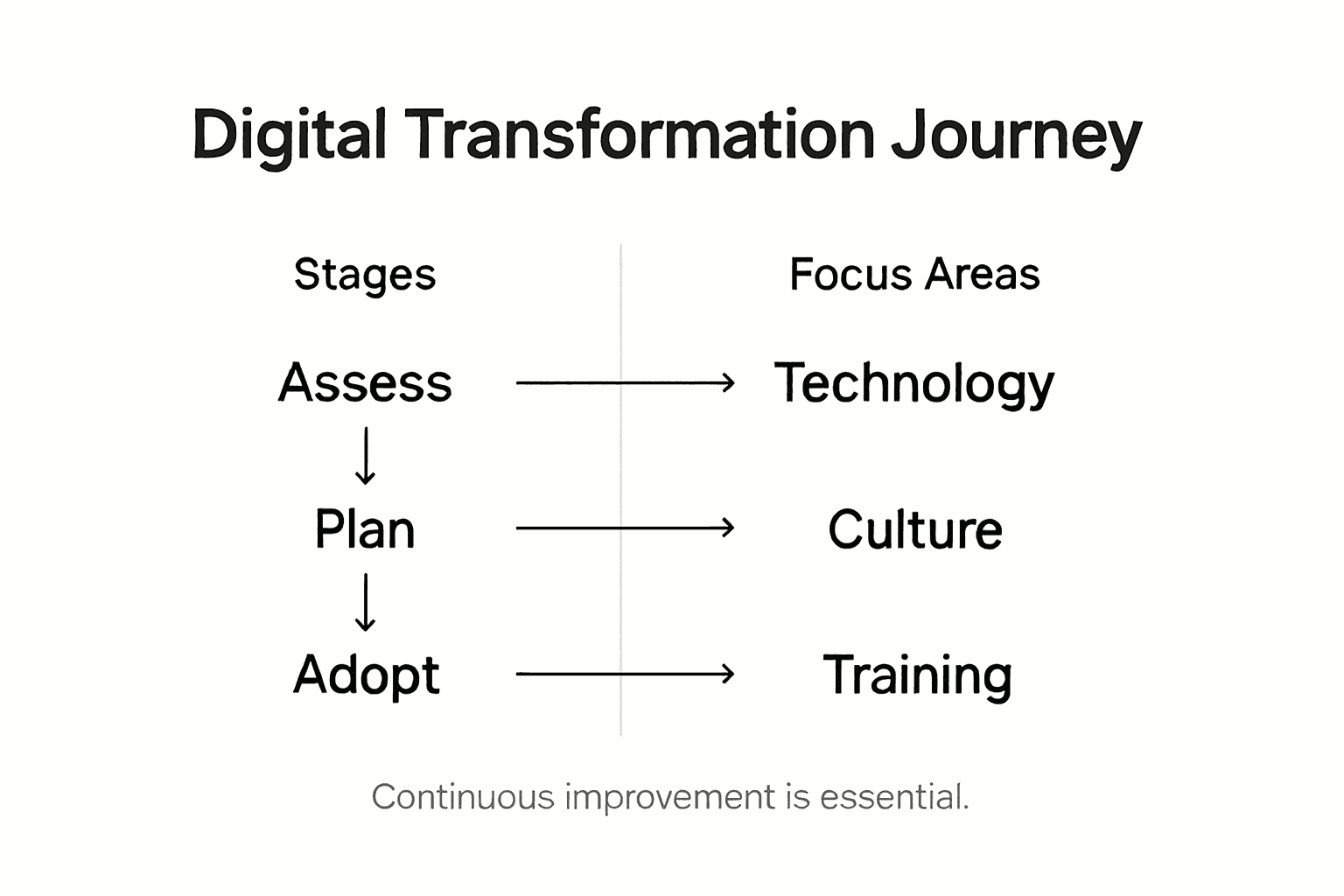
Pro Tip: Begin your digital transformation journey by conducting a comprehensive digital maturity assessment to understand your current technological capabilities and identify strategic improvement opportunities.
Key Technologies Shaping Business Transformation
Artificial Intelligence and advanced digital technologies are fundamentally reshaping how businesses operate, compete, and deliver value. Global technological infrastructures are evolving rapidly, presenting unprecedented opportunities for organizations willing to embrace digital innovation and strategic technological integration.
The core technologies driving business transformation include:
- Artificial Intelligence (AI): Enabling intelligent automation, predictive analytics, and personalized customer experiences
- Big Data Analytics: Providing deep insights for strategic decision making
- Cloud Computing: Offering scalable, flexible technological infrastructure
- Internet of Things (IoT): Connecting devices and generating real-time operational data
- Blockchain: Enhancing transparency and secure transaction mechanisms
- Machine Learning: Creating adaptive, self-improving technological systems
Research from the OECD highlights that digital technologies are not merely tools but transformative platforms that fundamentally reconfigure business models, market dynamics, and organizational capabilities. These technologies enable companies to create more intelligent, responsive, and efficient operational frameworks that can quickly adapt to changing market conditions.
Successful digital transformation requires more than technological implementation – it demands a strategic approach that integrates these technologies holistically, aligns them with business objectives, and develops workforce capabilities to leverage their full potential. Organizations must view these technologies as interconnected ecosystems rather than isolated solutions.

Pro Tip: Develop a comprehensive technology roadmap that prioritizes technologies based on your specific business needs and potential return on investment.
Essential Steps for Adopting Digital Solutions
Digital solution adoption requires a strategic, comprehensive approach that goes beyond simply purchasing new technologies. Organizational transformation frameworks highlight the critical importance of holistic planning and implementation, emphasizing that successful digital adoption is a multifaceted process involving technological, cultural, and strategic dimensions.
Key steps for effectively adopting digital solutions include:
-
Organizational Assessment
- Conduct a comprehensive digital maturity evaluation
- Identify current technological capabilities and limitations
- Understand existing workflow inefficiencies
-
Strategic Planning
- Develop a clear digital transformation roadmap
- Align technological investments with business objectives
- Set measurable performance indicators
-
Technology Selection
- Research and evaluate relevant digital solutions
- Assess scalability and integration potential
- Consider long-term adaptability and innovation potential
Research from Stanford Online underscores that successful digital solution adoption requires more than technological implementation. It demands creating an adaptive organizational culture that embraces continuous learning, encourages experimentation, and develops workforce capabilities to leverage new technological tools effectively.
Cultural transformation is equally crucial as technological implementation. Organizations must invest in change management, provide comprehensive training programs, and create an environment that supports digital innovation. This involves breaking down traditional departmental silos, encouraging cross-functional collaboration, and developing a mindset of continuous improvement and technological adaptability.
Pro Tip: Create a cross-functional digital transformation team that includes representatives from different departments to ensure comprehensive perspective and organizational buy-in.
Roles and Responsibilities of IT Managers
IT Managers serve as critical strategic architects who bridge technological capabilities with organizational objectives. Their multifaceted role extends far beyond traditional technical management, encompassing strategic planning, leadership, and transformative technological implementation.
Core responsibilities of IT managers include:
-
Strategic Technology Alignment
- Develop comprehensive technological roadmaps
- Align IT infrastructure with business goals
- Identify emerging technological opportunities
-
Team Leadership and Development
- Recruit and mentor skilled technical professionals
- Create training and skill development programs
- Foster a culture of continuous learning and innovation
-
Infrastructure Management
- Oversee network security and data protection
- Manage hardware and software infrastructure
- Ensure system reliability and performance
Research from systematic reviews highlights that successful IT managers must balance technical expertise with exceptional leadership and communication skills. They are not merely technical administrators but strategic change agents who drive organizational digital transformation through intelligent technological integration and cultural adaptation.
Modern IT managers must also navigate complex challenges such as cybersecurity threats, rapid technological evolution, and increasing demands for digital innovation. This requires a holistic approach that combines technical knowledge, strategic thinking, risk management, and the ability to communicate complex technological concepts to non-technical stakeholders.
Pro Tip: Develop a continuous learning strategy that includes regular technology workshops, industry conferences, and cross-departmental collaboration to stay ahead of emerging technological trends.
Risks, Challenges, and Common Pitfalls
Digital transformation is a complex journey fraught with potential obstacles that can derail even the most well-intentioned technological initiatives. Organizations face numerous critical challenges that require strategic foresight and proactive management, demanding comprehensive risk assessment and mitigation strategies.
Key risks and challenges include:
-
Organizational Resistance
- Cultural reluctance to adopt new technologies
- Fear of change among existing workforce
- Entrenched legacy systems and mindsets
-
Technological Complexity
- Integration challenges with existing infrastructure
- Skill gaps in emerging technological domains
- Rapid technological obsolescence
-
Strategic Misalignment
- Disconnection between IT and business objectives
- Insufficient long-term technological planning
- Inadequate investment in digital capabilities
Harvard Business School's analysis of global digital transformations reveals that many organizations underestimate the complexity of digital transformation, often viewing it as a one-time technological upgrade rather than a continuous, evolving process of organizational adaptation.
Successful digital transformation requires more than technological implementation. Organizations must develop robust change management strategies, invest in continuous workforce training, create adaptive organizational cultures, and maintain flexibility in their technological approaches. This demands leadership commitment, strategic thinking, and a willingness to experiment and learn from both successes and failures.
Here's a comparison of digital transformation challenges and strategies for overcoming them:
| Challenge Category | Common Obstacles | Effective Mitigation Strategy |
|---|---|---|
| Organizational Culture | Resistance to change, legacy mindsets | Develop adaptive culture and change management |
| Technological Complexity | Integration problems, skill gaps | Invest in workforce training, flexible IT |
| Strategic Misalignment | Disconnect between IT and business | Align technology projects with core objectives |
| Rapid Change | Fast tech evolution, obsolescence | Adopt agile approaches and continuous learning |
Pro Tip: Implement a comprehensive digital transformation governance framework that includes regular performance reviews, continuous learning mechanisms, and agile adaptation strategies.
Measuring Success and Optimizing Outcomes
Digital transformation success requires a sophisticated, multifaceted approach to measurement that goes beyond traditional performance metrics. Comprehensive evaluation frameworks provide structured methodologies for assessing organizational digital maturity, enabling businesses to track progress and make data-driven strategic adjustments.
Key performance indicators (KPIs) for measuring digital transformation success include:
-
Technological Performance
- Technology adoption rates
- Infrastructure efficiency improvements
- System integration effectiveness
-
Operational Metrics
- Productivity enhancements
- Cost reduction percentages
- Process automation achievements
-
Strategic Alignment
- Business goal achievement
- Innovation capability expansion
- Competitive positioning improvements
Harvard Business School's strategic roadmap for digital transformation emphasizes the importance of developing dynamic, iterative measurement approaches that capture both quantitative outcomes and qualitative organizational changes. This means looking beyond immediate technological implementations to understand deeper shifts in organizational capabilities, workforce adaptability, and strategic responsiveness.
Successful measurement requires establishing baseline metrics, creating continuous feedback mechanisms, and maintaining flexibility in assessment strategies. Organizations must develop holistic evaluation frameworks that consider technological performance, human capital development, cultural transformation, and strategic alignment. This approach ensures that digital transformation is viewed as an ongoing journey of organizational evolution rather than a static, one-time implementation.
The following table summarizes major KPIs for assessing digital transformation progress:
| KPI Category | Measurement Focus | Example Metric |
|---|---|---|
| Technology Performance | Infrastructure and adoption rates | Cloud uptime, AI tool usage rate |
| Operations Efficiency | Productivity and cost savings | Process cycle time, cost reduction % |
| Strategic Outcomes | Business alignment, innovation | New products launched, market share gain |
Pro Tip: Implement a quarterly digital transformation scorecard that combines quantitative metrics with qualitative assessments to provide a comprehensive view of organizational progress.
Elevate Your Digital Transformation Journey With Superior Visual Solutions
Digital transformation demands seamless integration of technology that enhances communication and collaboration across your organization. Challenges like strategic alignment and workforce skill development call for reliable, high-quality display solutions that support productive presentations and immersive experiences. Whether upgrading conference rooms or educational spaces, choosing the right projection technology plays a crucial role in achieving your digital transformation goals.

Discover the power of innovative projection with ProjectorDisplay.com. Explore our wide selection of portable, laser, short-throw, and smart projectors tailored for business, education, and home environments. Stay ahead by investing in solutions that offer high lumens, full HD resolution, and wireless connectivity to foster an adaptive culture and drive your organizational success. Act now to benefit from fast shipping within Peninsular Malaysia and responsive customer support. Visit ProjectorDisplay.com to enhance your digital strategy and transform how your team collaborates today.
Frequently Asked Questions
What is digital transformation in business?
Digital transformation refers to the strategic reimagining of how organizations use technology to reshape operations, customer experiences, and culture. It goes beyond just technological upgrades to include the integration of digital capabilities and a comprehensive approach to organizational processes.
What are the key technologies driving digital transformation?
Key technologies include Artificial Intelligence (AI), Big Data Analytics, Cloud Computing, Internet of Things (IoT), Blockchain, and Machine Learning. These technologies facilitate intelligent automation, data-driven decision making, and enhanced customer experiences.
What are some essential steps for adopting digital solutions?
Essential steps include conducting an organizational assessment to evaluate digital maturity, strategic planning to create a clear transformation roadmap, selecting appropriate technologies that align with business objectives, and fostering a culture of continuous learning and innovation.
How can organizations measure the success of their digital transformation efforts?
Organizations can measure success through key performance indicators (KPIs) such as technology adoption rates, operational efficiency improvements, innovation capabilities, and alignment with business goals. It is important to maintain a holistic approach that considers both quantitative and qualitative outcomes.
Recommended
- Tech for Small Businesses: Complete Guide for 2025 – Projector Display
- How to Set Business Goals for Measurable Growth Success – Projector Display
- Understanding Digital Signage for Offices: Key Insights – Projector Display
- 7 Top Digital Transformation Trends for Smarter Display Solutions – Projector Display
- Future of Diesel Engines in 2025: What Technicians Need to Know – My WordPress