

Over 60 percent of American businesses admit they rarely revisit their strategy after initial planning. Staying ahead in a constantly shifting market means regularly assessing where your business stands and what needs to change. By following a structured approach from evaluating your current position to refining goals and action plans you can transform uncertainty into steady progress and uncover growth opportunities hidden in your daily operations.
Table of Contents
- Step 1: Assess Current Business Position
- Step 2: Identify Key Business Objectives
- Step 3: Set Specific and Measurable Goals
- Step 4: Develop Actionable Plans For Each Goal
- Step 5: Monitor Progress And Adjust Strategies
Quick Summary
| Key Point | Explanation |
|---|---|
| 1. Assess Business Position Thoroughly | Analyze financial statements and operational efficiency to understand your market standing. Document all vital performance indicators for ongoing tracking. |
| 2. Set Strategic Objectives Carefully | Develop specific, measurable, and aligned goals that reflect your overall business vision. Ensure objectives reinforce one another for better synergy. |
| 3. Create SMART Goals | Use the SMART criteria to transform objectives into measurable targets, allowing for adaptability based on changing circumstances. |
| 4. Develop Detailed Action Plans | Break down each goal into actionable steps. Assign ownership and establish timelines while preparing contingency plans for potential challenges. |
| 5. Monitor and Adjust Regularly | Establish a real-time tracking system for goal progress. Use regular reviews to refine strategies based on performance metrics and feedback. |
Step 1: Assess Current Business Position
Understanding your business's current landscape is like taking a comprehensive health check. Evaluating your business's position requires a systematic approach that goes beyond surface level metrics.
Start by gathering detailed data across key performance areas. This means diving deep into financial statements, analyzing revenue streams, examining operational efficiency, and understanding your market positioning. Conducting an industry analysis helps contextualize your performance against broader market trends. Break down your assessment into critical domains: financial performance, marketing effectiveness, resource allocation, staff productivity, and risk management.
A pro tip many entrepreneurs overlook: document everything. Create a comprehensive dashboard that tracks your key performance indicators (KPIs) in real time. This living document will not just help you assess your current position but will become an invaluable strategic planning tool. By maintaining a clear, data-driven view of your business, you transform assessment from a periodic exercise into a continuous improvement mechanism.
With a thorough assessment complete, you're now ready to transition into setting targeted growth goals that are anchored in your current business reality.
Step 2: Identify Key Business Objectives
Transforming your business assessment into actionable goals requires strategic precision. Developing strategic objectives is about creating a roadmap that translates your current position into meaningful, measurable targets.
Start by crafting objectives that are specific, measurable, achievable, relevant, and time bound. This means moving beyond vague aspirations to concrete milestones. Aligning your objectives across different business functions ensures a holistic approach to growth. Break down your objectives into categories financial performance, customer experience, internal processes, and learning and innovation. Each objective should directly connect to your broader business vision and provide a clear pathway for implementation.
A critical strategy many leaders overlook is creating objective interdependencies. Your objectives should not exist in isolation but create a interconnected network of goals that reinforce and support each other. Think of it like building a complex machine where each component enhances the performance of others. By establishing clear relationships between objectives, you create a more robust and adaptable strategic framework.
With your key business objectives clearly defined, you are now positioned to develop a detailed strategy for achieving these ambitious yet achievable goals.
Step 3: Set Specific and Measurable Goals
Transforming broad objectives into concrete results requires a strategic approach to goal setting. Using the SMART criteria provides a powerful framework that ensures your goals are not just wishful thinking but actionable targets.

The key is to create goals that are precise and quantifiable. Break down each objective into specific metrics that can be tracked and measured. Implementing the OGSM framework can help you structure your goals by clearly defining the objective, establishing measurable goals, outlining strategies, and determining specific measures of success. For instance, instead of saying you want to increase sales, set a goal like increase quarterly revenue by 15% through targeted marketing campaigns and expanded product lines.
A pro tip many entrepreneurs miss is building flexibility into your goal setting. While specificity is crucial, you also need room for adaptation. Create goals with built in checkpoints that allow you to reassess and adjust your strategy as market conditions or business circumstances change. This approach transforms your goals from rigid targets to dynamic roadmaps that can evolve with your business.
With your specific and measurable goals now clearly defined, you are ready to develop the strategic actions that will turn these objectives into reality.
Step 4: Develop Actionable Plans for Each Goal
Creating a comprehensive business plan transforms abstract goals into tangible strategies that drive real world results. This crucial step bridges the gap between your vision and actual implementation.
Break down each goal into specific actionable steps with clear ownership and timelines. Using the BADIR framework can help you systematically derive insights and develop strategic recommendations. Start by identifying the precise actions required for each goal technical resources needed, potential obstacles, required skills, and budget allocations. For each objective, create a detailed roadmap that outlines milestone dates, responsible team members, required resources, and specific success metrics.
A critical strategy many leaders overlook is building contingency plans. While your primary plan should be robust, always develop alternative approaches for potential roadblocks. Think of these backup strategies like emergency exits in a building they provide safety and flexibility. By anticipating potential challenges and preparing alternative paths, you create a more resilient and adaptable strategic approach.
With actionable plans now developed for each goal, you are positioned to move forward with confident and structured implementation of your business strategy.
Step 5: Monitor Progress and Adjust Strategies
Evaluating organizational agility requires a dynamic approach to tracking and responding to your business performance. Monitoring progress is not a passive exercise but an active strategy of continuous assessment and strategic refinement.
Establish a robust tracking system that provides real time insights into your goal achievement. Aligning metrics with business objectives means creating a dashboard that goes beyond surface level numbers. Implement quarterly review sessions where you critically examine each goal performance. Look for patterns identify what strategies are working and which need adjustment. Use both quantitative metrics like revenue growth and qualitative indicators such as team engagement and market perception.
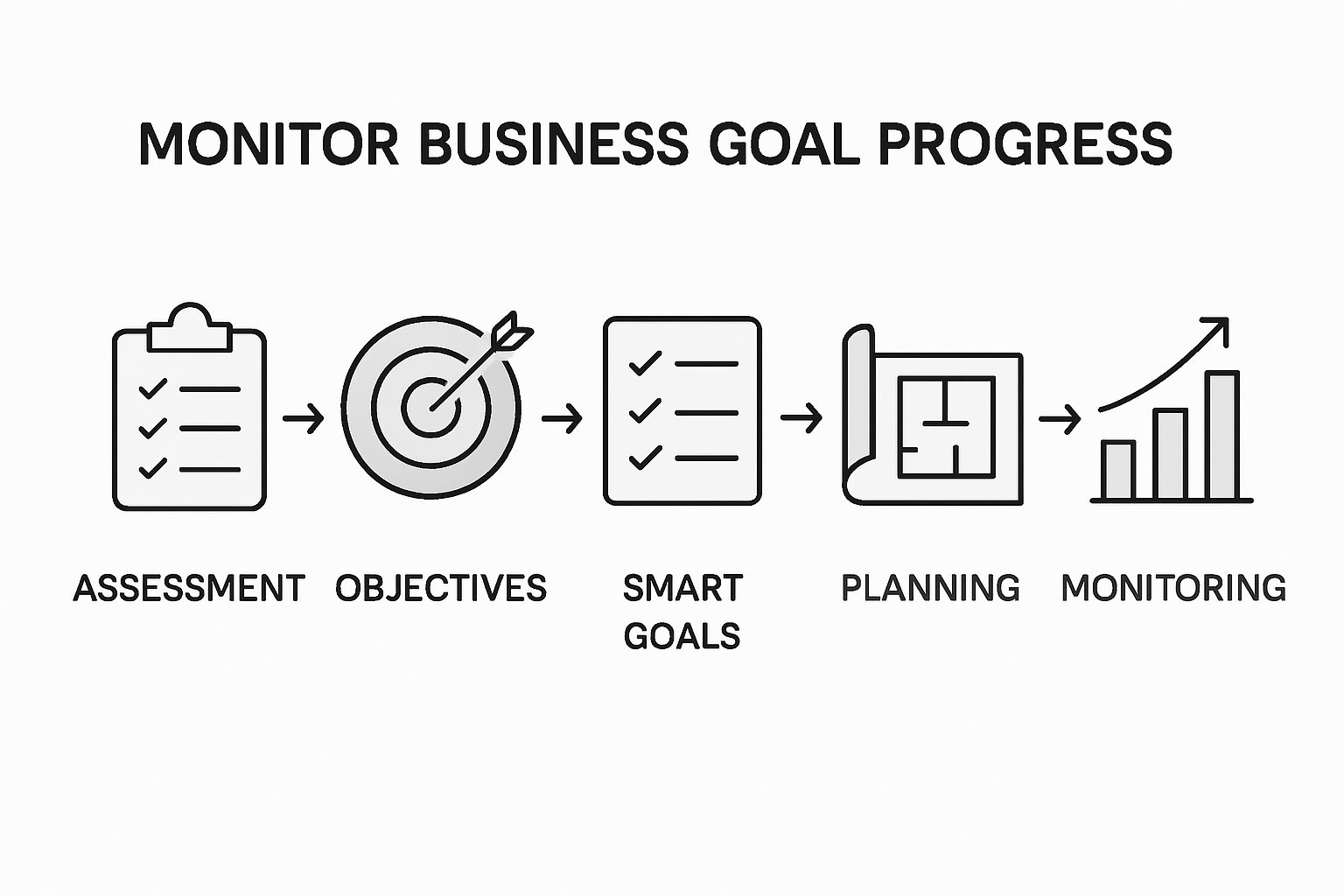
A critical strategy many leaders miss is creating a feedback loop that allows for swift strategic pivots. Treat your business plan as a living document not a rigid blueprint. Build in regular checkpoints where you can recalibrate your approach based on emerging data and market dynamics. This approach transforms monitoring from a reporting exercise into a strategic tool for continuous improvement and organizational adaptability.
With a clear system for tracking and adjusting your strategies, you are now equipped to navigate your business growth with precision and flexibility.
Elevate Your Business Goals with Crystal Clear Visual Solutions
Achieving measurable growth success starts with setting specific, actionable objectives as outlined in the article How to Set Business Goals for Measurable Growth Success. One common challenge businesses face is communicating their vision powerfully and effectively during presentations, meetings, or training sessions. Without the right technology, even the best strategies can lose impact. Key pain points like engaging your audience, providing high-quality visuals, and maintaining flexibility in dynamic environments require reliable projection solutions.
That is where ProjectorDisplay.com can make a real difference. Offering a diverse range of projectors including portable, laser, and smart projectors, our solutions ensure your business presentations and strategic plans come to life with precision and clarity. Whether you are refining your objectives or monitoring progress, having the right display technology is essential for creating a strong connection and driving team alignment. Explore our selection of advanced projection screens and accessories designed to match your business needs.
Take your strategic planning and goal-setting process to the next level today with high-quality visual tools from ProjectorDisplay.com.
Unlock the full potential of your business presentations by visiting our site now for fast shipping across Peninsular Malaysia and expert customer support. Don't settle for less than clear communication—make every meeting count with our professional projector solutions.
Frequently Asked Questions
How can I assess my current business position effectively?
To assess your current business position, gather detailed data across key performance areas like financial performance, operational efficiency, and market positioning. Start by analyzing your financial statements and create a comprehensive dashboard to track key performance indicators (KPIs).
What are the SMART criteria for setting measurable business goals?
The SMART criteria refer to goals that are Specific, Measurable, Achievable, Relevant, and Time-bound. When setting your goals, ensure they meet these criteria to create clear and actionable targets that can be tracked over time.
How do I develop actionable plans for each business goal?
To develop actionable plans, break each goal down into specific steps with clear ownership and timelines. Identify the necessary resources and potential obstacles, and establish a roadmap that outlines milestones and success metrics for each objective.
What metrics should I track to monitor my business goals?
You should track both quantitative metrics like revenue growth and qualitative indicators such as team engagement and market perception. Create a system that provides real-time insights and allows for regular evaluations to ensure you remain aligned with your business objectives.
How frequently should I review my business goals and progress?
Conduct quarterly reviews to assess each goal's performance and identify areas for adjustment. This ensures that you stay responsive to changes and maintain a dynamic approach to your business growth strategy.
What should I do if I need to adjust my business strategies?
If you need to adjust your business strategies, implement a feedback loop that allows you to recalibrate based on emerging data. Regularly revisit your goals and action plans to ensure they remain relevant and effective in achieving measurable growth.