

Setting up a home theater that truly impresses can be tougher than it seems. Size constraints, light flooding in from windows, or the wrong equipment choices can all leave you with washed out images and underwhelming sound. Most people quickly realize that guessing your way through projector and screen selection rarely delivers the immersive experience they imagined.
The right approach saves you money, avoids common pitfalls, and transforms any room into a personal cinema. By following clear, actionable recommendations, you can match your setup to your space, maximize image quality, and create full surround sound that feels like a real theater. These practical tips will guide you step by step, taking you from confusion to confidence in your home theater decisions.
Get ready to discover professional secrets for projector selection, lighting tweaks, ideal placement, and easy sound upgrades—so your next movie night truly wows everyone who watches.
Table of Contents
- 1. Choose The Right Projector For Your Room Size
- 2. Select A High-Quality Projection Screen Material
- 3. Optimize Room Lighting For Better Picture Quality
- 4. Understand Projector Placement And Throw Distance
- 5. Invest In Surround Sound For Full Immersion
- 6. Set Up Simple Wireless Connections For Streaming
- 7. Maintain Your Projector And Screen For Longevity
Quick Summary
| Takeaway | Explanation |
|---|---|
| 1. Select a Projector Based on Room Size | Measure the distance from your projector to screen to choose between short-throw and standard projectors. This ensures proper fitting and functionality. |
| 2. Choose the Right Screen Material | A matte white screen suits most setups, but high-gain screens are better for bright rooms. Consider your room's lighting conditions before buying. |
| 3. Control Ambient Light for Optimal Viewing | Use blackout curtains and avoid direct lighting during movie time. This enhances image quality and contrast from your projector. |
| 4. Implement Surround Sound for Immersive Experience | Invest in a surround sound system to enhance audio quality dramatically. A 5.1 setup is recommended for most home theaters. |
| 5. Maintain Your Projector and Screen Regularly | Regular maintenance of projectors and screens, such as cleaning filters and checking lamp hours, prolongs their lifespan and performance. |
1. Choose the Right Projector for Your Room Size
Your room's dimensions are the foundation for everything that follows in your home theater setup. The size of your space determines which projector will actually work in your environment, and choosing the wrong one can mean wasted money and a disappointing viewing experience.
Room size affects two critical aspects of projector selection: throw distance and brightness. Throw distance refers to how far your projector sits from the screen. In a smaller bedroom or office, you might have only 8 to 10 feet between the back wall and your screen. In that case, a standard projector requiring 12 to 15 feet of throw distance simply won't function properly. This is where short-throw projectors become invaluable for Malaysian homes, especially in urban apartments where space is at a premium. Short-throw projectors can produce a large image from just 3 to 5 feet away, making them perfect for compact rooms.
Conversely, if you have a larger dedicated home theater room with plenty of depth, a standard-throw projector offers more flexibility and often delivers superior image quality at a lower price point than short-throw alternatives. You'll find these projectors dominate the market, and brands like Epson, BenQ, and Optoma projector Malaysia options provide excellent performance across various room sizes.
Brightness is equally important and often overlooked by first-time buyers. Lumens measure brightness output, and the right lumen count depends entirely on your room's lighting conditions. A dark, windowless room with blackout curtains needs only 100 to 1,000 lumens to display a crisp, vibrant image. However, if your room receives ambient light from windows or you prefer to watch without complete darkness, you'll need 2,000 to 3,000 lumens to prevent image washout. This is particularly relevant for Malaysian homeowners who might not have dedicated home theater rooms and need projectors that perform well in naturally lit spaces.
Here's a practical way to assess your situation: measure the distance from where you plan to place the projector to your screen location. This throw distance number guides your projector category choice. Next, evaluate your lighting honestly. Can you darken the room completely during viewing, or do you have light sources you'd prefer to keep active? This determines your brightness requirements. When you understand both factors, comparing specifications becomes straightforward, and you'll avoid the common mistake of selecting a projector designed for a completely different room setup.
For Malaysian buyers specifically, considering products from trusted retailers offering best projector seller in Malaysia services ensures you get accurate recommendations tailored to local room dimensions and climate conditions. Many popular models come with flexible mounting options and adjustment capabilities that accommodate various room configurations.
Pro tip: Visit your local projector retailer in Malaysia and request a throw distance calculator or quick room assessment before making a purchase, as this simple step prevents costly mistakes and ensures your chosen projector actually fits your space properly.
2. Select a High-Quality Projection Screen Material
The screen material you choose matters just as much as the projector itself. Many people overlook this critical component, assuming any white surface will work, but the truth is that screen material directly impacts brightness, contrast, color accuracy, and your overall viewing satisfaction.
Projection screens are engineered products, not simple painted surfaces. Screen materials vary in reflectivity, gain, and texture, each designed to optimize performance under specific conditions. Reflectivity determines how much of the projector's light bounces back to your eyes, while gain refers to a measurement system where 1.0 is neutral and higher numbers mean increased brightness. Texture affects how evenly that light scatters across the viewing area, which impacts image clarity from different seating positions.
Matte white screens represent the most universally compatible option and are the go to choice for most Malaysian home theater setups. These screens feature a gain of approximately 1.0, meaning they reflect light uniformly without color distortion. They work beautifully with virtually any projector type and handle ambient light reasonably well. If you're sitting in a slightly lit room or your family members like to move around during viewing, a matte white screen keeps the image visible from multiple angles without the dark spots or hotspots that can occur with higher gain materials.
However, if you're facing brighter ambient light conditions, such as a room with large windows or one that doubles as a living space, specialized high-gain screens become more attractive. These materials can reach gains of 1.5 to 2.0 or higher, essentially amplifying the projector's output. The tradeoff is reduced viewing angle, meaning the image looks optimal from directly in front but degrades if you sit far to the side. For dedicated dark home theaters, high-gain screens aren't necessary and might actually create unwanted brightness inconsistencies.
Another consideration is screen color. Pure white screens are standard, but some premium screens incorporate subtle gray tints to enhance black levels and overall contrast. This matters when you're watching action movies or dramatic films where deep blacks add emotional impact. Gray screens reduce overall brightness slightly but deliver richer, more nuanced images. This choice depends on your projector's brightness and your room's darkness level.
For Malaysian buyers investing in best projector screen options, surface quality is equally important as material composition. Look for screens manufactured by established brands that control quality during production. Wrinkles, uneven coating, or manufacturing defects can create hot spots where certain areas appear brighter than others, ruining your viewing experience. Premium screens from trusted suppliers ensure consistent performance across the entire surface.
Don't overlook the screen frame and mounting system either. In Malaysia's humid climate, materials that resist moisture absorption and mold growth become practical necessities. Quality screens use materials that withstand tropical conditions without degrading. Budget screens might appear to save money initially but often fail prematurely in humid environments.
Pro tip: Request material samples or view demonstration screens at your local retailer before purchasing, as seeing how different screen materials perform with actual lighting conditions in your space will reveal which option delivers the viewing experience you want.
3. Optimize Room Lighting for Better Picture Quality
The room you watch your projector in is just as important as the projector itself. Lighting control transforms a mediocre viewing experience into something truly cinematic, and it doesn't require expensive renovations or complicated equipment.
When ambient light floods your viewing space, it washes out colors, reduces contrast, and makes blacks appear gray. Your projector works by reflecting light onto the screen, and if that room is already bright, the image gets diluted before it even reaches your eyes. Think of it like trying to see stars during the day. They're still shining, but daylight overpowers them. The same principle applies to your projected image.
Start by eliminating direct light sources during viewing hours. Windows are often the biggest culprits in Malaysian homes, where sunshine is abundant year round. Heavy blackout curtains or motorized roller shades solve this problem effectively. These aren't just decorative additions, they're functional equipment that protects your investment in quality projection. When you close them, you create a darker environment where your projector's brightness can truly shine. The image gains depth, colors pop with intensity, and darker scenes reveal details that disappear in brighter conditions.
Next, address artificial lighting within the room. Ceiling lights, table lamps, and even LED strips seem innocuous, but they contribute to ambient light that degrades picture quality. The solution is simple: turn them off during viewing. If you need some light for safety or ambiance, install dimmable fixtures that let you reduce brightness dramatically. Some enthusiasts install soft accent lighting behind the screen or around the perimeter of the room at very low levels. This provides just enough illumination to navigate safely without competing with the projected image.
Reflective surfaces magnify lighting problems. Mirrors, glossy paint, light colored furniture, and metallic decorations all bounce light around the room. Consider the surfaces that face your screen. Matte finishes absorb light rather than reflecting it, so painting walls in flat or matte colors significantly improves your viewing environment. Dark colors are ideal because they absorb stray light rather than bouncing it back. This doesn't mean your room must feel like a cave, but strategic use of darker finishes in key areas makes a noticeable difference.
Wall color behind and around your screen deserves special attention. Light colored walls reflect light back onto the screen, creating a washed out appearance. Many home theater enthusiasts paint the wall behind the screen a dark gray or black. This absorbs light and creates better contrast. The side walls should also lean toward darker tones to prevent light bounce that could affect picture quality from various seating positions.
For Malaysian homeowners dealing with tropical climate challenges, consider how heat and humidity interact with your lighting choices. Dark colors absorb more heat, which can make rooms uncomfortable. Balance your lighting optimization with ventilation and climate control. A well ventilated room with proper cooling combined with blackout curtains provides both visual excellence and physical comfort.
Timing matters too. Watching your projector during daytime requires much brighter conditions than nighttime viewing. You might tolerate slightly higher ambient light in the afternoon, but ideally you'd schedule important movie viewing for evenings when you have complete darkness control. This simple scheduling hack lets you get maximum enjoyment from your projector screen setup without additional investments.
The interaction between room lighting and your screen choice is worth mentioning. A high gain screen performs better in brighter rooms, while a matte white screen works well in optimized dark spaces. By controlling your lighting first, you gain flexibility in screen selection and can often choose less expensive options that still deliver excellent performance.
Pro tip: Install dimmable LED accent lights on a separate circuit that you can control independently, allowing you to quickly adjust room lighting for different viewing scenarios without walking around manually switching switches.
4. Understand Projector Placement and Throw Distance
Where you position your projector in the room fundamentally determines whether your system works or fails. Throw distance is the measurement from your projector lens to the screen, and getting this wrong means you either cannot fill your screen with an image or you end up with a tiny picture in the corner of a massive blank wall.
Throw distance comes down to simple physics and projector optics. Every projector has a specific throw ratio, which is a mathematical relationship between the distance traveled and the image size produced. A projector with a 2.0 throw ratio needs to sit twice as far from the screen as the screen width to fill it completely. If your screen is 10 feet wide and your projector has a 2.0 throw ratio, you need 20 feet of distance. Understanding optimal projector distance becomes critical when planning your setup, because your room dimensions ultimately dictate which projectors are actually viable for your space.
Standard throw projectors dominate the market and offer excellent value for most home theaters. They typically have throw ratios between 1.5 and 2.2, meaning they require substantial distance from the screen. If you have a dedicated home theater room with plenty of depth, these projectors deliver outstanding image quality at reasonable prices. They give you flexibility in positioning and generally offer superior optical performance compared to specialized alternatives.
Short-throw and ultra-short-throw projectors represent a different category entirely. These units can project large images from just a few feet away, with throw ratios as low as 0.3 or even lower. For Malaysian homeowners in apartments or compact rooms, short-throw projectors solve the placement challenge. You can mount them on a table near the screen or install them on the ceiling close to the front wall. The tradeoff is cost, as short-throw technology commands a premium price, but for space constrained environments, the investment often makes sense.
Projector angle matters more than many people realize. If your projector sits below your screen and points upward, or above the screen pointing downward, you introduce keystone distortion where the image appears trapezoidal rather than rectangular. Professional installations minimize this angle to preserve image geometry. The best practice is positioning your projector at approximately the same height as the screen's center, aiming straight ahead. This requires advance planning during room setup, so measure carefully before installation.
Ceiling mounting provides clean aesthetics and solves cable management challenges, but it demands accurate throw distance calculation. When you mount a projector to the ceiling, the distance measurement runs from the lens to the screen, accounting for the vertical angle. Many installers use throw distance calculators to ensure precise positioning before drilling mounting holes. This prevents the frustration of discovering your projector cannot focus on your screen after installation.
Focus and alignment go hand in hand with placement. Once your projector sits in its final position, you need to focus the lens until the image appears sharp across the entire screen. Improper focus ruins image quality regardless of how expensive your projector was. Most projectors allow mechanical focus adjustment, and some premium models include autofocus technology that handles this automatically. Take time during setup to achieve perfect focus, as this final step dramatically impacts your viewing experience.
Cable routing follows from your placement decision. Ceiling mounted projectors require either long power cords running along walls or professional in wall installations. Tabletop setups offer simpler cable management but consume valuable desk or shelf space. Malaysian installers often prefer ceiling mounting to preserve room aesthetics and protect projectors from accidental damage in living spaces.
Throw distance is not adjustable after you commit to a projector model and room configuration. Measure twice, install once.
For Malaysian buyers investing in best projector Malaysia systems, visiting a showroom to see how different throw distances work with actual screens provides invaluable insight. Seeing a short-throw projector produce a full screen image from just three feet away versus a standard throw model requiring fifteen feet brings the concept to life in ways that specifications cannot match.
Pro tip: Before purchasing any projector, physically measure the distance from your planned installation location to your screen position, then verify that measurement against your projector's throw ratio specifications to confirm the image will fill your screen completely.
5. Invest in Surround Sound for Full Immersion
A stunning visual experience falls flat without equally impressive audio. Your ears are just as important as your eyes when it comes to cinematic immersion, yet many home theater builders focus entirely on the projector and screen while neglecting sound. This is a critical mistake that undermines your entire investment.
Surround sound creates three dimensional audio that draws you into the action rather than simply delivering dialogue from a speaker in front of you. When a helicopter flies across the screen from left to right, proper surround sound makes it fly across the room from your left ear to your right ear and continuing behind you. This spatial audio experience cannot be replicated with a simple stereo setup. Your brain recognizes these directional cues and processes them as realistic, which dramatically enhances emotional engagement with whatever you are watching.
Understanding basic surround sound configurations helps you make informed decisions. A 5.1 system includes five speakers plus a subwoofer. The front left and right speakers handle music and general audio, the center channel delivers dialogue so actors' voices match their on screen positions, and the left and right surround speakers positioned at the sides or rear of your seating area create the immersive effect. The subwoofer handles low frequency effects like explosions and thunderstorms that you feel more than hear. This configuration represents the entry point for meaningful surround sound and delivers night and day improvement over stereo.
A 7.1 system adds two additional surround speakers, typically positioned at the back corners of the room. This provides more refined directional audio and works particularly well in larger spaces. If your home theater room exceeds 15 feet in depth, investing in a 7.1 system makes sense. For average sized Malaysian home theater rooms, a well calibrated 5.1 system delivers excellent results at significantly lower cost.
Sound system design for projectors requires thoughtful speaker placement. Your center channel speaker should mount directly above or below the screen so dialogue appears to originate from the actors' mouths. The front left and right speakers angle slightly toward the listening area to create an immersive sound stage. Surround speakers position at ear level to your sides or slightly behind the seating area. This geometry creates the three dimensional effect that makes surround sound powerful.
Room acoustics matter as much as speaker quality. Hard surfaces like tile floors and glass windows reflect sound, creating echoes that muddy audio clarity. Carpet, curtains, soft furniture, and acoustic panels absorb sound reflections and improve clarity. Malaysian homes with tile or concrete floors benefit significantly from adding rugs and soft furnishings to the media room. This simple approach improves perceived audio quality without expensive equipment changes.
Subwoofer placement dramatically affects bass performance. Many people position subwoofers arbitrarily in corners, but the optimal location depends on your room's acoustic characteristics. Bass frequencies behave differently than mid range and treble, responding to room geometry in complex ways. Some corners produce boomy bass while others sound thin and weak from the same subwoofer. Spend time experimenting with subwoofer placement, moving it to different locations and listening to the same content before settling on a permanent spot. This investment in positioning often improves bass quality more than spending additional money on a larger or more expensive unit.
Crossover frequency settings determine which speakers handle which frequencies. Your receiver allows you to set a crossover point where lower frequencies route to the subwoofer and higher frequencies go to your main speakers. Typical settings range from 80 to 120 Hertz. If your front speakers are small or sit far from the listening position, use a higher crossover point like 120 Hertz to free those speakers from handling difficult low frequencies. Larger front speakers with robust bass can use lower crossover points like 80 Hertz. Correct crossover settings smooth out transitions between speakers and improve overall audio coherence.
Cable quality affects surround sound performance less than many people believe, but connections matter. Use shielded speaker cables to prevent electromagnetic interference, especially in rooms with multiple electronic devices. Run surround speaker wires along walls or within walls when possible, keeping them away from power cables. Poor connections introduce noise that degrades audio clarity, so spend time ensuring all connections are firm and properly seated.
Calibration transforms surround sound systems from merely good to genuinely excellent. Most modern AV receivers include automatic calibration features using a included microphone. Place the microphone at ear level in your primary seating position and let the system measure speaker levels and distances. This ensures each speaker contributes equally to the sound stage. After automatic calibration, you can make fine adjustments by ear if you prefer different settings. Many enthusiasts spend an hour or two tweaking settings and discover dramatic improvements in audio quality.
Pro tip: Start with a quality 5.1 surround system before considering expensive upgrades like Dolby Atmos ceiling speakers, as a properly calibrated 5.1 system outperforms a poorly installed 7.1 or higher configuration every single time.
6. Set Up Simple Wireless Connections for Streaming
The days of running cables across your home theater room are behind you. Wireless streaming transforms how you access content, but setting it up properly separates frustration free viewing from constant connectivity headaches. Let's walk through the essentials so your system works reliably every single time.
Wireless streaming means your projector and audio system receive content through your home network rather than physical cables. Your smartphone becomes a remote control, your laptop can display presentations or movies, and streaming devices like Roku, Apple TV, or Google Chromecast connect directly to your projector. The convenience factor alone justifies wireless setup, but reliability depends on getting the fundamentals right.
Start with your network foundation. A strong WiFi signal throughout your home theater space is non negotiable. Position your router in a central location if possible, away from thick walls and metal objects that block wireless signals. Many Malaysian homes use concrete walls that severely attenuate WiFi signals, so you might need to relocate your router or add a wireless extender in the media room. Modern WiFi 6 routers offer improved range and speed compared to older standards, and upgrading to one of these devices often solves connectivity problems immediately.
Bandwidth matters more than most people realize. If multiple devices compete for the same WiFi network, streaming devices might not get enough speed for reliable 4K video playback. A dedicated 5 GHz WiFi network for your home theater equipment separates streaming traffic from casual browsing on your phones and laptops. Most modern routers allow you to broadcast two networks simultaneously, so configure one for your media devices and another for general household use. This simple step dramatically improves streaming reliability without any additional hardware investment.
Wireless projector connectivity comes in several flavors. Many newer projectors include built in WiFi allowing direct screen mirroring from compatible devices. AirPlay for Apple products, Miracast for Windows devices, and proprietary solutions from manufacturers like Epson or BenQ all work wirelessly. Not all projectors support wireless streaming, so verify this feature before purchasing if it matters for your setup. For older projectors without wireless capability, adding a dedicated streaming device like Apple TV or Chromecast positioned near your projector solves the problem inexpensively.
Streaming devices require a home theater specific approach. Position your Roku, Apple TV, or Chromecast near your projector for optimal WiFi signal strength. Some people hide these devices in cabinets or behind the screen, but doing so often weakens their wireless connection. Keep them in open air with clear line of sight to your router whenever possible. If your streaming device sits far from your router and experiences buffering, moving it closer or adding a WiFi extender in that location fixes the issue.
Wireless streaming reliability depends more on network infrastructure than device quality. A budget streaming device with excellent WiFi signal outperforms expensive equipment fighting weak connectivity.
Content apps require your attention during setup. Netflix, Disney Plus, Amazon Prime Video, YouTube, and other services need to authenticate on your streaming device. Enter your login information once during initial setup, and the device remembers it permanently. For households with multiple account holders, configure profiles so each person sees their personalized recommendations and watchlist.
Remote control options simplify wireless streaming. Your streaming device comes with a dedicated remote, but universal remotes or smartphone apps offer convenient alternatives. Many people find controlling their entire home theater system from a single smartphone app more intuitive than juggling multiple remotes. Apps like the Apple Remote, Google Home, or manufacturer specific apps put all controls at your fingertips.
Security deserves attention when setting up wireless connections. Use a strong WiFi password to prevent neighbors from connecting to your network and consuming your bandwidth. Change default passwords on streaming devices if they allow it. Most modern devices automatically update security patches, but periodically checking for updates ensures you have the latest protections against vulnerabilities.
Wireless audio streaming complements your video setup. AirPlay, Bluetooth, and WiFi Direct allow you to stream music from your phone directly to your home theater speakers or dedicated wireless speakers. This transforms your media room into a multi function space where you can watch movies with full surround sound but also stream background music during casual gathering without turning on the projector. Quality wireless audio receivers ensure this functionality works smoothly without dropouts or sync issues.
Latency is the hidden enemy of wireless streaming. Some wireless technologies introduce delay between when you press a button and when your device responds. For watching content this barely matters, but for interactive applications or gaming, latency becomes frustrating. Standard WiFi performs adequately for content streaming, but dedicated low latency wireless protocols exist for gaming focused setups. For most home theater applications focused on movies and shows, standard WiFi handles everything beautifully.
Malaysian humidity affects wireless equipment more than people expect. Moisture in the air can degrade wireless signals and corrode electronic components over time. Ensure your media room maintains reasonable humidity levels through proper ventilation or climate control. Keep electronics away from direct sources of moisture, and consider protective covers for equipment during extended periods of non use.
Pro tip: Test your wireless streaming setup thoroughly with actual content you plan to watch before finalizing your installation, ensuring your network handles 4K streaming or other formats you prefer without buffering or connection drops.
7. Maintain Your Projector and Screen for Longevity
Your projector and screen represent significant investments, and proper maintenance ensures they deliver outstanding performance for years rather than months. Neglecting basic care shortcuts your equipment's lifespan dramatically and leads to expensive repairs or premature replacement. The good news is that maintenance requires minimal effort when done consistently.
Projector lamps represent the most critical maintenance concern. These are consumable components that gradually dim over time, typically lasting between 2,000 and 5,000 hours depending on model and usage patterns. Understanding projector lamp lifespan helps you plan replacements before your image quality noticeably degrades. Many projectors display lamp hour counters on the menu, showing exactly how many hours your bulb has operated. When your lamp approaches end of life, order a replacement in advance so you have it ready when brightness drops below acceptable levels. Trying to extend a dying lamp's life by running it at full brightness damages the lamp and potentially harms your projector's internal components.
Dust accumulation represents the second major threat to projector longevity. Your projector's internal cooling system draws air through filters and past optical components. Dust buildup blocks airflow, causing the projector to overheat and throttle performance or shut down entirely. Malaysian homes in urban areas experience heavier dust loads than rural locations, making regular filter cleaning especially important. Most projectors have easily accessible filters that pop out for cleaning. Use a soft brush or compressed air to gently remove dust buildup. Never use a vacuum cleaner near your projector, as the static electricity can damage sensitive electronics.
The projector lens demands special care. Your lens is precision optical glass that focuses light onto the screen, and any scratches or dust on its surface degrades image quality. Never touch the lens with your bare fingers, as skin oils leave residue that's difficult to remove. If dust settles on the lens, use a specialized lens cleaning kit with microfiber cloths and lens cleaning solution designed for optical glass. Store lens caps when your projector is not in use to prevent dust accumulation. For Malaysian users dealing with humid air and potential mold growth, ensure your projector operates in well ventilated spaces to prevent moisture damage to optical coatings.
Ventilation and airflow are non negotiable for projector health. Your projector generates significant heat during operation, and the cooling fan must expel that heat effectively. Never block air vents or place your projector in an enclosed cabinet without ventilation. Position it where air can circulate freely around it. If your projector sits in a particularly dusty environment, consider using a projector enclosure with built in air filtration that protects the unit while maintaining proper cooling.
Cleaning your projector regularly maintains image quality beyond just maintaining hardware. Dust on internal optical elements reduces brightness and contrast gradually. Annual deep cleaning by a qualified technician removes accumulated dust from areas you cannot access yourself. For Malaysian users where humidity enables faster dust accumulation, consider professional cleaning every 18 months rather than annually.
Projector software requires attention too. Manufacturers release firmware updates addressing bugs, improving compatibility, and sometimes adding features. Check your projector's menu for available updates quarterly. Connecting your projector to your network allows it to download and install updates automatically. These updates often improve performance and fix issues you might not even know existed.
Your projection screen demands gentler but equally important care. Never touch the screen surface with bare hands, as oils leave marks that attract dust and degrade appearance. If dust accumulates on your screen, gently brush it away with a soft horsehair brush designed for screens. For stubborn marks or stains, use a slightly damp microfiber cloth, never liquid cleaners that could damage the screen material. Store screens in protective cases when not in use for extended periods.
Screen tension requires periodic adjustment. Motorized screens sometimes lose tension over time, causing the surface to wrinkle or sag. Check your screen tension monthly by looking for any visible wrinkles or uneven surfaces. If sagging occurs, most motorized screens have tension adjustment bolts that you can tighten to restore flatness. Manual pull down screens rarely experience tension issues but can accumulate dust in the storage tube, so keep the dust cover installed when not in use.
Regular maintenance prevents catastrophic failures that cost far more than scheduled preventive care ever could.
Cable connections deserve occasional inspection. Over time, vibration from the cooling fan or ambient temperature changes can loosen connections. Gently wiggle each cable connection quarterly to ensure they remain firmly seated. Loose connections introduce noise or intermittent signal loss that frustrates users. Fixing this often involves simply reseating a cable.
Temperature control matters more than many people realize. Projectors perform optimally between 50 and 95 degrees Fahrenheit. Malaysian climates often exceed this upper range, so ensure your home theater room maintains reasonable temperature through air conditioning. High temperature operation shortens lamp life and degrades electronic component longevity. If your projector's thermal shutdown triggers frequently, your room needs better cooling or ventilation.
Maintenance records help you track equipment age and warranty status. Document when you replace lamps, clean filters, or perform professional service. This information proves invaluable if you ever need warranty service or decide to upgrade. For Malaysian buyers, maintaining records also protects your investment if warranty disputes arise.
Pro tip: Create a simple maintenance calendar that reminds you to check lamp hours monthly, clean filters quarterly, and schedule professional service annually, treating these tasks as seriously as you would car maintenance.
Below is a detailed table summarizing the main strategies and elements necessary for setting up an optimal home theater experience as discussed in the article.
| Aspect | Key Guidelines | Considerations |
|---|---|---|
| Choosing a Projector | Select based on throw distance and lumen requirements specific to room dimensions. | Short-throw models for compact spaces; higher lumens for brighter environments. |
| Projection Screen Materials | Opt for materials with appropriate gain and surface texture. | Matte white screens are versatile, while high-gain screens suit bright rooms. |
| Room Lighting | Control ambient light using blackout curtains and dimmable fixtures. | Dark walls and minimizing reflective surfaces enhance viewing conditions. |
| Projector Placement | Position the projector considering throw distance, angle to screen, and room setup. | Ceiling mounts provide clean installations, but require accurate calculations. |
| Audio Setup | Invest in surround sound systems (e.g., 5.1 or 7.1) for immersive audio experiences. | Calibrate speakers and optimize placement for clear, directional sound. |
| Wireless Streaming | Utilize modern wireless streaming devices compatible with your projector. | Ensure strong, dedicated WiFi for consistent connectivity and performance. |
| Maintenance | Regularly clean dust filters, replace projector lamps, and manage ventilation. | Maintain records of maintenance schedules and follow climate-specific practices. |
This table organizes and presents the essential aspects for creating an enjoyable home theater setup based on the insights from the article.
Discover the Ultimate Home Theater Experience with ProjectorDisplay.com
Creating a captivating home theater is about more than just buying a projector and screen. The challenge lies in selecting the perfect equipment that fits your room size, enhances image quality, and delivers immersive sound. Whether you struggle with finding the right projection screen to optimize brightness and contrast or need a powerful sound system that completes the cinematic atmosphere, ProjectorDisplay.com offers solutions designed especially for Malaysian homes. Avoid common pitfalls like poor throw distance, ineffective lighting, and subpar audio that undermine your viewing pleasure.
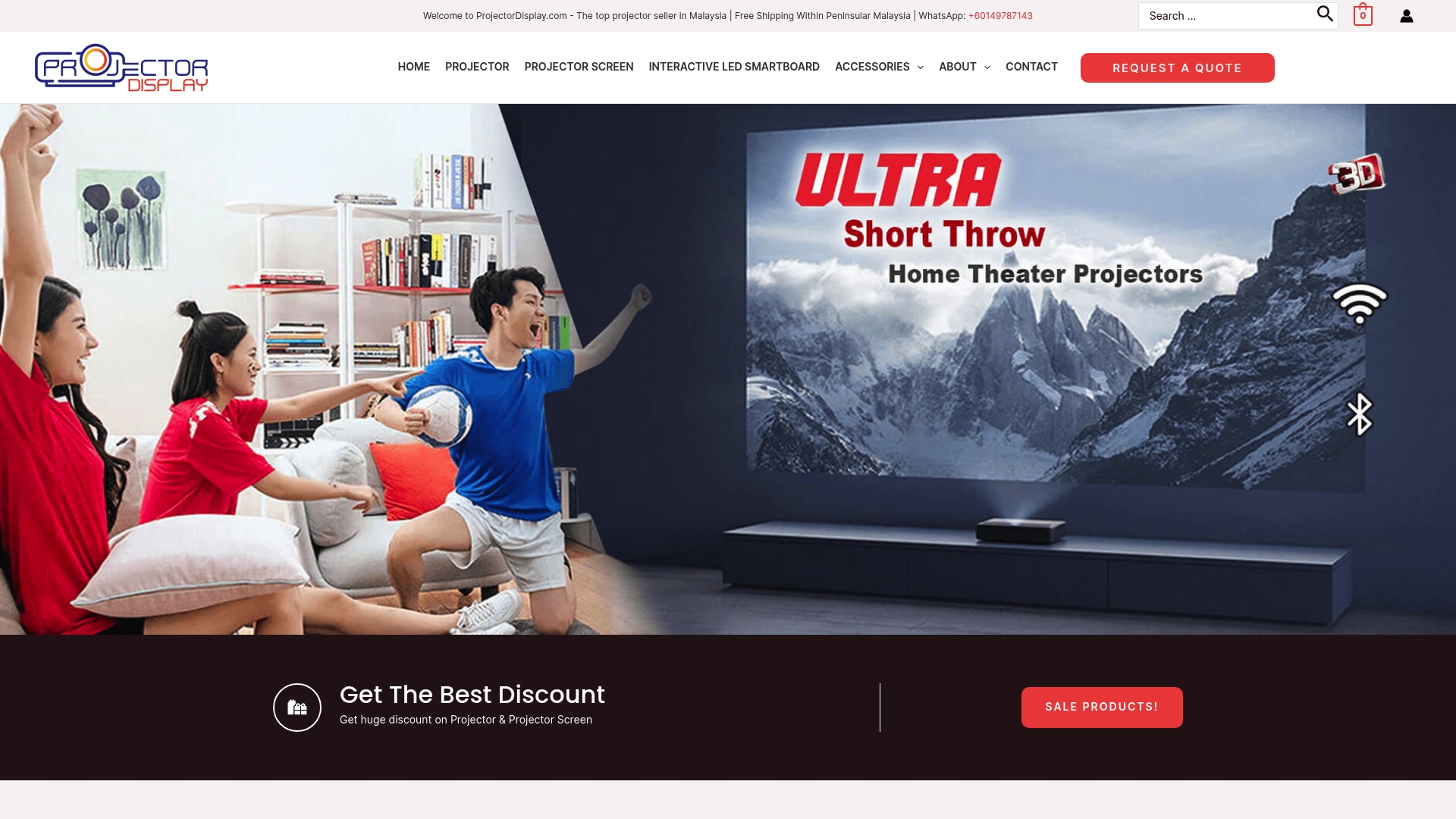
Take control of your home theater setup today by exploring our carefully curated selection of projectors, screens, and accessories. Benefit from expert guidance, fast shipping across Peninsular Malaysia, and products tailored to your unique space and lifestyle. Visit ProjectorDisplay.com now to upgrade your entertainment space with high-quality equipment that guarantees years of immersive movie nights. Act now and transform your viewing experience with the best projector and screen solutions available.
Frequently Asked Questions
What should I consider when choosing a projector for my home theater?
Choosing the right projector depends on your room size and lighting conditions. Measure the distance from your projector's location to the screen and select a model that suits your setup, such as a short-throw projector for smaller spaces.
How do I optimize my projection screen for the best viewing experience?
Select a high-quality screen material that reflects light evenly and works with your ambient lighting. If your room has high ambient light, consider a high-gain screen to enhance brightness, or choose a matte white screen for more controlled lighting conditions.
What are some effective ways to manage room lighting for projector viewing?
To improve picture quality, eliminate direct light sources and use heavy blackout curtains to darken the room. Additionally, consider using dimmable lights to create the right atmosphere while ensuring sufficient visibility during safe navigation.
How can I ensure my projector is placed correctly in the room?
Determine the correct throw distance by measuring from the projector lens to the screen based on the projector's throw ratio. Aim to position the projector at the same height as the center of the screen, minimizing any potential image distortion.
What type of audio setup is recommended for a home theater system?
Invest in a surround sound system, starting with a 5.1 configuration, to create a more immersive audio experience. Position speakers strategically around the seating area to enhance directional sound, making the viewing experience more engaging.
How do I set up wireless connections for streaming content to my projector?
Establish a strong WiFi signal in your home theater space for reliable streaming. Consider separating your home theater devices on a dedicated network, ensuring they have ample bandwidth for uninterrupted playback.
Recommended
- 7 Best Home Theater Projector Tips for Ultimate Viewing – Projector Display
- Best Projector and Screen for Home Theater in Malaysia 2025 – Projector Display
- Home Theater Projector Setup: Achieve the Ultimate Viewing Experience – Projector Display
- How to Build Home Theater: Create Your Ultimate Setup – Projector Display