

Projector lamps power everything from classroom presentations to epic movie nights and they are at the heart of sharp and vivid images. Most people expect their lamp to last for years but did you know standard projector lamps usually burn out after just 2,000 to 5,000 hours of use. Now for the curveball. In hot, humid environments like Malaysia, skipping proper shutdowns or cleaning can cut that number down even faster and leave you in the dark sooner than you think.
Table of Contents
- What Is A Projector Lamp And Its Lifespan?
- Why Projector Lamp Lifespan Matters For Users
- How Projector Lamps Work: Technology Behind The Lifespan
- Key Factors Influencing Projector Lamp Lifespan
- Real-World Context: Projector Lamp Lifespan In Malaysia
Quick Summary
| Takeaway | Explanation |
|---|---|
| Projector lamps impact visual quality. | Their lifespan directly affects brightness and clarity of images projected in various settings. |
| Replace lamps every 2,000 to 5,000 hours. | Regular maintenance ensures optimal performance and prevents unexpected failures in projection systems. |
| Environmental factors affect lamp longevity. | High temperatures, humidity, and dust can accelerate degradation, necessitating proper care and placement. |
| UHP lamps experience gradual brightness decline. | Expect a 20% reduction in brightness within initial hours, affecting presentation quality over time. |
| Investment in quality lamps is crucial. | Replacement costs range from $200 to $500, making informed choices important for long-term budget management. |
What is a Projector Lamp and Its Lifespan?
A projector lamp is the critical light source responsible for producing the bright, clear images you see projected onto screens or walls. These specialized bulbs convert electrical energy into intense light that passes through imaging technology to create visual displays. Understanding projector lamp lifespan is crucial for maintaining optimal projection quality and managing long-term equipment costs.
The Technological Heart of Projection
Projector lamps are not ordinary light bulbs but sophisticated technological components designed to generate extremely high-intensity illumination. Most modern projectors utilize Ultra-High-Performance (UHP) lamps, which are high-pressure mercury arc lamps developed by Philips. These lamps can reach internal pressures up to 200 atmospheres during operation, enabling them to produce remarkably bright and consistent light output.
UHP lamps operate through a complex process where electrical current passes through pressurized mercury vapor, creating an extremely bright arc of light. This light is then precisely focused and directed through color wheels, imaging chips, and optical systems to generate the projected image. Learn more about projection technology in our comprehensive guide on projection systems.
Understanding Lamp Lifespan Dynamics
Projector lamp lifespan is typically measured in operational hours and varies significantly based on several critical factors:
- Usage Intensity: Continuous high-brightness mode reduces overall lamp longevity
- Environmental Conditions: High temperatures and dust can accelerate lamp degradation
- Projector Model: Different technologies have varying lamp performance characteristics
According to projection technology experts, most projector lamps last between 2,000 and 5,000 hours.
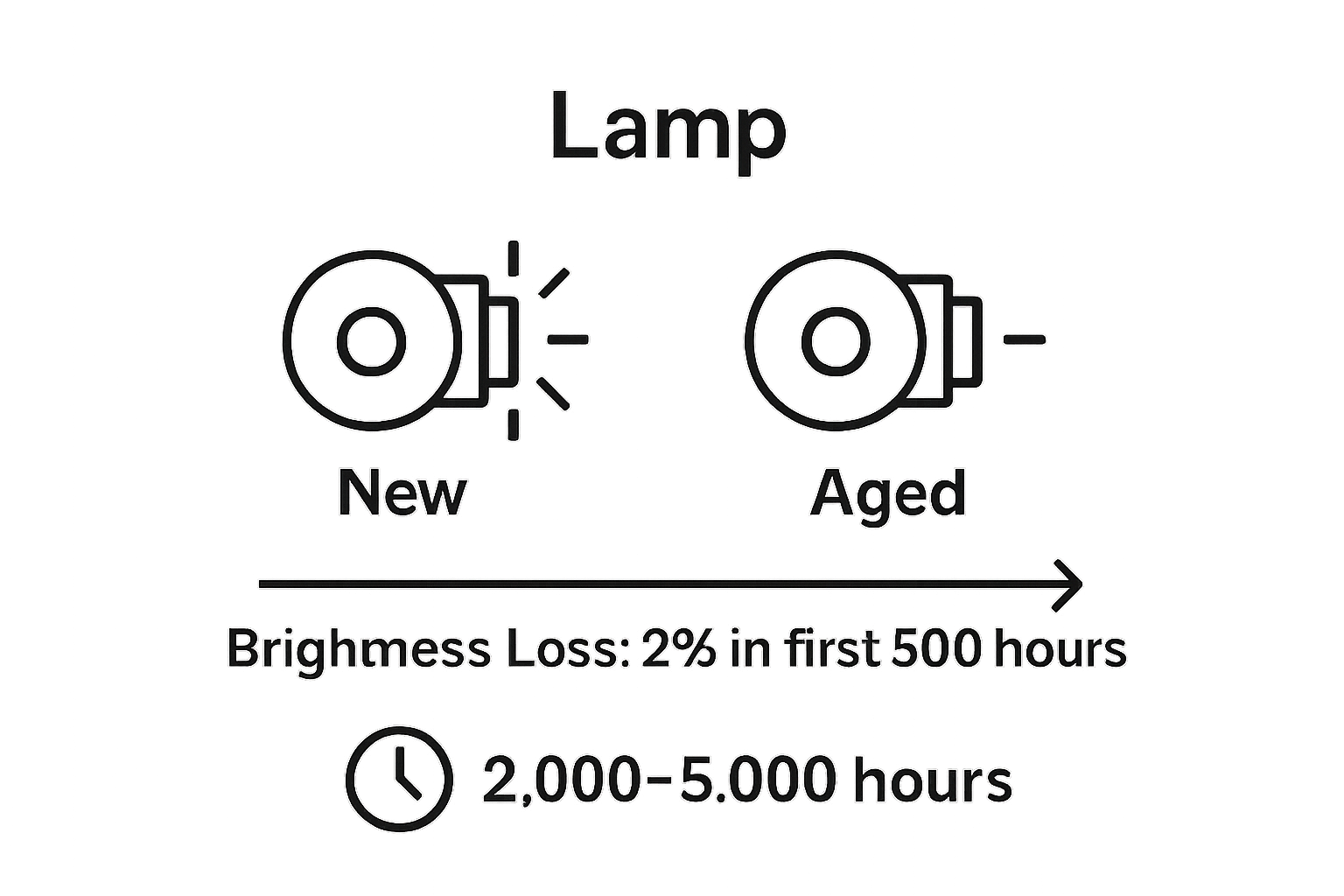 This translates to approximately 2.5 years of regular use in educational or professional settings, assuming 4 hours of daily operation across typical work weeks.
Interestingly, UHP lamps experience a predictable brightness progression. They initially maintain stable output, then gradually decrease in luminosity. Most lamps lose around 20% of their original brightness within the first few hundred hours, with the rate of decline slowing thereafter. This gradual degradation means projector owners should monitor lamp performance and plan replacements proactively to maintain image quality.
Why Projector Lamp Lifespan Matters for Users
Projector lamp lifespan is a critical consideration that extends far beyond simple technical specifications. For users across educational, professional, and home entertainment environments, understanding lamp longevity directly impacts financial investments, operational reliability, and overall visual performance. The implications of projector lamp lifespan touch multiple aspects of equipment management and user experience.
This table compares financial and performance considerations related to projector lamp lifespan, making it easier for users to see the broad implications at a glance.
| Consideration | Explanation | Typical Impact |
|---|---|---|
| Direct Replacement Cost | Lamps are specialized and expensive | $200–$500 per lamp depending on projector model |
| Downtime Expenses | Replacing lamps can disrupt meetings or classes | Interruptions during critical presentations |
| Performance Degradation | Brightness and image quality drop as lamp ages | Reduced clarity and effectiveness in visual communication |
| Maintenance Planning | Proactive replacement helps avoid failures | Enables consistent equipment function and minimizes surprises |
| Environmental Impact | Frequent replacements lead to more electronic waste | Efficient management reduces waste and supports sustainability |
Financial and Operational Implications
The economic impact of projector lamp lifespan is significant. Replacement lamps can be expensive, often costing between $200 to $500 depending on the projector model. Frequent replacements can transform what initially seemed like an affordable projection solution into a costly long-term investment. Learn more about managing projector maintenance costs in our comprehensive guide.
Key financial considerations include:
- Direct Replacement Costs: Expensive specialized lamps
- Downtime Expenses: Interruptions during critical presentations
- Performance Degradation: Reduced image quality affecting professional outcomes
Performance and Quality Considerations
Lamp lifespan directly influences projection quality. As lamps age, they experience gradual luminosity reduction, which can compromise visual clarity and brightness. In professional settings like conference rooms, classrooms, and home theaters, diminishing lamp performance can significantly impact audience engagement and communication effectiveness.
According to energy efficiency researchers, understanding lamp lifecycle helps users make more informed decisions about equipment maintenance and replacement strategies. Proactive monitoring of lamp performance enables users to anticipate and plan for replacements before critical failures occur.
The broader implications extend beyond individual user experiences. Efficient lamp management contributes to reduced electronic waste, supports sustainable technology practices, and helps users maximize their projection equipment investments. By understanding projector lamp lifespan, users can make more informed purchasing decisions, implement effective maintenance routines, and ensure consistently high-quality visual presentations across various professional and personal environments.
How Projector Lamps Work: Technology Behind the Lifespan
Projector lamp technology represents a sophisticated intersection of electrical engineering, materials science, and optical design. These specialized light sources are far more complex than standard household bulbs, engineered to produce intense, consistent illumination capable of generating high-quality projected images across various environments.
Illumination Mechanics
At the core of projector lamp functionality is the Ultra-High-Performance (UHP) lamp technology. These lamps operate through a precisely controlled electrical arc that generates immense light output. When electrical current passes through pressurized mercury vapor contained within a quartz envelope, an extremely bright plasma arc is created. This arc generates temperatures approaching 6,000 degrees Celsius, producing an incredibly intense white light that can be precisely focused and directed.
The lamp's internal architecture is critical to its performance. The quartz envelope must withstand extreme temperatures and pressures while maintaining structural integrity. Explore our comprehensive guide on projector lamp replacement techniques, which details the intricate mechanisms behind these remarkable light sources.
Performance and Degradation Factors
Projector lamp lifespan is influenced by multiple interconnected technological factors:
- Electrical Arc Stability: Consistent plasma arc maintenance
- Thermal Management: Effective heat dissipation mechanisms
- Mercury Vapor Pressure: Precise internal pressure maintenance
- Quartz Envelope Integrity: Resistance to thermal and electrical stress
According to energy efficiency researchers, projector lamps typically consume around 300 watts during operation and have an average service life of approximately 2,000 hours. This translates to roughly 4 years of moderate use before potential performance degradation or failure.
The lamp's gradual performance decline is not random but a predictable scientific process. As the mercury vapor arc operates, microscopic changes occur in the quartz envelope and electrode structures. These changes incrementally reduce light output, color temperature stability, and overall luminous efficiency. Understanding these technological nuances helps users anticipate and plan for lamp replacements, ensuring consistent projection quality across educational, professional, and entertainment contexts.
Key Factors Influencing Projector Lamp Lifespan
Projector lamp lifespan is not a static metric but a complex interplay of multiple technological and environmental variables. Understanding these factors enables users to maximize lamp performance, reduce replacement frequency, and optimize projection equipment investment. The intricate relationship between design, usage, and maintenance determines how long a projector lamp will effectively illuminate screens.
Environmental and Operational Conditions
Temperature and ventilation represent critical determinants of projector lamp longevity. Excessive heat buildup can accelerate lamp degradation, causing premature failure and reduced luminosity. Projectors operating in poorly ventilated spaces or experiencing restricted airflow are particularly vulnerable. Ambient temperature, dust accumulation, and internal cooling system efficiency directly impact lamp performance.
Key environmental stress factors include:
- Heat Accumulation: Prolonged exposure to high temperatures
- Dust Contamination: Particulate interference with optical components
- Humidity Levels: Moisture-related electrical and mechanical degradation
- Electrical Stability: Power surge and voltage fluctuation risks
Discover professional lamp maintenance techniques in our comprehensive replacement guide, which provides insights into mitigating environmental challenges.
Usage Patterns and Performance Dynamics
Projector lamp lifespan is fundamentally tied to operational characteristics. According to quantum materials research, the frequency and intensity of usage significantly influence lamp deterioration. Continuous operation modes and high-brightness settings accelerate lamp wear, reducing overall operational hours.
Critical usage considerations include:
- Frequency of Power Cycling: Repeated on/off switching stresses lamp components
- Brightness Mode Selection: Higher luminosity settings increase degradation rate
- Cumulative Operating Hours: Total time under electrical stress
- Consistent vs. Intermittent Usage: Steady operation versus sporadic engagement
Understanding these nuanced factors empowers users to implement strategic maintenance protocols.
The following table summarizes key factors that influence projector lamp lifespan, providing concise explanations to help users understand how each element impacts performance and longevity.
| Factor | Impact on Lifespan | Details |
|---|---|---|
| Usage Intensity | High usage shortens lifespan | Continuous high-brightness mode or long operating hours accelerate wear |
| Environmental Conditions | Adverse conditions reduce longevity | High temperatures, humidity, and dust cause faster degradation |
| Power Cycling | Frequent on/off cycles shorten lifespan | Turning the projector on and off repeatedly stresses lamp components |
| Projector Model | Different models perform differently | Various lamp technologies and designs have varying expected lifespans |
| Ventilation and Cooling | Poor ventilation leads to overheating | Inadequate cooling increases the risk of early lamp failure |
Real-World Context: Projector Lamp Lifespan in Malaysia
In Malaysia's dynamic technological landscape, projector lamp lifespan represents a critical consideration for businesses, educational institutions, and home entertainment enthusiasts. The tropical climate, characterized by high humidity and temperatures, presents unique challenges for projection equipment maintenance and longevity.
Regional Usage Patterns
Malaysian environments demand specialized projection solutions that can withstand intense heat and humidity. Educational institutions, corporate training centers, and multimedia spaces across Kuala Lumpur, Penang, and other urban centers rely heavily on projectors for daily communications. Explore our comprehensive guide on projector selection for Malaysian users, which addresses region-specific performance considerations.
Unique Malaysian projection usage characteristics include:
- High-Intensity Educational Settings: Extended classroom and lecture hall operations
- Corporate Presentation Environments: Frequent multimedia communication requirements
- Home Entertainment Diversity: Varied usage patterns across different residential contexts
- Climate-Induced Stress: Increased thermal and humidity challenges
Maintenance and Performance Considerations
According to research from Universiti Teknologi MARA, improper shutdown procedures can dramatically reduce projector lamp lifespan in Malaysian settings. Proper cooling and maintenance protocols are crucial for extending lamp operational hours. The study emphasizes the importance of allowing cooling fans to complete their cycle before disconnecting power, a practice particularly critical in Malaysia's warm climate.
Key maintenance strategies for Malaysian users include:
- Regular Ventilation Checks: Ensuring unobstructed airflow around projection equipment
- Dust Management: Frequent cleaning of optical components and ventilation areas
- Controlled Environment Storage: Protecting projectors during non-operational periods
- Systematic Shutdown Procedures: Implementing manufacturer-recommended cooling protocols
The economic implications are significant. With projector lamps costing between $200 to $500 and typical operational lifespans ranging from 2,000 to 5,000 hours, Malaysian users must adopt strategic approaches to maximize their investment. Understanding regional challenges and implementing targeted maintenance techniques can help users optimize projector performance and extend lamp longevity in Malaysia's unique technological ecosystem.
Replace Worn-Out Projector Lamps and Restore Brilliant Picture Quality
Are you noticing reduced brightness, fading images, or frequent interruptions during your crucial presentations or movie nights? This article highlights common challenges faced by projector users in Malaysia, such as short lamp lifespan, unexpected downtimes, and the gradual decline in image clarity. If you want to protect your investment and keep your visual experience sharp and reliable, it is time to act before your current lamp leaves you in the dark. Make sure your entire projection setup works at its best and partner it with quality accessories for the ultimate display.
Explore our projector screen collection and ensure your viewing surface is just as vibrant as your projector. Consider full solutions that include secure projector bag and case options for easy transport and protection.

Do not wait for a complete lamp failure or a dip in your display standards. Visit ProjectorDisplay.com right now to find the latest projector lamps, screens, and essential accessories trusted across Malaysia. Shop with confidence, experience fast local shipping, and reach out to our expert team for personalized support. Give your visuals the refresh they deserve—discover better solutions and avoid loss of clarity today.
Frequently Asked Questions
What is the average lifespan of a projector lamp?
Most projector lamps last between 2,000 to 5,000 hours, depending on usage intensity and environmental conditions.
How can I extend the lifespan of my projector lamp?
To extend your projector lamp's lifespan, ensure proper ventilation, avoid high-brightness settings for prolonged periods, and regularly clean dust from the projector's components.
What factors influence projector lamp lifespan?
Projector lamp lifespan is influenced by factors such as usage intensity, environmental conditions (like temperature and dust), projector model, and how often you power cycle the lamp.
Why does projector lamp brightness decrease over time?
As projector lamps age, their internal components undergo changes that reduce light output. Lamps typically lose around 20% brightness within the first few hundred hours of use, with the decline slowing afterward.