

Over 30 percent of American college students now enroll in at least one online course, illustrating how distance learning is reshaping modern education. The freedom to study from anywhere appeals to learners balancing work, family, and personal growth. With flexible schedules, digital resources, and interactive technology, students enjoy new opportunities and face fresh challenges. This article unpacks the evolution of distance learning, explores its core models, and highlights the tools and strategies essential for success in today's educational landscape.
Table of Contents
- Defining Distance Learning In Modern Education
- Types Of Distance Learning Modalities Compared
- Essential Technology And Tools For Success
- Strategies For Engagement And Collaboration Online
- Common Distance Learning Mistakes To Avoid
Key Takeaways
| Point | Details |
|---|---|
| Embrace Technology | Leverage advanced digital tools and platforms to enhance your distance learning experience and engagement. |
| Choose the Right Modality | Assess your personal learning preferences and technological capabilities when selecting a distance learning approach. |
| Manage Your Time | Establish a consistent study schedule and prioritize tasks to avoid procrastination and manage course workload effectively. |
| Foster Engagement | Implement strategies to maintain motivation and interaction with peers and instructors to enrich the online learning environment. |
Defining Distance Learning in Modern Education
Distance learning represents a transformative educational approach that enables students to acquire knowledge and skills without physical presence in a traditional classroom setting. Emerging research explores the philosophical foundations of distance education, highlighting its unique communication and instructional methodologies.
At its core, distance learning leverages technology to bridge geographical gaps, offering unprecedented educational accessibility. Key characteristics include:
- Flexible scheduling
- Remote instructional delivery
- Asynchronous learning options
- Digital content distribution
- Self-paced curriculum progression
Multinational studies examining student perceptions reveal complex dynamics within distance education frameworks. Students appreciate the convenience while simultaneously navigating technological and motivational challenges inherent in remote learning environments.
Modern distance learning transcends traditional correspondence courses by integrating interactive digital platforms, multimedia resources, and real-time collaboration tools. These technological advances enable sophisticated learning experiences that mirror and sometimes surpass traditional classroom interactions.
Pro Tip – Digital Preparation: Invest in reliable internet connectivity and establish a dedicated, distraction-free study space to maximize your distance learning effectiveness and maintain consistent academic engagement.
Types of Distance Learning Modalities Compared
Distance learning encompasses multiple educational delivery methods, each designed to meet diverse learning needs and technological capabilities. Comprehensive research explores various distance learning modalities, revealing nuanced approaches that extend beyond traditional educational paradigms.
The primary distance learning modalities include:
-
Online Courses
- Fully digital curriculum
- Self-paced learning
- Interactive multimedia content
- Regular virtual assessments
-
Blended Learning
- Combination of online and in-person instruction
- Flexible learning environments
- Balanced digital and traditional teaching methods
-
Massive Open Online Courses (MOOCs)
- Large-scale online educational platforms
- Unlimited participant capacity
- Often free or low-cost
- Global accessibility
Mobile learning technologies represent an emerging distance education modality, utilizing portable devices to deliver educational content through smartphones, tablets, and other wireless technologies. These platforms enable unprecedented learning flexibility, allowing students to access educational resources anytime and anywhere.
Each modality presents unique advantages and challenges, requiring learners to carefully assess their personal learning styles, technological access, and educational objectives. The evolution of digital learning platforms continues to expand and refine these educational approaches, making distance learning increasingly sophisticated and personalized.
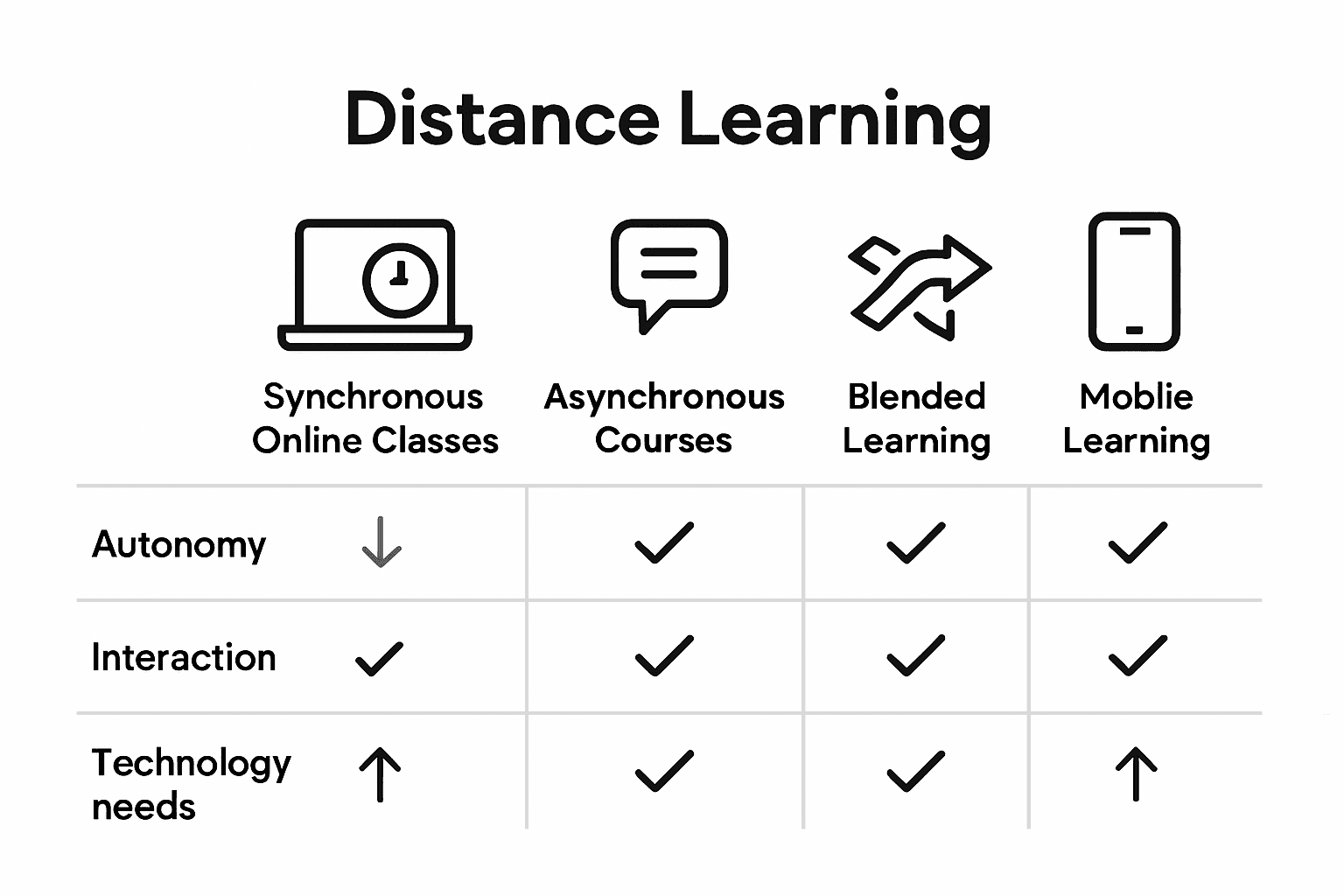
Here's a comparison of major distance learning modalities to help select the best fit:
| Modality | Learner Autonomy | Interaction Level | Typical Technology Required |
|---|---|---|---|
| Online Courses | High self-management | Moderate (discussion forums) | Computer and LMS platform |
| Blended Learning | Moderate | High (in-person and online) | Computer plus classroom access |
| MOOCs | Very high (self-driven) | Low to moderate (peer forums) | Computer, web browser |
| Mobile Learning | Flexible, on-the-go | Low (mainly self-study) | Smartphone or tablet, apps |
Pro Tip – Modality Selection: Evaluate your personal learning preferences, technological comfort, and scheduling constraints before selecting a distance learning approach to maximize your educational success and engagement.
Essential Technology and Tools for Success
Distance learning demands a sophisticated technological ecosystem that enables seamless educational experiences. Emerging research explores augmented and virtual reality technologies that are transforming online educational engagement and interaction.
Critical technologies for successful distance learning include:
-
Communication Platforms
- Video conferencing tools
- Instant messaging applications
- Virtual collaboration spaces
-
Learning Management Systems (LMS)
- Course content distribution
- Assignment tracking
- Progress monitoring
- Integrated assessment tools
-
Hardware Requirements
- High-speed internet connection
- Reliable computer/mobile device
- Quality webcam and microphone
- Noise-canceling headphones
Computer-supported collaborative learning technologies have revolutionized how students interact and engage with educational content. These platforms enable real-time collaboration, allowing learners to participate in group projects, discussions, and interactive learning experiences regardless of physical location.

Successful distance learning requires strategic technology integration, combining robust hardware, sophisticated software platforms, and user-friendly interfaces. Malaysian users must prioritize compatibility, reliability, and performance when selecting their technological tools.
Pro Tip – Tech Readiness: Conduct a comprehensive technology assessment before starting your distance learning journey, ensuring your devices, internet connection, and digital skills meet the necessary educational requirements.
Strategies for Engagement and Collaboration Online
Online collaboration requires intentional strategies that transform virtual interactions into meaningful educational experiences. Computer-supported collaborative learning approaches provide structured frameworks for creating dynamic, interactive learning environments.
Effective engagement strategies include:
-
Active Participation Techniques
- Regular synchronous discussion sessions
- Structured group project assignments
- Peer review and feedback mechanisms
- Interactive problem-solving workshops
-
Communication Enhancement
- Clear communication protocols
- Defined response time expectations
- Multichannel interaction platforms
- Inclusive discussion guidelines
-
Motivation and Connection Strategies
- Virtual team-building activities
- Personal introduction forums
- Collaborative digital workspaces
- Recognition and achievement tracking
Digital pedagogy principles emphasize the importance of creating meaningful connections beyond traditional lecture-based models. These strategies transform passive learning into an interactive, collaborative experience that encourages critical thinking and deep engagement.
Successful online collaboration requires intentional design, technological support, and a culture of mutual respect and active participation. Malaysian learners must develop digital communication skills, emotional intelligence, and proactive engagement to maximize their distance learning potential.
Pro Tip – Engagement Mastery: Develop a personal online interaction strategy by setting clear communication goals, practicing active listening, and consistently contributing meaningful insights during virtual learning sessions.
Common Distance Learning Mistakes to Avoid
Distance learning presents unique challenges that can derail academic success if students do not approach online education strategically. Extensive research highlights critical mistakes students frequently encounter in virtual learning environments.
Common distance learning mistakes include:
-
Poor Time Management
- Inconsistent study schedules
- Procrastination
- Inadequate planning
- Underestimating course workload
-
Technology and Infrastructure Gaps
- Unreliable internet connection
- Insufficient digital skills
- Limited technological resources
- Poor hardware configurations
-
Social and Motivational Challenges
- Lack of peer interaction
- Limited instructor engagement
- Reduced accountability
- Decreased motivation
Research exploring potential pitfalls in distance learning reveals the critical importance of proactive student engagement and robust self-management strategies. These insights demonstrate that successful online learning requires more than just technical access — it demands intentional, disciplined approaches to education.
Malaysian distance learners must recognize these potential obstacles and develop comprehensive strategies to mitigate risks. This involves creating structured personal learning environments, maintaining consistent communication with instructors, and cultivating strong self-discipline.
Below is a summary of common pitfalls in distance learning and practical prevention tactics:
| Mistake Type | Typical Consequence | Prevention Strategy |
|---|---|---|
| Poor time management | Missed deadlines and frustration | Set a weekly study plan |
| Tech skill gaps | Inability to access resources | Take digital literacy tutorials |
| Social isolation | Reduced motivation and engagement | Join virtual study groups |
| Weak accountability | Inconsistent performance | Schedule regular check-ins |
Pro Tip – Mistake Prevention: Develop a comprehensive self-assessment strategy that regularly evaluates your learning progress, identifies potential challenges, and implements targeted improvements to optimize your distance learning experience.
Enhance Your Distance Learning Experience with the Right Display Technology
Distance learning for Malaysian users comes with challenges like staying engaged, managing technology, and creating an optimal study environment. This article highlights common pain points such as technology gaps, social isolation, and poor time management. To address these, having a clear and vivid visual setup is essential. Investing in high-quality projection and display solutions can transform your learning space by making presentations, collaborative sessions, and multimedia content more immersive and accessible.
Explore a wide range of projectors and screens designed for educational settings at ProjectorDisplay.com.
Don't let technology barriers hold you back during your distance learning journey. Visit ProjectorDisplay.com today to find interactive displays, portable projectors, and wireless solutions that support active participation and collaboration. Take control of your virtual classroom and boost your motivation with cutting-edge visual technology. Start transforming your learning environment now.
Frequently Asked Questions
What are the main types of distance learning modalities?
The main types of distance learning modalities include online courses, blended learning, MOOCs (Massive Open Online Courses), and mobile learning. Each modality offers different levels of flexibility, interaction, and resource accessibility.
How can I improve my time management for distance learning?
To improve time management, create a consistent study schedule, set specific goals, prioritize assignments, and use tools like calendars or planners to track deadlines and progress.
What technology do I need for effective distance learning?
Essential technology for effective distance learning includes a reliable internet connection, a computer or mobile device, video conferencing tools, and learning management systems (LMS) to access course materials and assignments.
What strategies can enhance my engagement in online classes?
Effective engagement strategies include actively participating in discussions, joining virtual study groups, utilizing communication platforms for collaboration, and setting clear personal communication goals.
Recommended
- Mobile Learning Solutions: Everything You Need to Know – Projector Display
- Virtual Field Trips: Enhancing Learning for Students – Projector Display
- Cybersecurity in Education – Protecting Digital Classrooms – Projector Display
- Wireless Screen Mirroring in Malaysia: 2025 Guide for Entertainment, Education, and Business – Projector Display