

Teaching students how to use technology wisely is becoming a central challenge in Malaysian classrooms. With devices like projectors and interactive displays shaping daily lessons, educators must go beyond basic instruction and model responsible digital citizenship. Equipping learners with digital literacy, ethical decision making, and critical thinking skills prepares them to engage thoughtfully in both online and offline worlds. This article explores classroom strategies that combine current technology with a comprehensive approach to digital citizenship education.
Table of Contents
- Defining Digital Citizenship In Education
- Key Competencies And Core Domains Explained
- Types Of Digital Citizenship Skills Taught
- Integrating Digital Citizenship With Classroom Technology
- Educator Roles, Responsibilities, And Common Challenges
- Strategies To Address Risks And Misuse Online
Key Takeaways
| Point | Details |
|---|---|
| Digital Citizenship Framework | Digital citizenship encompasses technological proficiency, ethical behavior, and social responsibility for effective engagement in digital spaces. |
| Core Competencies | Key domains include digital safety, ethical interaction, and understanding digital rights, which develop critical skills for navigating online environments. |
| Educator Responsibilities | Educators play pivotal roles as mentors and facilitators, integrating digital citizenship into curricula while addressing ongoing challenges in digital education. |
| Risk Management Strategies | To address online risks, implement preventative education, foster psychological resilience, and strengthen technical risk management among students. |
Defining Digital Citizenship in Education
Digital citizenship has emerged as a critical framework for understanding responsible technology engagement in modern educational settings. Comprehensive research by UNESCO highlights digital citizenship as more than just technical skill acquisition, but a holistic approach to ethical digital interaction and global understanding.
At its core, digital citizenship encompasses three fundamental dimensions: technological proficiency, ethical behavior, and social responsibility. Academic studies reveal this multifaceted concept involves considered digital interactions that prioritize community welfare and civic engagement. Educators must recognize digital citizenship as a dynamic construct that evolves alongside technological advancements, requiring continuous adaptation and learning.
Key components of digital citizenship education include:
- Critical digital literacy
- Online safety awareness
- Ethical content creation
- Respectful digital communication
- Understanding digital rights and responsibilities
This comprehensive approach prepares students to navigate complex digital landscapes with confidence, integrity, and social consciousness. By integrating digital citizenship principles across curriculum, educational institutions can empower learners to become responsible global digital participants.
Pro tip: Develop classroom digital citizenship protocols that emphasize practical skills and ethical decision making in online environments.
Key Competencies and Core Domains Explained
Comprehensive research on digital citizenship reveals a sophisticated framework of competencies essential for navigating modern digital landscapes. These competencies extend far beyond basic technology skills, encompassing complex social, ethical, and civic dimensions that prepare students for responsible digital engagement.
The core domains of digital citizenship are strategically organized into six critical categories that address comprehensive digital literacy and responsible behavior:
- Digital Safety and Security
- Personal information protection
- Cybersecurity awareness
- Online privacy management
- Ethical Digital Interaction
- Respectful online communication
- Understanding digital etiquette
- Recognizing cyberbullying
- Digital Rights and Responsibilities
- Intellectual property understanding
- Legal digital conduct
- Responsible content sharing
National Academy of Education research emphasizes that these competencies are not static but dynamic skills requiring continuous development. Educators must approach digital citizenship education as an evolving framework that adapts to technological changes and emerging social norms.

Successful implementation requires integrating these competencies across curriculum, transforming digital literacy from a standalone subject into a holistic approach to understanding technology's role in modern society. By developing these core domains, students become empowered, critical digital participants who can navigate complex online environments with confidence and ethical awareness.
Here is a comparison of digital citizenship domains and the competencies they promote:
| Domain | Focus Area | Skills Developed |
|---|---|---|
| Digital Safety & Security | Privacy, cybersecurity | Threat awareness, data protection |
| Ethical Digital Interaction | Online behavior, etiquette | Respect, empathy, conflict resolution |
| Digital Rights & Responsibilities | Legal, social norms | Responsible sharing, copyright understanding |
| Pedagogical Technology Integration | Tech-enabled learning | Critical thinking, collaboration |
Pro tip: Design interdisciplinary learning experiences that allow students to practically apply digital citizenship competencies across multiple subject areas.
Types of Digital Citizenship Skills Taught
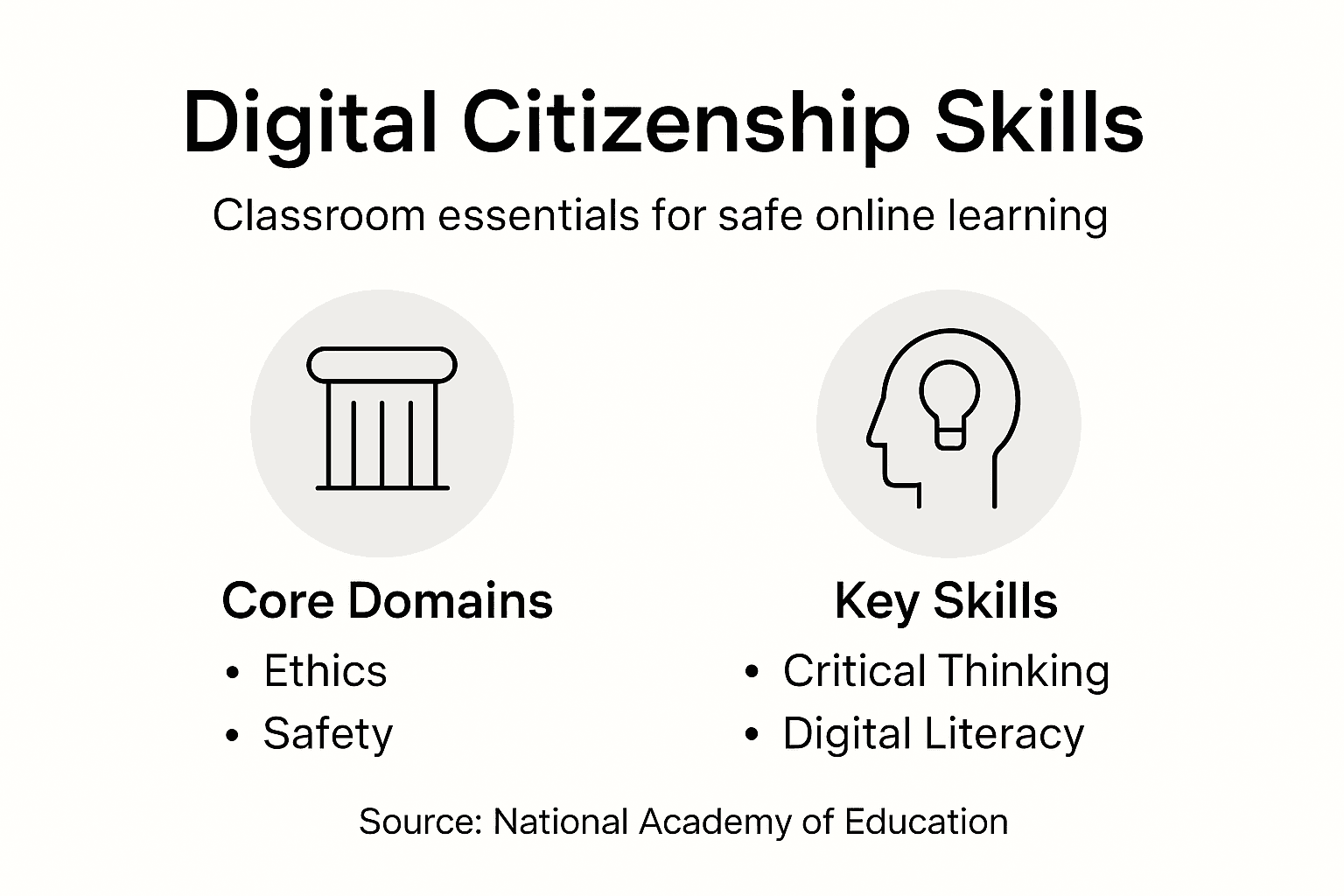
Research on primary digital education reveals a comprehensive approach to teaching digital citizenship skills that goes beyond technical competence. These skills are strategically designed to prepare students for meaningful and responsible digital participation across various contexts and platforms.
The primary categories of digital citizenship skills can be organized into four interconnected domains:
- Technical Proficiency Skills
- Basic digital device navigation
- Software and application usage
- Troubleshooting fundamental technical issues
- Ethical Engagement Skills
- Online communication etiquette
- Recognizing and preventing cyberbullying
- Understanding digital consent and boundaries
- Safety and Privacy Skills
- Personal information protection
- Recognizing online threats
- Managing digital footprints
- Critical Thinking Digital Skills
- Information source verification
- Media literacy
- Evaluating online content credibility
Academic studies on digital citizenship emphasize that these skills are not static but evolving competencies requiring continuous adaptation. Educators must create dynamic learning environments that allow students to practice and refine these skills through real-world scenarios and interactive experiences.
Successful implementation involves integrating these skills across multiple subjects, transforming digital literacy from an isolated concept into a holistic approach to technological engagement. By developing these comprehensive skills, students become empowered, discerning digital citizens capable of navigating complex online landscapes with confidence and integrity.
Pro tip: Create simulation-based learning experiences that allow students to practically apply digital citizenship skills in controlled, reflective environments.
Integrating Digital Citizenship With Classroom Technology
Research on digital infrastructure reveals that effectively integrating digital citizenship requires a strategic approach that combines technological tools with intentional pedagogical practices. Classroom technology serves as more than just a learning tool – it becomes a dynamic platform for developing ethical digital engagement.
Successful integration involves multiple interconnected strategies:
- Technology Infrastructure Alignment
- Selecting interactive classroom technologies
- Ensuring secure digital learning environments
- Implementing age-appropriate digital platforms
- Pedagogical Technology Integration
- Designing technology-enabled learning experiences
- Creating collaborative digital workspaces
- Developing critical technology evaluation skills
- Ethical Technology Usage
- Teaching responsible digital interaction
- Establishing clear online behavior guidelines
- Promoting digital empathy and respect
UNESCO's global framework emphasizes that digital citizenship education must be seamlessly woven into technological learning experiences. This approach transforms classroom technology from a mere instructional tool into a comprehensive platform for developing responsible digital citizens.
By deliberately designing learning environments that prioritize both technological proficiency and ethical awareness, educators can create powerful opportunities for students to develop nuanced digital citizenship skills. The goal extends beyond technical competence to nurturing thoughtful, engaged digital participants who understand the broader social implications of their online interactions.
Pro tip: Develop technology-integrated lesson plans that explicitly model and practice ethical digital behaviors across different classroom technologies.
Educator Roles, Responsibilities, and Common Challenges
Research on educator preparedness reveals the complex landscape of digital citizenship education, where teachers must navigate technological, pedagogical, and ethical challenges. Educators are no longer just knowledge transmitters but critical facilitators of responsible digital engagement.
Key roles and responsibilities include:
- Digital Mentorship
- Modeling responsible online behavior
- Guiding ethical digital interactions
- Demonstrating critical technology use
- Curriculum Integration
- Embedding digital citizenship across subjects
- Creating technology-informed learning experiences
- Developing adaptive digital learning strategies
- Student Skill Development
- Teaching digital literacy skills
- Promoting critical online thinking
- Developing digital safety awareness
Comprehensive educational research highlights significant challenges facing educators in this rapidly evolving digital landscape. These challenges range from technological limitations to professional development gaps, requiring continuous learning and adaptability.
Major obstacles include limited technological resources, rapidly changing digital platforms, diverse student technological backgrounds, and the ongoing need for professional skill upgrades. Successful digital citizenship education demands a proactive approach that balances technological proficiency with ethical awareness and critical thinking.
This table summarizes common challenges educators face and ways to address them:
| Challenge | Root Cause | Possible Solution |
|---|---|---|
| Limited technological resources | Budget constraints | Leverage open-access tools |
| Keeping pace with digital changes | Rapid tech evolution | Ongoing teacher training |
| Diverse student tech backgrounds | Varied home access/skills | Differentiated instruction |
| Professional development gaps | Insufficient training time | Regular, targeted PD sessions |
Pro tip: Develop ongoing professional development programs that provide educators with regular technology and digital citizenship training opportunities.
Strategies to Address Risks and Misuse Online
Digital citizenship research reveals complex challenges in managing online risks, requiring comprehensive and proactive educational strategies. Understanding these risks involves recognizing the multifaceted nature of digital interactions and potential vulnerabilities students may encounter.
Key strategies for addressing online risks include:
- Preventative Education
- Developing digital awareness programs
- Teaching critical online evaluation skills
- Recognizing potential digital threats
- Psychological Resilience
- Building emotional intelligence online
- Managing digital stress and pressure
- Developing healthy digital boundaries
- Technical Risk Management
- Implementing robust privacy settings
- Understanding digital security protocols
- Recognizing potential cybersecurity threats
Systematic reviews highlight that effective risk mitigation requires a holistic approach addressing personal, psychological, technological, and social factors. This comprehensive strategy ensures students develop nuanced skills for navigating complex digital environments safely and responsibly.
Successful risk management goes beyond technical solutions, focusing on empowering students with critical thinking skills, emotional intelligence, and a deep understanding of digital ecosystem dynamics. By creating supportive, informed learning environments, educators can help students develop resilience and make responsible digital choices.
Pro tip: Create interactive simulation scenarios that allow students to practice identifying and responding to potential online risks in controlled learning environments.
Elevate Digital Citizenship Education With Cutting-Edge Classroom Display Technology
Teaching responsible digital engagement requires more than lessons on ethics and safety. It demands powerful visuals and interactive tools that captivate students while reinforcing skills like critical thinking and online safety. This article highlights how integrating ethical technology usage and pedagogical technology integration empowers educators to create immersive digital citizenship experiences.

Discover how you can transform your classroom with high-quality projectors and interactive displays from ProjectorDisplay.com. Our selection of smart projectors and projection screens supports clear, engaging presentations that make complex concepts accessible and memorable. Take advantage of advanced features such as wireless connectivity and full HD resolution to bring digital citizenship lessons to life. Act now to equip your learning environment with technology that promotes ethical digital interaction and critical thinking today.
Explore our comprehensive range of products designed for education at ProjectorDisplay.com. Experience seamless integration of digital tools that enhance student understanding and participation in safe online practices. Start your journey toward responsible digital education by visiting ProjectorDisplay.com and elevating your classroom technology.
Frequently Asked Questions
What is digital citizenship education?
Digital citizenship education refers to the teaching of responsible technology engagement, ethical behavior, and social responsibility in digital environments. It prepares students to navigate online interactions with integrity and awareness of their impact on the community.
Why is digital citizenship important in classrooms?
Digital citizenship is important in classrooms because it equips students with essential skills to handle online safety, ethical communication, and respect for digital rights. This education fosters responsible global digital participants who can confidently engage in complex digital landscapes.
What are the key components of digital citizenship education?
The key components include critical digital literacy, online safety awareness, ethical content creation, respectful digital communication, and understanding digital rights and responsibilities. These elements prepare students for effective and ethical participation in the digital world.
How can educators integrate digital citizenship into their curriculum?
Educators can integrate digital citizenship by embedding it across subjects, creating technology-enabled learning experiences, and developing clear classroom protocols for online behavior. This holistic approach transforms digital literacy into a comprehensive part of students' education.
Recommended
- Digital Literacy for Educators: Transforming Classrooms – Projector Display
- Cybersecurity in Education – Protecting Digital Classrooms – Projector Display
- 21st Century Teaching Skills: Everything You Need to Know – Projector Display
- The Essential Guide to Teaching Critical Thinking Skills – Projector Display