
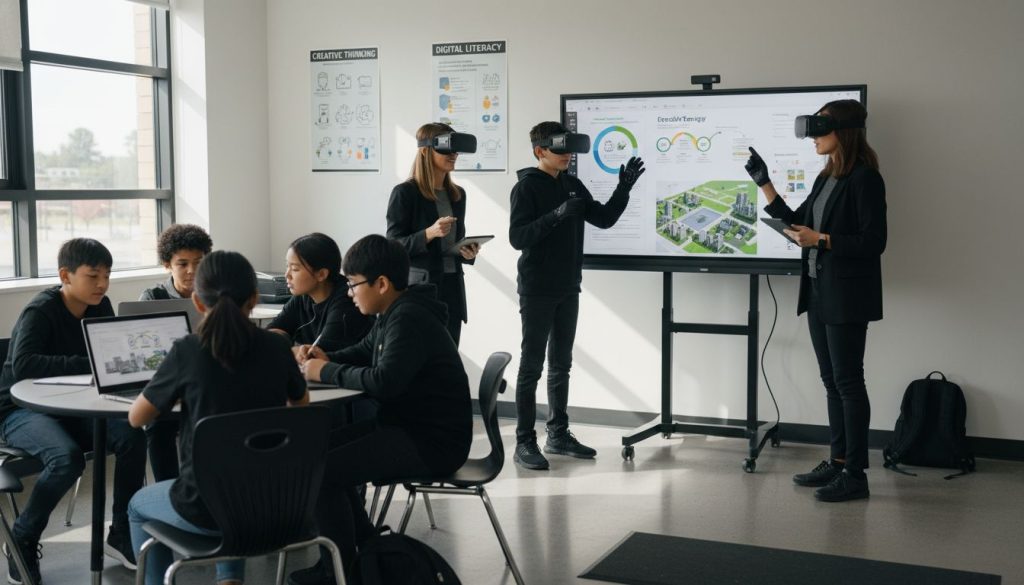
More than 80 percent of teachers say their classrooms look nothing like they did a generation ago. Rapid advances in technology and global demands have redefined what it means to teach and learn in the 21st century. Today's educators need much more than subject knowledge—they must nurture skills like creativity, collaboration, and digital fluency that help students thrive in a connected world. Understanding these new teaching skills is the first step toward empowering both teachers and learners for lasting success.
Table of Contents
- Defining 21st Century Teaching Skills
- Core Competencies and Key Characteristics
- Types of 21st Century Teaching Approaches
- Integrating Technology in Modern Classrooms
- Common Challenges and Misconceptions to Avoid
Key Takeaways
| Point | Details |
|---|---|
| Embrace 21st Century Skills | Educators must develop learning and innovation, digital literacy, and life and career skills to prepare students for a complex global environment. |
| Innovative Teaching Approaches | Implement modern methodologies like blended learning and project-based learning to enhance student engagement and foster critical thinking. |
| Technology Integration | Educators should strategically incorporate technology to create dynamic learning environments that support creativity and collaboration, rather than replacing traditional methods. |
| Address Common Misconceptions | Recognize that technology cannot replace human educators and avoid practices that diminish academic rigor, ensuring genuine learning experiences for students. |
Defining 21st Century Teaching Skills
The landscape of education has dramatically transformed in the 21st century, demanding educators develop a sophisticated set of skills far beyond traditional teaching methodologies. 21st century teaching skills are dynamic competencies that prepare students for an increasingly complex, technology-driven global environment. According to unevoc, these skills encompass enhanced ways of thinking, learning, working, and engaging with the world around us.
At its core, 21st century teaching skills comprise three critical domains: learning and innovation skills, digital literacy skills, and life and career skills.
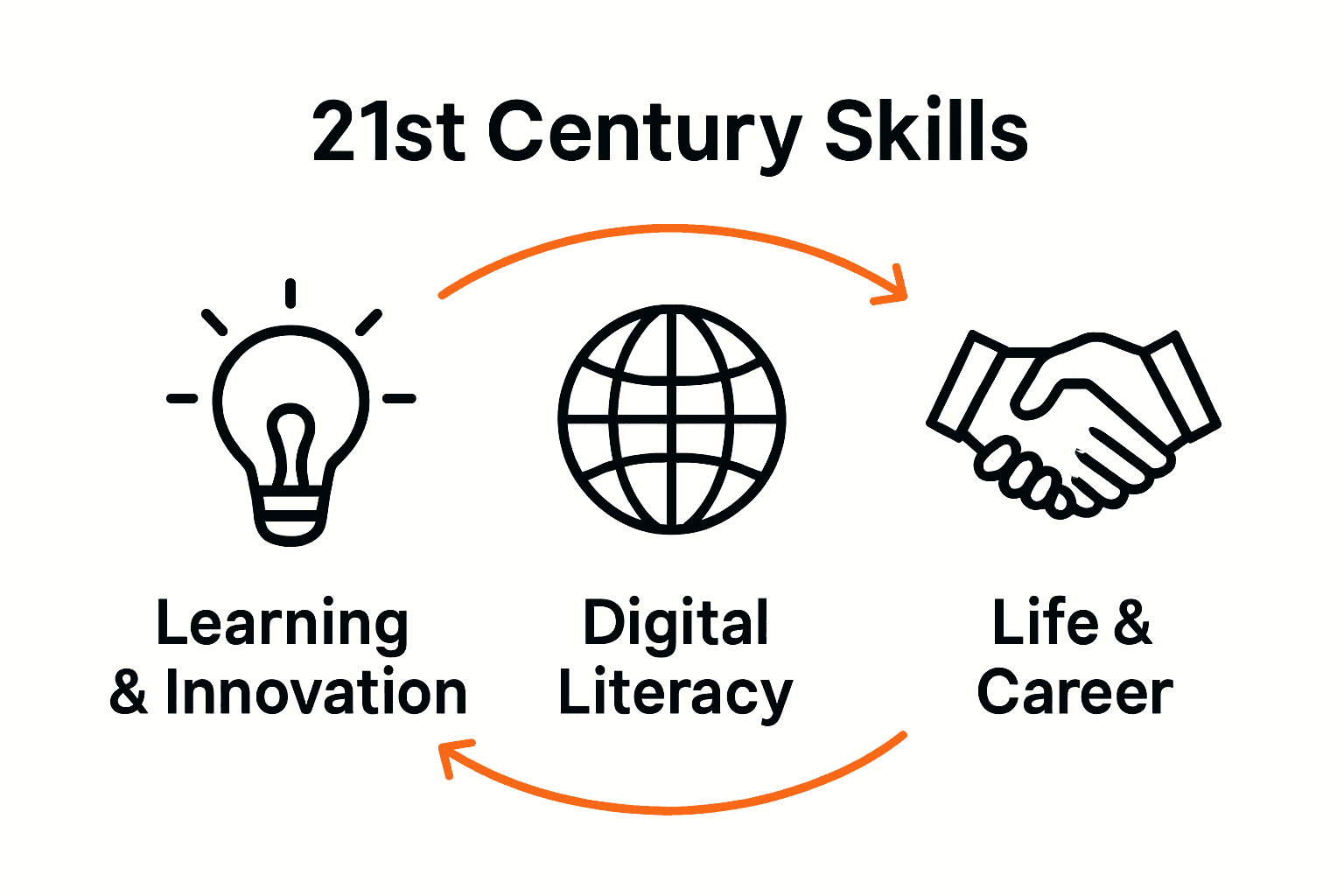 en highlights these as foundational competencies that modern educators must cultivate.
Here's a summary comparing the core domains of 21st century teaching skills:
| Domain | Key Skills & Competencies | Focus Areas |
|---|---|---|
| Learning & Innovation | Critical Thinking Communication Collaboration Creativity |
Problem-solving Interactive learning Idea generation |
| Digital Literacy | Information Management Media Interpretation ICT Proficiency |
Technology use Online research Digital communication |
| Life & Career Skills | Adaptability Initiative Social Intelligence Cross-cultural Understanding |
Professional readiness Resilience Global awareness |
| Learning and innovation skills include critical thinking, communication, collaboration, and creativity. These skills transform classrooms from traditional lecture environments into dynamic, interactive learning spaces where students are active participants in their educational journey. |
Digital literacy has become paramount in contemporary education. Modern teachers must not only understand technological tools but also effectively integrate them into curriculum design. This means developing proficiency in information management, media interpretation, and information communication technology (ICT). Life and career skills are equally crucial, encompassing attributes like adaptability, initiative, social intelligence, and cross-cultural understanding. Educators today are tasked with preparing students not just academically, but holistically preparing them for a rapidly evolving professional landscape.
The paradigm shift requires teachers to become more than knowledge transmitters. They must be facilitators, mentors, and guides who help students develop complex cognitive abilities. By embracing 21st century teaching skills, educators can create learning environments that are engaging, relevant, and transformative, ultimately empowering students to become innovative, adaptable, and critically thinking global citizens.
Core Competencies and Key Characteristics
Effective 21st century educators must develop a comprehensive set of core competencies that go far beyond traditional academic knowledge. files reveals that modern teaching requires a nuanced blend of personal attributes and professional skills, including creativity, empathy, communication, critical thinking, and digital literacy. These competencies are not just additional skills but fundamental transformative capabilities that enable teachers to navigate complex educational landscapes.
Pedagogical expertise in the 21st century demands multifaceted skill development. ijiet research highlights that educators must cultivate analytical thinking, creative problem-solving, and robust social skills. This means moving beyond content delivery to becoming adaptive learning facilitators who can design interactive, engaging educational experiences. Key characteristics include demonstrated leadership, personal responsibility, effective time management, and the ability to create dynamic learning environments that inspire student curiosity and independent thinking.
Technology integration represents another critical competency for modern educators. Teachers must not only understand digital tools but seamlessly incorporate them into curriculum design, transforming traditional classroom experiences. This requires continuous learning, adaptability, and a willingness to experiment with emerging educational technologies. Emotional intelligence has also become paramount, with educators needing to develop strong interpersonal skills to connect with diverse student populations and create inclusive learning spaces.
Ultimately, 21st century teaching competencies are about holistic development. Successful educators are those who can balance technical expertise with profound human understanding, creating educational experiences that prepare students for an increasingly complex, interconnected global environment. By embodying these core competencies, teachers become more than instructors they become mentors, guides, and transformative leaders in students' educational journeys.
Types of 21st Century Teaching Approaches
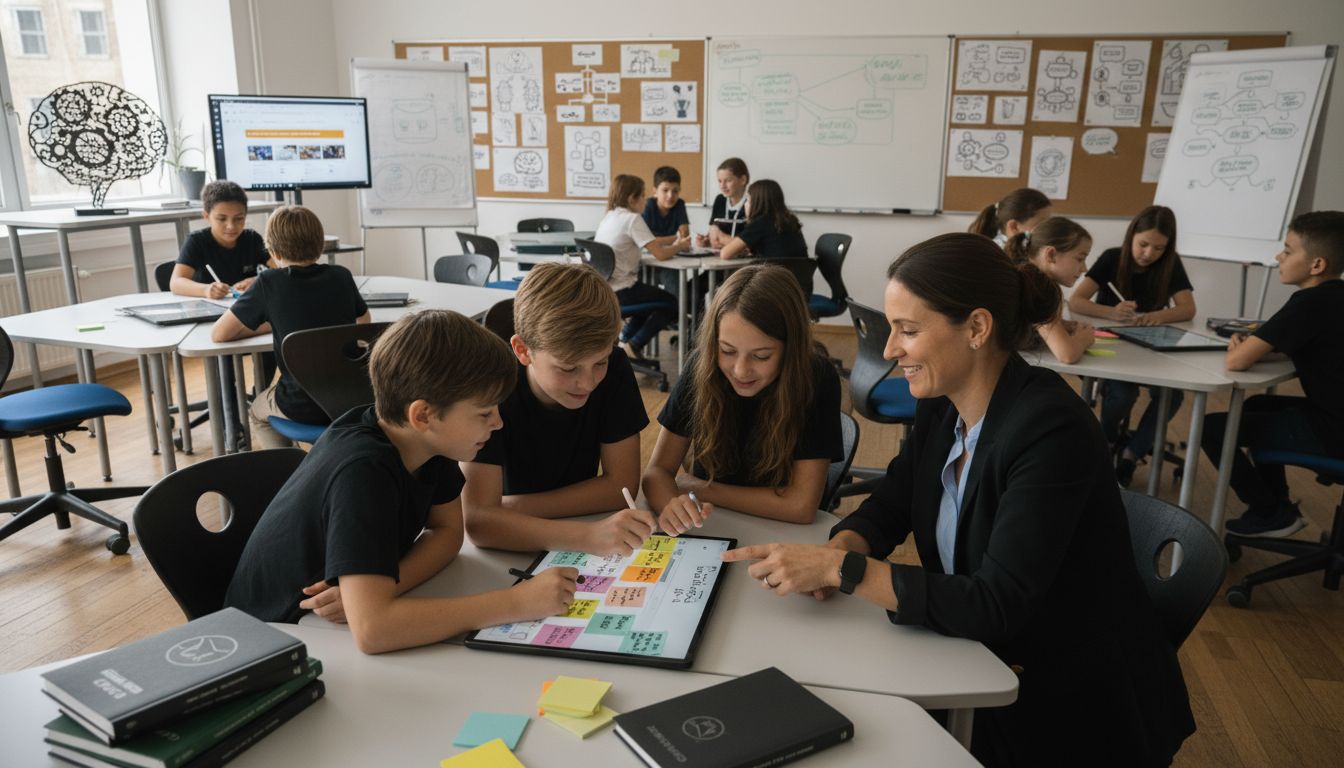
21st century teaching approaches represent a radical departure from traditional educational methodologies, emphasizing dynamic, interactive, and technology-enhanced learning experiences. en introduces blended learning as a transformative approach that seamlessly integrates online educational materials with traditional classroom methods, creating a more flexible and personalized learning environment. This approach allows educators to leverage digital tools while maintaining the critical interpersonal elements of face-to-face instruction.
en highlights computer-supported collaborative learning (CSCL) as another innovative pedagogical strategy. This approach fundamentally reimagines learning as a social process, where knowledge is constructed through interactive digital platforms. Students engage in collaborative problem-solving, knowledge sharing, and collective learning experiences that transcend physical classroom boundaries. The approach emphasizes peer-to-peer interaction, critical thinking, and the development of digital communication skills.
Other prominent 21st century teaching approaches include flipped classroom models, where traditional lecture and homework elements are reversed. Students consume instructional content at home through digital resources, while classroom time is dedicated to interactive discussions, practical applications, and personalized guidance. Project-based learning has also gained significant traction, encouraging students to explore real-world challenges through comprehensive, interdisciplinary projects that develop critical thinking, creativity, and practical problem-solving skills.
These modern teaching approaches share a common philosophy: education should be student-centered, technology-enabled, and focused on developing transferable skills. By embracing these innovative methodologies, educators can create more engaging, relevant, and adaptive learning experiences that prepare students for the complex, rapidly changing professional landscapes of the 21st century. The goal is no longer just knowledge transfer, but empowering students to become active, independent learners capable of navigating an increasingly complex global environment.
Integrating Technology in Modern Classrooms
Technology integration has become a fundamental transformation in educational environments, moving beyond simple digital tool adoption to creating immersive, interactive learning experiences. arxiv highlights the emergence of generative AI as a critical component in modern classroom strategies, emphasizing the importance of developing AI literacy and critical thinking skills among students. This approach requires educators to not only understand technological tools but to strategically incorporate them to enhance learning outcomes.
arxiv research reveals the expanding landscape of computational thinking and digital tools in education. Modern classrooms are increasingly utilizing visual programming and simulation technologies to develop comprehensive cognitive, technical, and social competencies. These tools enable students to engage with complex concepts through interactive, hands-on learning experiences that transcend traditional pedagogical boundaries. For instance, students can now explore scientific principles through virtual laboratories, mathematical concepts through interactive modeling, and historical events through immersive digital reconstructions.
The integration of technology requires a nuanced approach that balances digital innovation with pedagogical effectiveness. Educators must develop strategies that promote ethical technology use, encourage digital citizenship, and prepare students for an increasingly technology-driven professional landscape. This involves creating learning environments where technology serves as a catalyst for creativity, collaboration, and critical thinking, rather than a mere substitute for traditional teaching methods.
Ultimately, successful technology integration is about empowerment. 7 Interactive Classroom Ideas for Engaging Learning demonstrates that when implemented thoughtfully, technology can transform passive learning into dynamic, student-centered experiences. By embracing digital tools as collaborative platforms, educators can create more engaging, personalized, and adaptive learning environments that not only transfer knowledge but also inspire curiosity, innovation, and lifelong learning skills.
Common Challenges and Misconceptions to Avoid
Navigating the landscape of 21st century teaching requires confronting several persistent misconceptions that can hinder educational effectiveness. arxiv highlights one of the most significant challenges: the mistaken belief that technological tools, particularly AI, can entirely replace human educators. This misconception fundamentally misunderstands the complex role of teachers, who bring irreplaceable qualities like emotional intelligence, critical thinking, and nuanced interpersonal guidance that no algorithm can fully replicate.
en introduces another critical challenge known as the disengagement compact, a subtle yet destructive educational phenomenon. This implicit agreement occurs when educators reduce academic rigor and inflate grades in exchange for favorable course evaluations, ultimately undermining students' intellectual development. Such approaches create a false sense of achievement while actually diminishing students' problem-solving capabilities, critical thinking skills, and genuine learning potential.
Technology integration itself presents numerous potential pitfalls that educators must carefully navigate. Common misconceptions include assuming that simply introducing digital tools automatically improves learning outcomes, believing that all students have equal access to technology, and overlooking the critical need for comprehensive digital literacy training. Educators must recognize that technology is a tool, not a magical solution. Effective implementation requires thoughtful strategy, ongoing professional development, and a deep understanding of how different technologies can genuinely enhance pedagogical approaches.
Recognizing and addressing these challenges requires a holistic, nuanced approach. 7 Key EdTech Trends in 2025 Every Malaysian Should Know underscores the importance of continuous learning and adaptive strategies. Successful 21st century educators are those who remain flexible, critically evaluate technological tools, maintain human-centered teaching philosophies, and continuously develop their own digital competencies. By understanding these potential pitfalls, teachers can create more authentic, engaging, and truly transformative learning experiences.
Empower Your 21st Century Classroom with the Right Technology
Educators today face the challenge of transforming classrooms into dynamic hubs where critical thinking, creativity, and digital literacy thrive. The article highlights how modern teaching demands effective integration of technology to foster interactive and personalized learning experiences. However, without the right equipment, it can be difficult to engage students and make lessons truly immersive.
Discover how high-quality projection solutions can elevate your teaching environment. At ProjectorDisplay.com, explore an extensive range of projectors including short-throw and smart options that support collaborative learning and digital engagement. These tools enable seamless technology integration that helps students develop key 21st century skills such as communication and problem-solving.

Ready to bring innovation into your classroom? Visit ProjectorDisplay.com now to find the perfect display technology that meets your educational needs. Act today to create interactive lessons that inspire creativity and critical thinking. For specialized advice or a custom quote, connect with our customer support and upgrade your teaching toolkit without delay.
Frequently Asked Questions
What are the core domains of 21st century teaching skills?
The core domains of 21st century teaching skills include learning and innovation skills, digital literacy skills, and life and career skills. These domains help educators develop the competencies necessary for modern educational environments.
How do 21st century teaching approaches differ from traditional methods?
21st century teaching approaches emphasize interactive, student-centered learning experiences and often integrate technology. Unlike traditional methods that focus on direct instruction, these approaches promote collaboration, critical thinking, and real-world problem-solving skills.
What role does technology play in 21st century teaching?
Technology plays a critical role in 21st century teaching by enhancing learning experiences through tools like generative AI, visual programming, and simulation technologies. Educators utilize these tools to create engaging, interactive environments that support students' cognitive and social development.
What are common challenges faced by educators in implementing 21st century teaching skills?
Common challenges include misconceptions about the role of technology, such as assuming digital tools can entirely replace teachers. Additionally, the disengagement compact, where educators inflate grades for favorable evaluations, undermines real learning and critical thinking development.
Recommended
- 7 Interactive Classroom Ideas for Engaging Learning – Projector Display
- 7 Key EdTech Trends in 2025 for Malaysian Innovators – Projector Display
- 7 Key EdTech Trends in 2025 for Malaysian Innovators – Projector Display
- 7 Key EdTech Trends in 2025 Every Malaysian Should Know – Projector Display
- 15 Reasons the Feynman Technique Is a Game-Changer for Students
- 7 Essential Student Learning Activities List for Schools – Scheer Genius Assembly Shows