
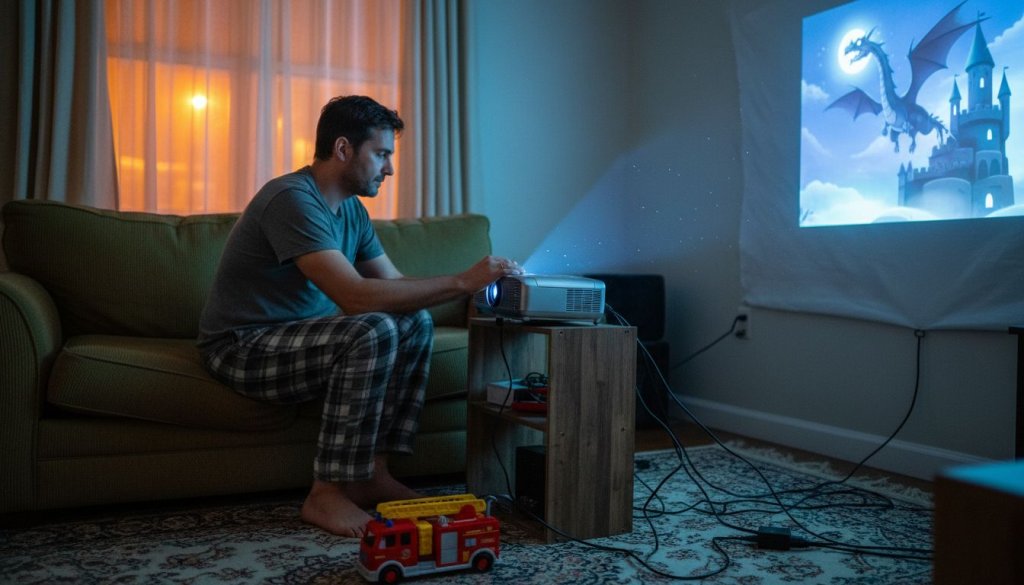
Most home theater enthusiasts don't realize that running their BenQ projector on maximum brightness settings can slash lamp life by up to 40%. The good news? Simple adjustments to your projector's economy mode can extend lamp life by 30 to 50 percent without sacrificing your viewing experience. This guide reveals how BenQ lamp technology works, what factors truly impact longevity in Malaysia's tropical climate, and practical strategies to maximize your investment while maintaining stellar image quality.
Table of Contents
- Introduction to BenQ Projector Lamp Technology and Lifespan
- Environmental and Usage Factors Affecting Lamp Longevity
- How Projector Settings Influence Lamp Life
- Common Misconceptions About BenQ Projector Lamp Durability
- Comparison: Lamp vs. Laser Technology Longevity and Cost Efficiency
- Manufacturer Guidelines and Replacement Recommendations
- Maintenance Practices to Extend BenQ Projector Lamp Life
- Balancing Lamp Life and Viewing Quality: Practical Tips and Cost Analysis
- Enhance Your Home Theater Experience with Projector Display Malaysia
- FAQ
Key Takeaways
| Point | Details |
|---|---|
| Lamp lifespan varies | BenQ UHP lamps last 2000-6000 hours while BlueCore laser models exceed 20,000 hours |
| Environment matters | Malaysia's heat and humidity accelerate lamp degradation, making ventilation critical |
| Settings save money | Economy modes extend lamp life by 30-50% compared to high brightness operation |
| Power cycling damages | Frequent on/off cycles reduce lamp life by over 25% through thermal stress |
| OEM quality wins | Genuine BenQ lamps outlast generic replacements by 20-30% in lifespan |
Introduction to BenQ Projector Lamp Technology and Lifespan
Understanding your BenQ projector's lamp technology helps you make informed decisions about usage and replacement. BenQ primarily uses two technologies: traditional UHP (Ultra High Performance) lamps and newer BlueCore laser systems.
UHP lamps are mercury-based arc lamps that generate intense white light through an electrical discharge. These traditional lamps typically deliver 2000-6000 hours of operation depending on usage patterns and settings. They provide excellent color reproduction and brightness but require periodic replacement.
BlueCore laser technology represents BenQ's premium solution, using solid-state laser diodes instead of traditional bulbs. These systems achieve over 20,000 hours of operational life, virtually eliminating replacement concerns for most users. The technology maintains consistent brightness and color accuracy throughout its lifespan.
Key differences between lamp technologies include:
- UHP lamps dim gradually over time, losing up to 30% brightness by end of life
- Laser systems maintain 90% or more of original brightness throughout rated lifespan
- Traditional lamps reach full brightness instantly, while some laser models require brief warmup
- Replacement costs differ significantly: UHP lamps cost $150-$400, while laser units rarely need service
Your choice between technologies depends on usage frequency, budget, and maintenance preferences. Understanding projector lamp lifespan details helps you select the right model for your home theater needs.
Environmental and Usage Factors Affecting Lamp Longevity
Malaysia's tropical climate creates unique challenges for projector lamp longevity. Heat and humidity directly impact how long your BenQ lamp performs optimally.
Ambient temperature dramatically affects lamp life. Operating a projector in rooms above 30°C accelerates lamp aging because cooling systems must work harder. Poor ventilation compounds this issue by trapping hot air around the projector's exhaust vents. Ambient temperature, humidity, ventilation, and power cycling heavily influence lamp degradation rates.
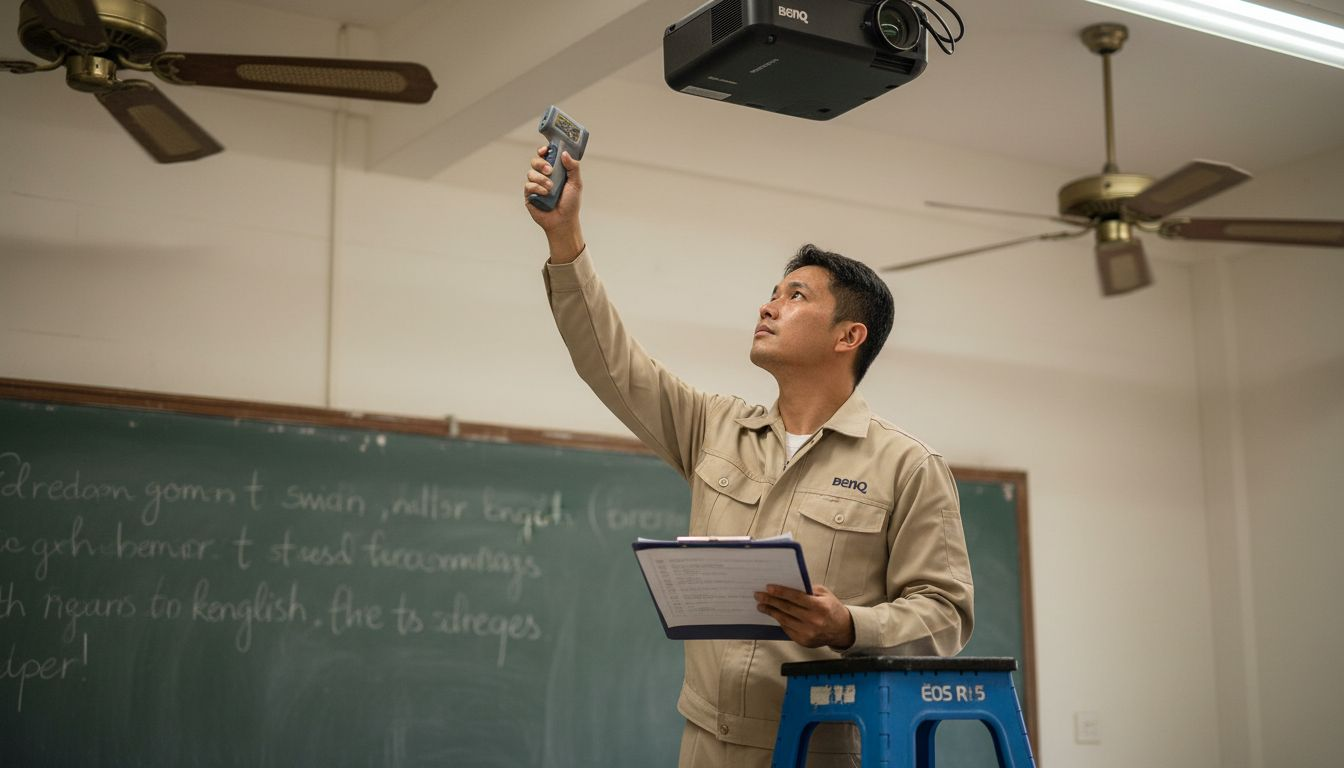
Malaysia's high humidity poses additional risks. Moisture can penetrate projector housings over time, causing corrosion on lamp contacts and electrical components. Dust particles combine with humidity to form sticky residue that blocks cooling vents, further raising internal temperatures.
Power cycling represents one of the most damaging usage patterns. Each time you turn your projector on, the lamp experiences thermal shock as it rapidly heats from room temperature to over 1000°C. Turning the projector off triggers another stress cycle as components cool. Users who frequently power cycle their projectors can reduce lamp life by more than 25%.
Typical Malaysian usage patterns that shorten lamp life include:
- Running projectors in enclosed cabinets without adequate airflow
- Using projectors during afternoon hours when room temperatures peak
- Powering on for short viewing sessions multiple times daily
- Neglecting air filter maintenance in dusty environments
Pro Tip: Allow your projector to run its full cooling cycle before unplugging. Modern BenQ projectors continue fan operation for several minutes after shutdown to protect the lamp from thermal shock.
Understanding these lamp lifetime factors in Malaysia helps you create an optimal environment for maximum lamp longevity.
How Projector Settings Influence Lamp Life
Your projector's brightness settings directly control lamp temperature and wear rate. Economy mode reduces power consumption and heat generation, extending lamp life significantly.
BenQ projectors offer multiple lamp modes: Normal, Eco, SmartEco, and LampSave. Normal mode delivers maximum brightness but generates the most heat. Eco mode typically reduces brightness by 20-30% while cutting power consumption proportionally. Economy modes can extend lamp life by 30-50%, while high brightness reduces it by up to 40%.
Running at full brightness constantly pushes lamp components to their thermal limits. The intense heat accelerates filament degradation in UHP lamps and stresses power supplies. Most users find that reducing brightness by 20% creates minimal visible difference in darkened home theater environments while substantially extending lamp life.
SmartEco technology dynamically adjusts lamp power based on image content. Dark scenes trigger automatic brightness reduction, saving energy without affecting perceived image quality. This intelligent management can add hundreds of hours to lamp life compared to static brightness settings.
Practical applications of lamp-saving settings:
- Use Eco mode for movies and TV shows in light-controlled rooms
- Reserve Normal mode for daytime presentations or ambient light situations
- Enable SmartEco for mixed content viewing sessions
- Reduce brightness manually when projecting subtitles or less demanding content
Statistic: Switching from Normal to Eco mode on a BenQ projector rated for 4000 hours can extend lamp life to 6000 hours or more, saving $200-$300 in replacement costs.
Pro Tip: Modern BenQ projectors remember your last used mode. Set Eco as your default to ensure you're always maximizing lamp life unless you specifically need extra brightness.
Exploring lamp-saving modes benefits reveals substantial cost savings over your projector's lifetime.
Common Misconceptions About BenQ Projector Lamp Durability
Several persistent myths about projector lamp care lead users to unknowingly shorten lamp life. Let's address the most damaging misconceptions.
-
Myth: Brightness settings don't significantly affect lamp life. Reality: Higher brightness increases lamp temperature dramatically. Running at maximum brightness can reduce rated lamp life by 40% or more. The relationship between brightness and longevity is exponential, not linear.
-
Myth: Frequent power cycling has minimal impact. Reality: Each power cycle subjects the lamp to extreme thermal stress. Users who turn projectors on and off multiple times daily can lose 25% or more of potential lamp life. The thermal shock from rapid heating and cooling damages lamp electrodes and shortens overall lifespan.
-
Myth: All replacement lamps perform equally. Reality: OEM BenQ lamps consistently outlast generic alternatives by 20-30% in real-world testing. Generic lamps often use lower-grade materials and less precise manufacturing, resulting in premature failure, color shifts, and potential safety hazards.
-
Myth: Lamps fail suddenly without warning. Reality: Most lamps show gradual degradation signs including dimming, color temperature shifts, longer ignition times, and occasional flicker. Monitoring these indicators allows planned replacement before complete failure.
Ignoring these facts leads to expensive consequences. Premature lamp failure disrupts viewing experiences and forces emergency replacements at potentially higher costs. Understanding true lamp behavior helps you implement practices that maximize return on investment.
"The difference between a well-maintained projector lamp lasting 5000 hours versus a neglected one failing at 2000 hours often comes down to simple habits: proper ventilation, appropriate brightness settings, and allowing complete cooling cycles."
Comparison: Lamp vs. Laser Technology Longevity and Cost Efficiency
Choosing between traditional UHP lamp and BlueCore laser projectors requires understanding both immediate costs and long-term value.
| Feature | UHP Lamp Projectors | BlueCore Laser Projectors |
|---|---|---|
| Typical Lifespan | 2000-6000 hours | 20,000+ hours |
| Initial Cost | $800-$2000 | $1800-$4000 |
| Replacement Frequency | Every 2-5 years | Rarely needed |
| Lamp Replacement Cost | $150-$400 per lamp | Minimal maintenance |
| Brightness Consistency | Degrades 20-30% over life | Maintains 90%+ brightness |
| Warmup Time | Instant | 30-60 seconds |
| Color Accuracy | Excellent initially | Consistent throughout life |
Total cost of ownership tells the real story. A UHP projector costing $1200 requires lamp replacements every 3000 hours at $250 each. Over 15,000 hours of use, you'll spend $1200 (initial) plus $1250 (five lamp replacements) totaling $2450.
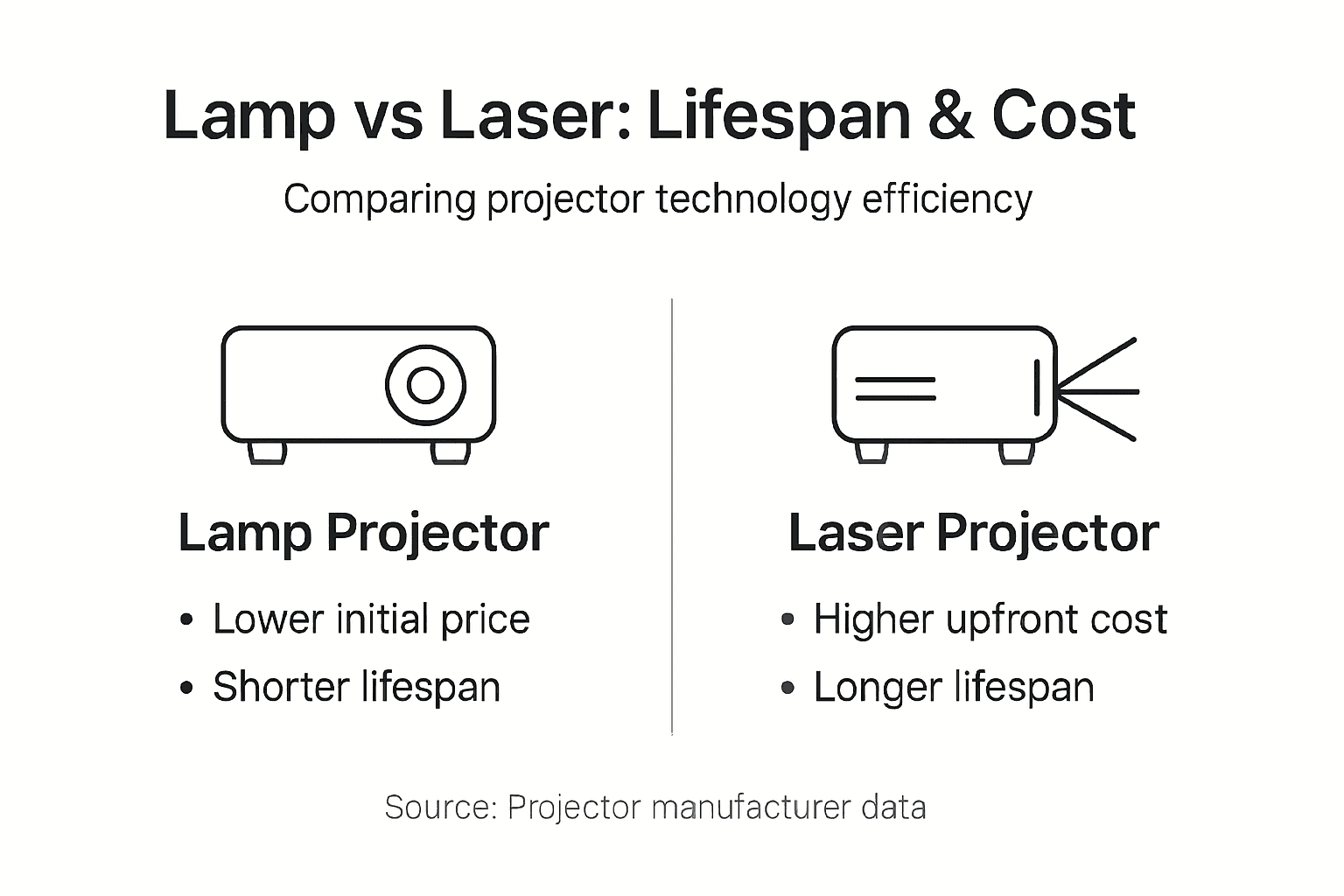
A comparable laser projector at $2400 requires virtually no lamp maintenance over the same 15,000 hours, potentially saving money while eliminating replacement hassles. The break-even point typically occurs around 8000-10,000 hours of use.
UHP lamps make sense for:
- Casual users with under 500 hours annual viewing
- Budget-conscious buyers prioritizing low initial investment
- Users wanting maximum initial brightness for daylight viewing
- Those comfortable with periodic maintenance
Laser technology benefits:
- Heavy users logging 1000+ hours annually
- Installation in difficult-to-access locations
- Commercial or educational settings requiring reliability
- Users prioritizing consistent image quality over years
Your viewing habits determine which technology delivers better value. Calculate your annual usage hours and multiply by expected ownership years to estimate total operational costs for each technology.
Manufacturer Guidelines and Replacement Recommendations
BenQ provides specific guidelines for lamp replacement timing and procedures to ensure optimal performance and safety.
BenQ recommends replacing lamps at approximately 70% of rated lifespan rather than waiting for complete failure. A lamp rated for 4000 hours should be replaced around 2800-3000 hours. This proactive approach prevents unexpected failures during important viewing sessions and maintains consistent image quality.
Signs indicating lamp replacement is needed:
- Noticeable dimming compared to original brightness, even at maximum settings
- Color temperature shifts toward yellow or green tints
- Increased ignition time or multiple attempts needed to start lamp
- Visible flicker or intermittent brightness fluctuations
- On-screen lamp warning messages or hour counter alerts
Replacement procedure follows these basic steps. First, allow the projector to cool completely for at least 60 minutes after final use. Disconnect power and remove the lamp cover using appropriate screwdriver. Release lamp module locking screws and carefully extract the assembly by its handle, never touching the glass bulb. Install the new OEM lamp by reversing these steps, ensuring proper seating and screw tightness. Reset the lamp hour counter through the projector's menu system.
Pro Tip: Purchase replacement lamps before your current lamp reaches 80% of rated life. Having a spare on hand prevents viewing interruptions and allows you to replace lamps during planned downtime rather than emergency situations.
Using genuine BenQ OEM lamps ensures proper fit, electrical specifications, and warranty coverage. Third-party lamps may void your projector warranty and pose safety risks from substandard manufacturing. Following proper BenQ lamp replacement procedure ensures safe, successful bulb changes.
Maintenance Practices to Extend BenQ Projector Lamp Life
Regular maintenance directly impacts how long your BenQ lamp performs optimally. Malaysian home theaters face unique challenges requiring consistent attention.
-
Clean air filters monthly. Dust accumulation restricts airflow, forcing cooling fans to work harder and raising internal temperatures. Remove filters according to your model's manual, vacuum or wash them gently, and ensure complete drying before reinstalling. This simple task can extend lamp life by 500-1000 hours.
-
Ensure adequate ventilation clearance. BenQ recommends minimum 30cm clearance around exhaust vents. Never operate projectors in enclosed cabinets without active cooling. Hot air recirculation dramatically shortens lamp life by preventing effective heat dissipation.
-
Minimize power cycling. If you'll use your projector again within 4-6 hours, consider leaving it in standby mode rather than full shutdown. The small electricity cost is offset by extended lamp life from avoiding thermal stress.
-
Use quality power protection. Voltage fluctuations and surges damage lamp power supplies and ballasts. Install a quality surge protector or UPS system to ensure clean, stable power delivery.
-
Schedule professional cleaning annually. Internal dust buildup on optical components and heat sinks requires professional service. Technicians disassemble the projector safely to clean areas unreachable by users.
-
Monitor operating temperature. Many BenQ projectors display internal temperature in service menus. If temps consistently exceed 45°C, improve room cooling or ventilation before lamp damage occurs.
Pro Tip: Create a maintenance log tracking filter cleanings, lamp hours, and any performance changes. This documentation helps identify patterns and optimal replacement timing for your specific usage environment.
Following these projector maintenance tips and implementing maintenance best practices ensures your BenQ projector delivers years of reliable service.
Balancing Lamp Life and Viewing Quality: Practical Tips and Cost Analysis
Maximizing lamp life while maintaining excellent image quality requires strategic decisions about settings, maintenance, and replacement parts.
The OEM versus generic lamp debate centers on cost versus reliability. Generic lamps retail for $80-$150 compared to $200-$400 for genuine BenQ lamps. However, generic lamps commonly have 20-30% shorter lifespan than OEM BenQ lamps. A generic lamp saving $150 upfront but lasting only 2000 hours versus an OEM lamp at 3000 hours actually costs more per viewing hour.
| Lamp Type | Initial Cost | Average Lifespan | Cost Per 1000 Hours |
|---|---|---|---|
| Generic | $120 | 2000 hours | $60 |
| OEM BenQ | $280 | 3000 hours | $93 |
| OEM + Eco Mode | $280 | 4500 hours | $62 |
Economy mode activation makes OEM lamps even more cost effective. The calculation shifts dramatically when you factor in reliability. Generic lamps show higher failure rates within warranty periods, potentially leaving you without a working projector during critical viewing times.
When economy mode makes sense:
- Dedicated home theaters with controlled lighting where brightness reduction goes unnoticed
- Extended viewing sessions where heat buildup becomes concerning
- Users prioritizing lamp longevity over maximum brightness specifications
- Budget-conscious buyers wanting to extend time between replacement purchases
When to use normal brightness:
- Rooms with ambient light where extra lumens improve image visibility
- Short viewing sessions where lamp heat won't accumulate
- Content with predominantly dark scenes that benefit from peak contrast
- Situations requiring absolute maximum brightness specifications
Maintenance investment pays substantial returns. Spending 30 minutes monthly on filter cleaning and ensuring proper ventilation can extend lamp life by 1000 hours or more, worth $200-$300 in delayed replacement costs. Annual professional cleaning at $80-$120 prevents premature failures that could cost far more.
Pro Tip: Track your actual cost per viewing hour by dividing total projector investment (purchase price plus lamp replacements) by cumulative operating hours. This metric reveals true ownership costs and helps justify maintenance investments.
Understanding OEM vs generic lamp lifespan differences helps you make informed purchasing decisions that balance immediate budget constraints with long-term value.
Enhance Your Home Theater Experience with Projector Display Malaysia
Ready to maximize your projector investment with quality equipment and expert guidance? Projector Display Malaysia offers an extensive selection of BenQ projectors featuring both traditional UHP and advanced BlueCore laser technologies, perfect for Malaysian home theaters.
Our team provides personalized recommendations based on your viewing habits, room conditions, and budget. We stock genuine OEM BenQ replacement lamps ensuring maximum lifespan and performance, plus essential accessories like air filters, mounting solutions, and surge protectors that extend equipment life.
Visit our showroom or browse online at Malaysia's top projector seller to explore current models. Check our projector sales in Malaysia for special promotions on premium home theater systems. Complete your setup with quality projector accessories designed to protect your investment and optimize performance. Our expert support helps Malaysian home theater enthusiasts achieve cinema-quality experiences that last for years.
FAQ
What is the average lifespan of a BenQ projector lamp?
BenQ UHP lamps typically last 2000 to 6000 hours depending on usage settings and environmental conditions. BlueCore laser models exceed 20,000 hours of operational life, essentially eliminating replacement needs for most home theater users. Actual lifespan varies based on brightness settings, power cycling frequency, and maintenance quality.
How does Malaysia's climate affect BenQ projector lamp life?
Malaysia's high temperatures and humidity accelerate lamp degradation by increasing operating temperatures and promoting dust buildup. Proper ventilation becomes critical in tropical climates to dissipate heat effectively. Regular filter cleaning and air-conditioned environments help mitigate climate impacts, potentially adding 500-1000 hours to lamp life.
Can I use third-party lamps to save costs?
While generic lamps cost less initially, they have 20-30% shorter lifespan and higher failure risk than OEM BenQ lamps. Third-party lamps may void manufacturer warranties and pose safety concerns from substandard materials. Calculate cost per viewing hour rather than just purchase price. OEM lamps often deliver better long-term value through extended lifespan, consistent performance, and warranty protection.
How does projector brightness setting affect lamp life?
Higher brightness increases lamp temperature significantly, reducing lifespan by up to 40% compared to economy modes. Each brightness level generates proportionally more heat, accelerating component wear. Economy mode extends lamp life by 30-50% with minimal visible quality loss in darkened home theater environments, making it the smart choice for most viewing situations.
Should I turn off my projector between short breaks?
Avoid powering off for breaks under 30-60 minutes, as frequent power cycling reduces lamp life by over 25% through thermal stress. Each on/off cycle forces the lamp through extreme temperature changes that damage electrodes and filament structures. Use pause or blank screen functions for short interruptions. Only power down completely when finished viewing for extended periods.
Recommended
- Projector Lamp Lifetime: What Malaysians Need to Know in 2025 – Projector Display
- Understanding Projector Lamp Lifespan: What to Know – Projector Display
- Changing Projector Lamp: A Step-by-Step Guide for 2025 – Projector Display
- 7 Must-Know Tips for Choosing Projectorlamps at Home – Projector Display