

Nearly 90 percent of the information processed by the brain is visual, making strong visual communication skills more valuable than ever. In a world overflowing with data, the ability to translate complex ideas into clear, engaging visuals helps people connect, learn, and remember. Whether you are designing presentations, crafting infographics, or simplifying concepts for diverse audiences, understanding how to communicate visually can transform the way your message is received.
Table of Contents
- Understanding Visual Communication Skills
- Key Elements And Modalities Explained
- Applications In Education, Business, And Home
- Techniques For Improving Visual Clarity
- Common Mistakes And How To Avoid Them
Key Takeaways
| Point | Details |
|---|---|
| Importance of Visual Communication Skills | Visual communication skills are essential for effectively conveying messages through visual elements, bridging the gap between text and comprehension. |
| Key Modalities and Their Applications | Mastering graphic design, data visualization, color theory, and typography enhances communication across fields such as education, business, and marketing. |
| Techniques for Enhancing Clarity | Focusing on simplification, color psychology, consistent typography, and logical hierarchy improves the clarity of visual information presented. |
| Common Mistakes to Avoid | To maintain effectiveness, avoid overcrowding visuals, inconsistent color schemes, and neglecting audience context, ensuring clear and memorable communication. |
Understanding Visual Communication Skills
Visual communication skills represent a critical ability to convey messages, ideas, and information through visual elements like images, graphics, and design. According to StudyGuides Library, these skills encompass more than just creating attractive visuals—they involve strategically using visual mediums to communicate complex concepts effectively.
At its core, visual communication bridges gaps between text and comprehension. It transforms abstract information into digestible, engaging formats that help viewers quickly understand messages. The Visual Communication Journal highlights how these skills span multiple disciplines, including media studies, journalism, and multimodal communication strategies.
Key components of strong visual communication skills include:
- Graphic design fundamentals
- Understanding color psychology
- Creating clear and impactful visual narratives
- Selecting appropriate visual representations
- Translating complex data into intuitive graphics
Professionals across various fields—from marketing to education—rely on visual communication to simplify complex information, capture audience attention, and enhance message retention. Whether designing presentation slides, creating infographics, or developing digital content, mastering these skills can significantly improve how information is perceived and understood.
Key Elements and Modalities Explained
Visual communication encompasses a sophisticated ecosystem of elements that transform raw information into meaningful, engaging experiences. Research from ArXiv reveals a compelling framework for understanding visual design, highlighting four critical dimensions that guide effective communication: communication goals, object selection, strategic approach, and specific techniques.
In business and organizational contexts, visual control plays a pivotal role in communication efficiency. According to Wikipedia, this approach leverages visual signals to communicate information quickly and clearly, enabling rapid comprehension and decision-making. By replacing text-heavy explanations with intuitive visual cues, organizations can streamline information transfer and reduce cognitive load.
Key modalities of visual communication include:
- Graphic Design: Creating visual compositions
- Data Visualization: Transforming complex data into understandable graphics
- Color Theory: Utilizing psychological impacts of color
- Typography: Designing text for readability and emotional impact
- Iconography: Using symbols and icons for universal understanding
Mastering these modalities requires understanding both technical skills and human perception. Visual communicators must blend artistic creativity with strategic thinking, anticipating how different audiences will interpret and engage with visual information. This multidisciplinary approach ensures that visual messages are not just seen, but truly understood and remembered.
Applications in Education, Business, and Home
Visual communication skills have become increasingly critical across multiple domains, transforming how we learn, work, and interact. Louisiana State University emphasizes the importance of communication skills across disciplines, highlighting how visual communication transcends traditional boundaries and enhances understanding in diverse contexts.
In business environments, graphic facilitation has emerged as a powerful tool for collaborative communication. According to Wikipedia, professionals now use diagrams, pictures, symbols, and strategic writing to guide people toward specific goals during meetings, seminars, and workshops. This approach transforms complex discussions into visually comprehensible experiences that promote clearer decision-making and team alignment.
Key application areas for visual communication include:
- Education: Creating engaging learning materials
- Business: Developing compelling presentations
- Marketing: Designing impactful infographics
- Home: Organizing personal information
- Technology: Simplifying complex system designs
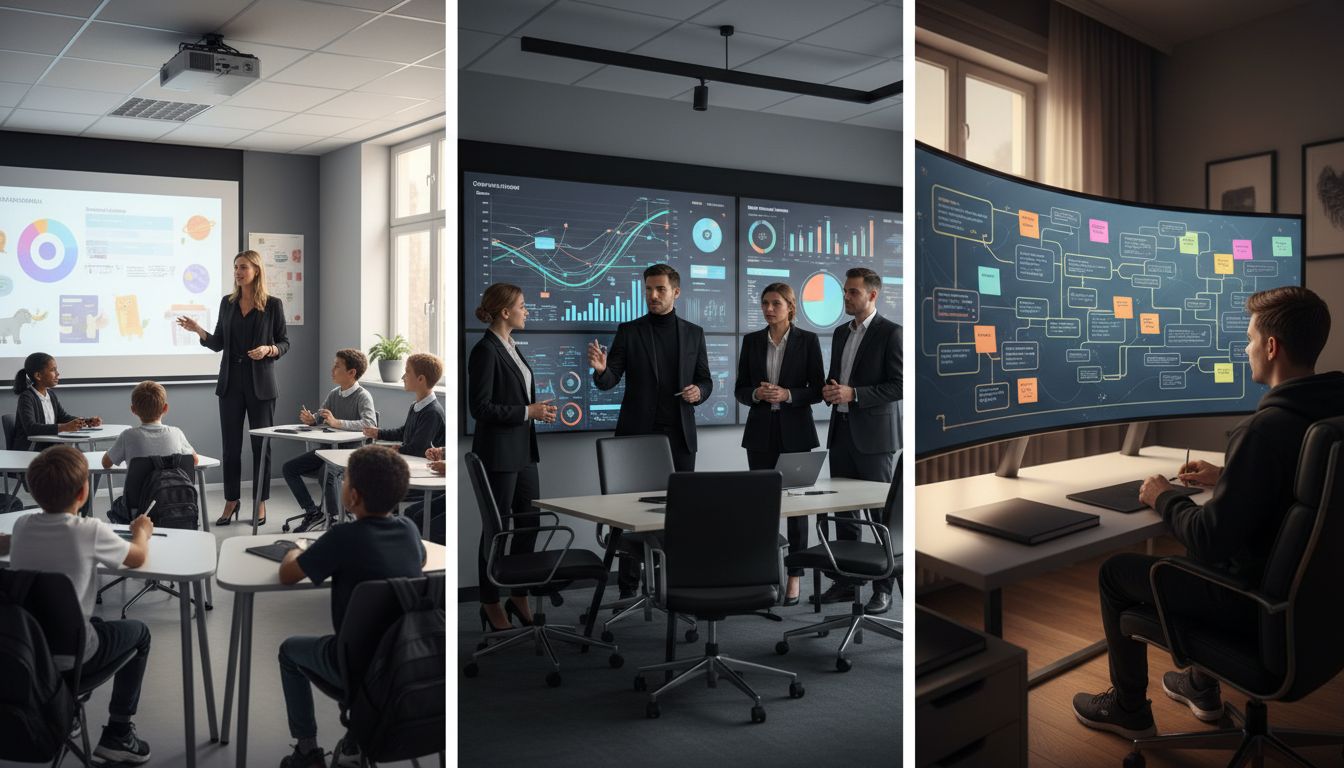
The versatility of visual communication means it serves multiple purposes across different settings. In classrooms, visual aids help students grasp complex concepts more quickly. In corporate boardrooms, infographics can communicate financial data more effectively than spreadsheets. At home, visual organization tools like mood boards or digital planners help individuals track goals and manage personal projects more intuitively. This adaptability makes visual communication an essential skill in our increasingly information-rich world.
Techniques for Improving Visual Clarity
Improving visual clarity is a nuanced skill that requires strategic thinking and intentional design. Research from ArXiv provides a compelling framework for effective visual communication, emphasizing three fundamental laws that can dramatically enhance the impact of visual information: establish a clear purpose, present data transparently, and make the core message unmistakably obvious.
Successful visual communication hinges on understanding how the human brain processes visual information. This means going beyond mere aesthetics and focusing on creating designs that guide the viewer's attention efficiently. By strategically using principles like color contrast, spatial organization, and hierarchical information presentation, communicators can create visuals that are not just seen, but immediately comprehended.
Key techniques for enhancing visual clarity include:
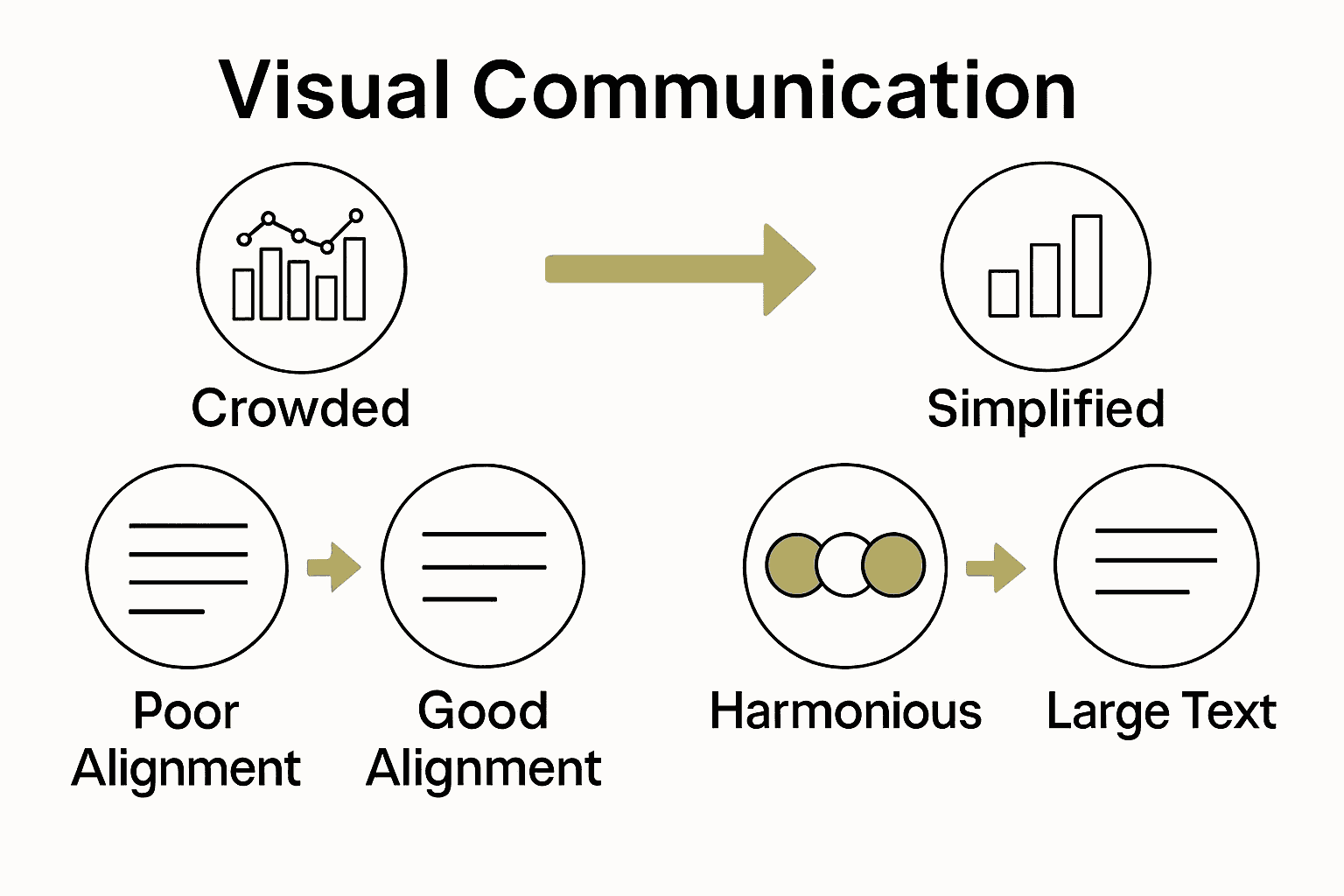
- Simplification: Removing unnecessary visual clutter
- Color Psychology: Using colors strategically to guide attention
- Consistent Typography: Maintaining uniform text styles
- White Space Management: Creating breathing room in designs
- Logical Information Hierarchy: Organizing content from most to least important
Practical application of these techniques requires continuous practice and refinement. Professionals must develop an intuitive sense of visual balance, learning to communicate complex ideas through streamlined, elegant design solutions. By treating visual communication as a deliberate craft, individuals can transform raw information into compelling, easily digestible visual narratives that resonate with their intended audience.
Common Mistakes and How to Avoid Them
Visual communication is a delicate art where small errors can significantly diminish message effectiveness. The World Health Organization warns against common design pitfalls, particularly emphasizing the dangers of excessive patterns and overcrowded content that can overwhelm viewers and obscure key information.
Research from ArXiv underscores the critical risk of visual misinterpretation, highlighting that poorly designed visualizations can actually hinder knowledge transfer instead of facilitating understanding. This means that visual communicators must be intentional about every design choice, understanding that each element either clarifies or complicates the intended message.
Most frequent visual communication mistakes include:
- Overcrowding: Cramming too much information into a single visual
- Inconsistent Color Schemes: Using colors that clash or confuse
- Poor Hierarchy: Failing to guide viewer's attention logically
- Ignoring Audience Context: Creating visuals without considering viewer's background
- Neglecting White Space: Not allowing visual 'breathing room'
Avoiding these pitfalls requires a disciplined approach to design. Successful visual communicators continually refine their craft by soliciting feedback, studying audience reactions, and remaining ruthlessly committed to clarity. By treating each visual as a precision instrument for communication, professionals can transform potentially confusing graphics into powerful, intuitive messages that resonate immediately and memorably.
Enhance Your Visual Communication with the Right Display Solutions
Mastering visual communication skills means turning complex ideas into clear, compelling stories that your audience can instantly grasp. However, without the proper tools to project vivid images and crisp graphics, even the best-designed visuals can lose their impact. Common challenges include overcrowding your visuals, poor color choices, and unclear information hierarchy—all problems that a high-quality projector and display system can help solve.
At ProjectorDisplay.com, we understand the power of clear and impactful visual communication. Whether you need a portable projector for dynamic business presentations or a smart projector to bring educational content to life, our extensive selection of projection equipment is designed to meet your exact needs. From full HD resolution and high lumens that ensure bright, sharp images to wireless connectivity for seamless display setup, our products help you deliver your message with clarity and confidence.
Looking for the perfect projector that matches your communication goals? Explore our range of projectors and projection accessories.

Don't let weak displays hold back your message. Elevate your visual communication now by visiting ProjectorDisplay.com to find the optimal projector solution for your classroom, office, or home environment. Start transforming your presentations with clarity and professionalism today.
Frequently Asked Questions
What are visual communication skills?
Visual communication skills involve the ability to convey messages and ideas effectively through visual elements like images, graphics, and design. They help transform complex information into engaging formats that are easier to understand.
Why are visual communication skills important in business?
In business, visual communication skills enhance efficiency by simplifying complex information. They aid in decision-making, increase audience engagement, and improve message retention through the use of visual aids like infographics and presentations.
How can I improve my visual communication skills?
To improve visual communication skills, focus on mastering graphic design fundamentals, understanding color psychology, and practicing techniques such as simplification and effective hierarchy. Continuous learning and feedback can also help refine these skills.
What common mistakes should I avoid in visual communication?
Common mistakes to avoid include overcrowding visuals with too much information, using inconsistent color schemes, neglecting white space, and failing to create a clear information hierarchy. These errors can hinder the effectiveness of your visuals.