
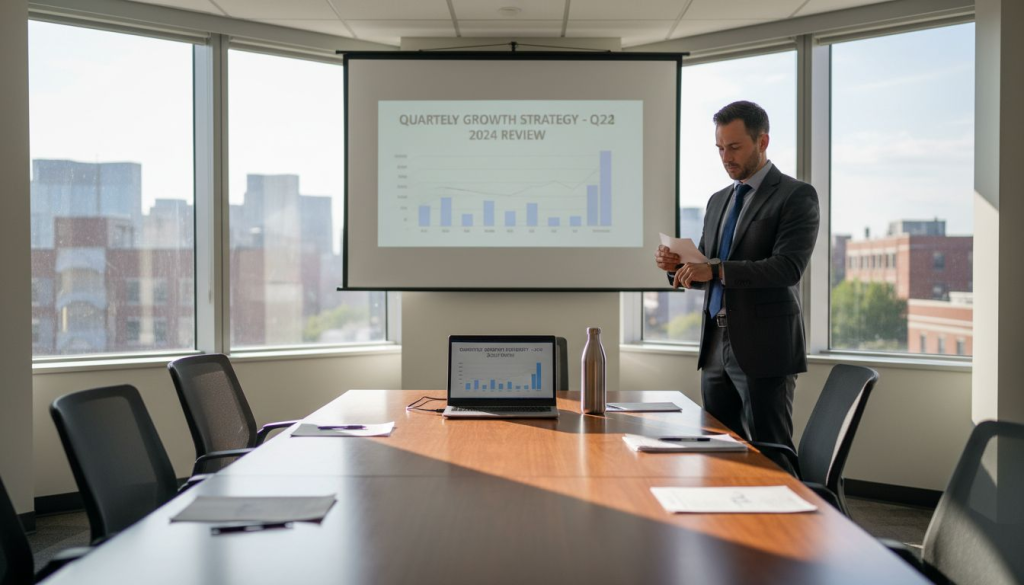
Many educators and professionals in Malaysia find that balancing project deadlines and lessons becomes easier with the right tools and proven methods. Research shows that adopting advanced time management strategies can enhance productivity by up to 25 percent, mirroring trends seen in American institutions. This guide offers practical techniques to help you manage your schedule, utilize projector technology more effectively, and ensure that every presentation or class runs smoothly.
Table of Contents
- Defining Time Management Strategies In Practice
- Types Of Time Management Techniques
- Key Features For Projector-Based Presentations
- Integrating Technology For Better Efficiency
- Roles And Responsibilities In Time Usage
- Common Pitfalls And How To Avoid Them
Key Takeaways
| Point | Details |
|---|---|
| Effective Time Management Requires Strategy | Incorporate goal-setting, prioritization, task organization, and proactive planning into daily routines for enhanced productivity. |
| Adaptability is Crucial | Continuously assess and modify time management techniques based on evolving personal and professional needs to maintain effectiveness. |
| Leverage Technology for Efficiency | Utilize digital tools like task management applications and digital calendars to optimize workflow and promote better time allocation. |
| Avoid Common Pitfalls | Recognize and address challenges such as multitasking, procrastination, and overcommitment to improve time management practices. |
Defining Time Management Strategies in Practice
Time management represents a systematic approach to organizing tasks, allocating resources, and maximizing personal productivity across professional and academic environments. Research indicates that targeted time management strategies can significantly enhance performance and self-efficacy, particularly when integrated strategically into daily workflows.
At its core, effective time management involves several fundamental strategies that help professionals and students optimize their productivity. These strategies typically include goal-setting, prioritization, task organization, and proactive planning. A comprehensive systematic review synthesizing 107 empirical studies highlights these core elements as central to enhancing workplace and educational productivity. By implementing structured approaches, individuals can transform their time management from reactive responses to deliberate, strategic actions.
Practical time management requires understanding individual work patterns and developing personalized systems. Key techniques include:
- Breaking large projects into smaller, manageable tasks
- Using digital and analog tools for tracking progress
- Establishing clear boundaries between work and personal time
- Creating realistic timelines with built-in buffer periods
- Regularly reviewing and adjusting management strategies
Successful time management goes beyond simple scheduling. It demands continuous learning, self-awareness, and adaptability. Professionals must remain flexible, regularly assess their approaches, and be willing to modify strategies that no longer serve their evolving needs.
Pro tip: Start each week by blocking out 30 minutes to review your goals, prioritize tasks, and create a strategic action plan that aligns with your most important objectives.
Types of Time Management Techniques
Time management techniques are strategic approaches designed to help individuals optimize their productivity and achieve personal and professional goals more efficiently. Research reveals a comprehensive range of techniques that enable professionals and students to improve their workflow and time allocation, each offering unique benefits and addressing different aspects of personal productivity.
Several foundational time management techniques have emerged as particularly effective across various contexts. These include the Eisenhower Matrix, Pomodoro Technique, Time Blocking, and the 2-Minute Rule. A detailed study exploring preferred time management methods highlights how different techniques can be strategically adapted to individual work styles and preferences%20197-206%20%20-25%20MCC_Candelasa-et-al-PREFERRED-TIME-MANAGEMENT-TECHNIQUES-AMONG-WORKING-STUDENTS.pdf?download=1). Understanding these techniques allows individuals to select and customize approaches that best suit their specific needs.
Key time management techniques include:
- Eisenhower Matrix: Categorizing tasks by urgency and importance
- Urgent and important: Do immediately
- Important but not urgent: Schedule deliberately
- Urgent but not important: Delegate when possible
- Neither urgent nor important: Eliminate
- Pomodoro Technique: Working in focused 25-minute intervals with short breaks
- Time Blocking: Dedicating specific time slots to particular tasks or types of work
- 2-Minute Rule: Immediately completing tasks that take less than two minutes
- To-Do List Prioritization: Ranking tasks by significance and potential impact
Successful time management requires ongoing experimentation and self-awareness. No single technique works universally, so professionals must remain adaptable, continuously refine their approach, and be willing to combine or modify techniques to suit their evolving needs.
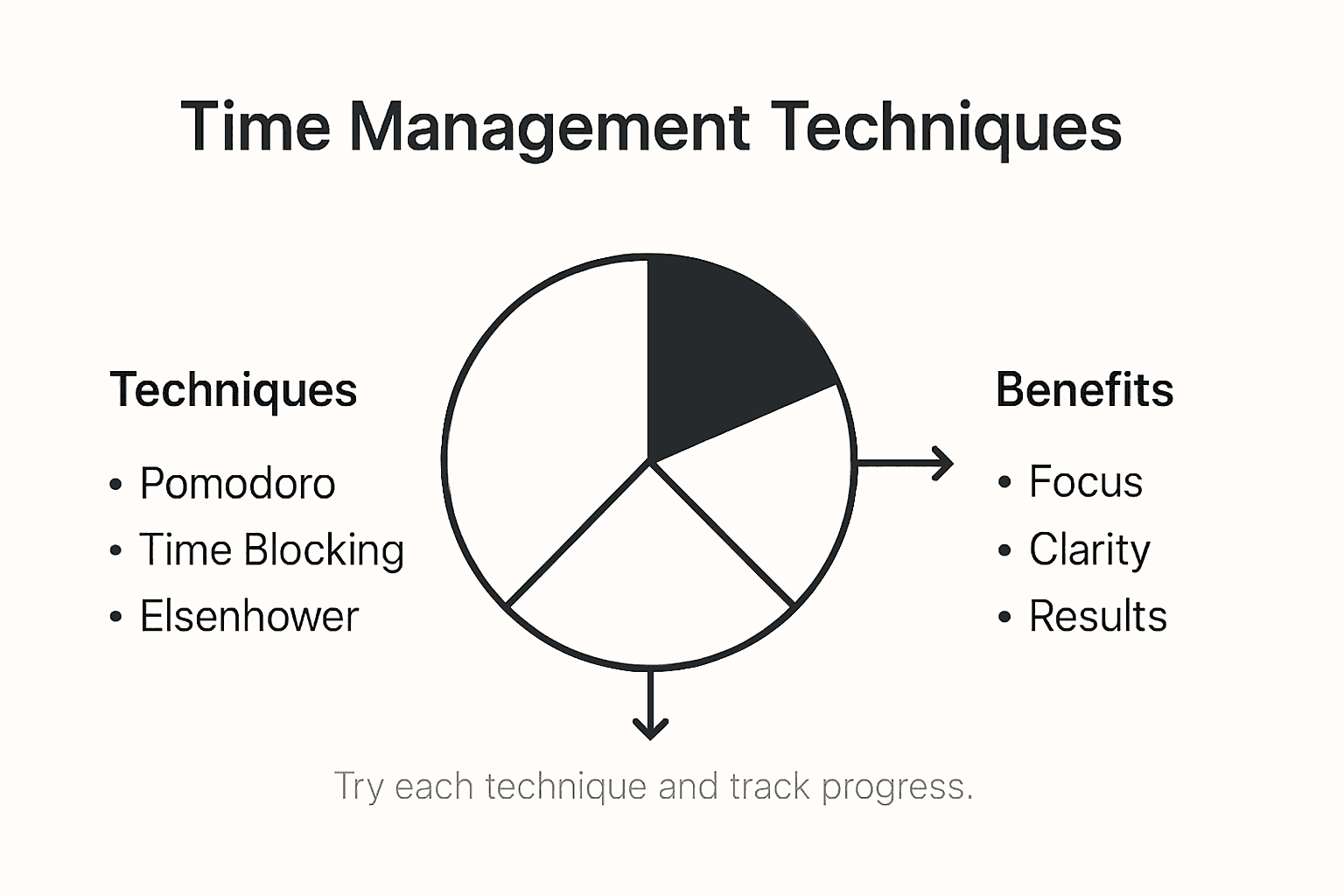
Here's a concise overview comparing top time management techniques and their best-use scenarios:
| Technique | Ideal For | Strengths |
|---|---|---|
| Eisenhower Matrix | Prioritizing task urgency | Clarifies importance |
| Pomodoro Technique | Deep, focused work blocks | Minimizes burnout |
| Time Blocking | Scheduling varied tasks | Enhances workflow clarity |
| 2-Minute Rule | Quick wins on small tasks | Reduces minor delays |
| To-Do List Prioritization | Goal-oriented planning | Easy daily implementation |
Pro tip: Experiment with different time management techniques for two weeks each, carefully tracking your productivity and personal satisfaction to discover your most effective personal workflow.
Key Features for Projector-Based Presentations
Professional presentations require strategic technological integration to maximize audience engagement and information retention. Business presentation techniques have evolved significantly with advanced projector capabilities, demanding a comprehensive understanding of key features that transform ordinary slides into compelling visual narratives.
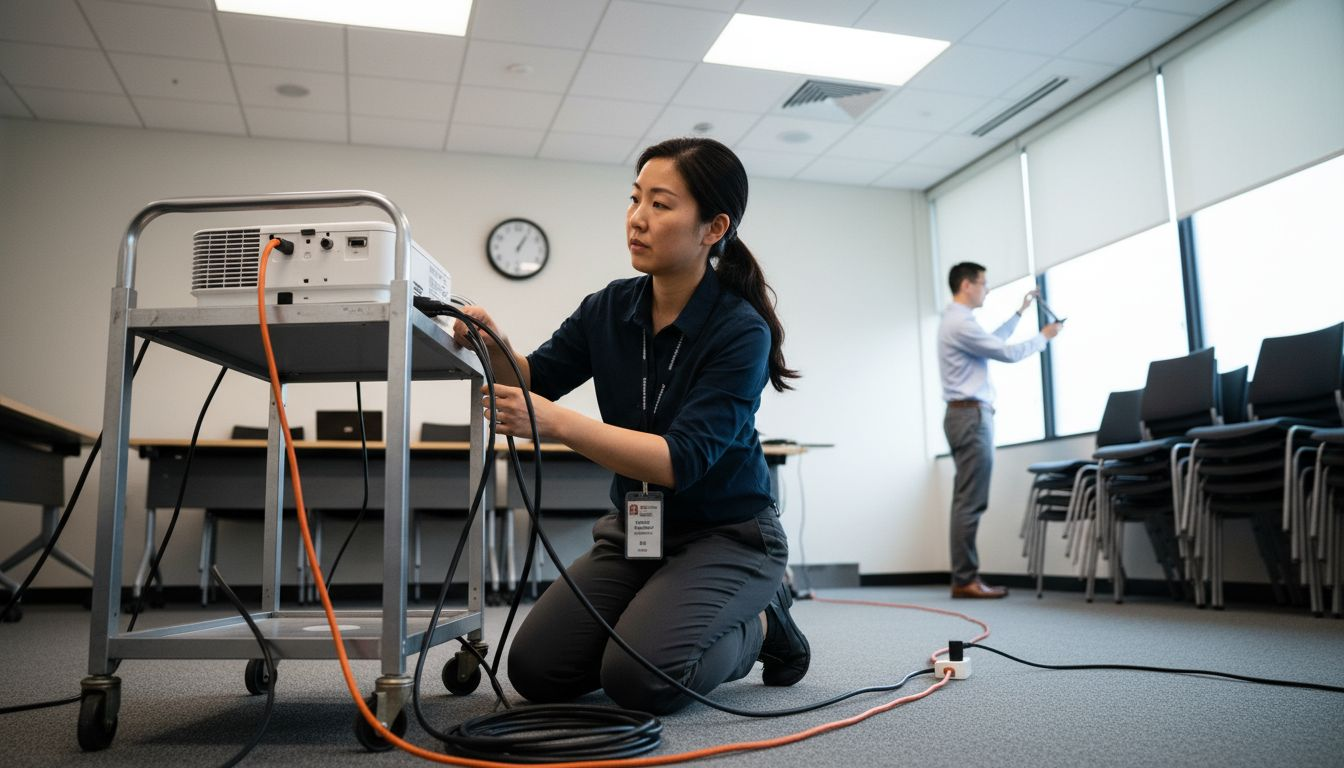
Modern projector-based presentations rely on several critical technological and design elements to ensure maximum impact. Lumens, resolution, connectivity options, and color accuracy represent fundamental technical considerations that directly influence presentation quality. Selecting the right projector involves carefully balancing these technical specifications with specific presentation requirements, whether for corporate boardrooms, educational settings, or professional conferences.
Key features for optimal projector-based presentations include:
- Technical Specifications
- High lumens rating for bright environments
- Full HD or 4K resolution for crisp visuals
- Multiple input ports (HDMI, VGA, USB-C)
- Wireless screen mirroring capabilities
- Presentation Design Elements
- Clean, minimalist slide layouts
- High-contrast color schemes
- Large, readable fonts
- Consistent visual branding
- Interactive Capabilities
- Touch-enabled projection surfaces
- Real-time annotation tools
- Remote presentation control
- Seamless device integration
Successful presenters understand that technology serves communication, not the reverse. The most advanced projector means little without clear, engaging content and confident delivery. Continuous practice, technical familiarity, and audience-centric design remain paramount in creating memorable presentations.
Pro tip: Test your entire presentation setup at least 30 minutes before your actual presentation to identify and resolve any potential technical issues.
Integrating Technology for Better Efficiency
Technological integration has revolutionized time management approaches, transforming how professionals and students approach productivity and task completion. Advanced digital tools enable more precise tracking and optimization of workflow processes, creating unprecedented opportunities for enhancing personal and professional efficiency.
Modern time management technologies offer sophisticated solutions that go beyond traditional scheduling methods. Digital calendars, task management applications, collaboration platforms, and automated reminder systems represent critical technological interventions that enable more strategic resource allocation. Comprehensive technological integration supports real-time workflow adjustments and more nuanced project management strategies, allowing users to adapt quickly to changing priorities and demands.
Key technological strategies for efficiency improvement include:
- Digital Productivity Tools
- Cloud-based task management platforms
- Integrated calendar synchronization
- Automated time-tracking applications
- Cross-device workflow management
- Communication and Collaboration Technologies
- Instant messaging platforms
- Video conferencing tools
- Shared document editing systems
- Project management dashboards
- Automation and AI-Powered Solutions
- Smart scheduling assistants
- Predictive task prioritization algorithms
- Intelligent notification systems
- Machine learning-based productivity insights
Successful technological integration requires a balanced approach that prioritizes human agency over technological complexity. The most effective systems remain flexible, allowing users to customize and adapt tools to their unique workflow requirements.
Pro tip: Select no more than three core technological tools and invest time in deeply understanding their advanced features rather than constantly switching between multiple platforms.
Roles and Responsibilities in Time Usage
Effective time management transcends individual effort, requiring strategic coordination and clear role definition within organizational and personal contexts. Time management research highlights the critical importance of well-defined responsibilities in optimizing workflow and productivity, emphasizing how systematic role allocation can dramatically improve overall performance.
Within professional and team environments, role clarity, task delegation, and strategic responsibility allocation emerge as fundamental principles for managing time efficiently. Leadership plays a pivotal role in establishing structured routines and preventing employee overstrain through intelligent time management practices, creating frameworks that balance individual capabilities with organizational objectives.
Key considerations for effective roles and responsibilities include:
- Individual Responsibility Strategies
- Clear personal performance expectations
- Self-accountability mechanisms
- Regular performance self-assessment
- Personal time tracking
- Team Coordination Approaches
- Transparent task distribution
- Collaborative goal setting
- Balanced workload allocation
- Cross-functional communication protocols
- Leadership Time Management Responsibilities
- Establishing performance standards
- Creating supportive workflow environments
- Monitoring team energy and potential burnout
- Providing necessary resources and support
Successful time management requires continuous adaptation and mutual understanding. Organizations and individuals must remain flexible, recognizing that roles and responsibilities are dynamic and should evolve with changing circumstances and organizational needs.
Pro tip: Conduct quarterly role and responsibility reviews to ensure alignment between individual capabilities, team objectives, and organizational goals.
Common Pitfalls and How to Avoid Them
Time management represents a complex skill fraught with potential obstacles that can significantly undermine personal and professional productivity. Research identifies systematic challenges that frequently derail effective time management strategies, revealing patterns of behavior that consistently impede optimal performance and organizational efficiency.
Understanding and mitigating these common pitfalls requires a strategic approach focused on recognizing destructive patterns, cognitive biases, and inefficient workflows. Professionals often fall into predictable traps that compromise their time management effectiveness, including multitasking, poor prioritization, and inadequate boundary setting. Successful individuals learn to identify these challenges early and develop targeted interventions to counteract their negative impacts.
Common time management pitfalls and their strategic solutions include:
- Multitasking Misconceptions
- Pitfall: Believing simultaneous task completion increases productivity
- Solution: Focus on single-task concentration
- Implement sequential task management
- Use time-blocking techniques
- Procrastination Patterns
- Pitfall: Delaying important tasks
- Solution: Break complex tasks into smaller steps
- Utilize the two-minute rule
- Create accountability mechanisms
- Distraction Management
- Pitfall: Constant digital interruptions
- Solution: Establish communication boundaries
- Use technology management tools
- Create dedicated focus periods
- Overcommitment Risks
- Pitfall: Accepting too many responsibilities
- Solution: Practice strategic saying no
- Evaluate opportunity costs
- Maintain clear personal boundaries
Successful time management is an ongoing process of self-reflection, adaptation, and continuous improvement. Individuals must remain vigilant, regularly assessing their strategies and being willing to modify approaches that no longer serve their evolving professional and personal needs.
For easy reference, the following table summarizes common time management pitfalls and their effective remedies:
| Pitfall | Challenge Faced | Strategic Remedy |
|---|---|---|
| Multitasking | Distraction, lower quality | Focus on one task at a time |
| Procrastination | Missed deadlines | Divide tasks, create urgency |
| Digital distractions | Lost focus, wasted minutes | Scheduled offline periods |
| Overcommitment | Burnout, reduced output | Prioritize, decline excess |
Pro tip: Conduct a weekly personal productivity audit, critically examining your time allocation and identifying specific areas where efficiency can be improved.
Elevate Your Presentations with Smart Time Management and Cutting-Edge Projection Technology
Mastering time management strategies like the Eisenhower Matrix, time blocking, and focused presentation preparation can dramatically boost your delivery impact. The article highlights how clear prioritization and reducing distractions are essential for a successful presentation. Yet, even the best preparation can fall short without the right visual technology. High lumens, crisp HD resolution, and seamless wireless connectivity are not just features – they are crucial for commanding attention and conveying your message with clarity in any setting.

Take your presentation skills to the next level by choosing from a variety of advanced projectors tailored for business, education, and professional environments at ProjectorDisplay.com. Explore options like short-throw and smart projectors that complement your time-blocked preparation efforts with flawless visuals. Act now to secure premium projection equipment that matches your strategic time management goals and deliver compelling presentations every time. Visit ProjectorDisplay.com to find your perfect projector solution and start transforming your impact today.
Frequently Asked Questions
What are some effective time management strategies for presentations?
Effective time management strategies for presentations include goal-setting, prioritization, task organization, and proactive planning. By implementing structured approaches, you can enhance your productivity and presentation impact.
How can I integrate technology to improve my presentation preparation?
You can integrate technology by using digital productivity tools such as cloud-based task management applications, digital calendars for scheduling, and automated reminder systems to keep track of your tasks and deadlines for presentations.
What common pitfalls should I avoid when managing my presentation time?
Common pitfalls to avoid include multitasking, procrastination, digital distractions, and overcommitment. Focus on single-task concentration, break complex tasks into smaller steps, and establish communication boundaries to enhance your efficiency.
How does the Eisenhower Matrix help in time management for presentations?
The Eisenhower Matrix helps prioritize tasks by urgency and importance, allowing you to categorize what to do immediately, what to schedule, what to delegate, and what to eliminate, thereby optimizing your preparation for presentations.