

Constant notifications and endless streams of digital content test the limits of even the most dedicated tech enthusiasts. For many in Malaysia, the struggle lies in finding balance—seeking immersive experiences with advanced projector setups while avoiding the mental drain of uncontrolled screen time. Embracing a digital detox not only restores focus but also transforms how you enjoy technology, turning your home entertainment system into a tool for deeper connection rather than another source of digital overload.
Table of Contents
- Digital Detox Explained For Modern Lifestyles
- Screen Time Categories And Common Myths
- Benefits Of Reduced Digital Overload
- Effective Detox Strategies For Tech-Savvy Homes
- Mistakes To Avoid During A Digital Detox
Key Takeaways
| Point | Details |
|---|---|
| Digital Detox Benefits | A digital detox promotes mental well-being by reducing stress and helping individuals reconnect with the present moment. |
| Active vs. Passive Screen Time | Understanding the difference between active and passive usage can lead to better digital habits and improve cognitive engagement. |
| Effective Detox Strategies | Implementing intentional screen-free periods and selecting purposeful activities can enhance social connections and improve focus. |
| Avoiding Common Mistakes | Setting realistic goals and having replacement activities prepared are crucial for a successful digital detox journey. |
Digital Detox Explained for Modern Lifestyles
A digital detox is the intentional act of stepping away from electronic devices to reduce stress, improve mental well-being, and reconnect with the present moment. Unlike a temporary trend or weekend break, a genuine digital detox addresses the reality of our hyperconnected world where notifications constantly demand attention and the pressure to be always available creates a relentless cycle of stress and anxiety. At its core, it's about reclaiming your time and mental space from the devices that have gradually colonized every corner of our daily routines.
The need for digital detox has become urgent because excessive screen time directly impacts your health. Mental health challenges including anxiety and depression stem largely from overstimulation caused by social media feeds, streaming services, and constant digital entertainment. Your brain receives thousands of micro-stimulations throughout the day, each one triggering a small dopamine response that trains your mind to crave constant digital engagement. This creates mental fatigue that manifests as difficulty concentrating, emotional exhaustion, and a disconnection from your physical surroundings.
What makes digital detox particularly relevant for Malaysian tech enthusiasts is how it can transform not just your mental health but also your relationship with technology itself. Rather than abandoning technology entirely, a strategic digital detox helps you use screens more intentionally. For instance, many people find that after a proper detox period, they can return to entertainment like premium home theater systems without falling into the trap of mindless scrolling. A best home projector Malaysia setup becomes more enjoyable when you use it purposefully for curated movie nights rather than background noise for constant viewing. The detox helps restore focus, improves sleep quality, and creates space for mindfulness and genuine real-world interactions.
The practical benefits extend to productivity and presence. People who take deliberate breaks from screens report clearer thinking, better emotional regulation, and stronger connections with family and friends during face-to-face time. Whether you're viewing a presentation on a best office projector or enjoying a film at home, the intentionality matters. Digital detox isn't about rejecting technology like projectors, wireless displays, or interactive solutions that enhance our lives. Instead, it's about preventing technology from hijacking your attention and mental resources.
Pro tip: Start with a single technology-free day each week where you avoid all screens except essential communication, then gradually introduce screens back in a controlled way, using them for meaningful purposes like watching curated content on your home theater setup rather than passive scrolling.
Screen Time Categories and Common Myths
Not all screen time is created equal. Understanding the difference between active usage and passive usage is crucial for making informed decisions about your digital habits. Active screen time involves engaging with content on mobile phones, tablets, televisions, and computers where you're posting on social media, creating content, or participating in interactive experiences. Passive screen time, on the other hand, means scrolling through feeds, watching videos without engagement, or consuming content without contributing. This distinction matters because your brain processes these activities differently. Active usage typically demands more cognitive resources and intentionality, while passive consumption can slip into hours without you realizing how much time has passed.
Here's a comparison of active and passive screen time and their effects:
| Usage Type | Key Characteristics | Common Devices | Mental Impact |
|---|---|---|---|
| Active Usage | Intentional, engaging interactions | Computers, tablets | Boosts focus, adds purpose |
| Passive Usage | Mindless, non-interactive | Phones, TVs | Drains attention, causes fatigue |
One of the biggest misconceptions is that all screen time is inherently harmful. The reality is far more nuanced. Quality matters more than quantity of screen time, meaning the nature of your interactions and the content you consume are more important than strict hourly limits. Watching a curated documentary on your best projector in Malaysia serves a completely different purpose than endlessly scrolling social media on your phone. Similarly, using a projector display Malaysia for a productive work presentation differs vastly from passive background television. Well-managed, purposeful screen use can actually provide benefits like learning, connection, and entertainment, while excessive or unsuitable content genuinely can be detrimental.
Screens also serve different contexts in your life. Your epson projector used for educational presentations requires different screen management than entertainment viewing. The device itself matters too. Research shows that screen time impacts vary by developmental sensitivity, type of device, and social context, meaning a smartphone demands different boundaries than a larger projection system used for intentional family movie nights. Another common myth is that you need to eliminate screens entirely for a successful digital detox. This simply isn't realistic for most people. Instead, the goal is developing awareness about how you use screens and being intentional about when and why you're engaging with them.
The type of content and the social context surrounding your screen use matter far more than the raw minutes spent. Watching a film together on your best office projector or a wireless projector Malaysia setup with family creates meaningful interaction, unlike isolated social media consumption. Creating content for work on a projector seller Malaysia presentation platform requires focus and purpose. The context transforms the same activity from potentially harmful to genuinely valuable.
Pro tip: Audit your current screen use for one week by noting whether each session is active or passive, then commit to converting at least 50% of your passive screen time into active, intentional activities like watching curated content on a quality projection system rather than mindless scrolling.
Benefits of Reduced Digital Overload
When you step back from constant digital stimulation, something remarkable happens to your brain. The benefits of reducing digital overload extend far beyond just feeling less tired. Lower screen time correlates with fewer symptoms of depression, anxiety, and improved sleep quality, according to research on university students who cut back on excessive screen time. Your sleep patterns normalize because your brain isn't being bombarded with blue light and stimulating content right before bed. You fall asleep faster, sleep deeper, and wake up actually feeling rested instead of groggy. Beyond sleep, your cognitive function bounces back noticeably. You find yourself able to focus on a single task for longer stretches without your attention fragmenting every few minutes. Tasks that felt impossible to complete now feel manageable because your brain has recovered from chronic information overload.

The mental health improvements are equally significant. When you reduce non-essential digital use, you're not just taking a break from notifications and social media comparisons. You're actively restoring your emotional regulation system, which gets thoroughly exhausted by constant digital engagement. Digital detox enhances cognitive and emotional well-being by reducing information overload, stress, and improving mindfulness, while fostering better social connections and habit reformation. Your anxiety levels drop because you're no longer in a perpetual state of artificial urgency. You stop reflexively checking your phone every 30 seconds. Your emotional responses become more measured and thoughtful rather than reactive. For Malaysian professionals working in high-pressure environments, this clarity translates directly into better decision-making at work and home.
What's particularly valuable for home entertainment enthusiasts is how digital detox reshapes your relationship with technology itself. When you take intentional breaks from constant digital noise, you return to screens with renewed appreciation. Watching a carefully selected film on your best home projector Malaysia feels like an event rather than background noise. Using a projector display Malaysia for a meaningful presentation or family gathering carries genuine weight. This shift transforms your technology use from something that depletes you to something that genuinely enriches your life. You become more selective, more present, and more satisfied with your digital experiences.
The cumulative effect builds personal growth. People who practice digital detox report stronger relationships because they're actually present during conversations instead of mentally half-there. Academic and work performance improves because sustained focus returns. Your creativity flourishes when your mind isn't constantly scanning for the next notification. Most importantly, you develop genuine awareness about why you use screens and how they serve or harm your actual life goals.
Pro tip: Track one specific benefit daily for two weeks of reduced screen time—whether that's sleep quality, focus duration, or mood—and you'll build concrete evidence of improvement that motivates continued digital detox practices.
Effective Detox Strategies for Tech-Savvy Homes
For tech-savvy Malaysian homeowners, the challenge isn't avoiding technology entirely—it's creating smart boundaries that work within your lifestyle. Start by implementing intentional screen-free periods throughout your day. Setting daily screen-free periods during meals, before bed, or in social settings proves highly effective for sustained digital well-being. The timing matters significantly. Your bedroom should be a device-free zone starting at least one hour before sleep, which dramatically improves sleep quality and makes you more alert the next morning. Family meals are another critical screen-free window where everyone benefits from genuine conversation. Even 30 minutes of focused device avoidance during dinner creates measurable improvements in mood and connection. If you have a home theater setup with a best projector Malaysia or wireless projector Malaysia, reserve it for scheduled, intentional viewing rather than constant background entertainment.
The research is clear about what works. Brief 30-minute daily breaks can improve emotional well-being if consistently applied, with the timing of detox efforts significantly impacting your mood the following day. This means you don't need dramatic, all-or-nothing changes. Instead of overhauling your entire digital life, commit to one strategic 30-minute window each day where you disconnect completely. Make this non-negotiable, like an appointment with yourself. For Malaysian professionals using projector seller Malaysia solutions for work presentations, this might mean a screen-free period immediately after work ends, allowing your mind to transition away from professional screens. The key is consistency over intensity—practicing this daily habit compounds benefits over weeks and months.
Replace screen time with activities that genuinely satisfy you. Replacing screen time with hobbies, physical activity, or social interactions reduces dependency and fills the void that digital engagement created. This is crucial because stopping screen use without providing alternatives leaves an uncomfortable emptiness that pulls you right back to your devices. Perhaps you practice a hobby you've neglected, take evening walks, cook a meal without checking your phone, or engage in face-to-face games with family. For those with a best office projector setup at home, consider using it intentionally for movie nights with family rather than solo streaming, transforming passive consumption into shared experiences. Physical activity works particularly well because it demands presence and naturally blocks phone checking.
Set clear, personalized boundaries that align with your actual life. Generic advice rarely works because everyone's relationship with technology differs. Ask yourself specific questions: When does screen time genuinely serve you versus drain you? What activities make you feel most present? Which devices create the most digital anxiety? Then build boundaries around those answers. Your projector display Malaysia for work presentations serves a different purpose than your personal phone, so they need different rules. Document your boundaries in writing so you stay accountable when temptation strikes at 11 PM.
Pro tip: Use your home's physical layout strategically—keep your bedroom completely device-free, establish a specific room for your best projector in Malaysia viewing with scheduled watching times, and charge all personal devices outside your bedroom each night to eliminate the midnight scroll temptation.
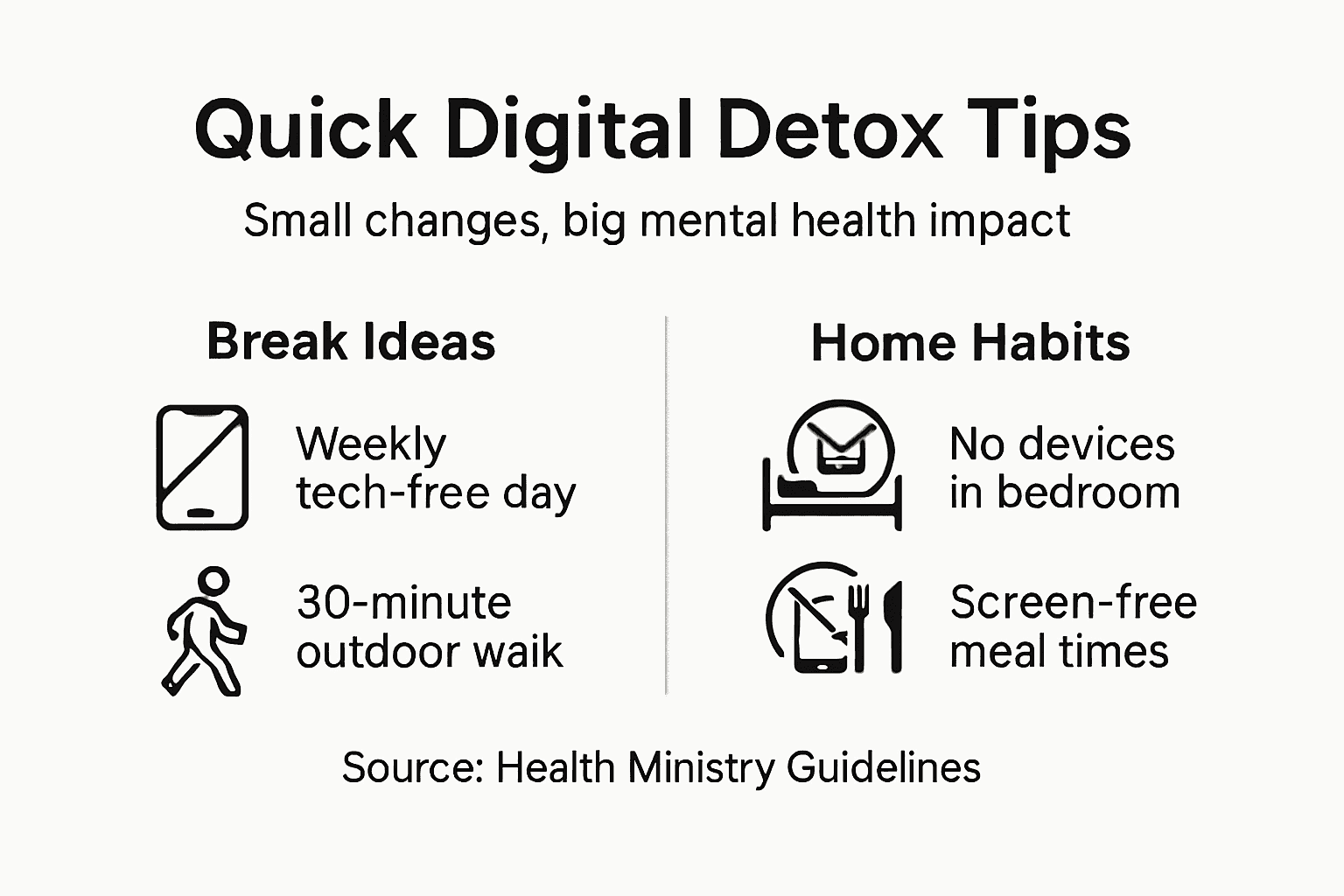
Summary of practical digital detox strategies and why they work:
| Strategy | Practical Action | Benefit for Well-Being |
|---|---|---|
| Screen-free meals | No devices during dinner | Enhances social connection |
| Device-free bedroom | Remove screens before sleep | Improves sleep quality |
| Scheduled use of projectors | Curated viewing times | Increases intentional enjoyment |
| Daily 30-minute break | Consistent device downtime | Lowers stress and boosts focus |
Mistakes to Avoid During a Digital Detox
Most digital detox attempts fail not because the concept doesn't work, but because people make predictable mistakes that sabotage their efforts. The biggest error is setting unrealistic goals that demand total abstinence overnight. Saying "I'll never use my phone again" or "no screens for a month" sets you up for failure because the withdrawal hits hard and you inevitably relapse. Instead, start small with achievable targets like a single screen-free hour each evening or one device-free day per week. Another critical mistake is failing to plan what comes next. Not having alternative activities to replace device use leads to boredom and relapse, leaving your brain craving stimulation and pulling you right back to your phone. You need concrete replacement activities ready before you start your detox. If you're accustomed to scrolling before bed, have a book selected. If you usually stream content endlessly, schedule specific times to watch your best projector in Malaysia or epson projector for intentional viewing rather than passive consumption.
Another trap is substituting one digital addiction for another. You quit social media but then obsessively check email instead. You stop gaming but start compulsively shopping online. The goal isn't just reducing screen time but breaking the habit loop itself. Common mistakes that undermine digital detox efforts include substituting one digital activity for another and lacking replacements for habitual screen time. This requires self-awareness about why you use devices in the first place. Are you bored? Lonely? Anxious? Stressed? Once you identify the underlying need, you can replace screen time with activities that actually address it. Physical exercise works better than another screen-based activity. Face-to-face conversation works better than online interaction. Offline hobbies work better than digital ones.
Ignoring social pressures is another common failure point. Friends send you messages, colleagues expect rapid email responses, family members judge your screen choices. You feel FOMO when offline. This creates pressure that breaks your commitment. The solution isn't isolation but intentionality about which digital connections matter and which don't. Maintaining offline social bonds is important because social connection needs drive device engagement. Tell the people in your life about your detox goals so they understand your delayed responses. Schedule specific times to catch up digitally rather than being constantly available. Use your projector display Malaysia for intentional video calls with loved ones instead of fragmented phone communication.
Finally, avoid the all-or-nothing mindset. Viewing digital well-being as a one-time intervention rather than an ongoing lifestyle practice guarantees failure. Life circumstances change. You'll have periods of heavy digital use during work deadlines or important projects. Rather than seeing occasional screen surges as failure, treat digital detox as a sustainable practice you continuously refine. Some weeks you'll maintain stricter boundaries, other weeks you'll be more flexible. The point is maintaining awareness and intentionality about your choices.
Pro tip: Write down three specific replacement activities you enjoy—reading, exercise, cooking, crafts, face-to-face games—and commit to having at least one available whenever you feel the urge to reach for a device, turning the detox impulse into a cue for something more satisfying.
Take Control of Your Screen Time with Purposeful Projection Solutions
Struggling to find balance in a world filled with constant digital noise The article on digital detox highlights the challenge of managing screen time and turning passive consumption into meaningful engagement. If you want to reduce digital overload while still enjoying quality entertainment or productive presentations a carefully selected projector can make all the difference. By choosing the right projection system you transform screen time from a source of stress into a deliberate and enriching experience that supports better focus deeper relaxation and stronger connections.
[Image:cta_image]
Discover how premium options like the best home projector Malaysia or a versatile projector display Malaysia can elevate your digital lifestyle with clarity and intention. Visit ProjectorDisplay.com to explore a wide range of high-quality projectors designed for home entertainment, work, and education. Act now to reclaim your mental space and enjoy screen time that truly adds value to your life with fast shipping across Peninsular Malaysia and dedicated customer support ready to help you create a healthier digital environment today.
Frequently Asked Questions
What is a digital detox?
A digital detox is a deliberate period of time when an individual refrains from using electronic devices to reduce stress, improve mental well-being, and reconnect with the present moment.
How can I effectively start a digital detox at home?
Begin by setting intentional screen-free periods during meals and before bed, gradually increase these times, and replace digital activities with hobbies or social interactions to fill the gaps.
What are the differences between active and passive screen time?
Active screen time involves engaging with content, such as creating or participating in interactive experiences, while passive screen time entails mindless scrolling or consuming content without interaction.
What benefits can I expect from reducing my screen time?
Reduced screen time can lead to improved mental health, better sleep quality, enhanced focus, and stronger personal connections as you become more present in your interactions.
Recommended
- Technology Life Balance for Malaysian Families – Projector Display
- How to Prevent Eye Strain Naturally with Display Devices – Projector Display
- Work From Home Essentials for Better Productivity – Projector Display
- Complete Guide to Entertaining Guests at Home – Projector Display
- Smart Living, Safe Living: The Future of OVAL Smart Home Technology – IRVINEi