
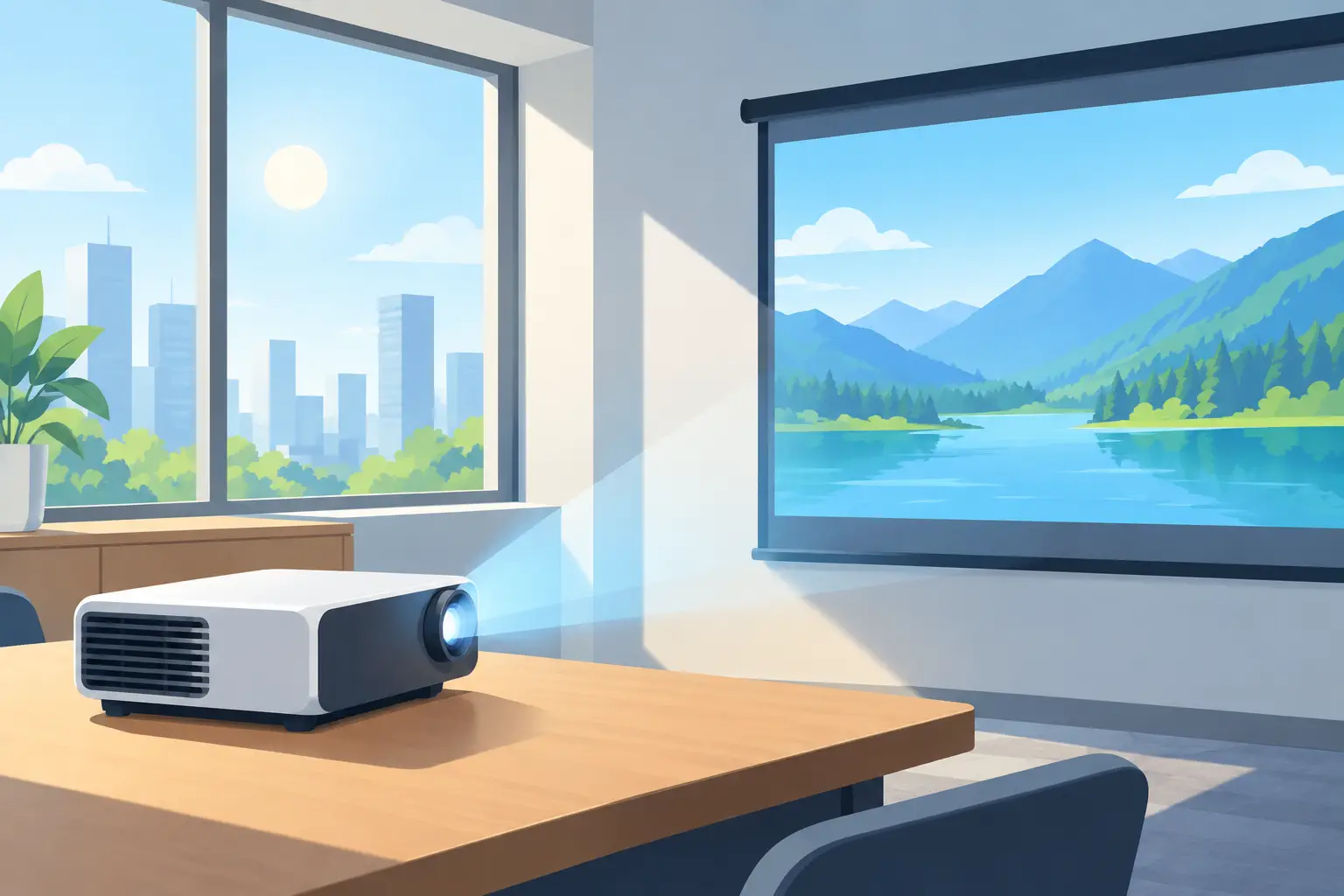
A projector image can look spectacular at night, then seem to disappear the moment sunlight reaches the wall. So, can projectors work in daylight? Yes, but the result depends far more on brightness, screen surface, and light control than on a projector simply being labeled 4K, smart, or laser.
For a living room presentation, classroom lesson, shop display, or daytime sports viewing, the goal is not to defeat the sun completely. It is to put enough useful light on the screen, preserve contrast, and prevent reflections from washing out the picture. With the right setup, daylight projection can be practical and impressive. With the wrong one, even a high-resolution projector will look pale.
Can Projectors Work in Daylight? The Short Answer
They can, especially in shaded rooms or spaces where you can control direct light. A projector is less likely to perform well in a bright, open area with unblocked windows, white walls, glossy surfaces, and sunlight falling directly on the projection screen.
Brightness is the first specification to check. Look for ANSI lumens, not vague marketing claims such as "LED lumens" or "peak lumens." ANSI lumens are measured using a recognized testing method, so they are the more useful number when comparing branded projectors for business, education, or home use.
A 1,000 ANSI lumen portable projector can produce a pleasant image after dark or in a dim bedroom. In a room with daylight, it will usually need blinds and a smaller image. For rooms with moderate ambient light, many buyers should start around 3,000 ANSI lumens. Bright meeting rooms, classrooms, training spaces, and multipurpose halls may benefit from 4,000 ANSI lumens or more, paired with a suitable screen.
More lumens are not a magic fix. Ambient light lowers perceived black levels and contrast. A projector can make white areas brighter, but it cannot project a deeper black than the light already falling on the screen. This is why screen choice and room setup matter just as much as the projector specification.
Brightness Is Only Part of the Daylight Equation
The projector's image gets dimmer as you make it larger. A 3,000-lumen projector filling a 100-inch screen has to spread its light over a much larger area than it would on an 80-inch screen. If daytime clarity matters, reducing the image size can deliver a noticeable improvement without changing the projector.
Resolution still matters, but it solves a different problem. Full HD is a strong starting point for movies, streaming, presentations, and general classroom use. 4K provides finer detail on large screens and for close seating distances. Neither Full HD nor 4K, however, will prevent a washed-out image in strong daylight. Brightness and contrast management come first.
Laser projectors are often a good fit for frequent daytime use because they can offer high brightness, long light-source life, and more consistent performance over time. Traditional lamp projectors can also work very well, particularly for budget-conscious installations, but lamp output gradually declines and replacement planning should be part of the ownership decision.
Think in Terms of the Actual Room
A conference room with ceiling lights and roller blinds is not the same as a glass-walled office. A classroom may need a viewable image with lights partially on so students can take notes safely. A family room may only need to handle indirect daylight during a weekend football game.
Before choosing a model, consider where the windows are, whether direct sun reaches the screen, how much light control is realistic, and how large the projected image needs to be. A few minutes spent assessing the room can prevent buying a projector that is perfect on paper but underpowered in practice.
Choose the Right Screen for Daytime Projection
Projecting onto a plain white wall is convenient, but it is rarely the best option for daylight. Walls often have texture, uneven paint, shadows, or a sheen that scatters light. The result is reduced sharpness and lower perceived contrast.
A proper projector screen gives the image a more consistent surface. For rooms with controlled lighting, a matte white screen remains a dependable, versatile choice. It provides natural color and a wide viewing angle, which works well for classrooms, meeting rooms, and family viewing.
In brighter spaces, a gray or ambient-light-rejecting screen can improve perceived contrast by reducing the impact of light coming from certain directions. These screens are not interchangeable, though. Their performance depends on projector placement, seating position, and the direction of the room's light. An ambient-light-rejecting screen may be an excellent investment for a fixed home theater or presentation room, but it is not always the right match for a portable projector moved from room to room.
Screen gain also deserves attention. A higher-gain screen can reflect more light back toward the audience, making the image appear brighter from the preferred viewing position. The trade-off is a narrower viewing angle and, in some cases, visible brightness variation. For group viewing, balance is usually better than chasing the highest possible gain.
Control Light Before Buying Extra Lumens
The most cost-effective daylight upgrade is often not a brighter projector. It may be blackout curtains, blinds, a screen positioned away from windows, or turning off the lights nearest the screen.
Avoid placing the screen opposite an uncovered window. Light behind viewers tends to hit the screen directly and causes the greatest washout. If the layout allows, position the screen on a wall that receives less direct light and place seating so windows are to the side rather than behind the audience.
Darkening the wall around the screen can also help perceived contrast. This does not mean every room needs to become a dedicated theater. Even reducing bright reflections from nearby white walls, glass tables, or glossy cabinets can make a visible difference.
For offices and schools, practical lighting control may be partial rather than complete. In that case, select a brighter business or education projector, use a screen instead of a wall, and keep presentation slides high contrast. Dark text on a white background may be familiar, but large text, strong color separation, and uncluttered layouts remain easier to read in ambient light.
Short Throw and Ultra-Short Throw in Bright Rooms
Short-throw projectors can be useful when space is limited. They create a large image from a shorter distance, helping reduce shadows from presenters and allowing flexible installation in classrooms, small meeting rooms, and compact entertainment spaces.
Ultra-short-throw models sit very close to the wall or screen, often on a media console. They can create a clean, TV-like installation without a ceiling mount or long cable run. For daytime viewing, however, they still need adequate brightness and an appropriate screen. In fact, screen compatibility is especially important with ultra-short-throw projection because the light reaches the screen at a very steep angle.
Do not choose short throw solely because the room is bright. Choose it because the room layout, mounting position, and audience movement make it the practical optical solution.
A Practical Daylight Setup by Use Case
For casual daytime home viewing, a 3,000 ANSI lumen projector, 80- to 100-inch screen, and curtains or blinds may be enough. Sports, cartoons, and bright streaming content are generally more forgiving than dark movies or cinematic games.
For a meeting room or classroom, prioritize brightness, readable resolution, reliable HDMI or wireless connectivity, and simple controls. A 3LCD projector can be particularly appealing for presentations because it delivers strong color brightness alongside white brightness. If the projector will run for hours each day, a laser model can make sense for lower maintenance over its usable life.
For outdoor daytime events, expectations need to change. Even a bright projector struggles against direct sun. A covered patio or canopy can support projection in shade, especially later in the afternoon, but full daylight outdoors is normally better served by a high-brightness LED display. Projectors become far more effective outdoors after sunset.
For retail, houses of worship, training centers, and larger venues, installation details matter. Screen size, projector throw distance, mounting height, cable routing, sound, and room lighting should be planned together. A projector, ceiling mount, screen, HDMI cable, and audio solution are not separate purchases when the goal is a dependable daily display system.
Do Not Shop by Lumens Alone
A daylight-ready projector should have enough ANSI lumens for the room, but it also needs accurate specifications, the right lens and throw distance, suitable resolution, and connectivity that fits how people actually use it. A bright XGA projector may suit basic slides, while Full HD or 4K is a better choice for detailed video, spreadsheets, design work, and home entertainment.
Also check fan noise, speaker needs, input options, wireless casting support, and maintenance requirements. A bright projector mounted in the wrong location, connected through an unreliable adapter, or paired with weak audio will still create a frustrating experience.
ProjectorDisplay.com can help buyers compare projector brightness, screen options, mounts, and complete display accessories for a specific room or application. The best daylight setup is not necessarily the most expensive one. It is the setup designed around the light you already have, the image size you need, and the viewing experience you want people to remember.