
TL;DR:
- Long throw projectors offer superior image quality, brightness uniformity, and cost advantages.
- They require significant room length, making them ideal for dedicated home theaters and large spaces.
- In small Malaysian rooms, short throw and ultra-short throw projectors may be more practical alternatives.
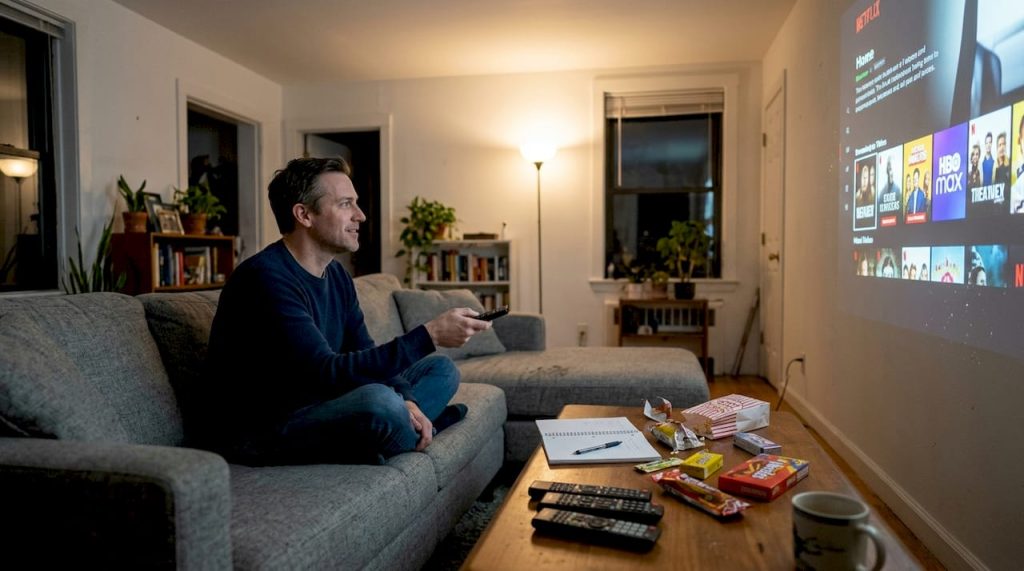
Short throw projectors get most of the attention in Malaysian showrooms and tech forums, but they aren't always the right choice. Long throw projectors quietly deliver superior image quality with sharper images, better brightness uniformity, and higher color accuracy, thanks to their simpler optical designs. Whether you're setting up a dedicated home theater in Petaling Jaya or running presentations in a large Kuala Lumpur boardroom, understanding what long throw projectors offer could save you money and give you a noticeably better picture.
Table of Contents
- What is a long throw projector?
- How long throw projectors compare to short throw models
- Where long throw projectors shine (and their limitations)
- Buying tips: How to choose and set up a long throw projector
- Our take: Why long throw projectors still deliver the best big screen experience
- Explore the best long throw projectors and accessories in Malaysia
- Frequently asked questions
Key Takeaways
| Point | Details |
|---|---|
| Long throw explained | Long throw projectors require greater distance from the screen and are best for large rooms or venues. |
| Superior image quality | They offer sharper images, better brightness, and higher color accuracy compared to short throw alternatives. |
| Space matters most | Room size is the top factor—Malaysians in tight spaces may find short throw projectors more practical. |
| Better value per dollar | Long throw models generally cost less and offer better image quality than their compact rivals. |
| Plan your setup | Measure your space and consider installation needs before choosing a long throw projector. |
What is a long throw projector?
A long throw projector is any model with a throw ratio of approximately 1.5:1 or higher. Throw ratio is the relationship between the projector's distance from the screen and the width of the image it produces. Understanding throw ratio basics is the first step toward picking the right projector for your space.
The formula is simple. Throw ratio equals) distance divided by image width, written as R = D / W. So if your projector sits 4 meters away and produces a 2-meter wide image, your throw ratio is 2.0:1. Long throw models typically fall between 1.5:1 and 3.0:1) or even higher, meaning the projector needs to be placed well back from the screen.
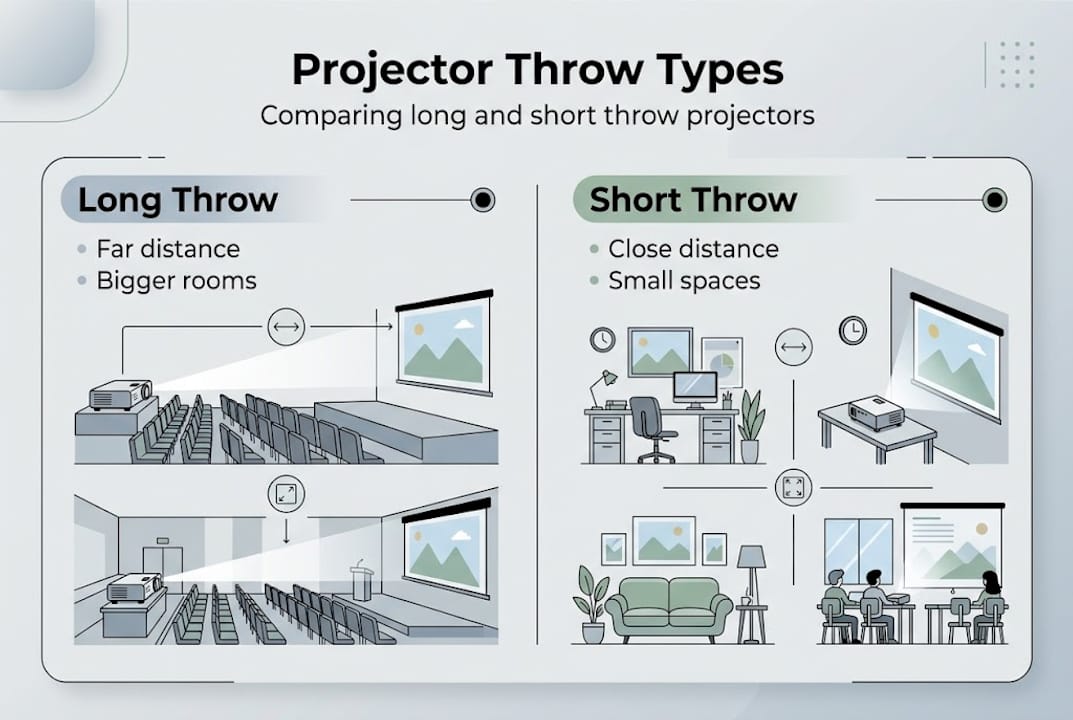
Here's a quick reference for common screen sizes and the distances a long throw projector (2.0:1 ratio) would require:
| Screen size | Image width | Required distance (2.0:1) |
|---|---|---|
| 80 inches | 1.77 m | 3.54 m |
| 100 inches | 2.21 m | 4.42 m |
| 120 inches | 2.66 m | 5.32 m |
| 150 inches | 3.32 m | 6.64 m |
Key terms to know before you shop:
- Throw ratio: Distance to screen divided by image width
- Zoom lens: Adjustable focal length that lets you fine-tune image size without moving the projector
- Lens shift: Vertical or horizontal adjustment that repositions the image without physically moving the unit
- Lumens: Brightness output; higher lumens perform better in lit rooms
Most long throw projectors include zoom lenses, giving you flexibility to adjust the image size without repositioning the unit. This is especially useful when ceiling mounting in rooms with fixed dimensions. Use a projector throw distance calculator to confirm your numbers before purchasing.
Pro Tip: Measure your room's usable throw distance before browsing models. Start from the back wall (or ceiling mount point) to the screen location, then use that number to filter projectors by compatible throw ratios.
How long throw projectors compare to short throw models
Once you understand the fundamentals, the differences between long throw and short throw (or ultra-short throw, UST) projectors become very practical. Each type suits different environments, budgets, and priorities.
| Feature | Long throw | Short throw | Ultra-short throw |
|---|---|---|---|
| Typical throw ratio | 1.5:1 to 3.0:1+ | 0.4:1 to 1.0:1 | Under 0.4:1 |
| Distance for 100" screen | ~14.5 ft (4.4 m) | ~3.6 ft (1.1 m) | Under 2 ft |
| Price range (1080p) | $400 to $800 | $600 to $1,200 | $1,500+ |
| Image quality | Excellent | Good | Variable |
| Best use | Large rooms, theaters | Medium rooms, offices | Small rooms, living rooms |
For a 100-inch screen, a long throw projector at 2.0:1 needs roughly 14.5 feet of distance, while a short throw at 0.5:1 only needs about 3.6 feet. That gap matters enormously in Malaysian homes where room dimensions vary widely.
Long throw projectors typically cost 30 to 50% less than comparable short throw models. A quality 1080p long throw unit runs $400 to $800, while a short throw equivalent often starts at $600 and climbs past $1,200.
Advantages of choosing long throw:
- Simpler optics mean fewer distortions and more consistent edge-to-edge sharpness
- Superior image quality with better brightness uniformity and color accuracy
- Lower price point for equivalent resolution and lumen output
- Less sensitive to minor screen imperfections
- Wider selection of models and brands at every budget level
For a detailed throw comparison that covers more scenarios, including Malaysian apartment setups, it helps to see real-world examples side by side. In compact condos in Bangsar or Cheras, a short throw or UST might be the only practical option. But in a double-story home with a dedicated media room, long throw wins on both quality and cost. Check out this short vs long throw in Malaysia breakdown for local context.
Where long throw projectors shine (and their limitations)
Long throw projectors are not a universal solution. Knowing where they excel and where they fall short saves you from a costly mistake.
Optimal environments for long throw projectors:
- Dedicated home theater rooms with controlled lighting and fixed seating
- Large classrooms and lecture halls where the projector mounts to the ceiling far from the screen
- Corporate boardrooms and conference halls with long table layouts
- Outdoor movie setups in gardens, courtyards, or open event spaces
- Event venues and ballrooms where large screens serve big audiences
For a 100-inch screen, a typical long throw projector at 2.0:1 requires approximately 14.5 feet (4.4 meters) of throw distance. That's a meaningful requirement, but it's completely achievable in most Malaysian landed homes, seminar rooms, and event spaces.
Long throw optics are also simpler and cheaper to manufacture, which means manufacturers can invest more in brightness and color performance at the same price point. You get more picture quality per ringgit.
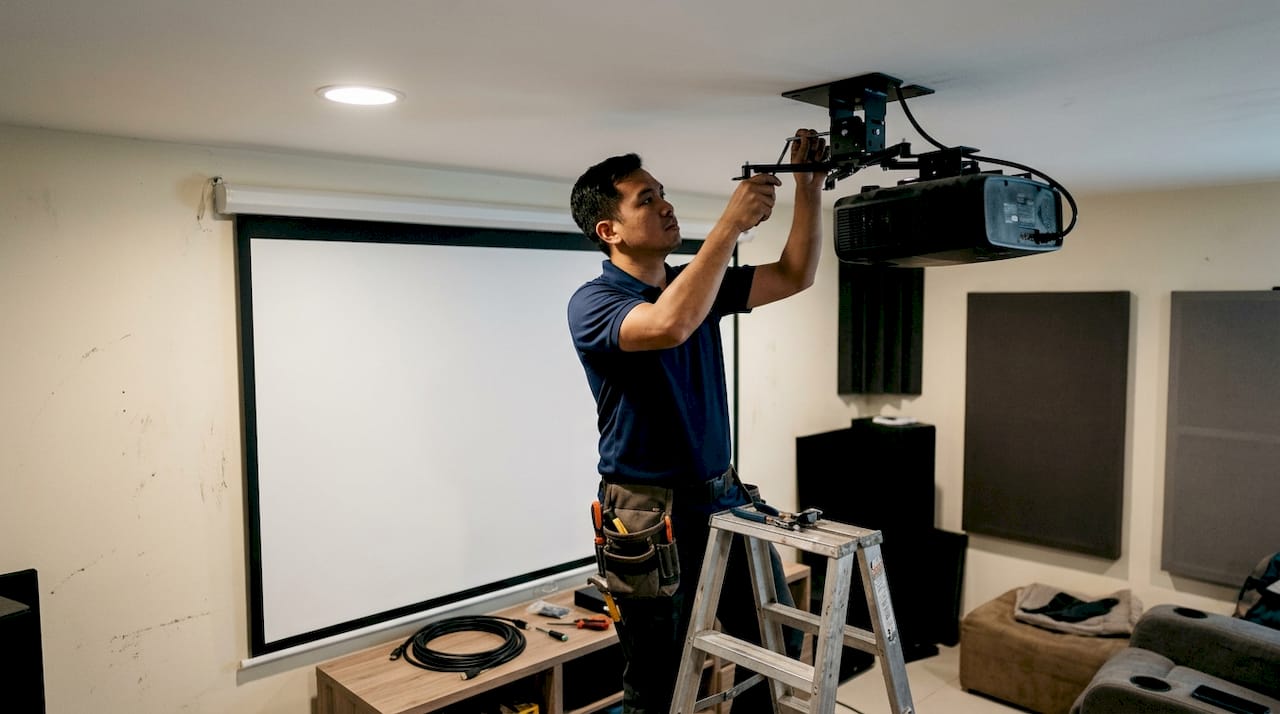
Pro Tip: If your room is deep enough but you're worried about people walking between the projector and screen, ceiling mounting solves the problem entirely. A fixed ceiling bracket keeps the beam above head height and eliminates shadow interruptions.
That said, long throw projectors have real limitations. In small rooms and apartments, they're often impractical without a ceiling mount. In a typical Malaysian apartment living room, a long throw unit placed on a coffee table will either produce a tiny image or require the projector to sit awkwardly close to the TV unit. People walking through the room will block the beam constantly. For those situations, explore small room projector options or short throw alternatives.
For home theater setups or long throw for presentations, the advantages are hard to beat when space allows.
Buying tips: How to choose and set up a long throw projector
Choosing the right long throw projector comes down to matching the unit's specifications to your specific room and use case. Here's what to evaluate before you buy:
- Room length: Measure the maximum throw distance available. This determines which throw ratios are compatible.
- Desired screen size: Work backward from the image size you want using the throw ratio formula.
- Ambient light levels: Brighter rooms need higher lumen output. Aim for at least 3,000 lumens in rooms with windows.
- Ceiling mount compatibility: Check that the projector supports inverted mounting and includes a standard mounting thread.
- Screen type: Gain screens can boost perceived brightness; matte white screens offer the widest viewing angles.
- Resolution: 1080p suits most home and office needs; 4K is worth the premium for large screens above 120 inches.
- Connectivity: HDMI 2.0, USB, and wireless casting support matter for modern setups.
Installation in Malaysian homes and offices benefits from a few practical adjustments. Ceiling mounts work best when the projector aligns with the center of the screen. If your ceiling is unusually high (common in older shophouses or bungalows), look for a projector with strong lens shift to reposition the image without tilting the unit.
Long throw optics are less sensitive to screen imperfections, so you don't need a premium tensioned screen to get a great image. A standard fixed-frame or pull-down screen works well. Pair your setup with the right projection screen types and check out must-have projector accessories like HDMI cables, mounts, and cable management kits.
For full setup guidance, the projector installation tips resource covers everything from bracket selection to keystone correction.
Pro Tip: Always run your measurements through an online throw distance calculator before finalizing your screen size. A small error in planning can mean the difference between a perfectly filled screen and an image that's either too small or spilling past the screen edges.
Our take: Why long throw projectors still deliver the best big screen experience
The industry keeps pushing compact projectors as the future, and we understand the appeal. Smaller units are easier to move, easier to hide, and easier to sell in a showroom. But here's the reality: when you prioritize image quality and value, long throw projectors remain the gold standard for large screen viewing.
The optical simplicity that makes long throw projectors less expensive is the same reason they produce better images. Fewer lens elements, less distortion, more consistent brightness from edge to edge. You're not paying for engineering workarounds; you're paying for straightforward, proven optics.
For Malaysian buyers with a dedicated room, a large hall, or even a spacious open-plan living area, settling for a short throw unit just to follow a trend means accepting a compromise in picture quality and paying more for it. That's a poor trade.
We believe that when space is available, long throw is the smarter investment. See our full projector comparison to make a side-by-side decision with confidence.
Explore the best long throw projectors and accessories in Malaysia
You now have the knowledge to make a confident, well-informed decision. The next step is finding the right model and getting it set up properly.
At ProjectorDisplay.com, we carry a curated selection of long throw projectors suited for Malaysian homes, offices, classrooms, and event spaces. Every product listing includes throw ratio specs so you can match the unit to your room before you buy. Need help with installation? Our installation guide walks you through every step, from ceiling mount selection to final image calibration. Browse our full range of projector accessories to complete your setup with the right screen, mount, and cables. Fast shipping across Peninsular Malaysia and WhatsApp support make the process straightforward.
Frequently asked questions
What is the main disadvantage of long throw projectors in Malaysian homes?
The main disadvantage is their need for long distances from screen to projector, making them tricky to use in small apartments or cramped rooms common in Malaysia. Without a ceiling mount, small rooms make long throw projectors impractical and prone to shadow interruptions.
How do I calculate the correct distance for my long throw projector?
Divide the desired image width by the projector's throw ratio. For example, a 2.0:1 throw ratio formula) with a 2.2-meter wide image means placing the projector 4.4 meters from the screen.
Do long throw projectors offer better image quality than short throw?
Yes. Long throw projectors typically deliver superior sharpness and color accuracy because their simpler optics avoid the edge softness, hotspots, and distortions that more complex short throw lens systems can introduce.
Can I use a long throw projector outdoors?
Absolutely. Long throw projectors are well suited for outdoor events and screenings where open space provides the distance needed for large, bright images without obstruction.
Recommended
- Home Theater Projector Setup: Achieve the Ultimate Viewing Experience – Projector Display
- Projector Screen Buying: Achieve Stunning Visuals Anywhere – Projector Display
- Projector Screen Instead of TV: Bigger Home Cinema – Projector Display
- 7 Top Home Theater Projectors for Immersive Viewing – Projector Display