
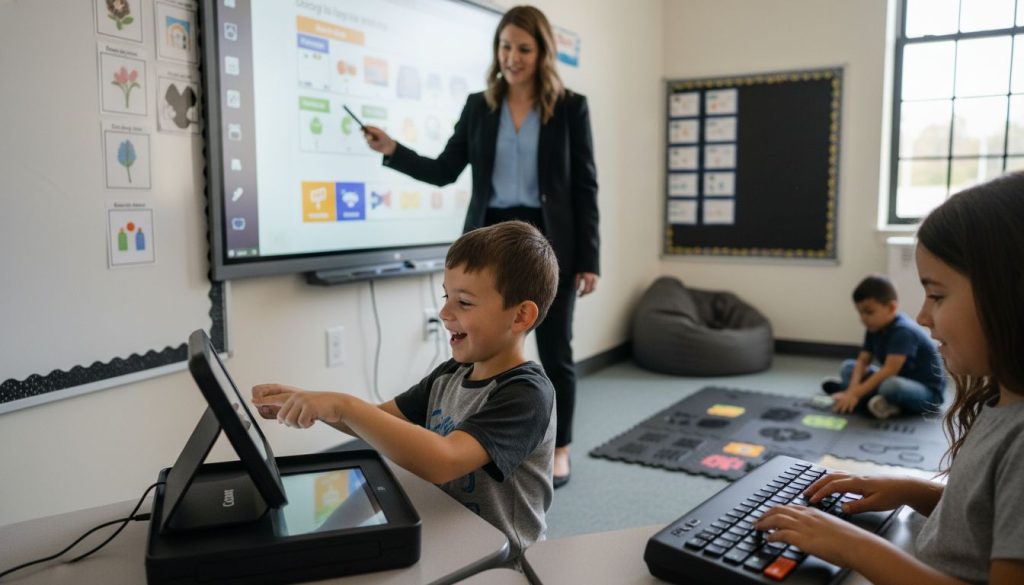
Over 90 percent of special needs students can benefit from technology that matches their unique learning requirements. For families and educators, finding the right tools is more than a technical choice—it shapes how children experience education and reach their full potential. This guide explains how assistive technology supports different learning styles, highlights key tools, and outlines what matters most when choosing educational solutions that make a real difference.
Table of Contents
- Defining Technology For Special Education Needs
- Types Of Educational Technology Solutions
- Key Features And Selection Criteria
- Legal Frameworks And Malaysian Guidelines
- Practical Applications In Classrooms
- Costs, Limitations, And Common Challenges
Key Takeaways
| Point | Details |
|---|---|
| Assistive Technology as a Framework | Assistive technology includes tailored devices and software that support students with disabilities, aiming to create inclusive learning environments. |
| Key Selection Criteria | Educators should evaluate technology based on customization, accessibility, and technical specifications to empower individual learners effectively. |
| Legal Frameworks in Malaysia | The Malaysian approach emphasizes inclusive education rights and accessibility standards, making technological access a fundamental right for students. |
| Navigating Challenges | Implementing assistive technology involves overcoming financial, technological, and training barriers to ensure meaningful integration for diverse learning needs. |
Defining Technology for Special Education Needs
Assistive technology represents a critical framework of tools and solutions designed to support learners with diverse educational requirements. According to Nature Research, assistive technology (AT) encompasses devices, software, and systems specifically engineered to enhance learning experiences and functional abilities for students with disabilities.
The primary goal of assistive technology in special education is creating inclusive learning environments that empower students with unique needs. Key objectives include:
- Facilitating curriculum access
- Fostering student independence
- Promoting active classroom engagement
- Bridging communication gaps
- Supporting individualized learning strategies
Modern assistive technologies span multiple domains, addressing various learning challenges. Research from MDPI highlights specific technological interventions like read-aloud tools, specialized computer applications, and adaptive online instructional environments. These technologies are not mere supplements but transformative educational resources that help students overcome potential learning barriers.
By integrating sophisticated technological solutions, educators can create personalized learning pathways that accommodate different cognitive processing styles, sensory experiences, and motor skill capabilities. The technology becomes an extension of the learner's potential, enabling them to navigate educational challenges with greater confidence and autonomy.
Types of Educational Technology Solutions
Educational technology solutions for special needs students encompass a diverse range of innovative tools designed to support unique learning requirements. Link Springer highlights the systematic approach to developing technology-enhanced learning systems tailored for children with diverse disabilities.
Key categories of educational technology solutions include:
-
Assistive Communication Devices
- Speech-generating devices
- Alternative communication interfaces
- Symbol-based communication systems
-
Sensory Support Technologies
- Visual processing aids
- Hearing assistance tools
- Tactile learning interfaces
-
Cognitive Learning Tools
- Text-to-speech software
- Word prediction applications
- Interactive learning platforms
According to APU, specific technological interventions like text-to-speech tools and speech-to-text applications play a crucial role in helping students with learning disabilities process information more effectively. These technologies transform traditional learning barriers into opportunities for engagement and understanding.
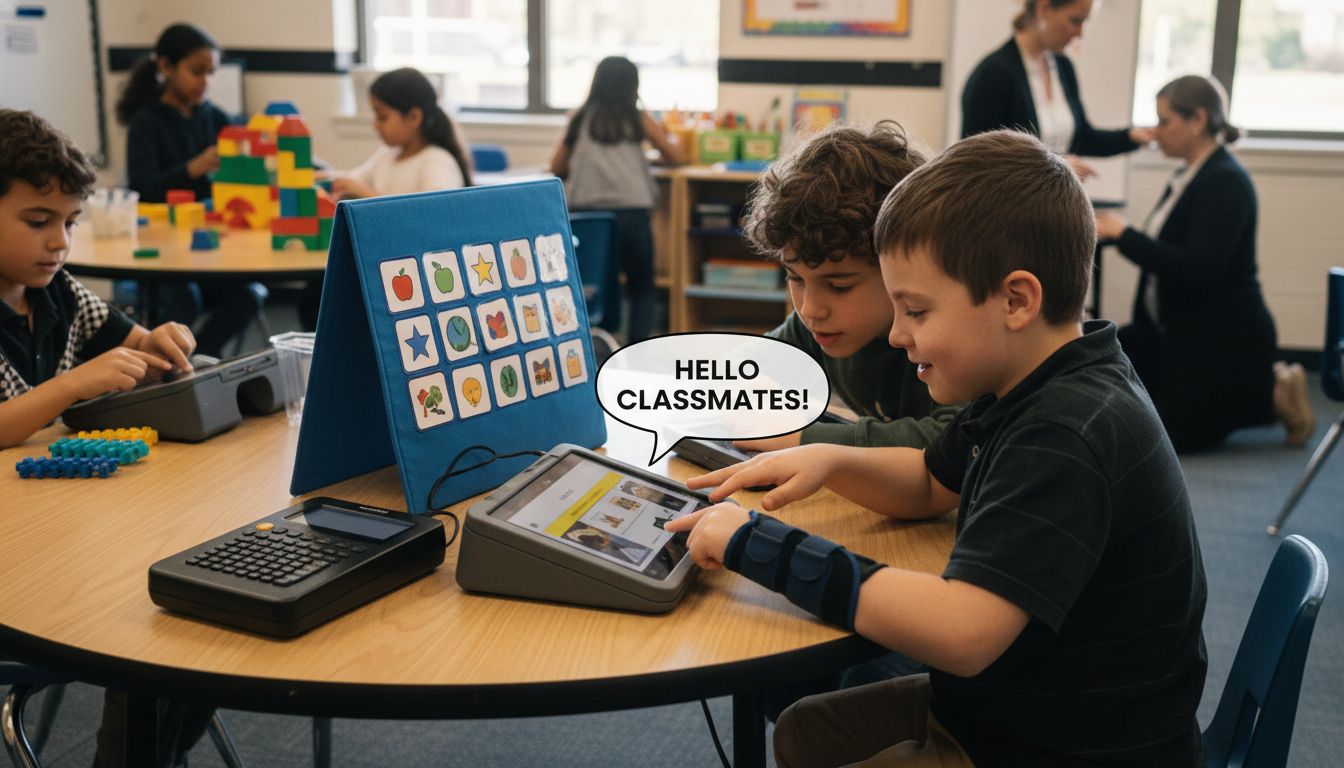
Modern educational technology solutions are not one-size-fits-all but rather personalized systems that adapt to individual student needs. By leveraging advanced software, adaptive interfaces, and intelligent learning platforms, educators can create inclusive environments that empower students with diverse abilities to learn, communicate, and succeed.
Key Features and Selection Criteria
Selecting appropriate educational technology for students with special needs requires a comprehensive evaluation of multiple critical factors. arXiv Research highlights the importance of a sophisticated device-interaction model that considers user adaptation and enhanced usability for students with disabilities.
Core Selection Criteria
When evaluating educational technology solutions, educators and administrators should consider the following key features:
- Customization Capabilities
- Adjustable interface settings
- Personalized learning paths
- Adaptive difficulty levels
- Accessibility Features
- Multiple input methods
- Screen reader compatibility
- Color contrast options
- Keyboard navigation support
- Technical Specifications
- Low processing requirements
- Cross-platform compatibility
- Regular software updates
- Robust technical support
The selection process demands a holistic approach that goes beyond technical specifications. Each technology must be evaluated for its potential to empower individual learners, addressing specific cognitive, sensory, and motor skill requirements.
Ultimately, the most effective educational technology solutions are those that seamlessly integrate into a student's learning environment, providing intuitive support without creating additional cognitive load. By prioritizing user experience, adaptability, and individual learner needs, educators can transform technological tools from mere accessories into powerful educational enablers.
Legal Frameworks and Malaysian Guidelines
Navigating the legal landscape of assistive technology in special education requires a nuanced understanding of evolving policy frameworks. arXiv Research highlights the critical role of legal guidelines in tracing the evolution of assistive technology and ensuring meaningful accessibility for users with diverse abilities.
Key Legal Considerations
The Malaysian approach to special education technology encompasses several essential legal principles:
- Inclusive Education Rights
- Guaranteeing equal learning opportunities
- Mandating reasonable technological accommodations
- Protecting students' rights to adaptive learning resources
- Technological Accessibility Standards
- Minimum accessibility requirements for educational technologies
- Compliance guidelines for digital learning platforms
- Standardized evaluation criteria for assistive tools
- Implementation and Enforcement
- Monitoring institutional technology adoption
- Providing funding support for adaptive technologies
- Creating accountability mechanisms
Legal frameworks in Malaysia increasingly recognize that technological access is not a privilege but a fundamental right for students with special needs. These guidelines aim to transform educational environments from potentially restrictive spaces into inclusive, empowering ecosystems that celebrate diverse learning capabilities.
By establishing comprehensive legal structures, Malaysia is positioning itself at the forefront of inclusive educational technology. The goal extends beyond mere compliance; it represents a profound commitment to ensuring every student can access meaningful, personalized learning experiences regardless of their individual challenges.
Practical Applications in Classrooms
Transforming classroom dynamics requires strategic implementation of assistive technologies that directly address diverse learning needs. MDPI Research highlights how technology can be effectively integrated into K-12 educational settings, particularly for students with high-incidence special needs.
Classroom Technology Integration Strategies
Effective classroom applications of assistive technology span multiple instructional approaches:
- Reading and Comprehension Support
- Text-to-speech software
- Interactive digital textbooks
- Annotative reading platforms
- Comprehension tracking tools
- Communication Enhancement
- Augmentative communication devices
- Symbol-based communication interfaces
- Real-time translation tools
- Visual communication boards
- Adaptive Learning Environments
- Personalized learning management systems
- Adjustable digital interfaces
- Progress tracking applications
- Individualized content delivery platforms
According to APU, specific tools like text-to-speech and speech-to-text applications play a crucial role in helping students with learning disabilities process information more effectively. These technologies bridge communication gaps and provide alternative pathways for learning and expression.
The ultimate goal of classroom technology integration is not replacement but empowerment. By carefully selecting and implementing assistive technologies, educators can create flexible, responsive learning environments that celebrate individual strengths, accommodate diverse learning styles, and provide every student with meaningful opportunities for academic and personal growth.
Costs, Limitations, and Common Challenges
Navigating the landscape of assistive technology requires a realistic understanding of its inherent complexities and potential obstacles. arXiv Research provides critical insights into the evolving challenges surrounding technological accessibility and empowerment for users with diverse abilities.
Financial and Operational Challenges
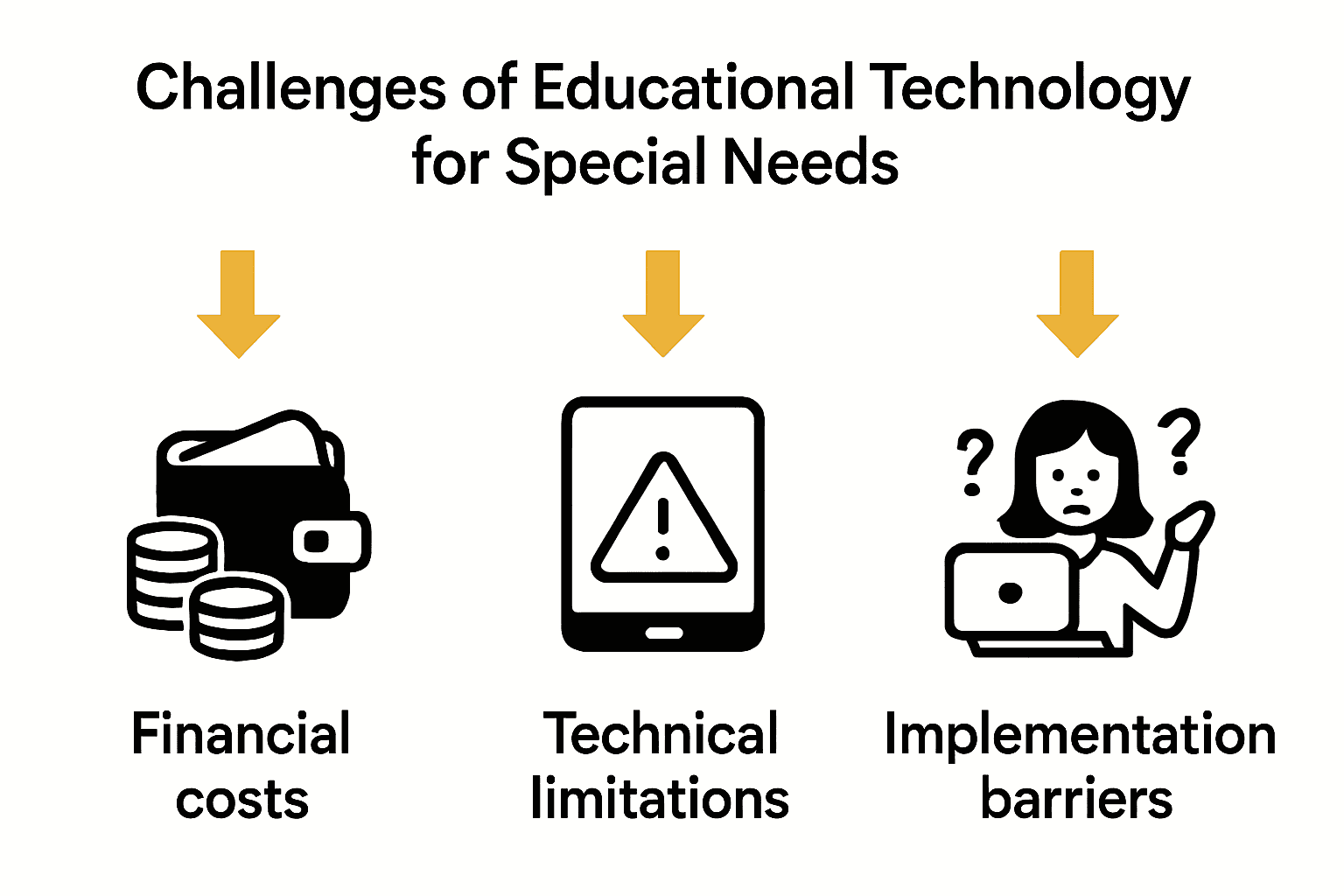
Key challenges in implementing educational technology for special needs include:
- Financial Constraints
- High initial technology investment
- Ongoing maintenance and upgrade costs
- Limited institutional budgets
- Expensive specialized equipment
- Technological Limitations
- Rapid technological obsolescence
- Compatibility issues between devices
- Complex user interfaces
- Limited customization options
- Implementation Barriers
- Insufficient teacher training
- Resistance to technological change
- Uneven technological infrastructure
- Individual adaptation challenges
The most significant challenge lies not in the technology itself, but in creating comprehensive support systems that ensure meaningful integration. While advanced tools offer tremendous potential, their effectiveness depends on thoughtful implementation, continuous professional development, and a holistic approach to understanding individual student needs.
Ultimately, addressing these challenges requires collaborative efforts among educators, technologists, policymakers, and families. By recognizing both the transformative potential and practical limitations of assistive technologies, stakeholders can develop more nuanced, responsive strategies that truly empower students with special educational requirements.
Enhance Special Education with High-Impact Visual Technology
Educators face unique challenges when creating inclusive classrooms for special education students. The need for assistive communication devices and adaptive learning environments calls for reliable visual solutions that foster engagement and understanding. Bright, clear displays with wireless connectivity empower teachers to deliver personalized content that meets diverse learning needs while minimizing complexity and distraction.

Discover how the right projector can transform your classroom. At ProjectorDisplay.com, we specialize in projectors designed for educational settings, including short-throw and interactive models that promote accessibility and student interaction. Act now to equip your school with tailored technology solutions that support curriculum access and empower every learner. Explore our range and experience fast shipping within Peninsular Malaysia to get started on making your learning environment truly inclusive.
Frequently Asked Questions
What is assistive technology in special education?
Assistive technology (AT) refers to devices, software, and systems specifically designed to support learners with disabilities, enhancing their learning experiences, independence, and engagement in educational settings.
What types of educational technology are available for students with special needs?
Types of educational technology solutions include assistive communication devices, sensory support technologies, and cognitive learning tools, such as text-to-speech software and speech-generating devices, tailored to address various learning challenges.
How can teachers select the right educational technology for their students?
Teachers should evaluate educational technology based on customization capabilities, accessibility features, and technical specifications to ensure the technology meets individual learner needs and integrates seamlessly into the classroom environment.
What are the common challenges in implementing assistive technology in schools?
Common challenges include financial constraints, rapid technological obsolescence, insufficient teacher training, and varying levels of technological infrastructure, which can hinder effective implementation and integration of assistive technologies.
Recommended
- 21st Century Teaching Skills: Everything You Need to Know – Projector Display
- 7 Key EdTech Trends in 2025 for Malaysian Innovators – Projector Display
- 7 Essential EdTech Trends in 2025 for Malaysian Users – Projector Display
- 7 Key EdTech Trends in 2025 for Malaysian Innovators – Projector Display
- Autism Counselling | Interactive Counselling
- Was Ist Personalisiertes Lernen? Der Komplett-Guide – Edory AI – Edukative Kindergeschichten