
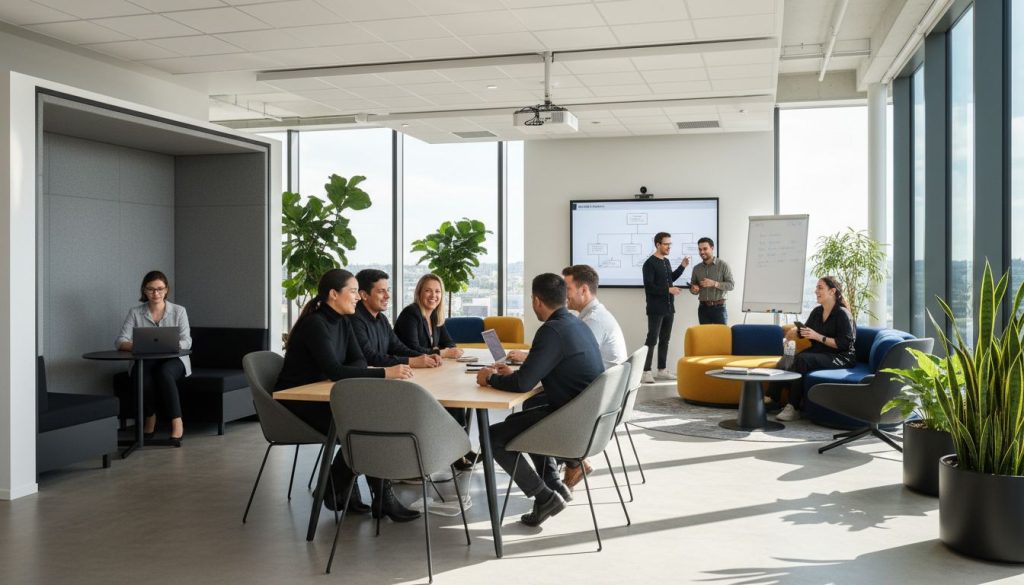
Over 80 percent of employees say that their physical workspace directly affects how they feel and perform at work. The way your office is designed can be the difference between daily motivation and constant frustration. Simple changes like adding sunlight, flexible furniture, or greenery can make a surprising impact on both productivity and wellbeing. Discover practical ideas that can transform your office into a space where teams feel energized, connected, and inspired to do their best work.
Table of Contents
- 1. Use Natural Light to Brighten Workspaces
- 2. Integrate Flexible Furniture for Versatile Layouts
- 3. Create Collaboration Zones for Teamwork
- 4. Add Greenery for a Healthy Office Atmosphere
- 5. Incorporate Projectors for Dynamic Displays
- 6. Utilize Color Schemes to Energize Spaces
- 7. Design Quiet Areas for Focus and Privacy
Quick Summary
| Takeaway | Explanation |
|---|---|
| 1. Maximize Natural Light in Workspaces | Position workstations near windows to enhance mood and productivity through better natural light exposure. |
| 2. Implement Flexible Furniture Solutions | Use modular furniture to allow quick reconfigurations for various work styles and collaboration needs. |
| 3. Create Dedicated Collaboration Zones | Design specific areas that foster teamwork and innovation, breaking communication barriers within the workspace. |
| 4. Integrate Indoor Plants for Wellbeing | Choose low-maintenance plants to improve air quality and reduce stress, creating a calming office environment. |
| 5. Designate Quiet Areas for Focus | Establish quiet spaces with acoustic panels and ergonomic furniture to support deep work and concentration. |
1. Use Natural Light to Brighten Workspaces
Transforming your office environment starts with understanding the powerful impact of natural light. Sunlight is not just aesthetically pleasing it is a game changing element that can dramatically improve workplace productivity and employee wellbeing.
According to a groundbreaking study from Northwestern University, workers exposed to more natural light experienced significant improvements in multiple life areas. The research revealed longer sleep duration, enhanced sleep quality, increased physical activity, and overall better quality of life compared to those working in dimly lit environments.
Why Natural Light Matters
Natural light does more than illuminate a space. It regulates our circadian rhythms, boosts mood, and reduces occupational stress. Research indicates that office environments with ample sunlight are directly correlated with higher employee satisfaction and productivity.
Practical Implementation Strategies
Implementing natural light does not require a complete office renovation. Here are some actionable approaches:
- Position workstations near windows
- Use light colored window treatments that allow maximum sunlight penetration
- Remove heavy curtains or blinds blocking natural light
- Consider glass partitions instead of solid walls
- Rearrange furniture to maximize light flow
By strategically designing your workspace to welcome natural light, you create an environment that supports both physical health and professional performance. The science is clear natural light is not a luxury it is a fundamental requirement for a thriving workplace.
2. Integrate Flexible Furniture for Versatile Layouts
The modern workplace demands adaptability and innovation. Flexible furniture represents a strategic approach to creating dynamic work environments that can instantly transform to meet changing team needs.
Recent research exploring office design reveals fascinating insights into workspace optimization. A compelling study examining mobile robotic partitions demonstrates how adaptable subspaces can facilitate spontaneous meetings and reduce workplace distractions. This approach goes beyond traditional static office layouts.
Why Flexibility Matters
Traditional office designs with rigid furniture configurations limit productivity and collaboration. Flexible furniture allows teams to quickly reconfigure spaces for different tasks from focused individual work to group brainstorming sessions. This adaptability supports various work styles and promotes a more dynamic organizational culture.
Practical Furniture Flexibility Strategies
Implementing flexible furniture does not require a complete office overhaul. Consider these actionable approaches:
- Select modular furniture with wheels for easy repositioning
- Invest in lightweight tables and chairs that can be quickly rearranged
- Create multipurpose zones that can transition between individual and group work
- Use foldable or stackable furniture to maximize space efficiency
- Choose furniture with integrated power and connectivity options
By embracing flexible furniture solutions, you create an environment that adapts to your team instead of forcing your team to adapt to a fixed space. The goal is creating a responsive workspace that supports creativity collaboration and individual productivity.
3. Create Collaboration Zones for Teamwork
Successful teamwork requires intentional design and strategic spaces that encourage interaction and creativity. Collaboration zones are purposefully crafted areas that transform traditional work environments into dynamic interaction hubs.
Cutting edge research examining workplace design reveals fascinating insights. A groundbreaking study exploring mobile robotic partitions demonstrates how thoughtfully designed spaces can facilitate spontaneous meetings and enhance team communication.
Why Collaboration Zones Matter
Traditional office layouts often inhibit meaningful interactions. Dedicated collaboration zones break down communication barriers by providing spaces that are specifically designed to spark creativity professional dialogue and collective problem solving. These areas signal to employees that teamwork and knowledge sharing are organizational priorities.
Designing Effective Collaboration Zones
Creating impactful collaboration spaces goes beyond simply adding a few chairs. Consider these strategic approaches:
- Select comfortable furniture that encourages extended conversations
- Integrate technology like digital whiteboards and video conferencing equipment
- Provide multiple seating configurations to support different interaction styles
- Include acoustic elements to manage noise and create privacy
- Design zones with flexible boundaries that can expand or contract
By intentionally designing collaboration zones you create physical environments that nurture teamwork innovation and organizational connectivity. The goal is to transform spaces from mere functional areas into catalysts for collective creativity and professional growth.
4. Add Greenery for a Healthy Office Atmosphere
Transforming your workspace with living plants is more than a design trend. It is a strategic approach to creating a healthier more vibrant work environment that supports both physical and mental wellbeing.
Research from an innovative study exploring workplace design suggests that connecting workers with natural elements can significantly improve overall office experience and productivity. Plants are not just decorative elements they are powerful agents of workplace transformation.
Why Plants Matter in Office Design
Indoor plants do much more than beautify a space. They purify air reduce stress levels enhance cognitive function and create a sense of calm. By introducing greenery you signal a commitment to employee wellness and create an environment that supports creativity and focus.
Strategic Plant Integration Strategies
Implementing office greenery does not require a botanical garden. Consider these practical approaches:
- Select low maintenance plants like snake plants and pothos
- Place plants near workstations to maximize air purification
- Create green walls or vertical garden installations
- Use plants as natural room dividers in open office layouts
- Choose plants that thrive in indoor office lighting conditions
By thoughtfully integrating plants into your workspace you create more than an aesthetic upgrade. You build an ecosystem that nurtures employee wellbeing productivity and organizational vitality. Plants transform offices from sterile environments into living breathing spaces of potential.
5. Incorporate Projectors for Dynamic Displays
Modern workspaces demand visual innovation that goes beyond traditional presentation tools. Projectors have emerged as powerful instruments for transforming static office environments into dynamic interactive landscapes.
Cutting edge research exploring generative AI installations demonstrates how immersive audiovisual technologies can dramatically enhance workplace experiences. Dynamic displays are not just technological additions they are strategic tools for communication and collaboration.
Why Dynamic Displays Matter
Traditional presentation methods often fail to engage teams effectively. Projectors enable organizations to create flexible visual environments that adapt to different communication needs. From interactive training sessions to collaborative brainstorming spaces these tools break down traditional communication barriers.
Strategic Projector Integration Approaches
Implementing projectors requires thoughtful planning. Consider these implementation strategies:
- Select projectors with high lumens for bright office environments
- Choose wireless projection capabilities for maximum flexibility
- Install projectors in multipurpose meeting spaces
- Use short throw projectors to maximize limited space
- Integrate projection mapping for creative visual presentations
For comprehensive insights into creative projection techniques, check out our projection mapping basics guide. By embracing dynamic display technologies you transform workspaces from static environments into adaptive visual communication platforms that inspire creativity and enhance team collaboration.
6. Utilize Color Schemes to Energize Spaces
Color is far more than a visual aesthetic. It is a powerful psychological tool that can dramatically transform workplace environments and influence employee mood productivity and creativity.
Research exploring daylight illumination and architectural experiences reveals that lighting conditions and color significantly impact cognitive engagement and emotional states. Strategic color selection is not just design it is a sophisticated approach to workspace optimization.
Understanding Color Psychology
Different colors trigger specific psychological responses. Blues promote calmness and focus. Yellows stimulate creativity. Greens reduce stress. Reds increase energy. By understanding these nuanced color effects you can intentionally design spaces that support specific workplace objectives.
Strategic Color Implementation Approaches
Implementing color psychology requires thoughtful planning. Consider these professional strategies:
- Use accent walls to introduce energizing color without overwhelming spaces
- Select complementary color palettes that support desired emotional responses
- Consider biophilic color schemes that mimic natural environments
- Integrate colors through furniture textiles and artwork
- Balance neutral tones with strategic color injections
By approaching color as a deliberate workplace design strategy you transform environments from passive backgrounds into active tools for employee engagement and organizational performance. Color becomes more than decoration it becomes a strategic workplace asset.
7. Design Quiet Areas for Focus and Privacy
Open plan offices can be productivity killers. Strategic quiet areas provide essential sanctuaries where employees can retreat recharge and concentrate without constant workplace distractions.
Cutting edge research exploring mobile robotic partitions reveals innovative approaches to creating enclosed subspaces within office environments. These dedicated zones are not just physical spaces they are psychological reset buttons for professional performance.
Why Quiet Areas Matter
Constant workplace noise and interruptions fragment attention and reduce cognitive performance. Dedicated quiet areas signal organizational respect for deep work concentration and individual employee needs. They acknowledge that creativity and complex problem solving require uninterrupted mental space.
Practical Quiet Area Design Strategies
Creating effective quiet zones requires thoughtful planning. Consider these professional implementation approaches:
- Use acoustic panels to reduce sound transmission
- Select ergonomic furniture that supports extended focus work
- Provide individual workstations with visual barriers
- Integrate soft lighting and neutral color schemes
- Include noise cancelling headphones or sound masking technology
By designing intentional quiet areas you transform workspaces from continuous interruption zones into environments that respect individual work rhythms and cognitive requirements. These spaces become powerful tools for maintaining employee mental wellness and organizational productivity.
Below is a comprehensive table summarizing the key strategies and their benefits discussed throughout the article about optimizing workplace environments.
| Strategy | Implementation | Expected Results |
|---|---|---|
| Natural Light | Position workstations near windows, use light window treatments, rearrange furniture to maximize light. | Improved productivity, enhanced mood, reduced stress, better sleep quality. |
| Flexible Furniture | Use modular pieces with wheels, lightweight and stackable furniture, create multipurpose zones. | Enhanced adaptability and collaboration, supports various work styles. |
| Collaboration Zones | Comfortable furniture, integrate technology, provide multiple seating options. | Improved creativity and teamwork, better communication. |
| Greenery Integration | Select low maintenance plants, create green walls, use plants as dividers. | Reduced stress, improved air quality, increased cognitive function. |
| Dynamic Displays | Choose high lumen projectors, wireless capabilities, short throw projectors. | Enhanced communication, flexibility in presentations, increased engagement. |
| Color Schemes | Use accent walls, complementary palettes, biophilic schemes. | Improved mood, increased creativity, reduced stress. |
| Quiet Areas | Acoustic panels, ergonomic furniture, visual barriers. | Enhanced concentration, respect for deep work, improved productivity. |
Elevate Your Office Design with Cutting-Edge Projection Solutions
Modern office design is all about creating environments that inspire productivity and spark creativity. This article highlights the power of flexible furniture, quiet zones, and dynamic displays to transform workspaces. One challenge many face is integrating technology that seamlessly enhances collaboration without disrupting the natural flow of the office atmosphere.
Bring your collaboration zones to life with high-quality projectors and sound systems. Imagine brainstorming sessions illuminated with crystal-clear visuals and immersive audio that keep teams fully engaged. At ProjectorDisplay.com, we provide a wide selection of projectors designed to fit various office needs, including portable, short-throw, and smart models that offer wireless connectivity and full HD resolution.
Explore our Sound Systems Archives – Projector Display for audio solutions that complement your visual displays and create the perfect interactive environment.
Upgrade your workspace today with reliable projection and sound technology that supports your office design goals. Browse our Projector Bag / Case Archives – Projector Display to protect your investment while enhancing mobility. Take the first step toward a smarter office environment now by visiting ProjectorDisplay.com and discover solutions tailored to boost productivity and encourage collaboration.
Frequently Asked Questions
How can I use natural light to improve my office design?
Enhancing your office with natural light can significantly boost employee wellbeing and productivity. Position workstations near windows and remove heavy window treatments to maximize sunlight exposure.
What types of flexible furniture should I consider for my office?
Consider modular furniture with wheels that can be easily rearranged. Lightweight tables and chairs can adapt to different work scenarios, making it easy to create multipurpose zones within your office.
What features should collaboration zones in my office have?
Collaboration zones should include comfortable seating, technology for video conferencing, and flexible layouts that can accommodate various group sizes. Aim to create spaces that encourage creativity and open dialogue by including acoustic elements to manage noise.
How can I effectively integrate plants into my office design?
You can integrate low-maintenance plants, such as snake plants or pothos, near workstations to improve air quality and reduce stress. Create green walls or vertical garden features to enhance aesthetics while promoting a healthier work environment.
What are the best practices for using color in office design?
Choose a color palette that supports your office's mood and productivity goals. For example, use calming blues for focus areas and energizing yellows in collaboration spaces to enhance creativity and engagement.
How do I design quiet areas that foster concentration?
To create effective quiet areas, utilize acoustic panels to minimize noise and select ergonomic furniture that promotes focus. Ensure these spaces have visual barriers and soft lighting to provide a calming atmosphere that allows for deep work.
Recommended
- 7 Best Productivity Apps for Businesses to Boost Results – Projector Display
- 7 Essential Productivity Apps for Businesses to Boost Efficiency – Projector Display
- 7 Aplikasi Projektor di Pejabat untuk Tingkat Produktiviti – Projector Display
- Understanding Digital Signage for Offices: Key Insights – Projector Display
- 7 Modern Kitchen Design Ideas for Busy Families