

Did you know that projection mapping can turn any building or object into a living work of art using light and imagery? As demand grows for unforgettable digital displays, understanding this technology is more valuable than ever. Discover what sets projection mapping apart, how it works behind the scenes, and why it is reshaping visual art, events, and even education with jaw-dropping results.
Key Takeaways
| Point | Details |
|---|---|
| Definition of Projection Mapping | Projection mapping is a technology that transforms ordinary surfaces into dynamic visual experiences using precise digital alignment on physical objects. |
| Types of Techniques | Four primary techniques exist: VJ'ing, Theatrical, Static/Interactive, and Video, each serving distinct creative needs across industries. |
| Essential Equipment | Key components include high-lumens projectors, projector-camera systems, mapping software, and content creation tools to ensure effective visual projection. |
| Common Applications | Projection mapping is utilized in corporate branding, entertainment, education, medical training, and architectural exhibits, showcasing its versatility in engaging audiences. |
Table of Contents
- Defining Projection Mapping And Core Concepts
- Types Of Projection Mapping Techniques Explained
- Essential Equipment And Software Requirements
- Common Applications And Real-World Examples
- Critical Mistakes To Avoid In Setup
Defining Projection Mapping and Core Concepts
Projection mapping is a fascinating technology that transforms ordinary surfaces into extraordinary dynamic visual experiences. According to research, projection mapping is also known as video mapping or spatial augmented reality—a technique that uses sophisticated software to precisely map images and videos onto two- or three-dimensional surfaces, often with irregular shapes.
At its core, projection mapping works by employing advanced digital techniques to align digital content perfectly with physical objects. As highlighted in a 2024 academic review, the technology involves several critical technical challenges, including:
- Geometric registration: Ensuring digital content matches physical surface contours
- Radiometric compensation: Adjusting brightness and color to match surface characteristics
- Defocus compensation: Maintaining image sharpness across different surface depths
- Shadow removal: Eliminating unwanted visual interference
The magic of projection mapping lies in its ability to transform mundane surfaces into immersive canvases. Whether it's turning a building facade into a storytelling platform, creating interactive museum exhibits, or designing breathtaking entertainment experiences, this technology bridges the gap between digital content and physical environments. By precisely mapping projections, designers and artists can create stunning visual narratives that seem to breathe life into static objects.
Types of Projection Mapping Techniques Explained
Projection mapping is a versatile technology with several distinctive techniques that cater to different creative and professional needs. According to research, there are four primary types of projection mapping that transform visual storytelling across various domains – from entertainment to advertising. Using projectors creatively opens up fascinating possibilities for visual communication.
The four main projection mapping techniques include:
- VJ'ing: Dynamic, live-controlled visual experiences where artists manipulate imagery in real-time
- Theatrical: Pre-designed scenes synchronized precisely with live performances
- Static/Interactive: Displays that are either looped or responsive to environmental changes
- Video: Fully pre-rendered linear shows with seamless narrative progression
A 2023 study in art and design education highlights how these projection mapping techniques have dramatically influenced contemporary creative industries. These techniques are not just technical processes but powerful storytelling tools that blur the boundaries between digital content and physical spaces. By leveraging different mapping approaches, artists, advertisers, and entertainers can create immersive experiences that captivate audiences, transforming ordinary surfaces into extraordinary canvases of visual communication.
Here's a comparison of the main projection mapping techniques:
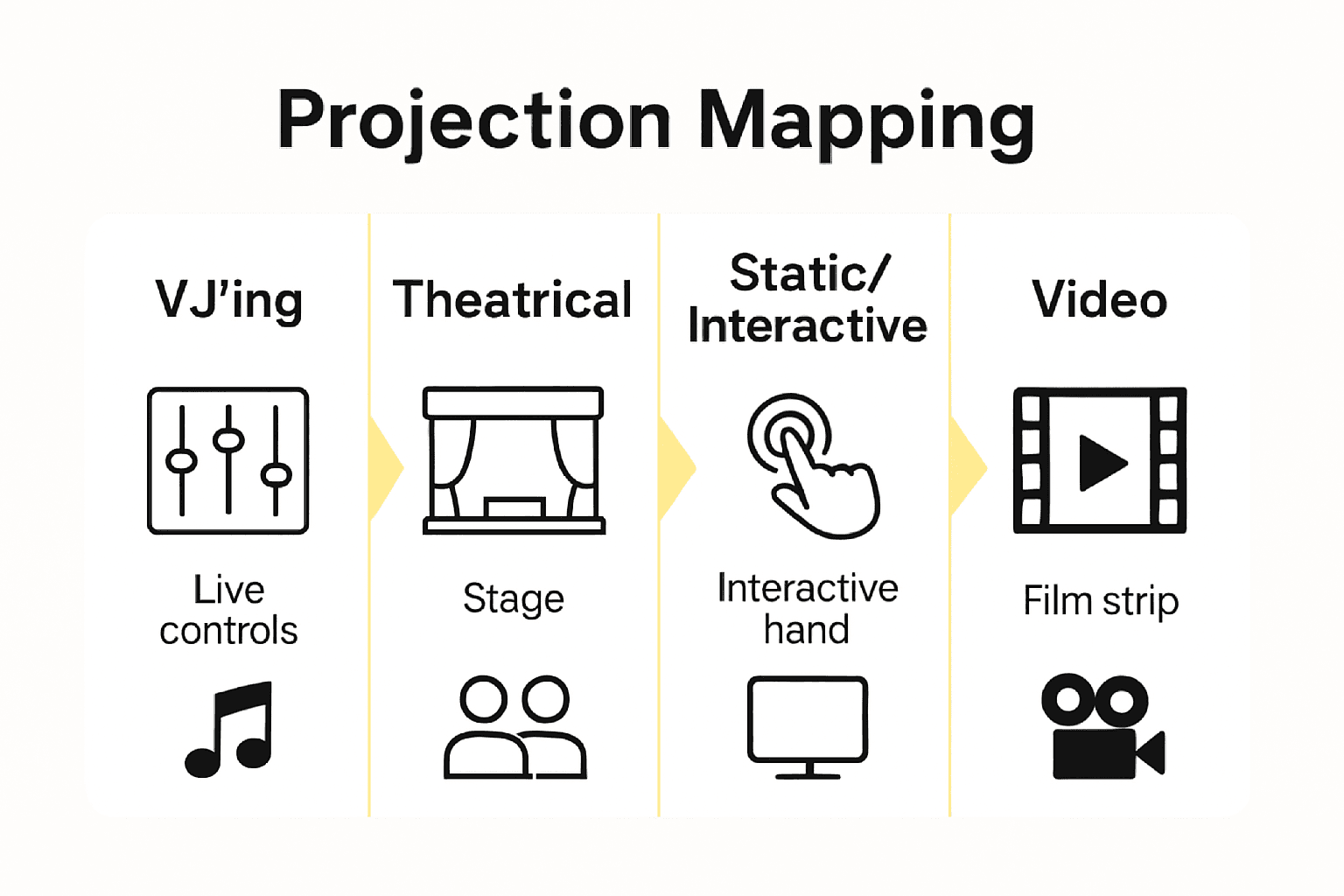
| Technique | Key Features | Common Uses |
|---|---|---|
| VJ'ing | Real-time control Dynamic edits |
Live events Clubs |
| Theatrical | Pre-planned scenes Sync to cues |
Theater Stage productions |
| Static/Interactive | Looping or responsive User input |
Museums Installations |
| Video | Pre-rendered Linear progression |
Advertising Brand showcases |
Essential Equipment and Software Requirements
Creating stunning projection mapping experiences requires a carefully curated set of technical equipment and sophisticated software solutions. According to research, the core of any projection mapping setup begins with selecting the right projector, which can range from modest 2,200-lumen indoor units to powerful 20,000-lumen systems capable of large-scale displays. Mirror phone to projector technologies can also enhance your projection capabilities.
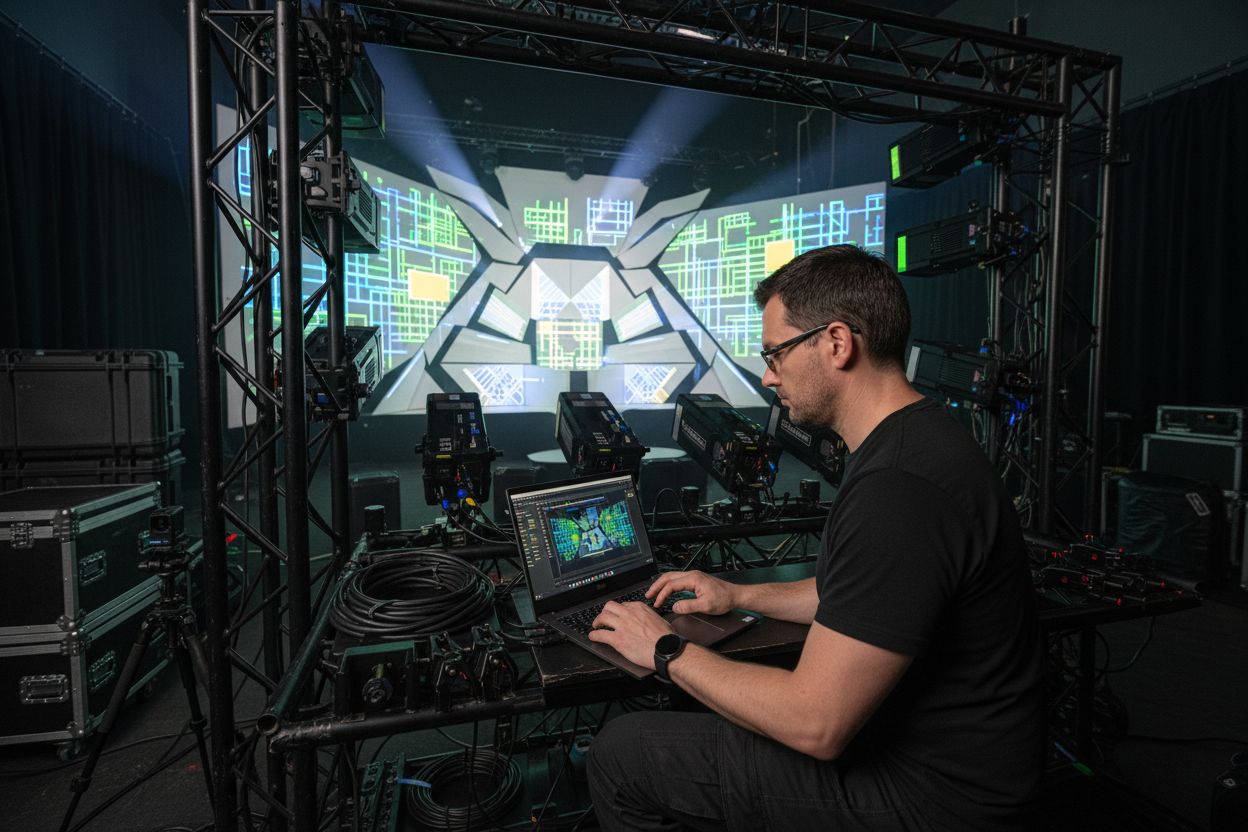
The essential equipment for projection mapping typically includes:
- High-Lumens Projector: Determines visual brightness and clarity
- Projector-Camera System: Enables precise geometric registration
- Mapping Software: Specialized tools for surface alignment and content projection
- Content Creation Tools: Software like Photoshop, After Effects, and open-source frameworks
- Mounting Hardware: Stable stands, rigging, or mounting solutions for precise positioning
Recent academic research emphasizes the critical role of projector-camera systems in achieving accurate geometric registration. These systems are fundamental in compensating for surface variations, ensuring that projected content aligns perfectly, maintains correct focus, and preserves consistent brightness across different surfaces. By combining sophisticated hardware with advanced software, creators can transform ordinary spaces into extraordinary visual canvases, pushing the boundaries of digital art and immersive experiences.
Common Applications and Real-World Examples
Projection mapping has revolutionized visual storytelling across multiple industries, transforming how we experience digital content in physical spaces. According to research, major global brands like Nokia, Samsung, and BMW have leveraged this technology for innovative guerrilla marketing campaigns that capture audience attention through stunning visual experiences. Using projector for art demonstrates the incredible versatility of this technology.
The applications of projection mapping span several exciting domains:
- Corporate Branding: Creating immersive marketing installations
- Entertainment: Enhancing concert and festival experiences
- Educational Exhibits: Interactive science and museum displays
- Medical Training: Augmenting surgical visualization environments
- Architectural Showcases: Transforming building facades into dynamic canvases
Research highlights fascinating real-world examples, such as the annual Lyon Fête des Lumières festival, where entire architectural landscapes become living canvases of light and motion. Beyond visual spectacle, projection mapping serves practical purposes in fields like medical training, where complex anatomical structures can be projected onto physical models, offering unprecedented interactive learning experiences. Electronic Dance Music (EDM) concerts have also embraced this technology, using precisely synchronized visual projections that pulse and transform with musical rhythms, creating multi-sensory experiences that blur the boundaries between visual art, technology, and live performance.
Critical Mistakes to Avoid in Setup
Successful projection mapping requires meticulous planning and technical precision. Even experienced professionals can fall into common traps that compromise the visual impact of their displays. Mirror phone to projector techniques can help mitigate some setup challenges, but understanding potential pitfalls is crucial.
Research highlights several critical mistakes that can derail a projection mapping project:
- Surface Misunderstanding: Neglecting surface color, texture, and geometric characteristics
- Lighting Interference: Failing to control environmental light conditions
- Incomplete Coverage: Projecting on only partial surfaces, breaking immersive experience
- Shadow Miscalculation: Overlooking light and shadow interactions
- Content Complexity: Underestimating development time and narrative coherence
Professionals must recognize that projection mapping is more than technical execution—it's about creating a seamless visual narrative. Environmental factors like ambient light can wash out projections, destroying carefully crafted visual effects. Strategic positioning, precise surface analysis, and comprehensive content design are essential. By anticipating potential technical limitations and designing with flexibility, creators can transform potential mistakes into opportunities for innovative visual storytelling that captivates and engages audiences.
Ready to Start Your Own Projection Mapping Project?
Turning inspiration into reality starts with the right tools. If you are struggling with uneven images, low brightness, or complicated setups as described in our beginner's guide, you are not alone. Many newcomers find the technical hurdles and equipment choices overwhelming when mapping vibrant visuals onto complex surfaces. That is where specialized projectors and accessories make a real difference. Better hardware ensures accurate geometric registration, consistent color quality, and immersive displays even in changing light conditions. Discover how our featured products can help you avoid the common mistakes outlined in the article and achieve the stunning results you envision.
Take your first step toward a professional projection mapping setup today. Visit ProjectorDisplay.com for a curated selection of high-lumens projectors, screens, and innovative display solutions. Enjoy fast shipping, expert advice, and trusted support to help you get started right away. Do not let technical limitations hold you back—unlock your creativity and start mapping visual experiences today.
Frequently Asked Questions
What is projection mapping?
Projection mapping is a technology that transforms ordinary surfaces into dynamic visual experiences by precisely mapping images and videos onto two- or three-dimensional surfaces, often using advanced software.
What are the main types of projection mapping techniques?
The four primary types of projection mapping techniques include VJ'ing (live visual manipulation), theatrical mapping (pre-designed scenes), static/interactive mapping (responsive displays), and video mapping (fully pre-rendered shows).
What equipment do I need for projection mapping?
Essential equipment for projection mapping includes a high-lumens projector, a projector-camera system, mapping software, content creation tools, and stable mounting hardware for positioning the projector accurately.
What are common applications of projection mapping?
Common applications of projection mapping include corporate branding, entertainment for concerts and festivals, educational exhibits in museums, medical training environments, and architectural displays that transform building facades into visual canvases.
Recommended
- What Is Projection Mapping? Guide for Malaysia's Tech Fans – Projector Display
- Mirror Phone to Projector: Easy Ways for Malaysians 2025 – Projector Display
- Projector Screen Size Guide 2025: Perfect Fit for Malaysian Needs – Projector Display
- Using Projector for Art: Creative Ideas and Tips 2025 – Projector Display