

Over 6.9 billion people worldwide own a smartphone, making mobile learning more accessible than ever before. As traditional classrooms give way to flexible, digital experiences, mobile devices are changing how people learn new skills and access information. Understanding the latest mobile learning solutions will help you tap into personalized, interactive, and convenient ways to study on your own schedule.
Table of Contents
- Mobile Learning Solutions Defined and Explained
- Types of Mobile Learning Platforms and Tools
- Core Features and Functionality of Mobile Learning
- Effective Implementation Strategies for Institutions
- Comparing Costs and Alternatives to Mobile Learning
- Common Pitfalls and How to Avoid Them
Key Takeaways
| Point | Details |
|---|---|
| Flexibility of Learning | Mobile learning provides the ability to access educational content anytime and anywhere, enhancing learner convenience and engagement. |
| Technology Integration | Implementing mobile learning requires robust technological infrastructure and innovative platforms that leverage adaptive technologies and real-time analytics. |
| Cost-Effectiveness | Mobile learning can reduce educational costs associated with traditional learning methods by minimizing physical infrastructure and resource investments. |
| Addressing Challenges | Successful implementation involves anticipating technical, pedagogical, and cultural challenges to enhance the effectiveness of mobile learning experiences. |
Mobile Learning Solutions Defined and Explained
Mobile learning, or m-learning, represents a revolutionary approach to education that leverages portable technology to transform how we acquire knowledge. According to Wikipedia, mobile learning is a form of distance education where learners use portable devices like smartphones and tablets to learn anytime and anywhere.
The core concept of mobile learning breaks traditional educational boundaries by enabling students to access learning materials beyond conventional classroom settings. Key features of mobile learning solutions include:
- Flexibility to learn at personal convenience
- Access to educational resources via handheld devices
- Real-time communication with instructors and peers
- Interactive and personalized learning experiences
- Ability to learn across multiple devices
Specifically in language education, mobile-assisted language learning (MALL) has emerged as a powerful subset of mobile learning. As Wikipedia explains, MALL enables students to access language learning materials and communicate with teachers through handheld mobile devices, providing unprecedented educational accessibility.
Modern mobile learning solutions integrate advanced technologies like adaptive learning algorithms, multimedia content, interactive assessments, and cloud-based platforms. These technologies transform mobile devices from simple communication tools into sophisticated learning environments that can personalize educational experiences, track progress, and provide instant feedback to learners across diverse educational contexts.
Types of Mobile Learning Platforms and Tools
Mobile learning platforms are sophisticated digital ecosystems designed to facilitate educational experiences across various devices and learning contexts. According to Simplilearn, these platforms include comprehensive Learning Management Systems (LMS) like Blackboard and Moodle, which support a wide range of multimedia content and communication tools.
The landscape of mobile learning platforms can be categorized into several key types:
Here's a comparison of key mobile learning platform types:
| Platform Type | Main Features | Example Platforms |
|---|---|---|
| Learning Management Systems (LMS) | Comprehensive course management Multi-format content support Advanced tracking & reporting |
Blackboard Moodle iSpring Learn |
| Dedicated Learning Apps | Specialized subject focus Gamified learning Interactive experiences |
Duolingo Babbel |
| Collaborative Learning Platforms | Peer interaction tools Communication integration Offline access |
Google Classroom Microsoft Teams 360Learning |
- Learning Management Systems (LMS)
- Cloud-based platforms with comprehensive course management
- Support for multiple content formats
- Advanced tracking and reporting features
- Dedicated Learning Apps
- Specialized platforms for specific skills or subjects
- Examples include language learning apps like Duolingo
- Interactive and gamified learning experiences
- Collaborative Learning Platforms
- Tools that emphasize peer-to-peer interaction
- Integration of communication and learning features
- Examples like Google Classroom and Microsoft Teams
Paradiso LMS highlights innovative platforms such as 360Learning and iSpring Learn, which combine collaborative tools with robust learning management capabilities. These platforms prioritize user engagement, offering features like offline access, global reach, and personalized learning paths.
Advanced mobile learning platforms now integrate artificial intelligence, adaptive learning algorithms, and real-time performance analytics. They transform mobile devices into powerful educational tools that can provide personalized learning experiences, track individual progress, and offer instant feedback across diverse educational and professional training scenarios.
Core Features and Functionality of Mobile Learning
Mobile learning platforms are designed with sophisticated core features that transform traditional educational experiences. According to Wikipedia, these features encompass critical aspects like portability, social interactivity, context sensitivity, and seamless connectivity, enabling learners to access educational content from virtually anywhere.
The key functionalities of mobile learning can be categorized into several essential domains:
-
Accessibility
- Instant access to learning materials
- Learning possible across multiple devices
- No geographical or time constraints
-
Interactivity
- Real-time collaboration with peers
- Interactive multimedia content
- Instant communication with instructors
-
Personalization
- Adaptive learning paths
- Customized content recommendations
- Individual progress tracking
Wikipedia highlights that mobile learning functionalities extend beyond traditional educational models by providing ubiquitous access to learning materials. This approach enables learners to engage with educational content dynamically, integrating social media and collaborative tools to create immersive learning experiences.
Modern mobile learning platforms leverage advanced technologies like artificial intelligence, machine learning, and data analytics to create intelligent, responsive educational environments. These technologies enable real-time performance assessment, predictive learning recommendations, and personalized feedback mechanisms that significantly enhance the overall learning experience across academic and professional training contexts.
Effective Implementation Strategies for Institutions
Mobile learning implementation requires a comprehensive and strategic approach that goes beyond simple technology adoption. University of Pretoria Repository suggests that successful integration involves blending mobile devices into existing learning environments, utilizing robust Learning Management Systems (LMS), and leveraging cloud storage for efficient content delivery.
Key strategic implementation approaches include:
- Technology Infrastructure
- Develop robust wireless network capabilities
- Ensure device compatibility across multiple platforms
- Implement secure cloud storage solutions
- Create scalable digital learning ecosystems

- Pedagogical Integration
- Design mobile-friendly curriculum content
- Train educators in mobile learning technologies
- Develop adaptive learning modules
- Create interactive multimedia educational resources
- Student Support Mechanisms
- Provide device access programs
- Offer technical support and training
- Develop mobile learning orientation sessions
- Create inclusive digital learning environments
According to Distance Learning Institute, institutions can enhance mobile learning accessibility by implementing technologies like push notifications for timely updates and SMS-based delivery systems. These strategies are particularly crucial in areas with limited internet connectivity, ensuring continuous learning experiences regardless of technological constraints.
Successful mobile learning implementation demands a holistic approach that balances technological innovation, pedagogical design, and student-centered support. By creating flexible, accessible, and engaging digital learning environments, institutions can transform traditional educational models and prepare students for an increasingly digital and interconnected world.
Comparing Costs and Alternatives to Mobile Learning
Mobile learning represents a transformative educational approach that offers significant cost considerations compared to traditional learning methods. ArXiv Research highlights that mobile learning can substantially reduce educational expenses by providing flexible, anytime-anywhere access to learning materials, thereby decreasing the need for physical infrastructure and traditional resource investments.
Cost comparison across different learning modalities reveals several key financial dimensions:
- Traditional Learning Costs
- Physical classroom infrastructure
- Printed learning materials
- Fixed scheduling requirements
- High maintenance expenses
- Geographic limitations
- Mobile Learning Expenses
- Initial device investment
- Internet connectivity costs
- Digital content development
- Cloud storage and platform subscriptions
- Software and application expenses
- Hybrid Learning Models
- Flexible resource allocation
- Reduced physical space requirements
- Scalable technology investments
- Lower long-term operational expenses
- Enhanced learning accessibility
The financial landscape of mobile learning extends beyond direct monetary considerations.
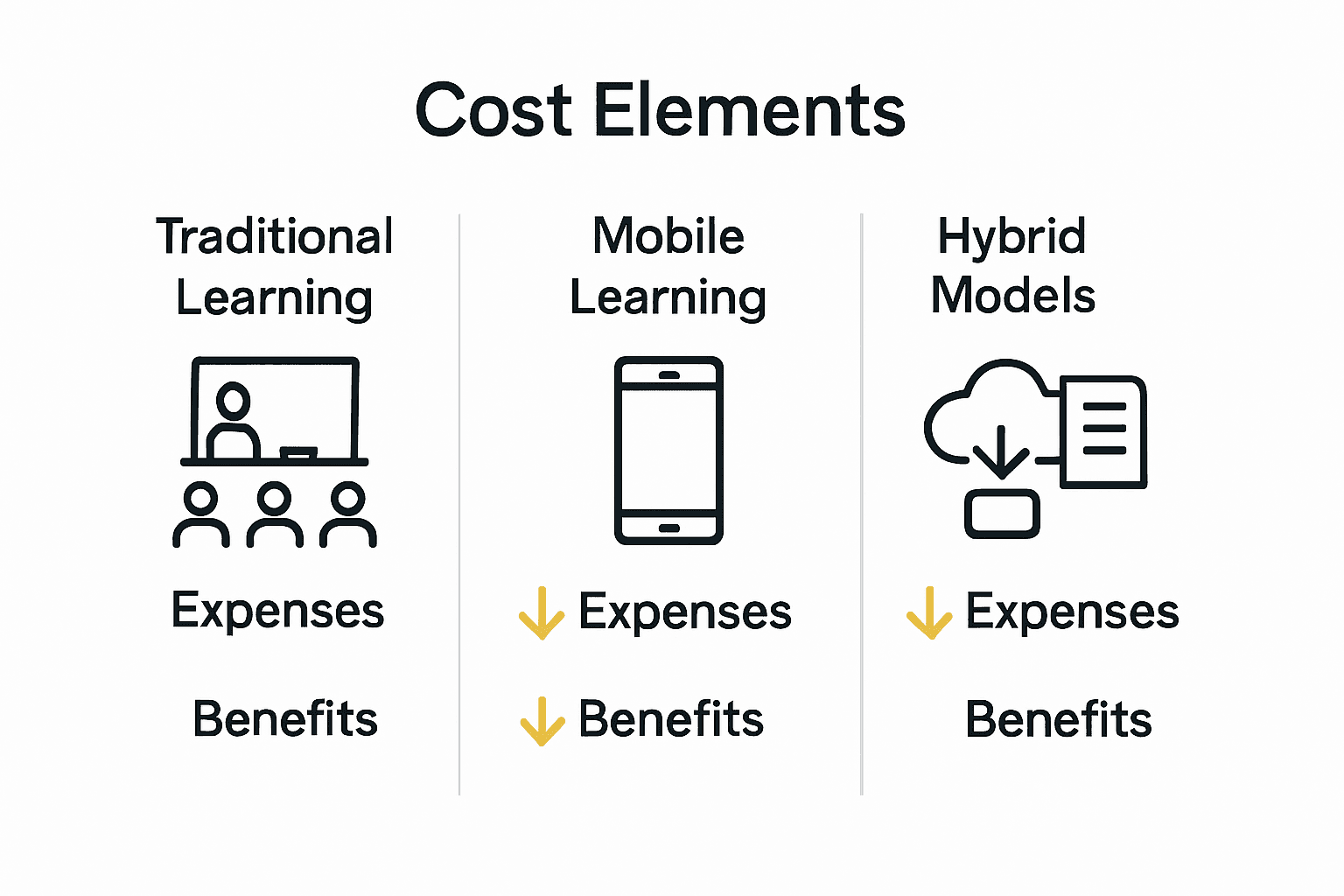 While initial technology investments might seem substantial, the long-term benefits include reduced travel costs, increased learning efficiency, and the ability to reach geographically dispersed learners without significant infrastructure development.
Ultimately, mobile learning represents a strategic investment in educational technology. By carefully balancing technological infrastructure, content quality, and learner accessibility, institutions and individuals can create cost-effective, dynamic learning environments that adapt to evolving educational and professional development needs.
Common Pitfalls and How to Avoid Them
Mobile learning implementation comes with a complex set of challenges that can significantly impact educational outcomes. Wikipedia identifies several critical technical pitfalls, including poor sound and display quality, limited device capabilities, and inconsistent internet connectivity that can undermine the learning experience.
The most common mobile learning challenges can be categorized into several critical domains:
- Technical Limitations
- Inadequate device performance
- Inconsistent internet connectivity
- Screen size and resolution constraints
- Battery life and device durability issues
- Compatibility across different platforms
- Pedagogical Challenges
- Designing engaging mobile content
- Maintaining student motivation
- Balancing self-directed and structured learning
- Creating interactive mobile learning experiences
- Ensuring content accessibility
- Cultural and Learning Barriers
- Overcoming traditional learning mindsets
- Addressing resistance to technological change
- Breaking rote memorization patterns
- Developing critical thinking skills
- Encouraging active student participation
Wikipedia further emphasizes that cultural norms can significantly inhibit student engagement, particularly in learning environments where questioning and active participation are not traditionally encouraged. Addressing these challenges requires comprehensive training and mentoring strategies for both educators and learners.
Successful mobile learning implementation demands a proactive, holistic approach that anticipates and mitigates potential obstacles. By developing robust technological infrastructure, creating pedagogically sound content, and fostering a culture of continuous learning and adaptation, institutions can transform potential pitfalls into opportunities for innovative educational experiences.
Elevate Your Mobile Learning Experience with Advanced Projection Solutions
Mobile learning thrives on flexibility and accessibility, but without clear, vibrant visuals, student engagement can suffer. The article highlights challenges like device limitations and the need for interactive content — problems you can solve with the right projection technology. Imagine transforming any learning space into an immersive, interactive environment with portable projectors and high-quality projection screens designed to enhance every lesson.

Discover tailored display solutions that bring mobile learning content to life. From wirelessly connecting to your smartphone or tablet to delivering crisp visuals in bright classrooms, our range at Projector Screen Archives offers the perfect complement to your digital lessons. Don't let poor visuals hold back your education goals. Visit https://projectordisplay.com now, explore our diverse projector options, and equip your learning spaces with technology that unlocks engagement and success.
Frequently Asked Questions
What is mobile learning?
Mobile learning, or m-learning, is a form of distance education where learners use portable devices like smartphones and tablets to acquire knowledge anytime and anywhere, breaking traditional educational boundaries.
What are the main types of mobile learning platforms?
The main types of mobile learning platforms include Learning Management Systems (LMS) like Blackboard and Moodle, dedicated learning apps such as Duolingo, and collaborative learning platforms like Google Classroom and Microsoft Teams.
What are the key features of mobile learning solutions?
Key features of mobile learning solutions include portability, interactive multimedia content, instant communication with instructors, personalized learning experiences, and accessibility across multiple devices.
How can institutions effectively implement mobile learning?
Institutions can effectively implement mobile learning by developing a robust technology infrastructure, integrating pedagogical frameworks into mobile curricula, and providing student support mechanisms, such as device access programs and technical training.
Recommended
- Wireless Screen Mirroring in Malaysia: 2025 Guide for Entertainment, Education, and Business – Projector Display
- Mirror Phone to Projector: Easy Ways for Malaysians 2025 – Projector Display
- 7 Essential EdTech Trends in 2025 for Malaysian Users – Projector Display
- 7 Key EdTech Trends in 2025 for Malaysian Innovators – Projector Display
- What is Microlearning? Understanding Its Significance|CS