

Many Malaysian HR teams invest heavily in wellness programs, yet real improvements in employee wellbeing remain elusive. This problem often stems from focusing on quick fixes instead of system-level change. Addressing root causes and harnessing holistic wellness strategies can reduce absenteeism, support mental health, and improve organizational reputation. Discover how integrated approaches and enhanced visual communication tools can transform your workplace into a healthier, more productive environment.
Table of Contents
- Workplace Wellness Strategies Defined And Debunked
- Pillars Of Modern Workplace Wellness Programs
- Key Approaches And Technology Integration
- Legal Requirements For Malaysian Employers
- Common Implementation Mistakes And How To Avoid Them
Key Takeaways
| Point | Details |
|---|---|
| Holistic Approach to Wellness | Effective workplace wellness strategies address physical, mental, and financial well-being through integrated programs rather than isolated initiatives. |
| Leadership Involvement is Crucial | Commitment from leadership and active participation are essential for the successful implementation of wellness programs. |
| Personalization Matters | Tailoring wellness initiatives to meet diverse employee needs ensures higher engagement and relevant support. |
| Emphasize Continuous Improvement | Organizations should implement ongoing feedback mechanisms and wellness assessments to refine and enhance their programs regularly. |
Workplace Wellness Strategies Defined and Debunked
Workplace wellness strategies represent a complex landscape of organizational interventions designed to improve employee health, productivity, and overall organizational performance. Despite significant investments and widespread enthusiasm, many companies struggle to implement truly effective wellness programs that deliver meaningful results.
Research indicates that corporate wellness approaches often fall short of their intended goals. The primary challenges stem from a narrow, individualistic perspective rather than addressing systemic workplace factors. Organizations frequently make critical mistakes in designing wellness initiatives, including:
- Focusing solely on individual health interventions
- Neglecting broader organizational culture and work environment
- Implementing one-size-fits-all programs
- Lacking consistent leadership support and role modeling
- Underinvesting in comprehensive, holistic wellness strategies
Successful workplace wellness strategies require a multifaceted approach that goes beyond traditional health screenings and fitness challenges. Sustainable wellness practices involve addressing physical, mental, and financial well-being through integrated, system-level interventions. Key elements of effective wellness strategies include:
- Leadership commitment and visible participation
- Personalized wellness programming
- Regular feedback and continuous improvement mechanisms
- Comprehensive benefits that support total employee health
- Creating a psychologically safe work environment
Organizations must recognize that wellness is not a standalone program but a fundamental aspect of organizational culture. Successful implementation requires ongoing commitment, strategic investment, and a genuine understanding of employees' holistic needs.
Here's a comparison of traditional versus modern workplace wellness approaches:
| Aspect | Traditional Programs | Modern Integrated Strategies |
|---|---|---|
| Focus | Individual health activities | Holistic employee well-being |
| Measurement | Basic participation tracking | Outcomes and continuous improvement |
| Technology use | Minimal or manual | Wearables and AI-driven platforms |
| Leadership involvement | Occasional endorsement | Active, visible participation |
| Customization | One-size-fits-all | Personalized to diverse needs |
Pro tip: Conduct anonymous employee surveys to understand specific wellness needs and design targeted interventions that demonstrate authentic organizational care.
Pillars of Modern Workplace Wellness Programs
Modern workplace wellness programs have evolved far beyond simple health screenings and fitness challenges. These comprehensive strategies now encompass a holistic approach to employee well-being that addresses multiple dimensions of health and organizational culture.
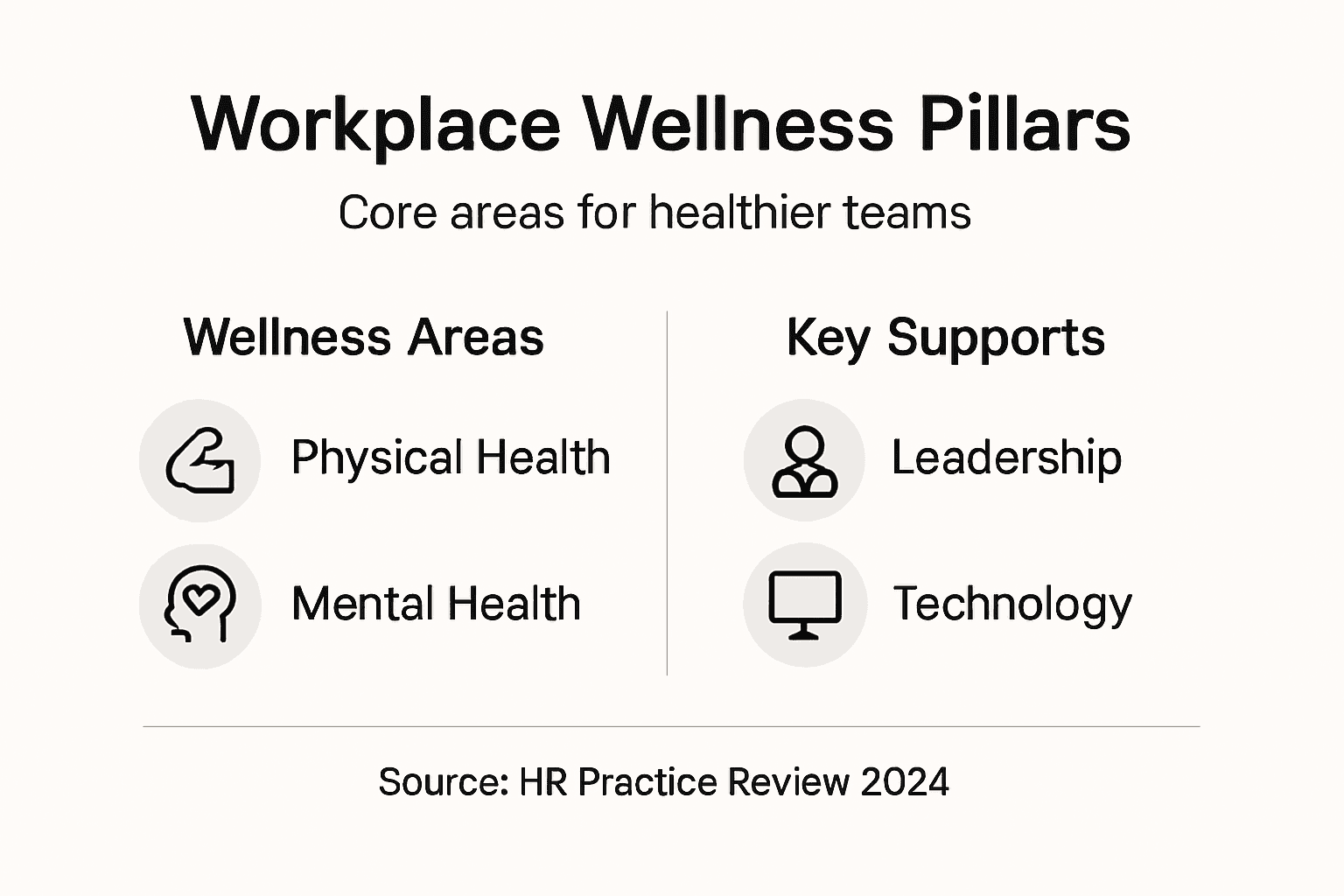
Emerging wellness initiatives integrate physical, mental, and technological components to create more dynamic and personalized employee support systems. The key pillars of contemporary workplace wellness programs include:
- Mental health resources and counseling
- Physical fitness and activity programs
- Nutrition and lifestyle coaching
- Technology-enabled health tracking
- Stress management and resilience training
Physical activity modalities remain a critical foundation of workplace wellness. Research demonstrates significant improvements in workability and overall health through structured exercise interventions. These programs typically incorporate:
- Aerobic exercise routines
- Strength training opportunities
- Flexibility and mobility workshops
- Ergonomic workplace assessments
- Active lifestyle encouragement
Technology has transformed workplace wellness by enabling more personalized and data-driven approaches. Wearable devices and AI-powered platforms now allow organizations to create targeted wellness strategies that adapt to individual employee needs and preferences.
Successful workplace wellness programs recognize that employee health is a complex, interconnected system requiring nuanced, holistic interventions.
Organizations must move beyond generic wellness offerings and develop integrated strategies that genuinely support employee well-being across multiple dimensions.

Pro tip: Implement quarterly wellness assessments to continuously refine and personalize your organization's wellness approach based on real employee feedback and emerging health technologies.
Key Approaches and Technology Integration
Workplace wellness is undergoing a profound transformation driven by technological innovation. Digital wellness programs are revolutionizing how organizations approach employee health by integrating sophisticated technological solutions into traditional wellness frameworks.
The key technological approaches reshaping workplace wellness include:
- Mobile health tracking applications
- Wearable fitness and biometric devices
- AI-powered mental health monitoring platforms
- Virtual wellness coaching systems
- Personalized health recommendation engines
Artificial intelligence has emerged as a game-changing technology in workplace wellness strategies. AI applications enable sophisticated mental health monitoring and personalized interventions that were previously impossible. These advanced systems can:
- Detect early signs of employee stress
- Provide customized mental health resources
- Track psychological well-being indicators
- Recommend targeted wellness interventions
- Maintain confidential employee health insights
Technology integration goes beyond simple data collection. Intelligent wellness platforms now create comprehensive ecosystems that adapt to individual employee needs, transforming passive health monitoring into proactive well-being management.
Successful technology integration in workplace wellness requires a delicate balance between data-driven insights and human-centered approaches.
Organizations must carefully navigate the complex landscape of technological wellness solutions, ensuring privacy, personalization, and genuine employee engagement.
The following table summarizes the benefits and potential risks of technology integration in workplace wellness:
| Technology Benefit | Example Solution | Potential Risk |
|---|---|---|
| Real-time health monitoring | Wearable fitness devices | Privacy and data security |
| Personalized support | AI mental health tools | Potential for depersonalization |
| Engagement tracking | Mobile health apps | Overreliance on digital alerts |
| Proactive intervention | Recommendation engines | Employee resistance to tech |
Pro tip: Conduct pilot programs with select employee groups to test and refine technological wellness interventions before full-scale implementation.
Legal Requirements for Malaysian Employers
Malaysian employers face increasingly complex legal obligations regarding workplace wellness and safety. The Occupational Safety and Health Act (OSHA) provides comprehensive guidelines that establish critical standards for maintaining employee well-being and organizational responsibility.
Key legal requirements for Malaysian employers include:
- Conducting comprehensive workplace risk assessments
- Implementing robust safety control measures
- Appointing designated safety coordinators
- Developing emergency response procedures
- Maintaining detailed workplace health documentation
Employer obligations have significantly expanded with the Occupational Safety and Health Amendment Act 2022. The new regulations introduce more stringent compliance standards, including:
- Extended coverage across all workplace environments
- Stricter penalties for non-compliance
- Direct liability for company directors
- Mandatory comprehensive risk management
- Enhanced employee protection mechanisms
The Department of Occupational Safety and Health (DOSH) plays a crucial role in enforcing these regulations. Legal compliance requires proactive management and continuous assessment of workplace wellness strategies.
Malaysian employers must recognize that workplace safety is not just a legal requirement but a fundamental commitment to employee well-being.
Organizations must develop holistic approaches that integrate legal compliance with genuine employee care and support.
Pro tip: Conduct annual comprehensive legal audits of your workplace wellness program to ensure full compliance with the latest OSHA regulations and amendments.
Common Implementation Mistakes and How to Avoid Them
Workplace wellness programs often struggle with implementation challenges that can undermine their effectiveness and potential impact. Implementation failures frequently stem from systemic organizational issues rather than inherent program design flaws.
Common workplace wellness implementation mistakes include:
- Insufficient stakeholder engagement
- Lack of leadership commitment
- Poor communication strategies
- Irrelevant or misaligned incentives
- Neglecting organizational cultural context
Employee engagement represents a critical factor in successful wellness program deployment. Effective strategies require comprehensive approach that addresses multiple organizational dimensions:
- Secure active senior leadership support
- Customize incentive structures
- Develop clear communication plans
- Create personalized wellness pathways
- Implement continuous feedback mechanisms
Organizations must recognize that wellness program success depends on nuanced, adaptive implementation strategies. Merely introducing programs is insufficient; they must be dynamically integrated into the organizational ecosystem.
Successful workplace wellness initiatives transform from generic programs to personalized, culturally resonant experiences that genuinely support employee well-being.
Companies need holistic approaches that consider individual employee needs, organizational culture, and sustainable long-term engagement strategies.
Pro tip: Conduct quarterly program assessments and employee feedback surveys to continuously refine and adapt your wellness initiatives.
Elevate Workplace Wellness with Visual Solutions That Inspire
Creating an effective workplace wellness strategy means more than just implementing programs. It requires engagement, personalized communication, and fostering a psychologically safe environment where employees feel supported. One powerful way to drive this transformation is through dynamic visual displays that capture attention, promote wellness initiatives, and enhance collaborative wellbeing efforts.
Interactive displays and projectors provide a versatile platform to share wellness content, conduct engaging training sessions, and encourage active participation across all employee levels. Whether you need a portable projector for flexible meeting spaces or a smart projector to support wellness workshops, the right visual technology makes information clear and motivates positive change.
Take the first step to transform your workplace wellness approach today. Explore premium projectors and interactive display solutions at ProjectorDisplay.com to deliver impactful wellness communications that resonate deeply with your team. Act now to combine innovative display technology with your wellness initiatives and create a healthier, more connected workplace culture.
Frequently Asked Questions
What are the key components of an effective workplace wellness strategy?
An effective workplace wellness strategy includes leadership commitment, personalized wellness programming, continuous feedback mechanisms, comprehensive benefits supporting total health, and a psychologically safe work environment.
How does technology enhance workplace wellness programs?
Technology enhances workplace wellness programs through mobile health tracking applications, wearable devices, AI-powered mental health platforms, and virtual wellness coaching, allowing for personalized and data-driven health support.
What common mistakes do organizations make when implementing wellness programs?
Common mistakes include insufficient stakeholder engagement, lack of leadership support, poor communication, irrelevant incentives, and neglecting the organizational culture, which can undermine program effectiveness.
Why is it important to integrate mental health resources into workplace wellness initiatives?
Integrating mental health resources is crucial because employee well-being is multifaceted. Addressing mental health helps reduce stress, improve productivity, and fosters a supportive workplace culture, contributing to overall organizational success.
Recommended
- 7 Smart Ways to Boost Office Design Inspiration Today – Projector Display
- 7 Creative Workspace Ideas to Boost Productivity and Focus – Projector Display
- Sustainable Office Solutions: Complete Guide for 2025 – Projector Display
- Complete Guide to Ergonomic Office Furniture – Projector Display
- Sustainable Wellness: Transforming Everyday Health Habits – EQUA – Sustainable Water Bottles