

Over eighty percent of american office workers experience back pain linked to hours spent at their desks. Improper furniture puts real strain on the body and can sabotage focus or even long-term health. Ergonomic office essentials are engineered to protect well-being while elevating everyday comfort and productivity. Discover how smart furniture choices make a difference for both workplace happiness and lifelong health.
Table of Contents
- Defining Ergonomic Office Furniture Essentials
- Major Types Of Ergonomic Office Furniture
- Key Features And Functional Benefits
- Health And Productivity Impacts
- Selecting The Right Ergonomic Furniture
- Mistakes To Avoid When Choosing
Key Takeaways
| Point | Details |
|---|---|
| Ergonomic Furniture Investment | Investing in ergonomic office furniture enhances employee health, comfort, and productivity. |
| Customizable Features | Key components like adjustable chairs and desks allow for personalized workspace configurations to reduce strain. |
| Health Benefits | Implementing ergonomic solutions can lead to reduced chronic pain and a significant decrease in work-related musculoskeletal disorders. |
| Avoiding Common Mistakes | Selecting furniture based on individual needs, rather than a one-size-fits-all approach, is crucial for maximizing ergonomic benefits. |
Defining Ergonomic Office Furniture Essentials
Ergonomic office furniture represents more than just stylish workplace equipment – it's a critical investment in human health, comfort, and productivity. According to Northwestern University, these specialized furnishings are specifically designed to support proper body mechanics and reduce physical strain during extended work periods.
Ergonomic furniture focuses on creating adaptable workspaces that accommodate individual body types and working styles. Key components include adjustable chairs, height-flexible desks, and supportive accessories that enable workers to maintain neutral body positioning. As outlined by Weill Cornell Environmental Health & Safety, the primary goal is preventing musculoskeletal discomfort and potential long-term health issues.
The essential elements of ergonomic office furniture typically include:
- Chairs with lumbar support and multiple adjustment points
- Desks that allow sitting and standing configurations
- Keyboard trays positioned to minimize wrist strain
- Monitor stands enabling eye-level viewing
- Footrests for proper leg positioning
By prioritizing furniture that adapts to human anatomy rather than forcing humans to adapt to rigid designs, organizations can create healthier, more comfortable work environments that simultaneously boost employee well-being and productivity. Understanding these ergonomic principles transforms ordinary office spaces into dynamic, health-conscious workstations that support peak performance.
Major Types of Ergonomic Office Furniture
Ergonomic office furniture comes in diverse configurations designed to support human body mechanics and enhance workplace comfort. University of Wisconsin Environmental Health & Safety highlights several critical categories that transform traditional workspaces into adaptive, health-conscious environments.
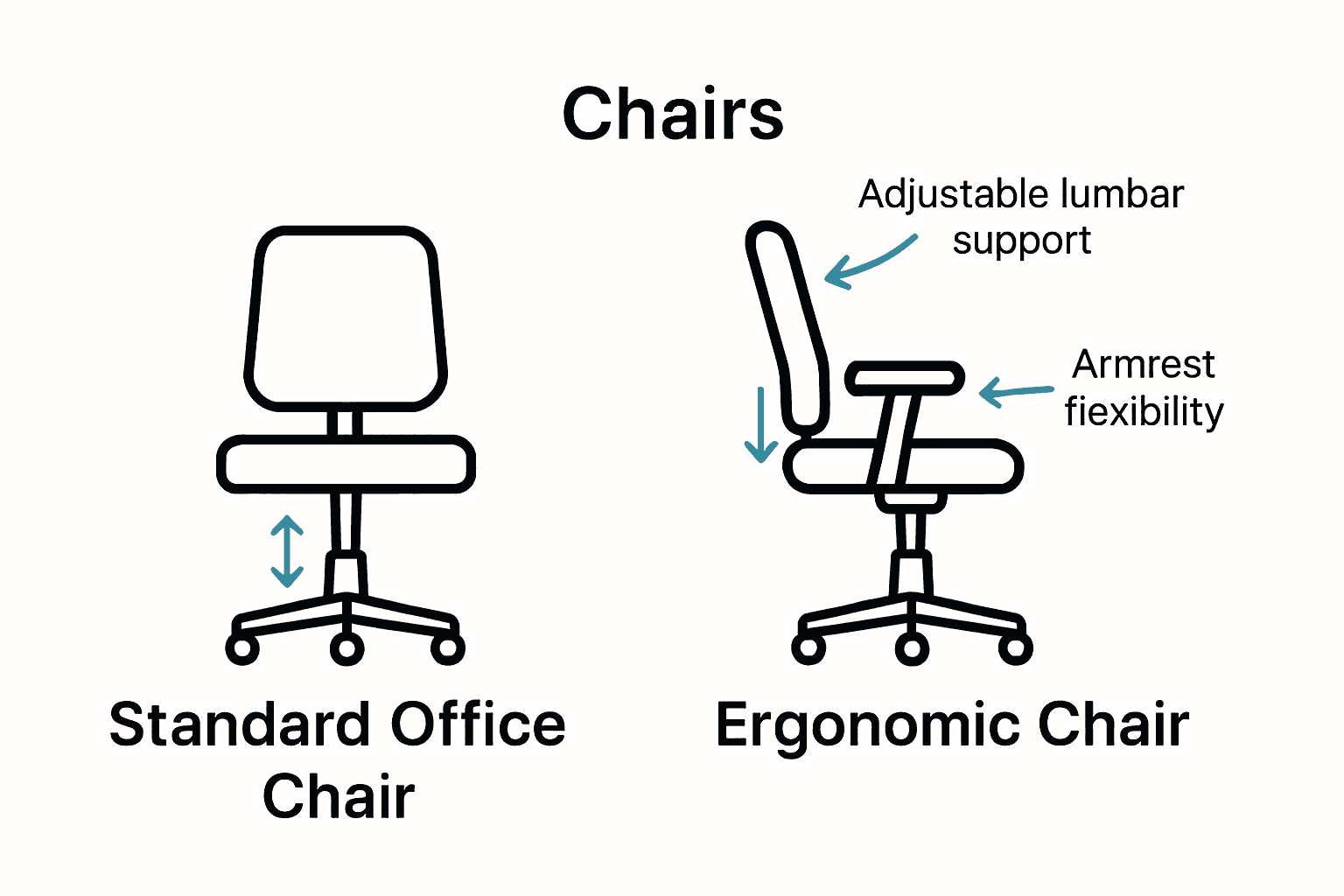
Adjustable Chairs represent the foundation of ergonomic furniture design. These specialized seating solutions feature multiple adjustment points including seat height, lumbar support, armrest positioning, and tilt mechanisms. The goal is to accommodate varied body types and provide customized support that reduces physical strain during extended work periods.
Key types of ergonomic office furniture include:
- Sit-Stand Desks: Allowing dynamic movement between seated and standing positions
- Ergonomic Chairs: With comprehensive adjustability for personalized support
- Keyboard Trays: Designed to maintain neutral wrist positioning
- Monitor Arms: Enabling precise screen height and angle adjustments
- Active Sitting Chairs: Encouraging micro-movements and core engagement
Beyond individual furniture pieces, modern ergonomic design focuses on creating holistic workstations that adapt to human physiology. By integrating flexible, scientifically designed furniture, organizations can significantly improve employee comfort, reduce potential repetitive strain injuries, and create work environments that prioritize both health and productivity.
Key Features and Functional Benefits
Ergonomic office furniture goes far beyond aesthetic design, focusing intently on human physiological needs and workplace performance optimization. Common Good Ventures emphasizes that strategic furniture design can dramatically transform workplace dynamics through carefully engineered features that support human body mechanics.
Adjustability emerges as the cornerstone of ergonomic furniture functionality. These intelligent designs incorporate multiple adjustment points that allow users to customize their workspace configurations. Critical features include seat height modifications, lumbar support mechanisms, armrest positioning, and dynamic tilt controls that enable workers to maintain optimal posture throughout extended work sessions.
The key functional benefits of ergonomic office furniture include:
- Reduced physical strain and potential musculoskeletal disorders
- Enhanced blood circulation during prolonged sitting
- Improved core muscle engagement and postural support
- Increased worker comfort and concentration
- Prevention of repetitive stress injuries
Ultimately, ergonomic furniture represents an investment in human capital. By prioritizing design elements that adapt to individual body mechanics, organizations create work environments that not only protect employee health but also drive productivity, demonstrating a holistic approach to workplace wellness that recognizes the intricate connection between physical comfort and professional performance.
Health and Productivity Impacts
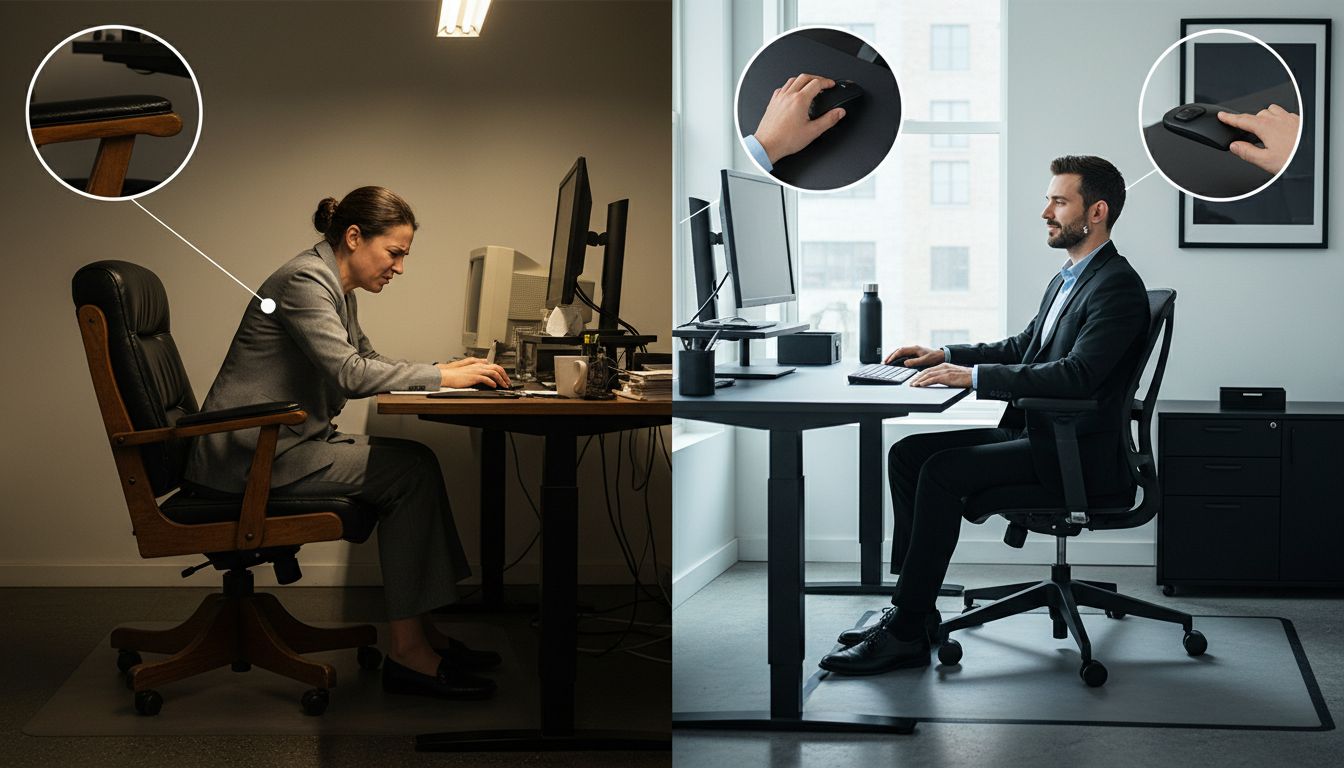
The connection between ergonomic office furniture and workplace performance is profound and scientifically substantiated. University of Texas Healthpoint highlights that strategic workstation design directly correlates with employee health outcomes and overall organizational productivity.
Workplace Wellness emerges as a critical metric influenced by ergonomic interventions. By minimizing physical strain and reducing the risk of musculoskeletal disorders, organizations can significantly decrease healthcare costs and absenteeism. Harper College emphasizes that designing workspaces to fit individual physiological needs creates an environment that maximizes both employee comfort and operational efficiency.
The key health and productivity impacts include:
- Reduction in work-related musculoskeletal disorders by up to 60%
- Decreased chronic pain and discomfort during work hours
- Enhanced cognitive performance through improved physical comfort
- Lower long-term healthcare expenses for employers
- Increased employee engagement and job satisfaction
Beyond immediate physical benefits, ergonomic furniture represents a strategic investment in human capital. By prioritizing employee well-being through thoughtfully designed workspaces, organizations can create a culture of health that simultaneously boosts individual performance and collective productivity, transforming traditional work environments into dynamic, human-centric ecosystems.
Selecting the Right Ergonomic Furniture
Choosing the ideal ergonomic furniture requires a strategic approach that goes beyond aesthetic preferences. Fort Lewis College emphasizes the importance of conducting a comprehensive assessment of individual workplace needs before making any furniture investments.
Personalized Fit emerges as the most critical factor in ergonomic furniture selection. University of Rochester Safety Guidelines recommends evaluating furniture based on individual body measurements, work habits, and specific job requirements. This means considering factors like height adjustability, lumbar support, and the range of motion needed for specific job functions.
Key considerations when selecting ergonomic furniture include:
- Comprehensive adjustability for multiple user profiles
- Material quality and durability
- Compatibility with existing workspace design
- Support for natural body positioning
- Long-term comfort and health benefits
For those seeking the perfect ergonomic setup, 7 Creative Workspace Ideas to Boost Productivity and Focus can provide additional insights into creating an optimal work environment. Ultimately, selecting the right ergonomic furniture is an investment in personal health, comfort, and professional performance – a decision that requires careful thought, research, and a holistic understanding of individual workplace needs.
Mistakes to Avoid When Choosing
Texas A&M Environmental Health & Safety reveals that many professionals unknowingly compromise their workplace health by making critical errors during ergonomic furniture selection. Understanding these potential pitfalls is crucial for creating a truly supportive work environment.
One-Size-Fits-All Approach represents a fundamental mistake in ergonomic furniture procurement. California State University Maritime Academy emphasizes that individual body mechanics vary significantly, making universal furniture solutions ineffective and potentially harmful. Selecting furniture without considering personal physical characteristics can lead to long-term health complications and reduced workplace productivity.
Common mistakes to avoid when choosing ergonomic furniture include:
- Prioritizing price over ergonomic functionality
- Neglecting individual body measurement requirements
- Overlooking adjustability features
- Ignoring workplace-specific ergonomic needs
- Failing to test furniture before long-term investment
For a comprehensive understanding of creating optimal workspaces, 7 Creative Workspace Ideas to Boost Productivity and Focus offers additional insights. Ultimately, selecting ergonomic furniture is a nuanced process that demands careful consideration, personal assessment, and a commitment to long-term workplace wellness.
Enhance Your Workspace with Smart Display Solutions for Ergonomic Comfort
Creating an ergonomic office means more than just buying adjustable chairs and desks. It also involves integrating technology that supports your comfort and productivity goals. The article highlights pain points like physical strain, poor posture, and reduced focus caused by improper workspace setups. To address these challenges, think about uniting ergonomic furniture with advanced visual technology that minimizes eye strain and encourages better posture throughout your workday.

Discover how incorporating high-quality projectors and interactive displays from ProjectorDisplay.com can transform your ergonomic office into a multimedia-friendly workspace. With options like full HD resolution and wireless connectivity, these devices complement ergonomic principles by reducing screen glare and allowing flexible arrangement to keep your neck and eyes comfortable. Don't settle for a workspace that compromises your health or concentration. Visit ProjectorDisplay.com now to explore projector solutions that work hand in hand with your ergonomic furniture choices. Elevate your productivity and well-being today.
Frequently Asked Questions
What is ergonomic office furniture?
Ergonomic office furniture is specially designed to support proper body mechanics, reduce physical strain, and enhance overall comfort during extended work periods. It includes adjustable chairs, sit-stand desks, and supportive accessories that promote healthy posture.
What are the key features of ergonomic office chairs?
Key features of ergonomic office chairs include lumbar support, multiple adjustment points for seat height and armrest positioning, and tilt mechanisms. These features ensure personalized support and help reduce strain on the body during long hours of sitting.
How can ergonomic furniture affect workplace productivity?
Ergonomic furniture can significantly enhance workplace productivity by reducing discomfort and the risk of musculoskeletal disorders. It promotes better posture and circulation, which can lead to increased focus, engagement, and overall job satisfaction among employees.
What should I consider when selecting ergonomic furniture for my workspace?
When selecting ergonomic furniture, consider factors like adjustability for different body types, material quality, compatibility with your existing workspace, and the specific ergonomic needs related to your job functions to ensure long-term comfort and health benefits.
Recommended
- 7 Smart Ways to Boost Office Design Inspiration Today – Projector Display
- Sustainable Office Solutions: Complete Guide for 2025 – Projector Display
- 7 Creative Workspace Ideas to Boost Productivity and Focus – Projector Display
- Epson Office Projector Guide for Malaysian Professionals – Projector Display
- Office Supply Storage: Organize Your Workspace Easily – BLUSHBEES USA
- Home Office Organization Ideas for Stylish and Tidy Spaces 2025 – BLUSHBEES USA