
Choosing between a projector and a TV can completely transform your home entertainment setup. Many tech enthusiasts in Malaysia are now discovering that projectors deliver cinematic experiences that often rival even the most advanced American televisions. With screen sizes reaching up to 300 inches and flexible placement options, projectors open up a new world of immersive viewing, offering solutions tailored for both casual movie nights and serious gaming marathons.
Table of Contents
- Understand The Key Differences Between Projectors And TVs
- Evaluate Room Size And Projection Distance For Best Results
- Choose The Right Brightness And Resolution For Your Needs
- Consider Easy Setup And Wireless Connectivity Features
- Assess Sound Quality And Audio Integration Options
- Review Energy Efficiency And Long-Term Cost Savings
- Explore Versatile Usage For Movies, Gaming, And Presentations
Quick Summary
| Takeaway | Explanation |
|---|---|
| 1. Projectors offer unmatched screen size flexibility | Projectors can create displays from 60 to 300 inches, ideal for immersive viewing experiences. |
| 2. Consider room lighting for optimal viewing | Projectors perform best in dark environments, while TVs offer consistency in bright settings. |
| 3. Brightness and resolution affect image quality | Higher lumens are needed in bright rooms; resolutions impact clarity, especially for movies and gaming. |
| 4. Wireless connectivity simplifies setup | Many modern projectors support wireless connections, allowing easy integration with various devices. |
| 5. Assess audio needs for enhanced experience | Built-in speakers may not suffice; consider external sound systems for superior audio quality. |
1. Understand the Key Differences Between Projectors and TVs
Choosing between projectors and televisions can significantly impact your home entertainment experience. While both deliver visual content, they offer unique advantages and challenges that make them suitable for different scenarios.
Projectors provide an incredible advantage in screen size flexibility. Unlike traditional TVs, they can create massive displays ranging from 60 to 300 inches, transforming any blank wall into a cinematic canvas. Large screen displays with versatile projection capabilities mean you can enjoy immersive viewing experiences without being limited by fixed screen dimensions.
However, projectors are more sensitive to ambient lighting conditions. Dark rooms work best for optimal image quality, whereas televisions maintain consistent picture performance across various light environments. This means if your entertainment space receives significant natural light, a TV might provide more reliable viewing.
Portability is another significant projector benefit. Most modern projectors weigh less than 10 pounds, allowing you to easily move them between rooms or take them for outdoor movie nights. Televisions, by contrast, are typically stationary and require more complex mounting or repositioning.
Maintenance requirements also differ. Projectors need periodic lamp replacements and careful cleaning of optical components, while televisions generally require minimal upkeep beyond standard dust management.
Pro Tip: When selecting between a projector and TV, consider your room's lighting, available space, and how frequently you plan to reposition your display system.
2. Evaluate Room Size and Projection Distance for Best Results
Successfully setting up a home entertainment projection system requires understanding the critical relationship between room dimensions and projection distance. Your room's physical space will significantly impact the quality and scale of your visual experience.
Projector throw ratios play a pivotal role in determining optimal placement. Understanding throw distance fundamentals helps you select the right projector type for your specific space. Standard throw projectors demand more distance from the screen, while short-throw and ultra-short-throw models can create large images from remarkably close proximities.
Measuring your room accurately is essential. Start by determining the wall or screen space available and then calculate the potential projection distance. Most projectors provide specific throw ratio specifications that help you predict screen size based on placement distance.
Three primary projector throw categories exist: long throw, standard throw, and short throw. Long throw projectors work best in larger rooms with significant distance between the projector and screen. Short throw projectors excel in compact spaces, allowing you to create large displays from just inches away.
To determine your ideal setup, measure the distance from your intended projector location to the projection surface. Multiply this distance by the projector's throw ratio to understand potential screen sizes. This precise calculation ensures you avoid image distortion or inadequate display dimensions.
Pro Tip: Always leave at least 10% extra space around your projected image for optimal viewing comfort and potential minor adjustments.
3. Choose the Right Brightness and Resolution for Your Needs
Selecting the ideal projector involves understanding two critical technical aspects: brightness and resolution. These factors dramatically influence your visual experience and determine how well your projector performs in different environments.
Brightness specifications measured in lumens are essential for ensuring clear image quality. Different room conditions require varying lumen levels. Dark home theater rooms typically need 1500 to 2000 lumens, while bright living spaces with significant ambient light might demand 3000 lumens or more for optimal visibility.
Resolution determines image sharpness and clarity. Standard HD resolution starts at 1280×720 pixels, while Full HD provides 1920×1080 pixels. For truly immersive experiences, consider 4K resolution with 3840×2160 pixels, which delivers incredibly detailed images with exceptional color depth.
When evaluating brightness, consider your specific room characteristics. Large windows, white walls, and overhead lighting can wash out projector images. Rooms with controlled lighting and darker surfaces will require fewer lumens, allowing more affordable projector options.
Matching resolution to your content consumption matters. Gaming and movie enthusiasts should prioritize higher resolutions like 1080p or 4K, while basic presentation or document viewing can work well with standard HD configurations.
Pro Tip: Always test your projector in your actual room environment before making a final purchase to ensure the brightness and resolution meet your specific viewing needs.
4. Consider Easy Setup and Wireless Connectivity Features
Modern projectors have revolutionized home entertainment with sophisticated connectivity options that simplify device integration and content sharing. Gone are the days of complicated cable configurations and limited display choices.
Projector connectivity options now include multiple interfaces like HDMI, USB, and advanced wireless technologies. These features allow seamless connections with smartphones, laptops, gaming consoles, and streaming devices without the hassle of complex wiring.
Wireless projection technology enables you to mirror your device screen directly onto the projection surface. Most contemporary projectors support screen mirroring through protocols like Miracast, AirPlay, and Chromecast, transforming your viewing experience into a flexible, cable free environment.
Smart projectors take connectivity further by integrating built in operating systems. These devices can connect directly to streaming platforms like Netflix, YouTube, and Hulu without requiring an external device. This means you can access content instantly, making setup incredibly straightforward.
When evaluating wireless capabilities, consider factors like signal stability, transmission range, and compatibility with your existing devices. Some projectors offer dual band WiFi connections, ensuring more reliable and faster wireless performance compared to older single band technologies.
Pro Tip: Always verify wireless compatibility with your primary devices before purchasing a projector to ensure smooth integration and minimal setup complications.
5. Assess Sound Quality and Audio Integration Options
Projector audio performance can make or break your home entertainment experience. Most built in speakers deliver mediocre sound that fails to match the impressive visual quality of modern projection systems.
Projector sound systems often require supplemental audio solutions to create immersive viewing environments. Understanding your audio integration options will help you design a comprehensive sound setup that complements your visual display.
Wireless sound bars and external speaker systems offer significant improvements over standard projector speakers. These devices connect seamlessly through Bluetooth or HDMI ARC, providing rich surround sound without complicated wiring. Some advanced models include built in subwoofers and multiple channel configurations for cinema quality audio.
Consider your room size and acoustic characteristics when selecting an audio system. Smaller rooms might benefit from compact sound bars, while larger spaces require more powerful multi speaker setups. Some modern projectors support direct audio output to wireless speakers, enabling flexible placement and minimizing cable clutter.
Advanced audio integration technologies like Dolby Atmos and DTS:X create three dimensional sound landscapes that transform your viewing experience. Look for projectors with multiple audio output options including optical, HDMI, and wireless connectivity to maximize your sound configuration flexibility.
Pro Tip: Always test audio systems with your specific projector before purchasing to ensure complete compatibility and optimal sound performance.
6. Review Energy Efficiency and Long-Term Cost Savings
Making an informed choice about projector energy consumption can result in substantial financial benefits and reduced environmental impact. Modern projection technology offers significant improvements in power management and operational efficiency.
Projector light source technologies have revolutionized energy consumption patterns. LED and laser projectors consume dramatically less electricity compared to traditional lamp based models, often using 30 to 50 percent less power while delivering superior performance and longevity.
Consider the total cost of ownership beyond the initial purchase price. LED projectors can operate for up to 20000 hours without requiring lamp replacements, translating to approximately 10 years of regular use. Traditional projector lamps typically need replacement every 2000 to 4000 hours, creating recurring expenses and additional environmental waste.
Energy efficient projectors often include smart power management features like automatic shutoff, eco mode settings, and low standby power consumption. These technologies help reduce electricity bills and minimize unnecessary energy drain when the device is not actively in use.
When comparing projector models, examine the lumens per watt ratio as an indicator of energy efficiency. Higher efficiency models will provide brighter images while consuming less electrical power, offering both performance and cost savings.
Pro Tip: Always verify the projector's annual energy consumption rating and compare total operational costs across different models before making your final purchasing decision.
7. Explore Versatile Usage for Movies, Gaming, and Presentations
Projectors have evolved far beyond traditional display technologies, offering remarkable versatility across entertainment and professional domains. Their adaptability makes them an exceptional alternative to standard televisions.
Projector usage spans multiple applications from immersive home theaters to dynamic gaming environments and professional presentation spaces. Modern projectors deliver seamless transitions between different usage scenarios with advanced connectivity and display capabilities.
For movie enthusiasts, high resolution projectors create cinema quality experiences at home. Gaming becomes extraordinarily immersive with large screen displays that bring interactive worlds to life. Business professionals can transform mundane presentations into engaging visual experiences using crisp projection technologies.
Gaming specific projectors now offer ultra low input lag, crucial for competitive players seeking responsive gameplay. Some models support 4K resolution and high refresh rates, rivaling dedicated gaming monitors. Movie projectors prioritize color accuracy and contrast, delivering cinematic visual depth that traditional televisions cannot match.
Presentation focused projectors incorporate features like wireless screen mirroring, built in speakers, and advanced color calibration. These capabilities enable seamless transitions between professional settings and home entertainment environments.
Pro Tip: Choose a projector with multiple input sources and adaptive brightness settings to maximize its versatility across different usage scenarios.
Below is a comprehensive table summarizing the key differences, considerations, and strategies for choosing between projectors and televisions, as well as setting up projection systems.
| Topic | Description | Key Considerations |
|---|---|---|
| Screen Size Flexibility | Projectors offer flexible screen sizes from 60 to 300 inches. | Consider if you need a large, adjustable display. |
| Light Sensitivity | Projectors perform best in dark rooms; TVs work well in various lighting. | Evaluate your room's lighting conditions. |
| Portability | Projectors are lightweight and portable; TVs are typically stationary. | Determine if you need to move the device frequently. |
| Maintenance | Projectors require lamp replacements and careful cleaning; TVs need minimal upkeep. | Consider maintenance willingness and capability. |
| Room and Projection Distance | Understanding throw ratios and room dimensions is key to setup. | Calculate distance and placement for optimal image quality. |
| Brightness and Resolution | Lumens impact projector performance in different environments; resolution affects image sharpness. | Match specifications to room conditions and content preferences. |
| Setup and Connectivity | Modern projectors offer wireless connectivity and various input options. | Ensure compatibility with existing devices. |
| Audio Integration | Most projectors need supplemental speakers for better sound quality. | Choose audio systems based on room size and desired sound experience. |
| Energy Efficiency | LED and laser models use significantly less power; total cost includes operational efficiency. | Compare energy consumption and long-term cost savings. |
| Versatile Usage | Projectors offer diverse applications for movies, gaming, and presentations. | Select models with features matching intended use. |
Discover the Ultimate Projector Experience for Your Home Entertainment
Tired of being limited by your TV screen size or struggling with poor audio and lighting conditions at home Explore Projector Screen Archives – Projector Display to find the perfect screen that transforms your space into a true cinematic environment. With projectors offering flexible screen sizes, brilliant brightness levels, and wireless connectivity options you can enjoy immersive movies gaming and presentations tailored to your unique room setup and style.
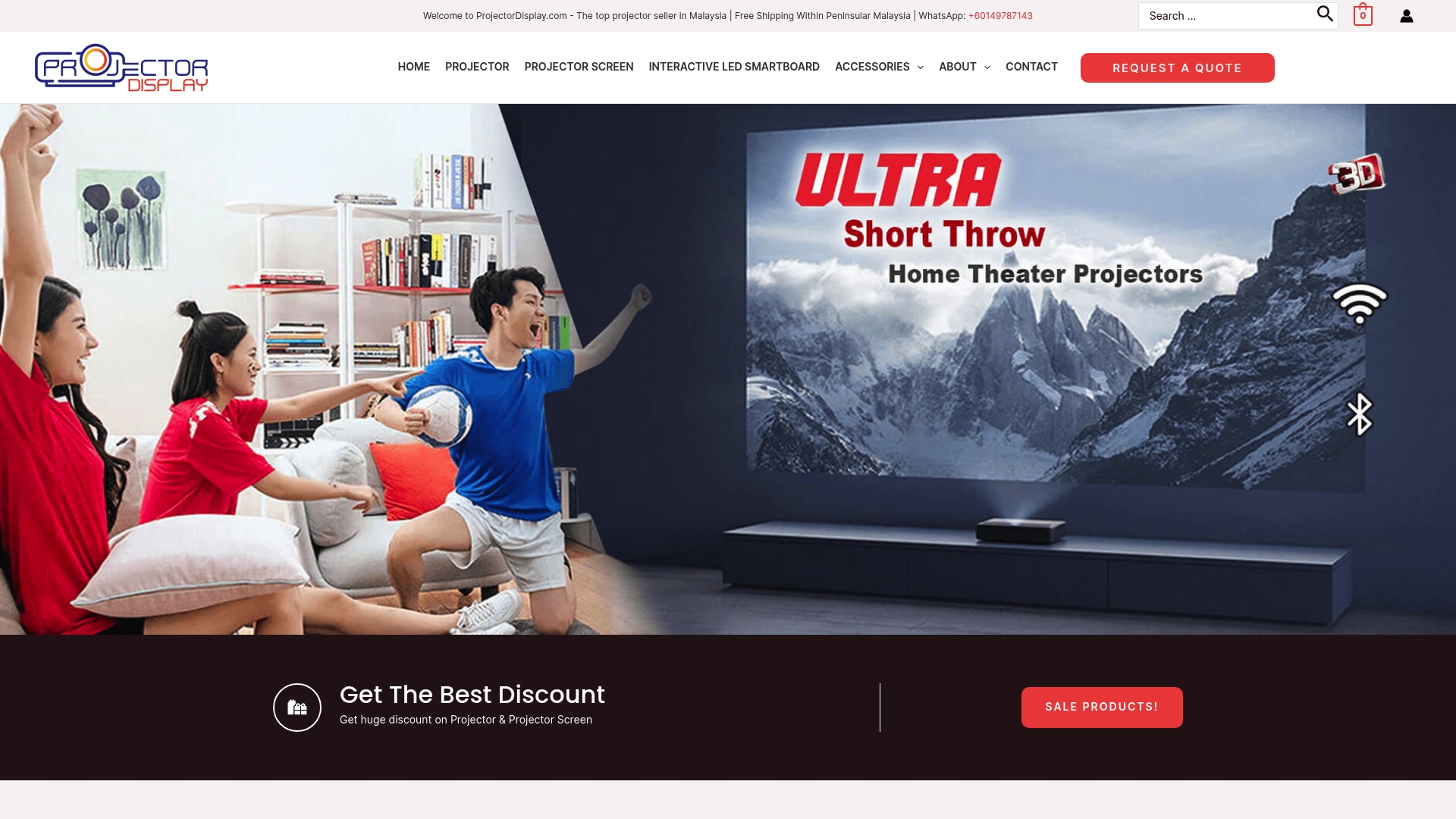
Now is the time to upgrade your home entertainment with a high-quality projector and enhance your audio with premium options from our Sound Systems Archives – Projector Display. Visit ProjectorDisplay.com to explore a wide range of projectors designed for brightness clarity and versatility all backed by secure shopping and fast delivery in Malaysia. Experience the difference today and reinvent how you watch and play from the comfort of your own home.
Frequently Asked Questions
What are the main advantages of using a projector instead of a TV for home entertainment?
Projectors offer larger screen sizes, typically ranging from 60 to 300 inches, providing an immersive viewing experience. Consider using a projector if you want to convert an entire wall into a cinematic display for your home theater.
How do I determine the right projector brightness for my room?
Brightness is measured in lumens, and the right level depends on your room's lighting. For dark home theaters, aim for 1500 to 2000 lumens, while bright spaces might require 3000 lumens or more to ensure clear images.
What should I consider when setting up a projector in a small room?
When dealing with a small room, select a short-throw or ultra-short-throw projector, which can produce large images from just inches away. Measure the available wall or screen space and calculate the projector's throw ratio to avoid image distortion.
How do I connect my projector to various devices for streaming and gaming?
Most modern projectors come with multiple connectivity options like HDMI, USB, and WiFi for easy integration with devices like smartphones and gaming consoles. Ensure to verify the projector's compatible connection interfaces before proceeding with your setup.
What audio options should I explore for a projector to enhance my viewing experience?
Many projectors have built-in speakers that may not provide the best sound quality, so consider using external audio solutions like sound bars or multi-speaker systems. Look for projectors that support audio output via Bluetooth or HDMI ARC for seamless audio integration.
How can I assess the energy efficiency of a projector before purchasing?
Review the project's lumens per watt ratio as an indicator of energy efficiency, and compare models based on their energy consumption ratings. Prioritize LED or laser projectors, which typically consume 30 to 50 percent less power than traditional lamp-based models.
Recommended
- Understanding Projector vs TV for Home Entertainment – Projector Display
- Best Projector and Screen for Home Theater in Malaysia 2025 – Projector Display
- 7 Best Home Theater Projector Tips for Ultimate Viewing – Projector Display
- 7 Smart Living Room Design Inspiration Ideas for All Spaces – Projector Display