
TL;DR:
- A projector with at least 2500 ANSI lumens is recommended for outdoor use in Malaysia.
- Proper weatherproofing, acclimation, and safety practices are crucial due to high humidity and unpredictable rain.
- Rigid, wind-proof screens and outdoor-rated equipment ensure a stable, high-quality outdoor movie experience.
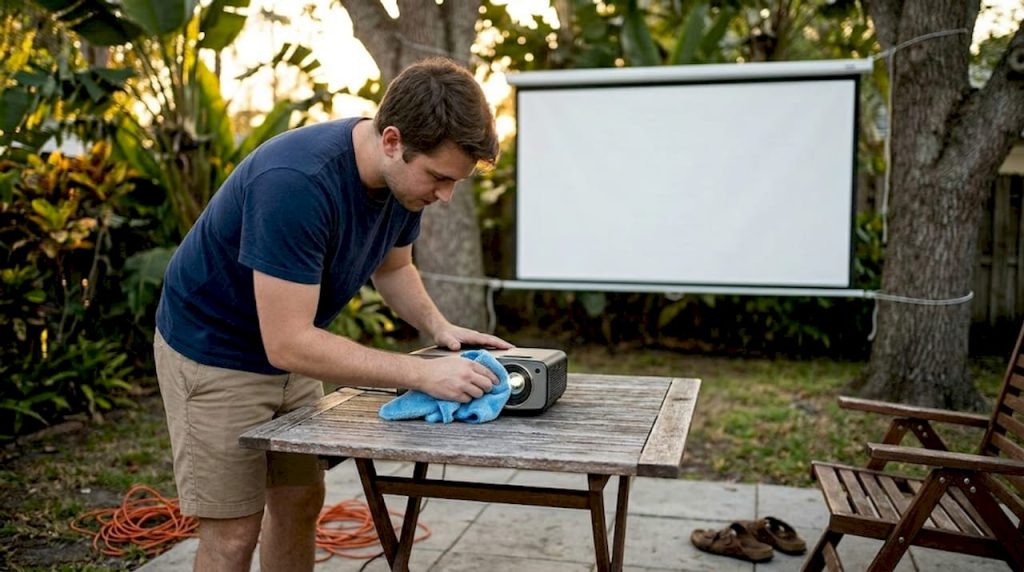
Many outdoor movie nights in Malaysia start with excitement and end with squinting at a washed-out, blurry image on a bedsheet strung between two trees. It doesn't have to go that way. Malaysia's tropical climate adds real complexity to outdoor projection, but the right specs and setup routines can turn your backyard into a cinema that actually impresses your guests. This guide walks you through brightness requirements, weatherproofing essentials, screen selection, sound setup, and the troubleshooting moves that separate a frustrating night from a flawless one.
Table of Contents
- Outdoor projector basics: What really matters
- Choosing the right projector: Brightness, specs, and screen size
- Weatherproofing and safety tips for Malaysian outdoors
- Screens, sound, and troubleshooting common outdoor challenges
- Why most outdoor projector advice overlooks Malaysia's true challenges
- Get started with outdoor projectors—shop and learn more
- Frequently asked questions
Key Takeaways
| Point | Details |
|---|---|
| Minimum brightness matters | Choose projectors with at least 2500 ANSI lumens for clear outdoor viewing in Malaysia. |
| Weatherproof your setup | Always use IPX4+ covers, acclimate your projector, and keep electricals safe in Malaysia's humid climate. |
| Stable screens outperform inflatables | Opt for solid screens to prevent wind issues and keep images sharp outdoors. |
| Test power and sound early | Check all connections and backup options before guests arrive to avoid mid-movie problems. |
Outdoor projector basics: What really matters
Let's start by clearing up the most expensive misconception in outdoor projection: that any projector will do once the sun goes down. It won't. The core issue is ambient light. Even after sunset in Malaysia, streetlights, garden lights, phone screens, and residual sky glow eat into your projected image. The unit that measures a projector's ability to fight back is ANSI lumens, which is a standardized brightness rating.
Here's the reality check: some sources claim 500 lumens is enough for night use, while others stress 2000 or more for real reliability. For Malaysia specifically, at least 2500 ANSI lumens is the baseline you should plan around. Anything below that, and you're gambling on perfect dark conditions that rarely exist in Malaysian neighborhoods.
Beyond brightness, three other factors shape your image quality outdoors:
- Screen surface: A white bedsheet absorbs and scatters light unevenly. A proper matte white or gray screen reflects it cleanly.
- Throw distance: The farther your projector sits from the screen, the dimmer the image gets. Know your projector's throw ratio.
- Ambient surroundings: Trees, light-colored walls, and open sky all bounce light back toward your screen.
Timing matters too. The sharpest window for outdoor projection in Malaysia is roughly 20 to 40 minutes after sunset. The sky transitions from bright blue to deep navy, giving you a natural dark backdrop without requiring a pitch-black environment.
"Malaysia's humidity doesn't just affect your comfort, it affects your projector's optics, cooling system, and even the screen material over time. Gear that works in a dry climate may underperform here."
Pro Tip: Browse the best outdoor projectors built for tropical conditions and check the projector lumens explained guide before buying so you know exactly what the spec sheet means in real use.
Choosing the right projector: Brightness, specs, and screen size
With the basics covered, it's time to pick a projector and screen tailored for Malaysia's unique outdoor environment. The first decision is always brightness, and here's a simple table to map scenarios to lumens:
| Scenario | Screen size | Minimum lumens |
|---|---|---|
| Small backyard, full dark | 80 to 100 inches | 2000 ANSI |
| Typical garden gathering | 100 to 120 inches | 2500 ANSI |
| Partial shade or ambient light | 120 to 150 inches | 3000+ ANSI |
| Open field or event space | 150 inches or larger | 4000+ ANSI |
2500+ ANSI lumens is recommended as the starting point, with 3000 or more for partial shade or larger screens. Real-world measurements matter here too. The HAPPRUN KC7 PRO measures around 2400 ANSI in tested conditions despite a 2500 spec, while the Nebula X1 delivers roughly 3300 measured against its 3500 ANSI rating. Always factor in that real-world output runs slightly below the manufacturer's number.
To choose the right setup, follow these steps:
- Measure your available space. Throw distance determines screen size. Most standard projectors need 10 to 15 feet for a 100-inch image.
- Match lumens to your environment. Use the table above and then add 500 lumens as a buffer for unpredictable conditions.
- Pick your screen size based on seating distance. Viewers seated 15 feet away are comfortable with a 120-inch screen.
- Check native resolution. Full HD (1920×1080) is the minimum worth using for movies outdoors. 4K helps on larger screens.
- Confirm connectivity. HDMI, USB, and wireless options give you flexibility with different source devices.
For deeper guidance, the projector brightness guide and ideal brightness for projectors pages break down specs by use case. You can also check out the roundup of top outdoor projectors available in Malaysia.
Pro Tip: Always round up on brightness. Malaysia's weather is unpredictable, and the difference between a 2500 and 3000 lumen projector becomes very obvious the moment clouds scatter light across your venue.
Weatherproofing and safety tips for Malaysian outdoors
Once the optimal projector is chosen, keeping it safe from Malaysia's weather and common electrical issues is the next challenge. Heat, humidity, dew, and sudden downpours are not edge cases here. They're the norm.
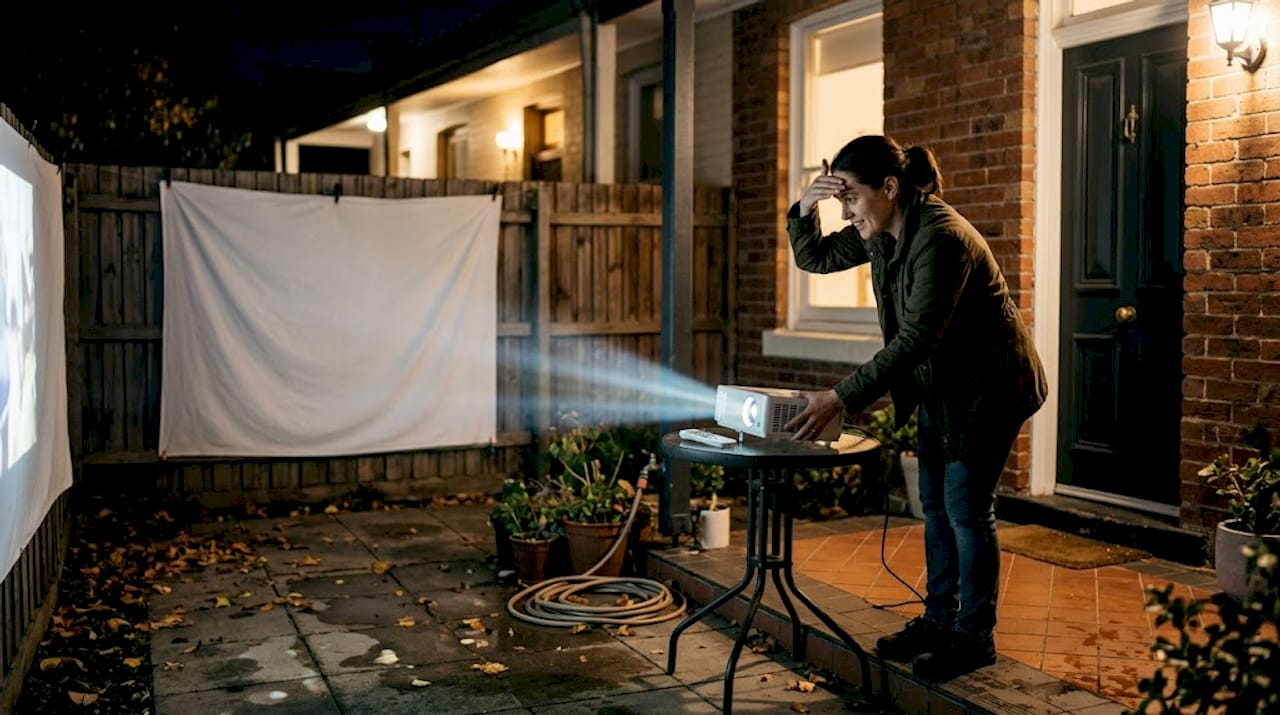
Start with acclimation. Bringing a projector straight from an air-conditioned room into humid outdoor air creates condensation inside the lens and optical components. Acclimate your projector 30 to 60 minutes before use, use IPX4-rated covers or enclosures during storage, avoid overnight outdoor exposure, and always ensure adequate ventilation around the unit.
Here's a quick comparison of safe practices versus risky ones:
| Safe practice | Risky practice |
|---|---|
| IPX4+ rated enclosure or cover | Plastic bag or cloth wrap |
| Elevated on a stable table or stand | Placed on damp ground |
| Ventilated on all sides | Enclosed in a tight box |
| Brought indoors after use | Left outside overnight |
| GFCI-protected outdoor outlet | Standard indoor extension cord |
Electrical safety is just as important as physical protection. Grounded outdoor-rated cords with GFCI protection are required for any outdoor power setup. GFCI stands for Ground Fault Circuit Interrupter, and it cuts power instantly if moisture causes a short circuit. This is non-negotiable in Malaysia's wet environment.
"Moisture and electricity are the two biggest enemies of any outdoor projection setup. Treating electrical safety as optional is how gear gets ruined or people get hurt."
For more detail, the prevent projector overheating guide covers cooling strategies, and the page on outdoor projector power safety walks through smart cable management for any outdoor space.
Screens, sound, and troubleshooting common outdoor challenges
Protection is just one part of the outdoor experience. Now let's look at screens, sound, and troubleshooting so your event goes smoothly from start to finish.
Screen choice is one of the most underestimated decisions in outdoor projection. Many people reach for an inflatable screen because it looks fun, but inflatable screens sway and ripple in even a mild breeze, ruining the image. A rigid fixed-frame or tensioned screen is a much better investment. Wind-proof screens keep your image stable, reduce dew absorption, and hold their position without constant adjustment. Elevate the screen off the ground to avoid moisture wicking up from wet grass or concrete.
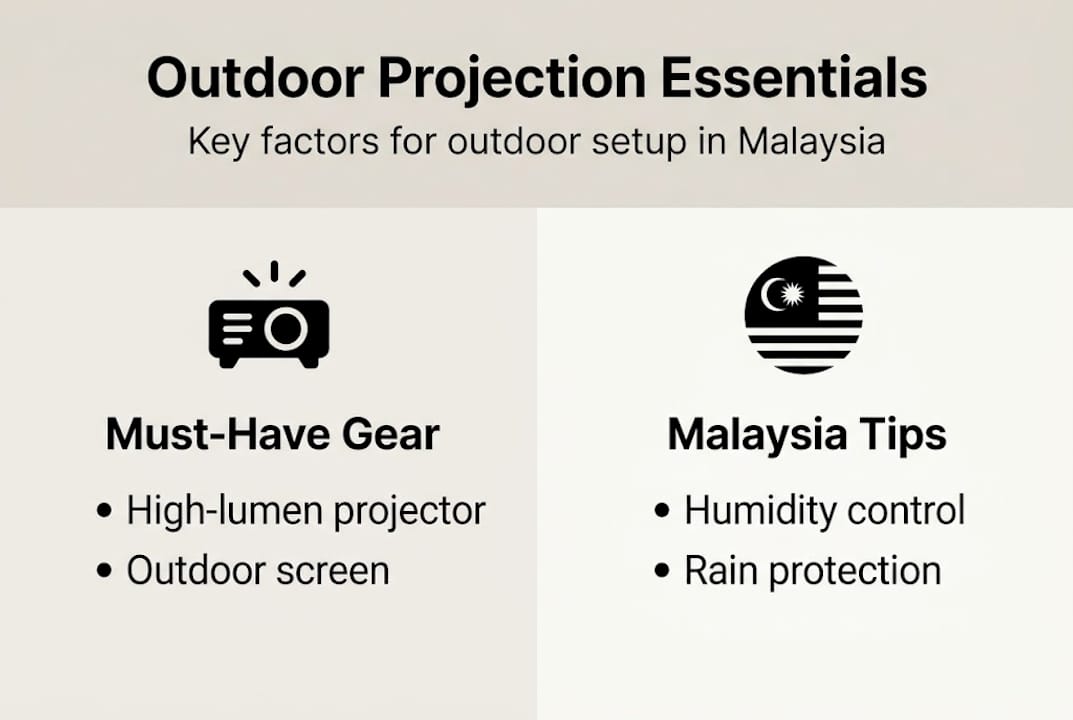
Sound needs the same attention as the image. Outdoor spaces have no walls to reflect audio, so the sound disperses quickly. A Bluetooth speaker with at least 20 watts of output works for groups under 20 people. For larger gatherings, use a PA system or two speakers placed at the sides of the screen.
Before anyone arrives, test the full setup at least 10 minutes before the event to catch power surprises, focus issues, or audio lag. Here's a quick troubleshooting checklist:
- Fuzzy image: Check focus ring, clean the lens, and verify the projector is level.
- Sound lag: Switch from Bluetooth to a wired speaker connection if latency is noticeable.
- Sudden power outage: Check the GFCI outlet; it may have tripped due to moisture.
- Washed-out image: Lower ambient lights nearby and verify you're at the right throw distance.
For screen options, the durable outdoor screens available from ProjectorDisplay.com are built for outdoor use, and the anti-light fixed screens handle ambient light far better than standard white options.
Pro Tip: Always pack a backup Bluetooth speaker and a spare extension cord rated for outdoor use. These two items have saved more than a few outdoor events when primary gear failed at the worst possible moment.
Why most outdoor projector advice overlooks Malaysia's true challenges
By now you've learned the essentials, from specs to safety, but here's something few guides address directly: most outdoor projector content online is written for audiences in North America or Europe. Those guides assume cool, dry evenings, stable power infrastructure, and minimal humidity. Malaysia's reality is almost the opposite.
Humidity here averages above 80% on most evenings. Temperatures stay high well into the night. Sudden rain is genuinely unpredictable, even during "dry" months. These conditions mean that the margins for error are much smaller. A projector that barely meets the 2500 lumen recommendation will disappoint. A screen that works fine in a dry climate will absorb moisture and lose reflectivity here.
The most common outdoor projection failures we hear about in Malaysia trace back to three underestimated problems: dew forming on lenses during long sessions, projectors overheating because ventilation was blocked, and brightness falling short after just an hour of use. None of these get covered in generic guides.
The good news is that overheating in warm climates is very preventable with the right habits. Gear up a level beyond what a global guide recommends, and you'll have a setup that actually performs under Malaysian skies.
Get started with outdoor projectors—shop and learn more
Armed with practical strategies, here's how you can get started shopping for the right gear or learning more.
At ProjectorDisplay.com, you'll find a curated selection of outdoor-ready projectors, rigid projection screens, and weatherproofing accessories chosen with Malaysia's conditions in mind. Whether you're planning a small backyard screening or a large event, the product range covers every scale and budget. Check the projector deals and accessories page for current promotions on top brands. If you want to go deeper on screen selection before buying, the guide covering types of projection screens will help you understand which screen material and format suits your specific outdoor setup.
Frequently asked questions
How many lumens do I need for an outdoor projector in Malaysia?
Aim for at least 2500 ANSI lumens for a reliable outdoor image in Malaysia; go for 3000 or more if your screen is larger than 120 inches or there's any ambient light nearby.
Can indoor projectors be used outdoors?
Indoor projectors struggle outdoors because they lack sufficient brightness and have no protection against Malaysia's humidity or sudden rain. You'll end up with a dim, at-risk setup.
What's the best way to protect my projector from humidity and rain?
Use IPX4-rated covers or purpose-built enclosures, give the unit 30 to 60 minutes to acclimate to outdoor temperature before use, and always bring it inside after the event.
How do I prevent power issues during my outdoor movie event?
Always use grounded outdoor-rated cords paired with GFCI outlet protection, and run a full power test at least 10 minutes before guests arrive.
Is a special screen necessary for outdoor projection?
Yes. Rigid or fixed-frame wind-proof screens resist movement and moisture far better than inflatable or basic cloth screens, giving you a stable, clear image throughout the event.
Recommended
- Best projectors for outdoor events: top picks & features – Projector Display
- Using projectors for presentations: practical guide for Malaysia – Projector Display
- 6 Pilihan Projector Outdoor Terbaik 2025 di Malaysia – Projector Display
- Projector FAQ Malaysia: Your Complete Guide to Smart Buying – Projector Display