
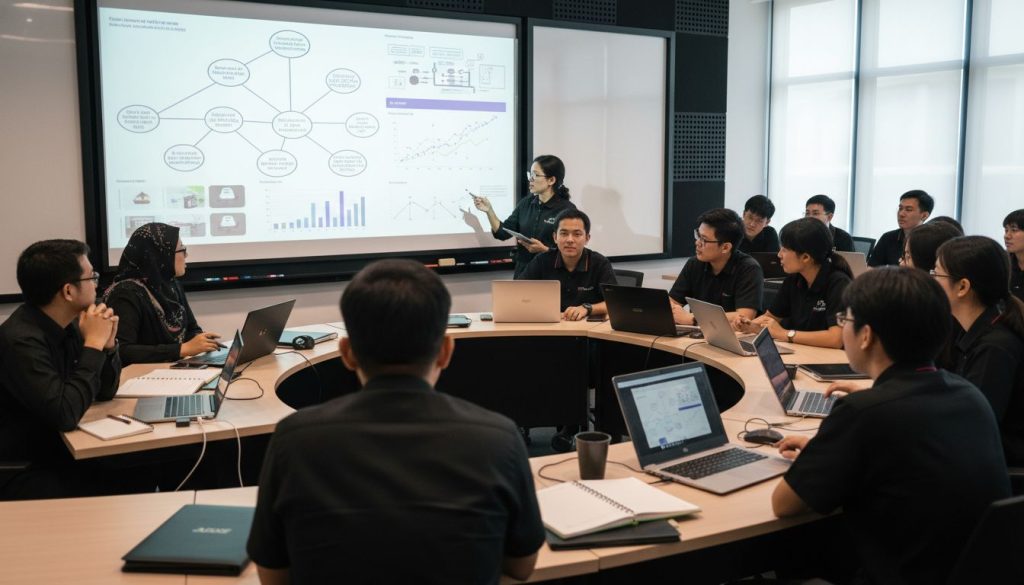
Nearly 65 percent of people are visual learners, which means most brains process images faster than words. Understanding how to use visuals is more than a study trick, it is a powerful way to make complex ideas stick. With our world shifting toward more interactive and image-based content, it is essential to know which techniques truly work. This article uncovers what visual learning looks like, explores why it matters, and highlights proven methods to help learners of all ages succeed.
Table of Contents
- Defining Visual Learning And Core Concepts
- Types Of Visual Learning And Key Strategies
- Science Behind Visual Learning Effectiveness
- Real-World Applications In Malaysia
- Projector Solutions For Visual Learners
Key Takeaways
| Point | Details |
|---|---|
| Visual Learning Effectiveness | Visual learning enhances comprehension and retention by using visual aids that align with the brain's natural processing capabilities. |
| Diverse Strategies | Implementing graphic representation techniques, such as mind mapping and gamification, can significantly improve engagement and understanding. |
| Neuroscientific Benefits | Visual learning promotes faster information processing and stronger neural connections, leading to more effective learning experiences. |
| Technological Integration | The use of advanced projector solutions and interactive technologies can create immersive environments that enhance the visual learning experience. |
Defining Visual Learning and Core Concepts
Visual learning is a powerful educational approach that transforms how individuals process, understand, and retain information through visual stimuli. According to Missouri State University, visual learning involves processing information through visual aids such as graphs, charts, and images, with learners who excel at interpreting visual information and possessing a strong aesthetic sense.
At its core, visual literacy extends far beyond simply reading text. As defined by Wikipedia, visual literacy encompasses the ability to interpret, negotiate, and extract meaningful insights from information presented through images. This skill allows individuals to comprehend complex concepts by translating visual representations into actionable understanding.
Key characteristics of visual learners include:
- Strong ability to recognize patterns and spatial relationships
- Enhanced memory retention through graphic representations
- Preference for diagrams, illustrations, and multimedia presentations
- Quick comprehension of complex information through visual mapping
In practical terms, visual learning strategies leverage multiple sensory inputs to create more engaging and memorable educational experiences. By transforming abstract concepts into tangible visual formats, learners can more effectively process information, making complex ideas more accessible and understandable. Whether in academic settings, professional training, or personal development, visual learning provides a dynamic approach to knowledge acquisition that resonates with how our brains naturally interpret and store information.
Types of Visual Learning and Key Strategies
Visual learning encompasses diverse strategies designed to optimize information processing and retention through visual techniques. According to MLSU, visual learners benefit from specialized approaches that transform traditional learning methods into more engaging, image-rich experiences.
Graphic Representation Strategies play a crucial role in visual learning. TAO Testing highlights several effective techniques that can dramatically enhance information comprehension:
- Educational video presentations
- Interactive gamification elements
- Graphic organizers and mind maps
- Classroom visual displays
- Color-coded note-taking systems
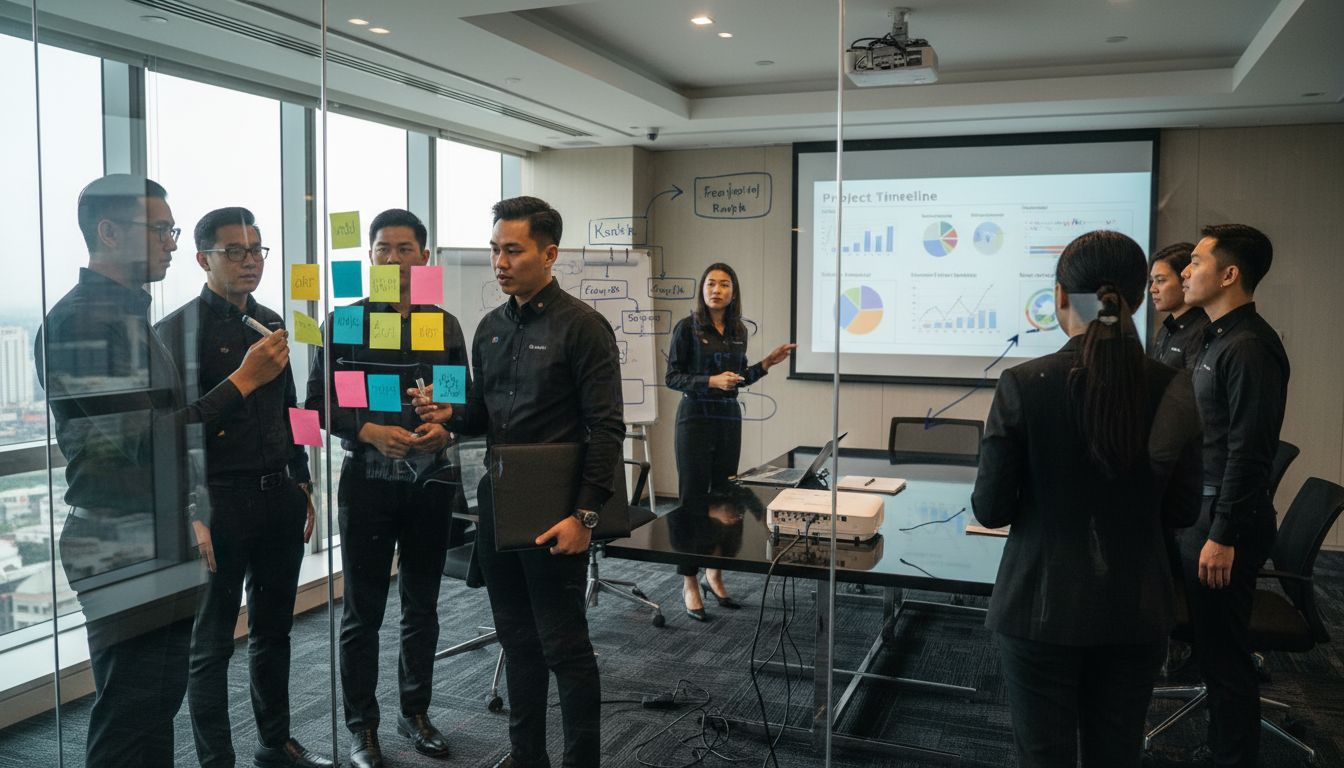
These strategies work by leveraging the brain's natural preference for visual information processing. Mind mapping, for instance, allows learners to create visual connections between concepts, transforming linear information into dynamic, interconnected networks. Color-coding helps categorize and differentiate information, making complex data more digestible and memorable.
Practical implementation of visual learning strategies requires creativity and adaptability. Techniques like substituting text with pictures, creating visual analogies, and encouraging learners to draw or sketch their understanding can transform abstract concepts into tangible, comprehensible visual representations. Whether in academic, professional, or personal learning environments, these approaches provide powerful tools for enhancing information retention and deepening overall understanding.
Science Behind Visual Learning Effectiveness
The scientific foundation of visual learning reveals profound insights into how our brains process and retain information. According to research from arXiv, the Neuro-Symbolic Concept Learner model demonstrates that integrating visual concepts with language descriptions significantly enhances learning efficiency, providing empirical evidence for the cognitive power of visual learning approaches.
Neuroscientific research highlights multiple mechanisms that make visual learning so effective. Multimodal pedagogy, as explained by Wikipedia, leverages the brain's capacity to process information across different sensory channels. This approach recognizes that visual inputs trigger multiple neural pathways, creating richer, more interconnected memory networks compared to text-only learning methods.
Key neurological advantages of visual learning include:
- Faster information processing speeds
- Enhanced memory encoding and retrieval
- Increased neural connectivity between brain regions
- More engaged and active learning experiences
- Improved comprehension of complex spatial relationships
The brain's remarkable plasticity allows visual representations to create stronger, more memorable cognitive connections. By transforming abstract concepts into tangible visual formats, learners can bypass traditional linear processing limitations. This approach essentially allows the brain to "map" information more efficiently, creating more robust understanding and long-term retention of complex ideas across various disciplines and learning contexts.
Real-World Applications in Malaysia
Visual learning strategies have found remarkable applications across Malaysia's dynamic educational and professional landscapes. According to TAO Testing, gamification provides innovative opportunities for learners to interact with vibrant graphics and interactive design elements, making learning more stimulating and memorable across various sectors.
In Malaysian educational institutions, visual learning techniques have transformed traditional teaching methodologies. Autism Parenting Magazine highlights color coding as a powerful strategy that helps learners organize and recall information more effectively. This approach has been particularly impactful in:
- School curriculum development
- Special education programs
- Corporate training environments
- Professional skill development workshops
- Technology-enhanced learning platforms
Practical implementations of visual learning in Malaysia span multiple domains. From interactive classroom displays in urban schools to sophisticated training simulations in Kuala Lumpur's tech companies, visual learning strategies are bridging cognitive gaps and enhancing information retention. Wireless screen mirroring technologies have further expanded these capabilities, enabling more dynamic and engaging visual learning experiences across educational and professional settings.
The convergence of technology and visual learning represents a significant opportunity for Malaysian learners. By leveraging interactive tools, gamified learning platforms, and advanced visualization techniques, institutions can create more inclusive, engaging, and effective learning environments that cater to diverse cognitive styles and learning preferences.
Projector Solutions for Visual Learners
Projector technologies have revolutionized the way visual learners engage with educational content. According to TAO Testing, educational videos can help visual learners reinforce information by providing additional context and allowing them to connect facts encountered in traditional classroom settings.
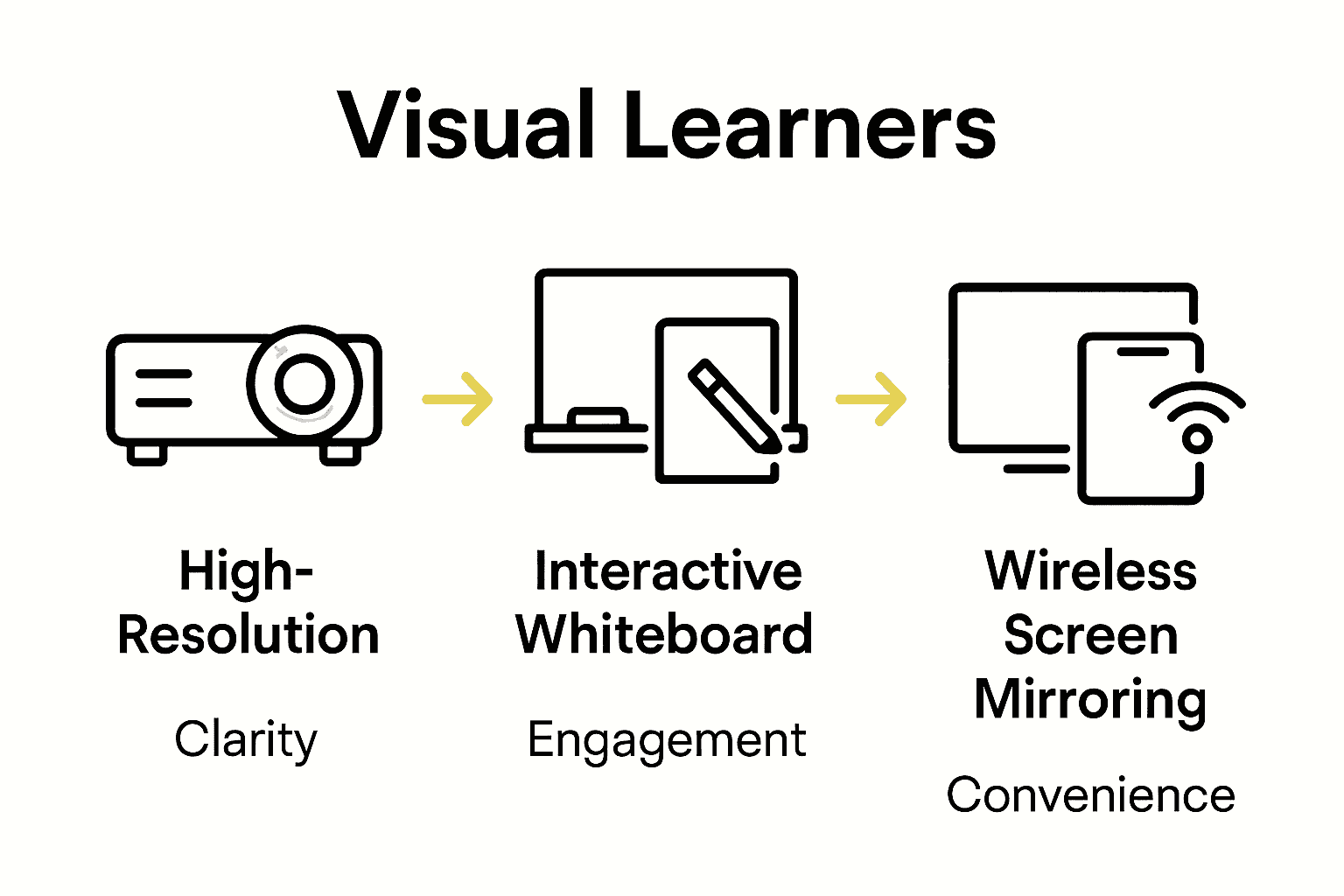
Teaching emphasizes that incorporating interactive technologies such as advanced projection systems can transform complex topics into more digestible visual experiences. Key projector solutions for visual learners include:
- High-resolution display systems
- Interactive whiteboard projectors
- Short-throw projection technology
- Ultra-bright classroom projectors
- Wireless screen mirroring capabilities
Modern projector solutions go beyond simple image projection. Classroom AV solutions guide highlights how contemporary projection technologies can create immersive learning environments that cater specifically to visual learning styles. These technologies enable educators to break down complex concepts through dynamic visual representations, making abstract ideas more concrete and accessible.
The future of visual learning lies in integrated, intelligent projection systems that can adapt to different learning contexts. By combining high-quality visual output with interactive features, projector solutions are transforming traditional educational approaches, providing visual learners with powerful tools to enhance their understanding and retain information more effectively.
Enhance Visual Learning with Cutting-Edge Projection Solutions
Visual learning thrives when complex information becomes clear and engaging through vivid visuals and interactive displays. This article highlights the challenges many face in retaining and understanding information delivered in traditional formats. If you want to boost comprehension and memory retention by using high-quality projection technology that supports color coding, mind mapping, and multimedia presentations, the right equipment is essential.
Explore a wide selection of projectors tailored to visual learners at ProjectorDisplay.com. Our range includes portable projectors, smart projectors, and short-throw units perfect for transforming classrooms, offices, or home study spaces into dynamic learning hubs. Don't wait to bring educational content to life and empower your visual learning experience. Visit our site now and find the perfect projection solution to make every lesson unforgettable.
Frequently Asked Questions
What are the main benefits of visual learning?
Visual learning enhances information retention, improves comprehension of complex concepts, and allows learners to create mental connections through visual mapping. This approach caters to the brain's preference for visual information processing, leading to more effective learning experiences.
How can visual learning strategies be implemented in education?
Visual learning strategies can be implemented through techniques like graphic organizers, interactive video presentations, color-coded notes, and mind maps to create engaging, image-rich educational environments that promote active learning.
What role do projector technologies play in visual learning?
Projector technologies enhance visual learning by providing high-resolution displays, interactive features, and immersive experiences that transform complex topics into understandable visual formats, making information more accessible and memorable for learners.
What are some effective visual learning strategies for different learners?
Effective visual learning strategies include using educational videos, gamification, classroom visual displays, and mind mapping to cater to diverse learning styles, allowing individuals to process information in ways that resonate with them.