
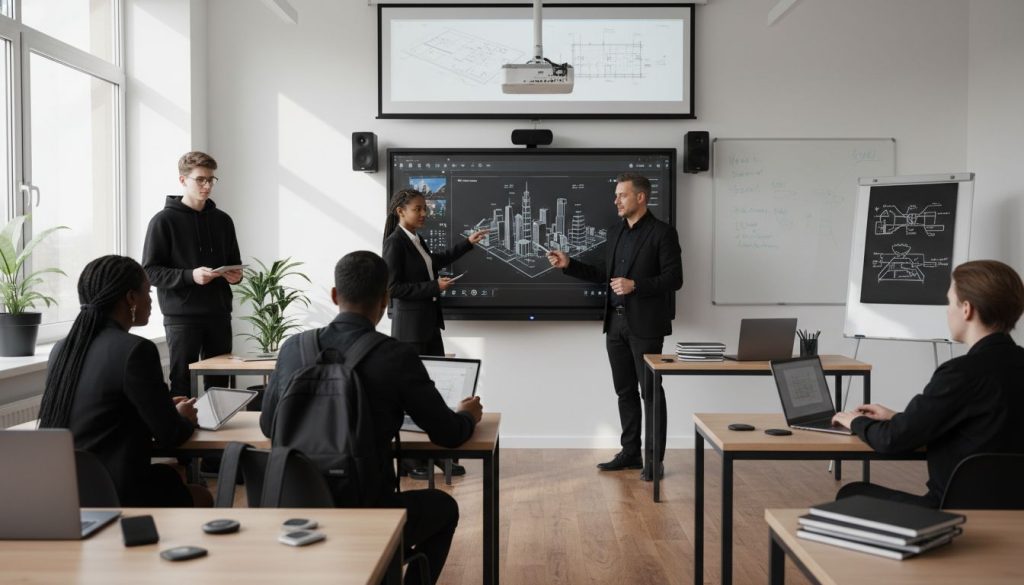
Did you know that classrooms using AV technology see up to 30 percent higher student engagement compared to traditional setups? As digital devices become a daily part of learning, schools are searching for ways to make lessons more interactive and accessible for every student. Understanding how classroom AV solutions work helps teachers create richer, more flexible experiences that keep learners interested and make complex subjects easier to grasp.
Table of Contents
- What Classroom AV Solutions Mean
- Types Of Classroom AV Solutions
- How Classroom AV Systems Operate
- Key Benefits And Features
- Implementation Challenges And Costs
Key Takeaways
| Point | Details |
|---|---|
| Innovative Learning Environments | Classroom AV solutions transform traditional teaching by integrating multimedia technology, enhancing engagement and comprehension. |
| Diverse AV Solutions | Key types include interactive displays, projection systems, sound reinforcement, wireless sharing, and lecture capture systems that facilitate both in-person and remote learning. |
| Operational Efficiency | These systems streamline educational content delivery, ensuring effective communication and interaction through technologically integrated platforms. |
| Implementation Challenges | Successful adoption requires addressing technical compatibility, cost management, user training, and infrastructure readiness to fully leverage AV capabilities. |
What Classroom AV Solutions Mean
Classroom audiovisual (AV) solutions represent sophisticated technological ecosystems designed to transform traditional learning environments into dynamic, interactive spaces. According to Wikipedia, audiovisual technologies combine electronic media with both sound and visual components, creating immersive educational experiences that extend far beyond conventional teaching methods.
At its core, classroom AV solutions integrate various multimedia tools and technologies to enhance educational delivery and student engagement. These solutions typically include projectors, interactive displays, sound systems, document cameras, and wireless presentation technologies that enable educators to present information more dynamically. Audiovisual education research emphasizes that such tools can significantly improve comprehension and knowledge retention by presenting complex information through multiple sensory channels.
The primary objectives of classroom AV solutions encompass several key dimensions:
- Enhanced Learning Visualization: Converting abstract concepts into visual representations
- Interactive Instruction: Enabling real-time student participation and multimedia interaction
- Flexible Presentation Formats: Supporting diverse teaching styles and learning preferences
- Technology Integration: Seamlessly blending digital tools with traditional pedagogical approaches
Modern classroom AV solutions go beyond simple technological implementations. Check out our guide on choosing classroom projectors to understand how these technologies can be strategically deployed to create more engaging and effective learning environments. By transforming traditional classrooms into multimedia-rich spaces, educators can create more inclusive, accessible, and stimulating educational experiences that cater to diverse learning styles and technological expectations of contemporary students.
Types Of Classroom AV Solutions
Classroom AV solutions represent a diverse ecosystem of technological tools designed to transform educational experiences. According to iVideo, these solutions encompass a comprehensive range of technologies including interactive displays, wireless collaboration tools, lecture capture systems, and centralized control mechanisms that support both in-person and remote instruction.
The primary types of classroom AV solutions can be categorized into several key technological domains:
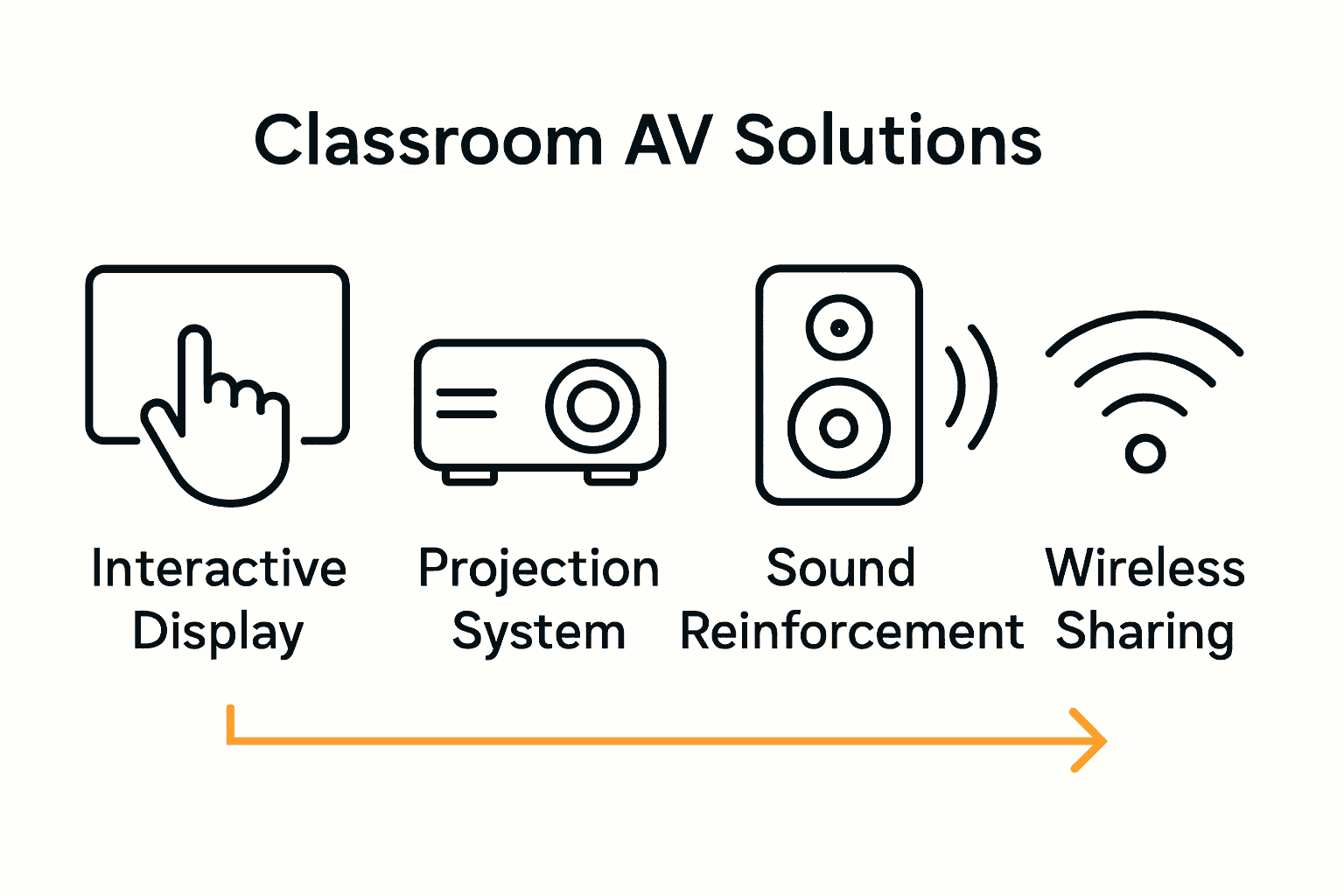
Here's a summary of the main types of classroom AV solutions and their core functions:
| AV Solution Type | Core Function | Typical Usage |
|---|---|---|
| Interactive Displays | Touchscreen interaction | Real-time student engagement |
| Projection Systems | Large-scale visual presentation | Displaying presentations/videos |
| Sound Reinforcement | Clear audio distribution | Ensuring all students hear |
| Wireless Sharing | Content transmission | Sharing materials across devices |
| Lecture Capture | Recording & streaming | Hybrid/remote class sessions |
- Interactive Displays: Large touchscreen panels enabling direct student interaction
- Projection Systems: High-lumens projectors for large-scale visual presentations
- Sound Reinforcement Systems: Audio equipment ensuring clear sound distribution
- Wireless Sharing Technologies: Platforms allowing seamless content transmission
- Lecture Capture Solutions: Recording and streaming classroom sessions
According to KramerAV, modern classroom AV solutions increasingly emphasize flexible connectivity, featuring dual-display systems that enable simultaneous viewing of primary content and remote participants. These technologies support multiple device connections, creating interconnected learning environments that facilitate collaborative and inclusive educational experiences.
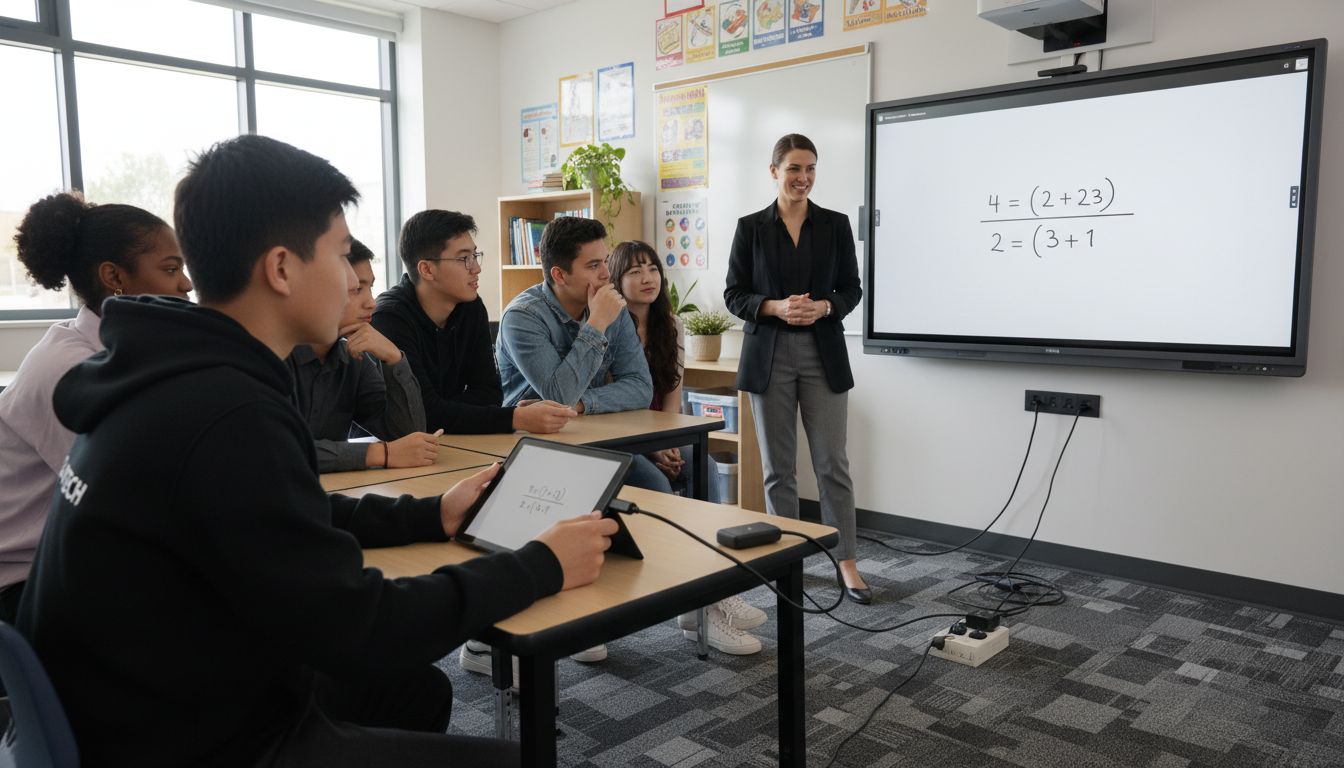
Learn more about implementing interactive classroom technologies to understand how these diverse AV solutions can be strategically integrated into educational settings. By leveraging these sophisticated technological tools, educators can create dynamic, engaging learning spaces that accommodate diverse student learning styles and technological expectations.
How Classroom AV Systems Operate
Classroom AV systems represent intricate technological networks designed to streamline educational content delivery and enhance interactive learning experiences. According to Wikipedia, these systems integrate electronic media with sophisticated sound and visual components, creating comprehensive multimedia platforms that transform traditional teaching methodologies.
The operational mechanics of classroom AV systems typically involve several interconnected technological layers:
- Signal Transmission: Converting digital content into displayable formats
- Device Synchronization: Ensuring seamless communication between different technological components
- User Interface Management: Enabling intuitive control and interaction
- Content Scaling and Adaptation: Adjusting visual and audio outputs for optimal viewing
- Network Integration: Supporting wireless and wired connectivity options
According to Wikipedia's interactive whiteboard research, these systems can function through multiple interaction modes. For instance, interactive whiteboards can operate as standalone touchscreen computers or function as touchpad controllers for projector systems, allowing educators to manipulate content dynamically through pen, finger, or specialized input devices.
Explore our comprehensive classroom projector setup guide to understand the intricate process of implementing these sophisticated AV technologies. By mastering the operational dynamics of classroom AV systems, educators can create more engaging, interactive, and technologically advanced learning environments that cater to diverse student learning preferences.
Key Benefits And Features
Classroom AV solutions represent a transformative approach to modern educational technology, offering unprecedented capabilities for enhancing learning experiences. According to iVideo, these solutions are designed to enrich teaching methodologies, enhance student engagement, and support increasingly complex hybrid learning environments through interactive and flexible technological platforms.
The key benefits of classroom AV solutions can be comprehensively categorized into several critical domains:
- Enhanced Learning Engagement: Creating immersive, interactive educational experiences
- Technological Flexibility: Supporting diverse teaching and learning styles
- Collaborative Capabilities: Enabling seamless in-person and remote interactions
- Content Accessibility: Improving information delivery and comprehension
- Operational Efficiency: Simplifying complex technological integration
According to KramerAV, these solutions offer remarkable operational advantages, including effortless system control, simple wireless content sharing, and comprehensive connectivity options. These features fundamentally transform traditional classroom dynamics by enabling clear audio communication, easy content transmission, and inclusive collaborative environments that bridge physical and digital learning spaces.
Learn more about implementing interactive classroom technologies to understand how these sophisticated AV solutions can revolutionize educational experiences. By leveraging these advanced technological tools, educators can create dynamic, engaging learning environments that accommodate diverse student learning preferences and prepare learners for an increasingly digital world.
Implementation Challenges And Costs
Implementing classroom AV solutions involves navigating a complex landscape of technological integration, financial considerations, and operational challenges. According to AVNetwork, organizations frequently encounter significant hurdles in ensuring seamless device connectivity, particularly with emerging technologies like USB-C, and managing remote system infrastructures effectively.
The primary implementation challenges can be categorized into several critical dimensions:
- Technical Compatibility: Integrating diverse technological ecosystems
- Cost Management: Balancing advanced features with budget constraints
- User Training: Ensuring smooth adoption and technological literacy
- Infrastructure Requirements: Preparing existing spaces for technological upgrades
- Scalability: Creating flexible systems that can evolve with technological trends
According to KramerAV, successful implementation demands more than just technological prowess. The critical focus must be on developing intuitive, user-friendly solutions that facilitate smooth collaborations without requiring extensive technical expertise. This approach ensures that educational institutions can leverage advanced AV technologies without overwhelming educators or students.
Discover our classroom projector setup guide to gain insights into navigating these complex implementation challenges. By understanding the nuanced landscape of classroom AV solutions, educational institutions can make informed decisions that balance technological innovation, financial prudence, and pedagogical effectiveness.
Transform Your Classroom with Expert AV Solutions Today
Modern classrooms face the challenge of integrating seamless audiovisual systems that boost engagement while being easy to manage and scalable. You want clear visuals, immersive sound, and effortless content sharing without the typical headaches of complex setups or compatibility issues. Our wide range of projectors, projection screens, and sound systems are designed to overcome these obstacles, helping you create interactive learning spaces that inspire students and simplify teaching.
Explore our Projector Screen Archives and Sound Systems Archives to find high-quality products that match your classroom needs.
Take control of your educational environment right now by visiting ProjectorDisplay.com for reliable AV solutions supported by expert advice and fast local shipping. Make your classrooms truly engaging and technologically advanced with just a few clicks.
Frequently Asked Questions
What are classroom AV solutions?
Classroom AV solutions are integrated technological systems designed to enhance learning experiences through the use of multimedia tools like projectors, interactive displays, and sound systems. They aim to improve student engagement and comprehension.
What types of technologies are included in classroom AV solutions?
Classroom AV solutions encompass various technologies such as interactive displays, projection systems, sound reinforcement systems, wireless sharing technologies, and lecture capture solutions, each serving unique functions in the educational setup.
How do classroom AV systems enhance learning?
These systems enhance learning by providing immersive, interactive educational experiences that support diverse teaching styles, facilitate real-time student participation, and improve content accessibility and comprehension.
What are the main challenges in implementing classroom AV solutions?
Key challenges include ensuring technical compatibility, managing costs, training users, preparing the infrastructure for upgrades, and creating scalable solutions that adapt to evolving technological trends.