
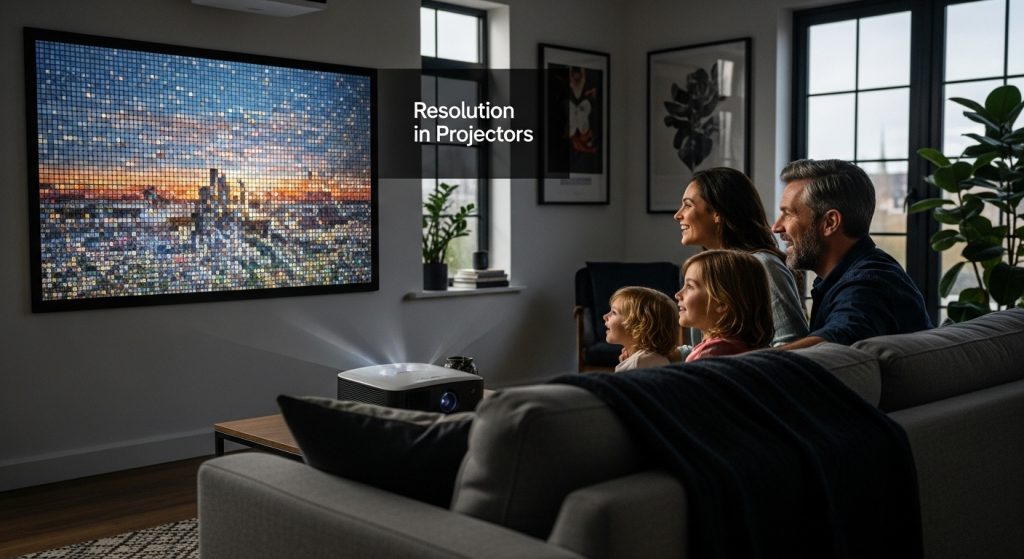
Projector resolution shapes every detail you see on the big screen and it decides how crisp movies, presentations, and photos really appear. Most people focus on brightness or price and skip over the pixel numbers but that move can actually wreck your whole viewing experience. Why? Because a switch from HD to 4K increases pixel count by over four times, jumping from 2 million to 8 million pixels and that single change can reveal details you never knew were missing.
Table of Contents
- What Is Resolution In Projectors And Why It Matters
- Different Types Of Projector Resolutions Explained
- How Projector Resolution Affects Image Quality
- Key Factors Influencing Projector Resolution Choices
Quick Summary
| Takeaway | Explanation |
|---|---|
| Higher resolution equals better image quality | More pixels enhance clarity, sharpness, and visual details, essential for impactful presentations or entertainment. |
| Choose resolution based on usage context | Determine resolution needs depending on whether the projector is for home entertainment, business, or education to achieve optimal results. |
| Resolution impacts color and detail | Higher resolutions result in improved color accuracy, edge definition, and fine detail rendering, crucial for professional settings. |
| Technical factors influence resolution selection | Consider screen size, viewing distance, and ambient lighting alongside pixel specifications to ensure effective projection. |
| Budget considerations matter for resolution choices | Higher resolutions offer enhanced quality but come with increased costs; balance current needs with future-proofing strategies. |
What is Resolution in Projectors and Why It Matters
Projector resolution represents the total number of pixels that compose an image displayed on a screen, fundamentally determining the clarity, sharpness, and visual detail of projected content. When you understand resolution in projectors, you unlock the potential to create stunning visual experiences across various settings.
Decoding Pixel Configurations
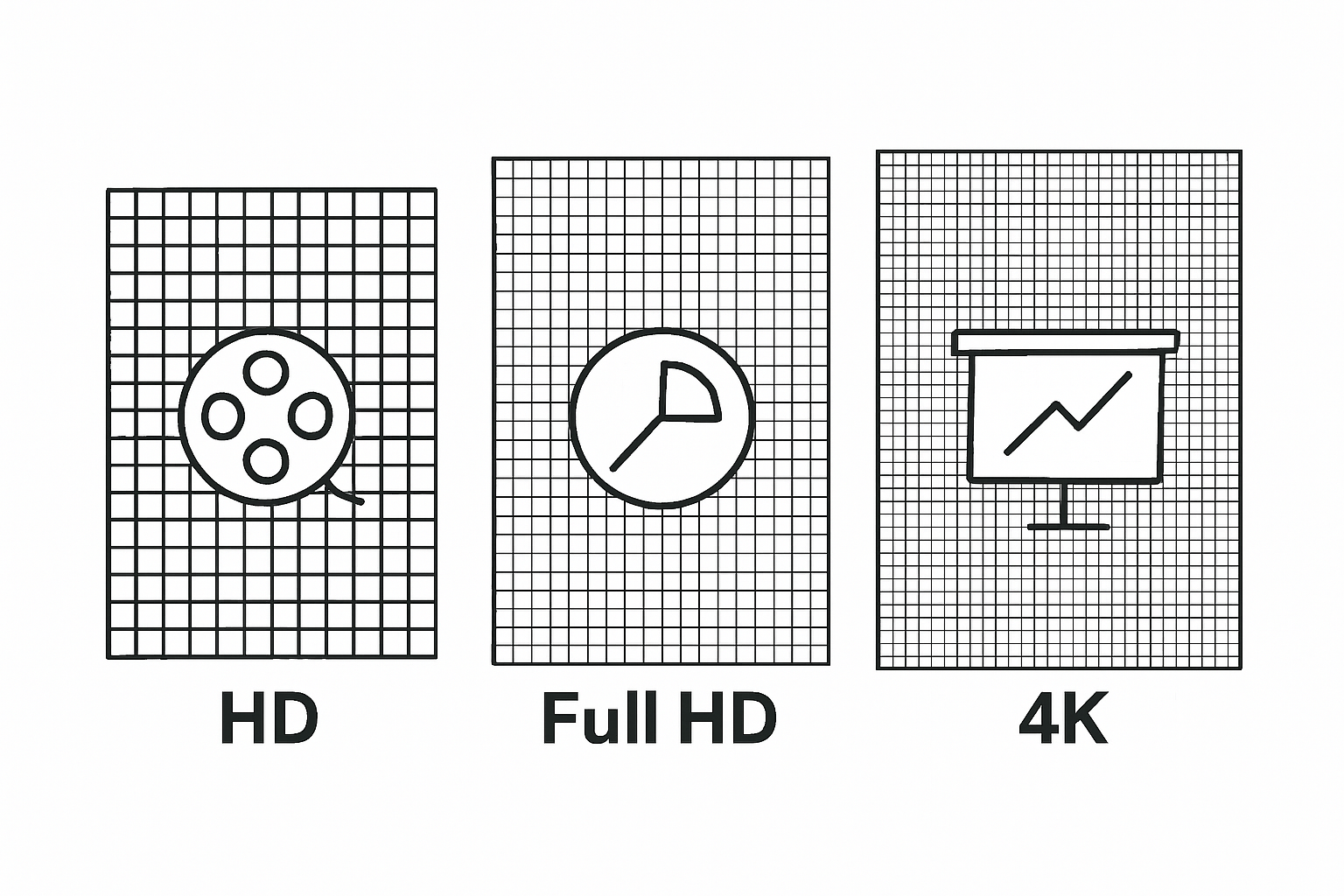
Resolution is typically expressed as width x height pixel measurements, such as 1920 x 1080 (Full HD) or 3840 x 2160 (4K). These numbers reveal how many individual pixels are arranged horizontally and vertically to construct an image. More pixels generally translate to higher image quality and more refined visual details.
Key pixel configuration classifications include:
- HD (High Definition): 1280 x 720 pixels
- Full HD: 1920 x 1080 pixels
- 4K Ultra HD: 3840 x 2160 pixels
- 8K: 7680 x 4320 pixels
The Visual Impact of Resolution
The significance of resolution extends beyond mere technical specifications. Higher resolution means sharper images, more accurate color reproduction, and enhanced viewing experiences. Whether you are presenting business slides, watching movies, or conducting educational sessions, resolution plays a critical role in how effectively visual information is communicated.
For Malaysian users seeking comprehensive insights, our guide on projector resolution provides deeper exploration of these technical nuances. Understanding resolution helps you make informed decisions when selecting projection equipment that meets your specific visual requirements.
Different Types of Projector Resolutions Explained
Projector resolutions range from basic HD to advanced 8K standards, each offering unique visual experiences tailored to specific usage scenarios. Understanding these resolution types helps users select the most appropriate projection technology for their needs.
Standard Resolution Categories
Projector resolutions are categorized into several standard classifications that define image quality and pixel density. These categories represent technological progression in visual display technologies:
- HD (High Definition): 1280 x 720 pixels
- Full HD: 1920 x 1080 pixels
- Quad HD (QHD): 2560 x 1440 pixels
- 4K Ultra HD: 3840 x 2160 pixels
- 8K: 7680 x 4320 pixels
Performance and Application Considerations
Each resolution type offers distinct advantages for different environments.
HD and Full HD projectors work excellently for basic presentations and home entertainment, while 4K and 8K resolutions provide exceptional detail for professional multimedia, high-end home theaters, and large venue presentations.
Exploring Full HD projector technologies can help Malaysian users understand the nuanced performance differences between resolution standards. Professional users typically require higher resolutions for intricate visual work, whereas casual users might find standard HD sufficient for everyday needs.
Below is a comparison table summarizing standard projector resolutions, their pixel counts, and typical usage scenarios to help readers quickly understand which resolution best fits their needs.
| Resolution Type | Pixel Dimensions | Total Pixels | Typical Usage Scenarios |
|---|---|---|---|
| HD | 1280 x 720 | 921,600 | Basic presentations, casual home use |
| Full HD | 1920 x 1080 | 2,073,600 | Home entertainment, classrooms |
| Quad HD (QHD) | 2560 x 1440 | 3,686,400 | Professional displays, gaming |
| 4K Ultra HD | 3840 x 2160 | 8,294,400 | Home theaters, large venues |
| 8K | 7680 x 4320 | 33,177,600 | High-end multimedia, advanced venues |
The progression from HD to 8K represents not just increased pixel count, but also improvements in color accuracy, contrast ratio, and overall image fidelity. As display technologies advance, resolution becomes a critical factor in creating immersive visual experiences across various professional and entertainment contexts.
How Projector Resolution Affects Image Quality
Resolution dramatically transforms the visual experience by determining the level of detail, clarity, and overall image sophistication projected onto screens. The intricate relationship between pixel count and perceived image quality represents a critical technological interaction in projection systems.
Pixel Density and Visual Precision
Higher resolution translates directly into superior image quality through increased pixel density. As pixel count rises, images become progressively more refined, revealing subtle details invisible in lower resolution configurations. The more pixels available, the more intricate and nuanced the visual representation becomes.
Key factors influencing image quality through resolution include:
- Color reproduction accuracy
- Edge sharpness and definition
- Contrast and depth perception
- Fine detail rendering
- Viewing distance tolerance
Technical Implications of Resolution
Resolution impacts not just visual aesthetics but also practical performance across different projection environments. Professional settings like conference rooms, educational institutions, and multimedia studios require higher resolutions to ensure precise information transmission. Understanding optimal projector resolution requirements enables users to select equipment matching their specific visual communication needs.
The progression from standard HD to 4K and 8K represents exponential improvements in pixel mapping technologies.
 Each resolution increment introduces more granular visual information, enabling more immersive and realistic projected experiences across entertainment, professional, and educational domains.
Key Factors Influencing Projector Resolution Choices
Selecting the right projector resolution involves analyzing multiple interconnected variables that extend far beyond simple pixel specifications. Understanding these nuanced factors helps users make informed decisions aligned with their specific visual requirements and environmental constraints.
Application and Usage Context
The primary purpose of your projection setup fundamentally determines the optimal resolution. Different scenarios demand distinct visual performance levels, making context the most critical resolution selection criterion.
Key usage scenarios requiring specific resolution considerations include:
- Home Entertainment: Immersive movie and gaming experiences
- Professional Presentations: Clear data visualization and graphics
- Educational Environments: Detailed content rendering
- Large Venue Displays: Comprehensive visual coverage
- Multimedia Production: Precision image representation
Technical and Environmental Considerations
Beyond usage, several technical factors significantly influence resolution selection. Screen size, viewing distance, ambient lighting, and source content resolution play pivotal roles in determining the most appropriate projection technology. Explore our comprehensive projector screen size guide to understand how these elements interact.
Resolution choices also depend on budget constraints and future-proofing strategies. While higher resolutions offer superior image quality, they come with increased equipment and content acquisition costs. Savvy users balance current needs with potential future technological advancements, selecting resolutions that provide optimal performance without unnecessary financial investment.
This table highlights critical factors and considerations that influence the choice of projector resolution, making it easier to match resolution options to specific usage situations.
| Factor | Description |
|---|---|
| Application/Usage Context | Home entertainment, business, education, large venues, multimedia work |
| Screen Size | Larger screens need higher resolutions for image clarity |
| Viewing Distance | Closer viewers require higher resolution to avoid pixelation |
| Ambient Lighting | Bright environments may impact perceived sharpness and clarity |
| Source Content Resolution | The quality of input content sets a maximum achievable visual detail |
| Budget/Future-Proofing | Balances cost with current needs and long-term upgrade considerations |
Elevate Your Visual Clarity With the Right Projector Setup
Struggling to translate the promise of crisp resolution into real-world results? Many readers finish guides like this with one big question: How do you actually find a projector and screen that bring out every pixel, every detail, just like the technology demands? If you want to see the true potential of HD, Full HD, or 4K in action, your journey should not stop at information. It should lead to equipment that matches your needs.
Explore our full range of projector screens for setups that maximize your projector's clarity and definition.
Ready to experience sharper presentations, immersive movies, and brilliant classrooms? Visit ProjectorDisplay.com to discover top-rated projectors, screens, and all the accessories you need. Secure your visual excellence now and see the difference the right resolution truly makes.
Frequently Asked Questions
What is projector resolution?
Projector resolution refers to the total number of pixels that compose an image displayed on a screen. It is typically expressed in width x height format, such as 1920 x 1080 for Full HD, and determines the clarity and detail of the projected content.
Why does resolution matter in projectors?
Resolution is crucial as it directly impacts image quality, including sharpness, color accuracy, and overall viewing experience. Higher resolutions provide more detailed and clearer images, enhancing the effectiveness of visual communication in various settings.
What are the different types of projector resolutions available?
Common projector resolutions include HD (1280 x 720), Full HD (1920 x 1080), Quad HD (2560 x 1440), 4K Ultra HD (3840 x 2160), and 8K (7680 x 4320). Each offers unique benefits for different usage scenarios.
How does the choice of resolution affect my projection setup?
Choosing the right resolution depends on factors like usage context, screen size, viewing distance, and ambient lighting. Higher resolutions are generally better for professional settings or large venues, while lower resolutions may suffice for casual home entertainment.
Recommended
- Projector Screen Size Guide 2025: Perfect Fit for Malaysian Needs – Projector Display
- Projector Resolution Explained: Guide for Malaysia 2025 – Projector Display
- Kenapa Resolusi Penting Projektor untuk Pengalaman Optimal – Projector Display
- Memahami Resolusi Full HD Projektor untuk Hiburan – Projector Display