
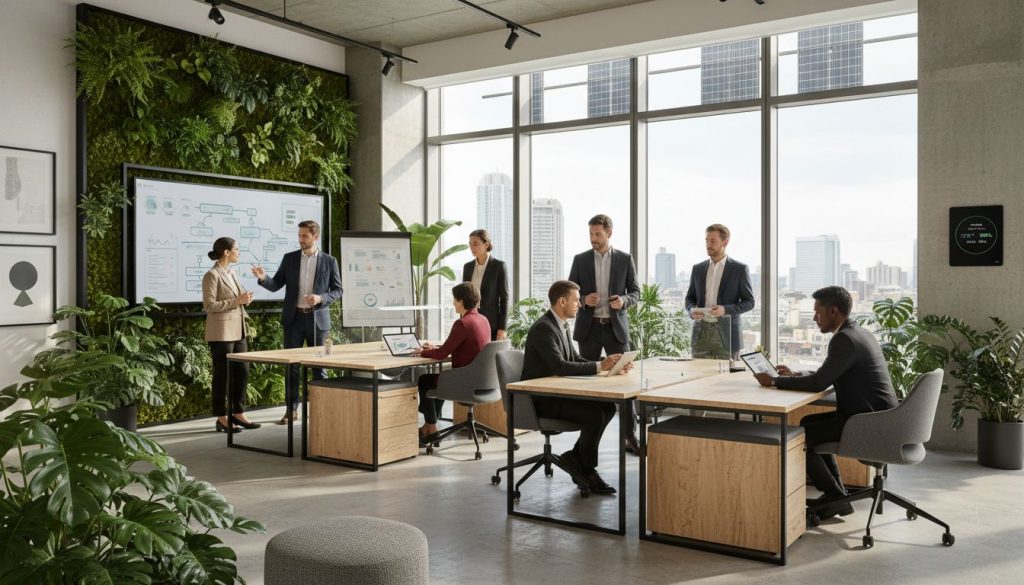
More than 80 percent of businesses now view sustainable office solutions as a top priority for future growth. The modern workplace faces rising demands for both environmental responsibility and employee well-being, making it clear that outdated practices no longer cut it. Embracing smarter technologies, flexible spaces, and wellness-driven design not only helps the planet but also boosts productivity and keeps teams happier for the long haul.
Table of Contents
- Defining Sustainable Office Solutions Today
- Key Types of Green Office Technologies
- How Energy-Efficient Offices Operate
- Real-World Sustainable Office Applications
- Cost Implications And Return On Investment
- Common Challenges And Avoidable Mistakes
Key Takeaways
| Point | Details |
|---|---|
| Sustainable Office Solutions | Focus on holistic design that promotes environmental responsibility, employee wellness, and operational effectiveness. |
| Green Office Technologies | Implement energy-efficient technologies to reduce environmental impact while enhancing productivity. |
| Energy Efficiency Strategies | Utilize smart sensors and renewable energy sources to create self-sustaining office environments. |
| Cost-Benefit Understanding | Recognize that high initial investments in sustainable solutions lead to substantial long-term savings and improved brand reputation. |
Defining Sustainable Office Solutions Today
Sustainable office solutions represent a holistic approach to workplace design and operations that prioritize environmental responsibility, employee well-being, and long-term organizational effectiveness. According to mdpi, modern office design can actively support organizational sustainability through strategic integration of energy-efficient technologies, flexible workspaces, and comprehensive employee wellness initiatives.
Key characteristics of sustainable office solutions encompass multiple interconnected dimensions:
- Energy Efficiency: Implementing smart technologies and infrastructure that minimize energy consumption
- Resource Management: Reducing waste through recycling programs and sustainable procurement practices
- Employee Wellness: Creating work environments that support physical and mental health
- Technological Integration: Utilizing digital tools that enable remote and flexible work arrangements
The concept extends far beyond traditional environmental considerations. As Wikipedia highlights, sustainable office solutions involve actively engaging employees and stakeholders in contributing to broader institutional sustainability efforts. This means transforming workplace culture to embrace practices that reduce carbon footprint, promote resource conservation, and create adaptive, responsive work environments.
By embracing sustainable office solutions, organizations can simultaneously achieve multiple strategic objectives: reducing operational costs, enhancing employee satisfaction, demonstrating corporate social responsibility, and contributing to global environmental conservation efforts. 7 Creative Workspace Ideas to Boost Productivity and Focus can provide additional insights into designing workspaces that align with these sustainable principles.
Key Types of Green Office Technologies
Green office technologies represent a critical frontier in sustainable workplace transformation, offering innovative solutions that dramatically reduce environmental impact while enhancing operational efficiency. Modern Consumer highlights several breakthrough technologies designed to minimize resource consumption and optimize workplace productivity.
Key categories of green office technologies include:
- Digital Collaboration Tools: Cloud-based platforms that eliminate paper waste
- Smart Energy Management Systems: Intelligent devices that monitor and reduce energy consumption
- Efficient Communication Technologies: Virtual meeting software that reduces travel-related carbon emissions
- Adaptive Workspace Technologies: Sensors and systems that optimize environmental conditions automatically
Fishers Tech emphasizes the importance of energy-efficient devices as a cornerstone of sustainable technology strategy. These technologies range from low-power laptops and servers to intelligent printers and smart office systems that dynamically manage lighting, heating, and cooling to minimize unnecessary energy expenditure.
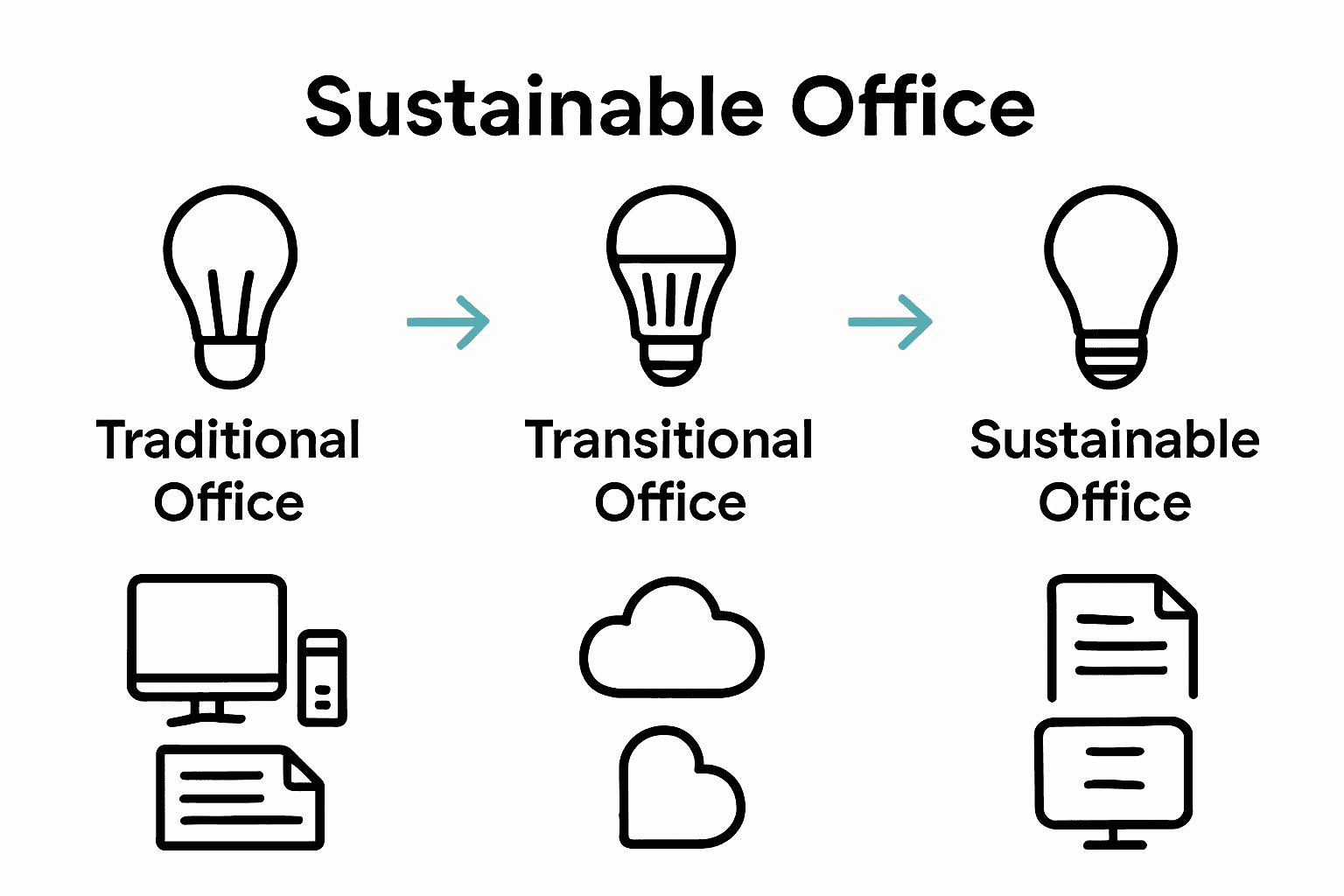
By strategically implementing these green technologies, organizations can achieve significant environmental and economic benefits. The integration of digital note-taking tools, e-signature software, and virtual communication platforms not only reduces paper consumption but also creates more flexible, responsive work environments.
IMAGE:descriptive_key_1] [7 Creative Workspace Ideas to Boost Productivity and Focus can provide additional context on how these technologies support modern workplace design and sustainability goals.
How Energy-Efficient Offices Operate
Energy-efficient offices represent a sophisticated ecosystem of intelligent technologies and strategic design principles that minimize resource consumption while maximizing workplace productivity. ArXiv highlights an innovative IoT framework that leverages cloud computing and advanced sensor networks to create adaptive environments that dynamically respond to occupant needs and optimize energy consumption in real-time.
Key operational strategies for energy-efficient offices include:
- Smart Sensor Integration: Utilizing occupancy sensors to automatically manage lighting and temperature
- Adaptive Climate Control: Implementing systems that adjust environmental conditions based on real-time usage
- Renewable Energy Infrastructure: Incorporating solar panels, wind turbines, and energy storage solutions
- Intelligent Power Management: Using advanced monitoring systems to track and reduce energy waste
Wikipedia explains that the ultimate goal of energy-efficient offices is to balance energy production and consumption, creating environments that generate as much energy as they utilize throughout the year. This approach goes beyond traditional energy-saving methods, transforming offices into self-sustaining ecosystems that actively contribute to environmental sustainability.
Understanding Energy Efficient Projectors for Everyone can provide additional insights into how specific technologies like energy-efficient projectors play a crucial role in creating sustainable workplace environments. By implementing these comprehensive strategies, organizations can significantly reduce their carbon footprint while creating more comfortable, responsive, and technologically advanced workspaces.
Real-World Sustainable Office Applications
Sustainable office applications are transforming workplace environments by integrating cutting-edge technologies and design principles that prioritize both environmental responsibility and employee productivity. Ibercenter highlights emerging trends that demonstrate how organizations are reimagining traditional workspaces through innovative sustainability strategies.
Key real-world applications of sustainable office design include:
- Biophilic Design: Incorporating natural elements like living walls, indoor plants, and natural lighting
- Flexible Workspace Configurations: Modular furniture and adaptable layouts that minimize material waste
- Remote Work Technologies: Digital infrastructure supporting distributed workforce models
- Wellness-Focused Environments: Creating spaces that support physical and mental employee health
Wikipedia illustrates how institutions are setting benchmarks for sustainable design, particularly through adherence to standards like LEED certification. These standards ensure comprehensive approaches to reducing resource consumption, minimizing environmental impact, and creating healthier work and learning environments.
By implementing these sustainable office applications, organizations can achieve multiple strategic objectives. 7 Smart Ways to Boost Office Design Inspiration Today offers additional insights into how companies can transform their workspaces into more efficient, engaging, and environmentally responsible environments that attract top talent and demonstrate corporate commitment to sustainability.
Cost Implications and Return on Investment
Sustainable office solutions represent a strategic financial investment that extends far beyond traditional cost considerations. ArXiv reveals compelling research demonstrating how green computing and energy-efficient technologies can generate substantial economic benefits, transforming environmental responsibility into a robust financial strategy.
Key financial considerations for sustainable office investments include:
- Initial Investment Costs: Higher upfront expenses for green technologies
- Long-Term Energy Savings: Significant reduction in operational expenses
- Productivity Enhancement: Improved employee performance and reduced absenteeism
- Tax Incentives: Potential government credits and financial benefits
- Brand Value: Increased market reputation and competitive advantage
Wikipedia emphasizes that while sustainable office solutions might require higher initial investments, they consistently deliver remarkable long-term financial returns. Organizations can expect reduced utility expenses, lower maintenance costs, and improved operational efficiency that compound over time.
Companies that strategically approach sustainable office investments often experience a comprehensive return on investment that transcends pure financial metrics. 7 Smart Ways to Boost Office Design Inspiration Today provides additional insights into how innovative design can simultaneously reduce costs and create more engaging workplace environments.
Common Challenges and Avoidable Mistakes
Sustainable office transformation requires strategic planning and nuanced understanding of potential pitfalls that can derail even the most well-intentioned initiatives. ArXiv highlights critical insights into the complexities of creating adaptive workplace environments, emphasizing the importance of intelligent technology integration and flexible design approaches.
Common challenges organizations frequently encounter include:
- Technological Misalignment: Implementing technologies without comprehensive workplace strategy
- Inflexible Design: Creating static spaces that cannot adapt to changing workforce needs
- Incomplete Employee Engagement: Failing to involve staff in sustainability transformation
- Inadequate Performance Monitoring: Neglecting systematic assessment of sustainability initiatives
- Budget Misallocation: Investing in unsustainable or short-term solutions
ArXiv underscores the critical need for workplaces to remain dynamically responsive to occupant requirements, warning against rigid design approaches that compromise employee well-being and organizational productivity. Successful sustainable office implementations demand continuous evaluation, adaptive strategies, and a holistic understanding of workplace ecosystems.
7 Smart Ways to Boost Office Design Inspiration Today offers additional perspectives on navigating these challenges, providing practical insights for organizations seeking to create more intelligent, responsive workplace environments that balance technological innovation with human-centric design principles.
Elevate Your Sustainable Office with Energy-Efficient Projection Solutions
Creating a truly sustainable office means embracing smart technology that boosts productivity and reduces environmental impact. This article highlights the critical need for energy-efficient offices that use adaptive climate control and innovative tech to save costs and support well-being. Projectors play a key role in this transformation by replacing bulky, power-hungry displays with sleek, low-energy options that fit perfectly in flexible workspaces and support seamless digital collaboration.
Explore the wide range of eco-friendly projectors and display solutions available at ProjectorDisplay.com. Designed for business, education, and remote collaboration, our high-lumen, wireless projector options help you reduce your carbon footprint while enhancing presentation quality and employee engagement. Don't wait to make your office more sustainable and technologically advanced. Visit ProjectorDisplay.com today and find out how easy it is to integrate green technology into your workspace for a smarter future. Also discover creative ways to boost productivity with sustainable devices in our insightful guide 7 Creative Workspace Ideas to Boost Productivity and Focus.
Frequently Asked Questions
What are sustainable office solutions?
Sustainable office solutions refer to workplace practices and designs that prioritize environmental responsibility, employee wellness, and long-term organizational effectiveness through energy efficiency, resource management, and technological integration.
How do energy-efficient offices operate?
Energy-efficient offices utilize smart technologies and design principles, such as smart sensor integration and adaptive climate control, to minimize energy consumption while optimizing workplace productivity and comfort.
What are some examples of green office technologies?
Examples of green office technologies include digital collaboration tools that reduce paper waste, smart energy management systems that monitor energy usage, and adaptive workspace technologies that optimize environmental conditions based on occupancy.
What financial benefits can organizations expect from implementing sustainable office solutions?
Organizations can expect several financial benefits from sustainable office solutions, including long-term energy savings, productivity enhancements, potential tax incentives, and an improved brand reputation, resulting in a comprehensive return on investment over time.
Recommended
- 7 Smart Ways to Boost Office Design Inspiration Today – Projector Display
- 7 Creative Workspace Ideas to Boost Productivity and Focus – Projector Display
- Tech for Small Businesses: Complete Guide for 2025 – Projector Display
- Understanding Digital Signage for Offices: Key Insights – Projector Display
- Environmentally Friendly Window Treatments: A 2025 Guide for UK Homes | Shutter World
- The Complete Office Removals Process Guide for 2025 | Schott Removals