
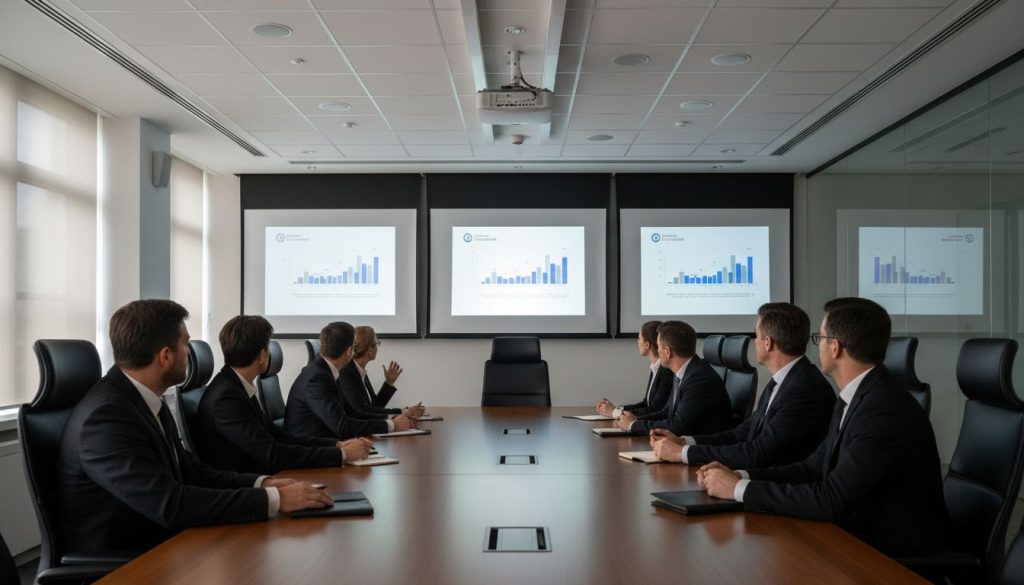
Did you know that screen gain can make a projected image appear twice as bright simply by choosing the right screen? This simple measurement directly shapes how every photo, video, or presentation looks in your space. Selecting the ideal screen gain means crisper visuals, vibrant colors, and a better viewing experience that matches your room conditions and projector type.
Table of Contents
- What Is Screen Gain in Projection Technology
- Types of Screen Gain and Key Differences
- How Screen Gain Affects Image Brightness
- Choosing the Right Gain for Your Setting
- Common Mistakes and Misconceptions About Gain
Key Takeaways
| Point | Details |
|---|---|
| Screen Gain Definition | Screen gain measures a projection screen's reflectivity, indicating how much brighter an image appears compared to a standard surface. |
| Importance of Selection | Selecting the right screen gain is critical as it influences image quality and brightness based on different environments like home theaters or conference rooms. |
| Types of Gain Screens | Screens are categorized into low, neutral, and high gain types, each suited for specific use cases and lighting conditions to optimize viewing experiences. |
| Common Misconceptions | Higher gain screens are not universally better; they can compromise image quality and viewing angles, necessitating careful evaluation for optimal performance. |
What Is Screen Gain in Projection Technology
Screen gain represents a crucial measurement in projection technology that determines how effectively a projection screen reflects light and impacts image brightness. According to Wikipedia, screen gain is a precise measure of a projection screen's reflectivity, indicating how much brighter a projected image appears compared to a standard reference surface.
At its core, screen gain operates as a numerical ratio that compares the light reflection capabilities of a projection surface. When a screen has a gain of 1.0, it reflects light exactly like a standard white reference surface. Screens with gains higher than 1.0 actively reflect more light, which results in enhanced image brightness and potentially more vivid visual presentations. As SVConline explains, this measurement represents the ratio of light reflected from the screen compared to a reference white surface.
Understanding screen gain becomes critical when selecting projection equipment for various environments. Different settings demand different gain levels:
- Home theaters might prefer lower gain screens for better color accuracy
- Bright conference rooms require higher gain screens to combat ambient light
- Educational spaces often need balanced gain screens that work well in moderate lighting conditions
The selection of screen gain directly influences image quality, brightness, and overall viewing experience. Professionals and home entertainment enthusiasts must carefully consider their specific projection environment when choosing a screen to maximize visual performance.
For more insights into projection screen technologies, explore our guide on understanding projector screen materials.
Types of Screen Gain and Key Differences
Projection screen technologies offer diverse gain types that significantly impact visual performance across different environments. According to Home Cinema Solutions, projection screens can be categorized into three primary gain classifications: matte white screens, microbeaded screens, and grey or high contrast screens.
Matte White Screens provide a standard gain of approximately 1.0, delivering uniform light diffusion and expansive viewing angles. As Blog Son Video explains, neutral gain screens offer balanced performance that works well in many standard settings. These screens reflect light equally to a reference white surface, making them versatile for various projection environments.
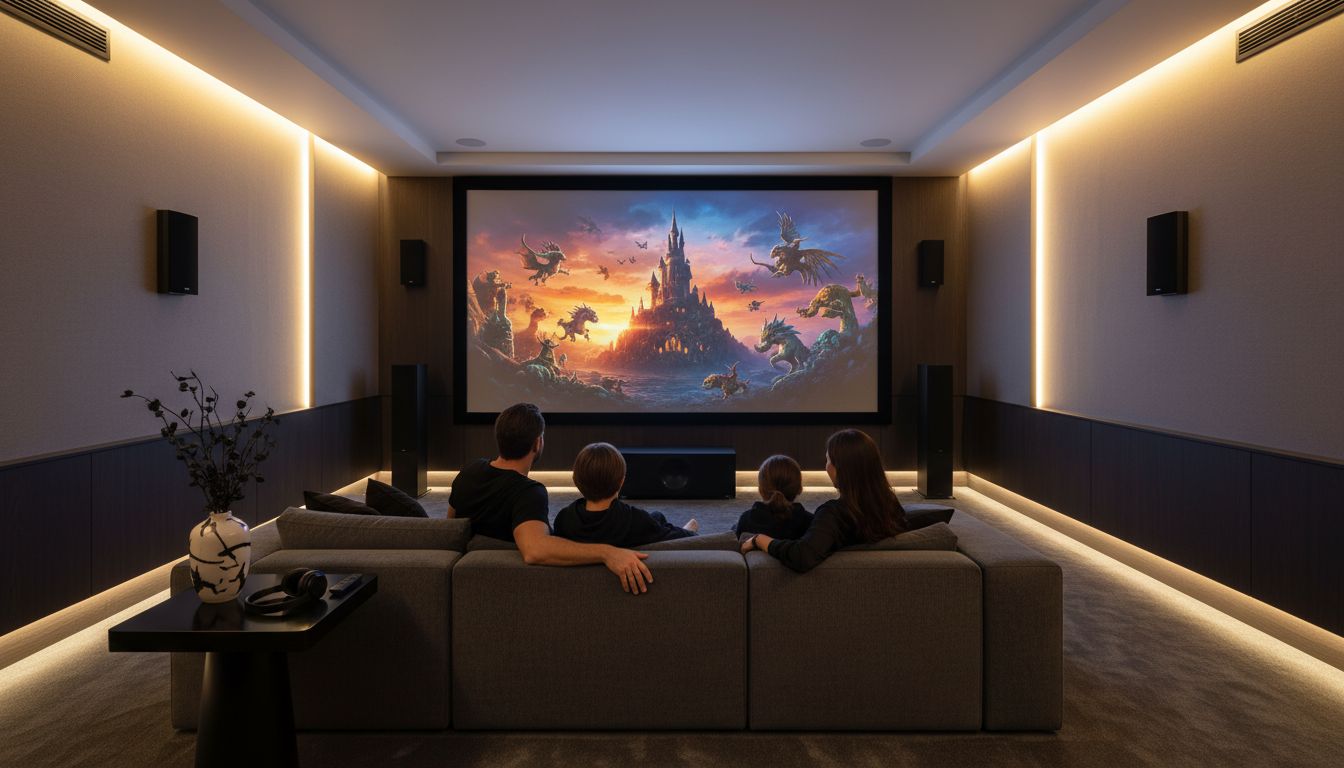
Different screen gain types excel in specific scenarios:
-
Low Gain Screens (gain < 1.0):
- Absorb more light
- Enhance contrast and black levels
- Ideal for high-brightness projectors
- Best for home theater environments
-
Neutral Gain Screens (gain = 1.0):
- Provide balanced light reflection
- Work well in controlled lighting conditions
- Suitable for standard home and office settings
-
High Gain Screens (gain > 1.0):
- Reflect more light
- Perfect for low-light projectors
- Excellent for bright environments
- Narrow viewing angles
Professionals selecting projection equipment must carefully evaluate their specific environment, ambient light conditions, and projector characteristics to choose the most appropriate screen gain. The right selection can dramatically improve image quality, brightness, and overall viewing experience.
Here's a comparison of the main projection screen gain types and their characteristics:
| Gain Type | Typical Gain Value | Advantages | Best Use Cases |
|---|---|---|---|
| Low Gain | Below 1. |
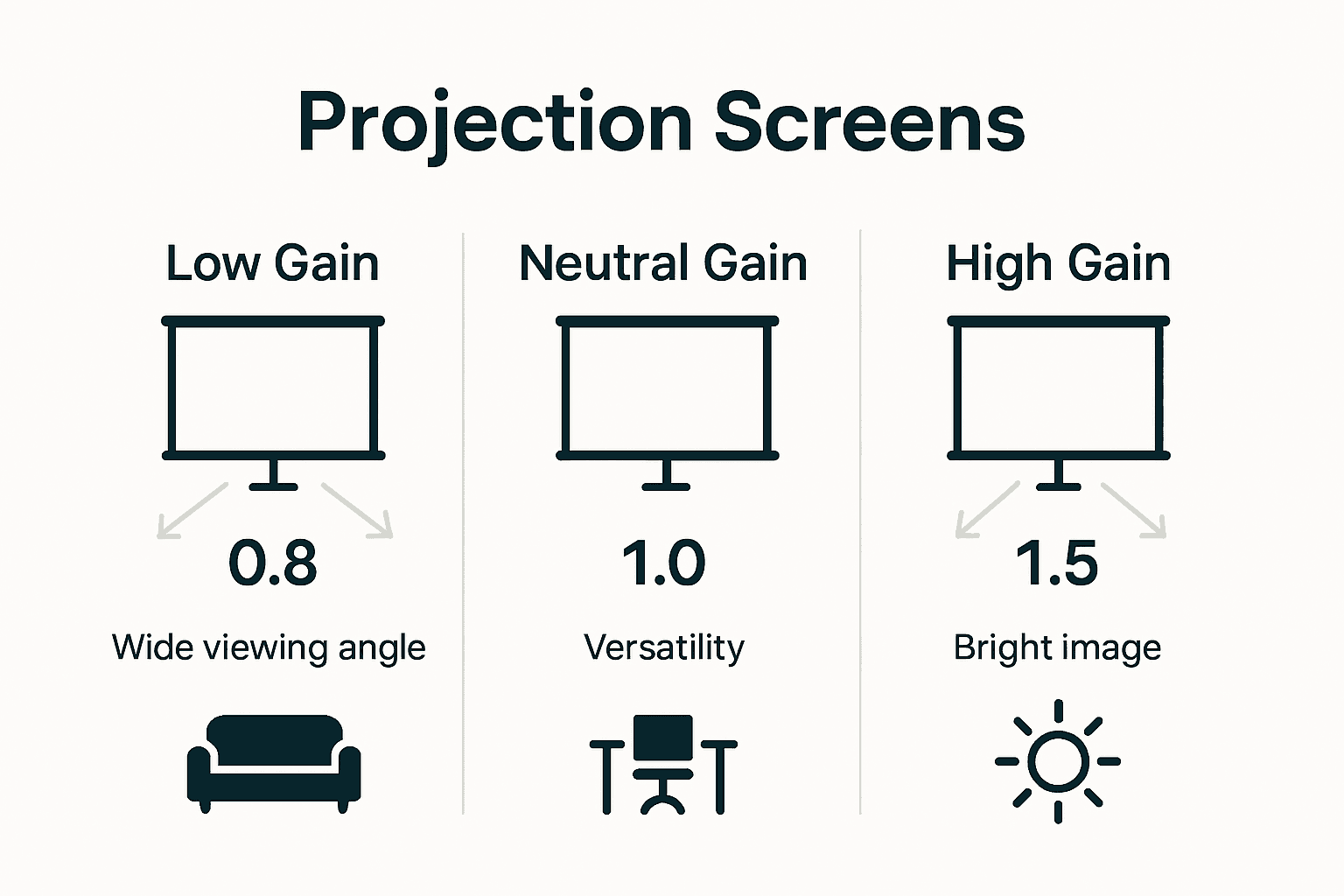 0 | Enhanced contrast
Rich black levels | Home theaters |
| Neutral Gain | 1.0 | Balanced reflection
Wide viewing | Offices
Home use |
| High Gain | Above 1.0 | Increased brightness
Fights ambient light | Bright rooms
Conference spaces |
For more detailed insights into projection screen technologies, explore our guide on understanding projector screen materials.
How Screen Gain Affects Image Brightness
Image brightness in projection technology is fundamentally tied to screen gain, a critical factor that dramatically transforms visual performance. According to SVConline, screen gain directly influences image brightness by determining how much light is reflected towards the audience, with higher gain screens producing significantly brighter images.
Brightness Dynamics vary dramatically across different gain levels. Projector Screen Resource explains that screens with higher gain values reflect substantially more light, making the projected image appear brighter. This characteristic becomes particularly beneficial in two specific scenarios:
-
Low-Lumen Projector Environments:
- Higher gain screens compensate for weaker projector output
- Enhance overall image visibility
- Ideal for spaces with limited projection power
-
Ambient Light Conditions:
- Bright rooms require screens with increased gain
- Counteract external light interference
- Maintain image clarity and definition
However, brightness enhancement comes with potential trade-offs. High-gain screens can introduce 'hot spotting', where the image center appears excessively bright compared to the edges. This phenomenon can create uneven visual experiences, particularly in professional presentation or home theater settings. Professionals must carefully balance gain levels to achieve optimal brightness without sacrificing image uniformity.
Understanding these nuanced brightness dynamics allows users to select screens that transform their projection experience, matching screen characteristics precisely to their specific environmental and technological requirements.
For deeper insights into projection screen technologies, explore our guide on understanding projector screen materials.
Choosing the Right Gain for Your Setting
Selecting the optimal screen gain requires careful consideration of multiple environmental and technological factors. Samsung highlights that the perfect screen gain depends on critical variables including projector brightness, ambient light conditions, and viewing angles.
Professionals and home entertainment enthusiasts must navigate a complex decision-making process. According to Blog Son Video, the primary consideration is matching screen gain to your specific projection environment. Different scenarios demand unique approaches:
-
Home Theater Settings:
- Prefer low to neutral gain screens
- Maximize color accuracy
- Minimize light reflection
- Ideal for controlled lighting
-
Conference Room Environments:
- Choose high-gain screens
- Combat ambient light
- Enhance image visibility
- Support lower-lumen projectors
-
Educational Spaces:
- Seek balanced gain screens
- Work effectively in moderate lighting
- Provide consistent image quality
- Support diverse projection needs
Key decision factors include projector lumens, room brightness, and intended viewing experience. A high-gain screen might seem attractive, but it can introduce unwanted visual artifacts like hot spotting or narrow viewing angles. Professionals must balance brightness enhancement with overall image quality and viewer comfort.
Making the right screen gain selection transforms your projection experience from ordinary to extraordinary, ensuring crisp, vibrant images that captivate your audience.
For more nuanced insights into projection technologies, explore our guide on understanding projector screen materials.
Common Mistakes and Misconceptions About Gain
Projection screen selection is fraught with misconceptions that can significantly impact visual performance. SVConline emphasizes that the most pervasive myth is the belief that higher gain screens are universally superior, when in reality, they introduce complex trade-offs in image quality and viewing experience.
Projector Screen Resource highlights several critical misconceptions that professionals and home theater enthusiasts must understand:
-
Brightness Fallacy:
- Misconception: Higher gain always means better image
- Reality: Increased gain can reduce overall image quality
- Potential issues include reduced color accuracy
- Narrower optimal viewing angles
-
Viewing Angle Misunderstanding:
- High-gain screens dramatically limit viewing positions
- Center of screen appears brighter than edges
- Creates uneven visual experience
- Restricts audience placement
-
Ambient Light Oversimplification:
- Not all high-gain screens solve lighting challenges
- Some screens create more problems than solutions
- Careful selection required for specific environments
Professionals must look beyond simplistic gain measurements. A screen's performance depends on intricate interactions between projector specifications, room characteristics, and viewing requirements. The most expensive or highest-gain screen is not automatically the best choice.
Understanding these nuanced trade-offs transforms screen selection from a guessing game to a strategic decision, ensuring optimal visual performance across diverse projection environments.
For deeper insights into projection screen technologies, explore our guide on understanding projector screen materials.
Enhance Your Projection Experience with the Right Screen Gain
Choosing the proper screen gain is key to overcoming challenges like poor brightness, color distortion, or limited viewing angles discussed in this article. Many struggle to find a screen that balances image clarity with ambient light conditions and projector capabilities. Whether you want deeper blacks for home theater or brighter visuals in a conference room, understanding screen gain is a vital step toward crystal-clear presentations.
Ready to improve your viewing quality now Explore our wide selection of projection screens designed for various gain levels at Projector Screen Archives – Projector Display. At https://projectordisplay.com, you can find products tailored to your environment and projector type. Don't wait to create vibrant, sharp images that captivate your audience and maximize your projector's potential. Start optimizing your setup today with expert advice and fast shipping in Malaysia.
Frequently Asked Questions
What is screen gain in projection technology?
Screen gain is a measurement that indicates how effectively a projection screen reflects light compared to a standard reference surface. A gain of 1.0 means the screen reflects light equally to a standard white surface, while gains above 1.0 reflect more light, resulting in brighter images.
How does screen gain affect image brightness in projections?
Screen gain significantly influences image brightness by determining the amount of light reflected toward the audience. Higher gain screens produce brighter images, making them ideal for low-lumen projectors and bright environments, but they can also introduce issues like hot spotting.
What are the different types of screen gain and their uses?
Screen gain types include:
- Low Gain Screens (gain < 1.0): Best for home theaters to enhance contrast.
- Neutral Gain Screens (gain = 1.0): Suitable for standard home and office settings with balanced performance.
- High Gain Screens (gain > 1.0): Ideal for bright environments to combat ambient light but may have narrow viewing angles.
What mistakes should I avoid when choosing a projection screen gain?
A common mistake is thinking that higher gain screens are always better. High gain can lead to reduced color accuracy and narrower viewing angles. It's essential to consider the specific lighting conditions and intended use to select the appropriate gain level.
Recommended
- Understanding Projector Screen Gain Explained – Projector Display
- Projector Screen Size Guide 2025: Perfect Fit for Malaysian Needs – Projector Display
- Understanding Projector Screen Materials for Home and Business – Projector Display
- Projector Screen vs White Wall: Pilihan Terbaik untuk Rumah dan Pejabat 2025 – Projector Display